
Butternut squash has been on the market for over 50 years, but it remains popular. It's prized for its small, neat fruits, excellent flavor, and distinct aroma. Learn about growing methods, overcoming challenges, and caring for this variety in this article.
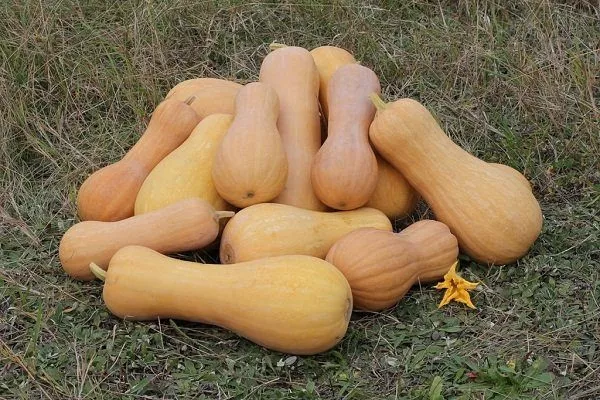
Butternut Squash
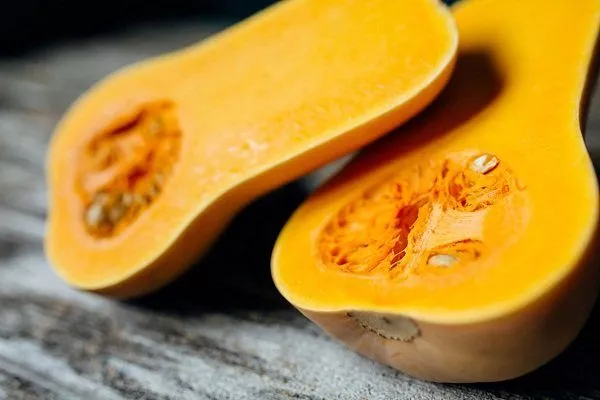
Butternut squash has a nutty flavor.
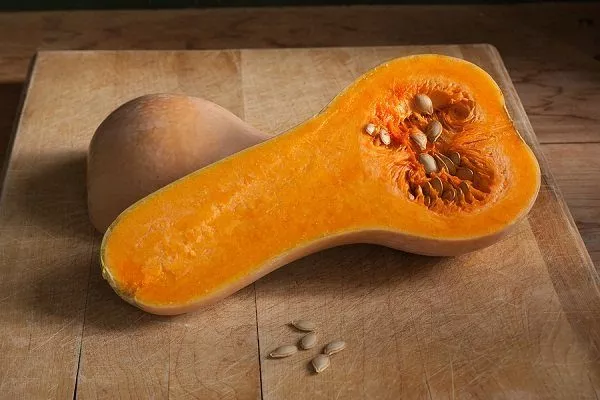
Butternut squash has a thin skin.
Origin
This is an artificially bred variety. Butternut squash was developed by American scientists in the 1960s by crossing African and Muscat squash. Today, the crop is widespread in Europe. Despite its heat-loving nature, it is successfully grown not only in southern but also northern regions.
Description and characteristics
The main features are:
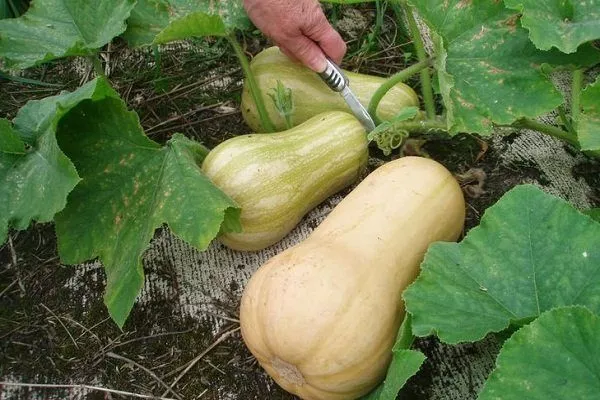
- Form. Pear-shaped - oblong at the top and widened towards the bottom.
- Color. Depending on the stage of ripeness, it has a delicate or rich orange-yellow color. The inside is paler.
- Bush. The vines can reach 2.5 m in length. The leaves are large and green.
- Taste. The pulp is juicy, with a distinct aroma and a slight nutty flavor.
- ✓ The fruits have a high content of carotene, which gives the pulp a bright orange color.
- ✓ The seeds are located only in the widened part of the fruit, making the top part ideal for slicing.
The characteristics are presented in the table:
| Weight, kg | Ripening time, days | Storage, months | Yield, kg per 1 sq. m. | Time for planting seedlings, month | Time of transplantation into the ground, month | Time of sowing seeds in the ground, month |
| 1.5-2.5 | 80-90 | up to 6 | 15 | 5 | 5-6 | 6 |
Features of agricultural technology
You can get a good pumpkin harvest only if you follow certain recommendations.
Conditions and preparation of the garden bed
What you need to do:
- Select a location. It should be on the south side to ensure the soil warms up well. Loamy soil is ideal. It's best to plant the pumpkin at the back of the house to protect the crop from strong winds.
- Preparation. In the fall, the soil is dug over and fertilized with manure. A month before planting, half a bucket of compost mixed with two cups of ash is added and the soil is covered with plastic wrap. Dig the soil again before planting.
- Predecessor cultures. A plot where potatoes, onions or cabbage were previously grown is suitable.
- ✓ Soil pH should be between 6.0-6.8 for optimal growth.
- ✓ The soil must be well drained to avoid waterlogging and root rot.
Avoid planting pumpkins in soil previously used for melons. The soil may harbor diseases and pests that can harm the plants.
Seed preparation
What actions to take:
- Drying. Keep the seeds near a radiator or stove for a month to warm them up.
- Sorting. Remove small and empty seeds. To do this, fill a glass with water, pour the seeds in, and discard any that float to the surface.
- Protection. Place the seeds in a low concentration potassium permanganate solution for 30 minutes.
- Hardening. Wrap in a damp cloth and put in the refrigerator for 2-3 days.
Growing seedlings
How it happens:
- Selecting capacity. It is better to use peat pots or separate plastic cups.
- Soil mixtureFill the containers with store-bought seedling nutrient mixture.
- Landing. Make a hole 4-6 cm deep and place 2 seeds in it.
- Conclusion. Cover the seeds with soil. Moisten the soil with a spray bottle. Cover with transparent film. Remove it when seedlings appear.
- Picking. After the seedlings appear, pinch off the weaker shoot.
Caring for seedlings
What is required:
- The right place. Move the containers to a well-lit windowsill.
- Temperature. Until sprouts appear, maintain the temperature within 23-25 degrees, then reduce to 18-22.
- Moisturizing. Water with room temperature water as the soil dries out.
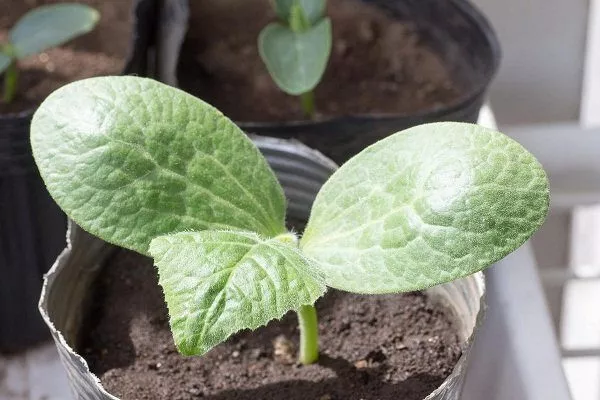
Transplantation into the ground
What are the rules:
- Time. This should be done when the soil has warmed up well and the plants have reached 15 cm in height.
- Preparation. Water the soil well.
- Landing. Dig a hole about 5 cm deep. Take a small cup and break up the bottom and sides, being careful not to damage the roots. Bury the peat pot in the soil along with the seedling.
Carefully replant the plant. Cover with soil.
- Scheme. The distance should be at least 60 by 70 cm.
In the north, planting is done in a greenhouse.
Sowing in open ground
In this case, it is better to make holes in advance, when preparing the soil.
Order:
- make holes in the ground according to the pattern used for planting seedlings, about 5 cm deep;
- plant 2 seeds;
- sprinkle with soil, water;
- in cold or windy weather, cover with film;
- After the sprouts have sprouted, remove the weaker plant.
This method is suitable only for southern regions.
Care
Butternut requires good care.
Watering
Recommendations:
- Frequency. In hot regions it is done up to 4 times a week, if the climate is cooler, 1-2 times may be enough.
- Water. It should be at room temperature, it is better to take settled water.
- Way. Watering the pumpkin at the root.
- Quantity. About 5 liters per pumpkin.
It is important to avoid either drying out or over-watering the soil.
Weeding and loosening
Weeding is done as soon as weeds appear. Once shoots have formed, this should be done more carefully to avoid damaging the plant. Weeding is usually done before watering, and loosening is done after.
Top dressing
You need to do at least 3 pumpkin fertilizer:
- 1st. When transplanting into the ground: Humus mixed with soil.
- 2nd. As soon as the ovaries form, use mullein diluted with water in a 1:3 ratio.
- 3rd. Fruit emergence. Any organic matter.
Bush formation
It's recommended to pinch off the central shoot and grow 2-3 lateral shoots. To ensure larger fruits, leave no more than 2 ovaries per shoot.
Possible difficulties
Problems that may arise include:
- Sprawl. The bush requires a large area. It's best to install a trellis on the site.
- Temperature. The temperature in the greenhouse and garden bed should be maintained between 15 and 25 degrees Celsius. Pumpkins don't grow well without warmth.
Pests and diseases
The following are especially dangerous for Butternut:
- Powdery mildew. Causes leaves to dry out. For prevention, spray with a 1% copper sulfate solution.
- White rot. Plants become covered with white spots that turn black over time. Affected areas should be cut off and sprinkled with ash.
- Root rot. This is a fungal disease. It occurs when watering conditions are not met properly. The plant begins to rot, starting from the roots, and eventually dies.
- Spider mite. It sucks the juices from the leaves and then envelops them in a web. As a result, crops are destroyed. Spraying with garlic infusion will help.
- Melon aphid. The parasite causes leaves to rot and curl. It occurs when there are weeds in the area, so it's recommended to pay special attention to their prompt removal. It's also best to treat pumpkins with a mild soap solution.
Harvesting
The technology is as follows:
- Time. In September, before frost sets in. It's best to choose a warm, sunny day.
- Way. Trim with a sharp knife, leaving 5 cm of the stalk.
- Storage location. Storing pumpkin in a dry, cool place.
Pros and cons
Among the advantages:
- Benefits. The pulp contains many vitamins and essential elements, making butternut squash a popular choice for dietary and baby food.
- Taste: Can be eaten in any form, even raw.
- Convenience. The vegetables have thin skins that peel off easily.
- Seeds. Concentrated at the bottom of the vegetable, with the top being the pulp.
- Pollination. With proper planting, pumpkin bushes do not require artificial pollination.
Reviews
Learn more about the butternut squash from reviews from people who have already grown this variety:
To get a good butternut squash harvest, you need to choose the right plot, prepare the seedlings promptly, and ensure proper care. Only by following all the recommendations can you grow delicious and healthy vegetables.