
The Barbara pumpkin is distinguished by its productivity and resistance to transportation. Its sweet flavor and crunchy texture make it ideal for a variety of dishes. This hybrid requires no special skills or knowledge to grow, making it suitable for both experienced and novice gardeners.
Description of the bush and fruits
The Barbara pumpkin belongs to the medium-sized, creeping group, characterized by vigorous green growth. The bush has a medium foliage density and is adorned with small, rounded, rich green leaves with small whitish spots. During flowering, the bush is enveloped in large, bright yellow inflorescences.
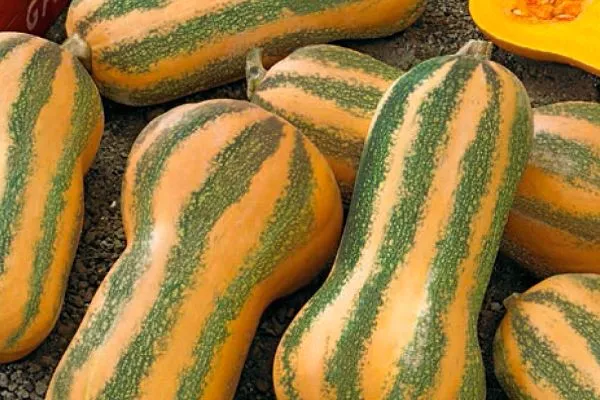
The fruits of this pumpkin deserve special attention:
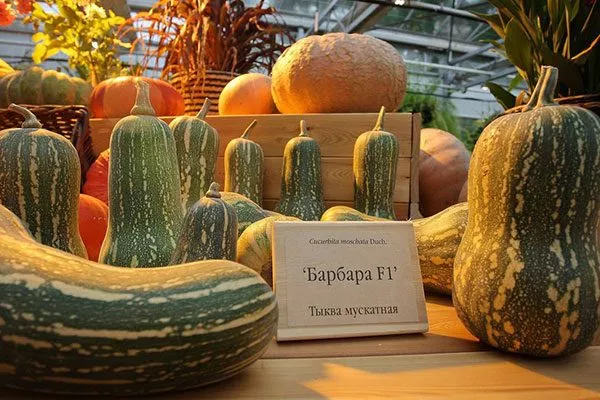
- They are cylindrical in shape with a slight bend at the neck, resembling a pear;
- the weight of ripe pumpkins varies from 1.7 to 2.5 kg, the length is 25-28 cm, and the diameter at the widest part is no more than 10 cm;
- the main color is intense green with characteristic bright creamy-orange stripes;
- the pulp is bright yellow and fleshy, it contains a seed nest with not very many seeds;
- A notable feature is the smooth surface, practically free of bumps.
Main characteristics
The Barbara F1 pumpkin is an innovative variety hybridized by Russian geneticists and first presented at an international agricultural exhibition in 2018. Created for modern farmers, this nutmeg hybrid immediately gained recognition among both gardening enthusiasts and professional agricultural enterprises.
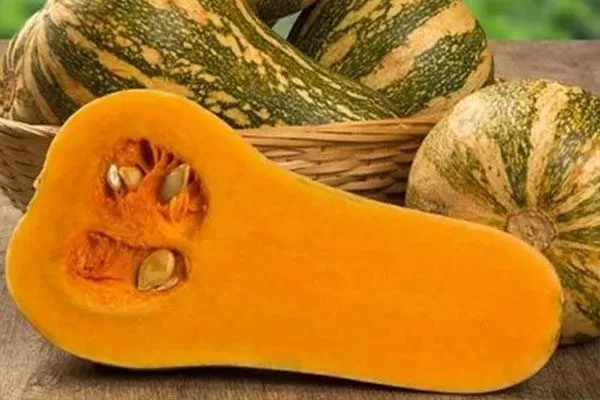
Key agronomic indicators:
- The harvested crop retains its taste and external integrity well, which allows it to be transported over long distances.
- The fruits are widely used in the culinary arts, being used in salads, sweet pumpkin desserts, and as a key ingredient in juices and fruit drinks. Pumpkins can be baked, frozen, and dried.
- The butternut squash variety is a mid-season crop. Harvesting begins approximately 50-60 days after the first green shoots appear. Criteria for determining full maturity include:
- hardening of the stalk and peel;
- formation of brightness in the color of the peel;
- drying of the tail.
- This variety demonstrates good yields. One square meter of soil can yield up to 2.5 kg of delicious pumpkin. A mature plant can produce up to four fruits.
- This improved hybrid has increased resistance to common diseases and insects, including white rot and anthracnose. However, overripe fruits can become susceptible to powdery mildew, downy mildew, and bacterial blight.
- Thanks to its tough skin and resistance to mechanical damage, the Barbara variety boasts excellent shelf life. This means the pumpkin can easily be stored for 130 to 150 days after being picked, maintaining its freshness and flavor.
Growing and care
This unusual vegetable doesn't require any special care, but to achieve the maximum harvest in the planned volume, it's still necessary to follow certain agricultural recommendations:
- It's best to choose a location in an open, sunny spot protected from winds. High yields can be expected in light, fertile soils.
- Maintaining an optimal temperature in the range of +15 degrees during planting is a key condition for successful seed establishment.
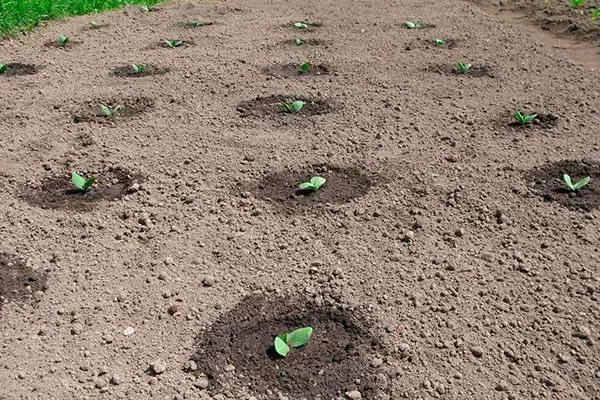
- Seeds for seedlings should be sown in April, and they can be transplanted outdoors from May to June. If you plan to sow pumpkins without seedlings, do so in May or early June.

- For optimal development of the Barbara pumpkin, the following planting pattern is recommended: 95-110 cm between rows and 50-55 cm between plants within a row. This arrangement will provide each plant with sufficient space to grow, optimal lighting, and access to nutrients.
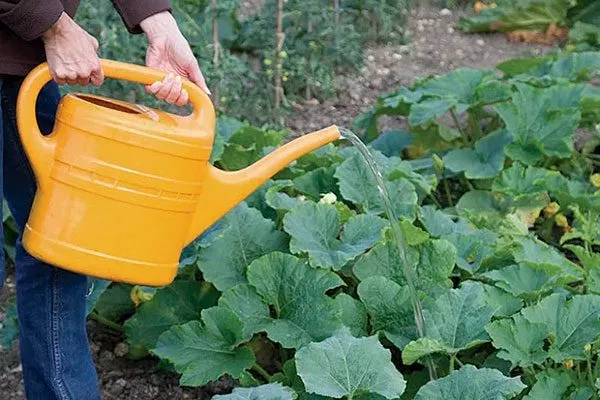
- Plant care involves a number of basic steps: regular watering, taking into account rainfall, loosening the soil, and weed removal. It's important to remember to periodically fertilize the plant and carry out preventative spraying against pathogens and insects. All procedures are standard.
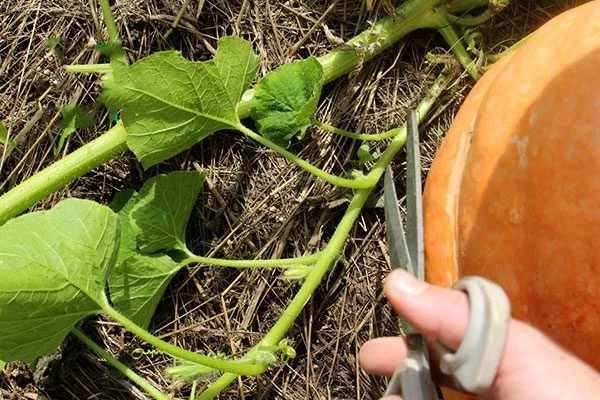
- Despite the small size of the bush, it is important to carefully monitor the pruning of shoots, which promotes faster development and ripening of vegetables.
- Pay special attention to harvesting, as the safety of the fruit depends on its precise execution. Avoid watering completely for a week before harvesting, and only carry out harvesting in dry weather. If the fruit gets wet, dry it thoroughly before storing.
Reviews
Barbara F1 is a butternut squash hybrid characterized by good productivity and the ability to bear fruit over a long period. It boasts good cold tolerance and disease resistance. Its attractive color and rapid fruit hardening allow for harvesting as early as 45 days after planting.