
The acorn pumpkin, also known as the acorn squash or potato squash, is particularly popular among vegetable lovers. This shrub boasts an incredibly high yield. One of the notable features of this variety is its unique color scheme: dark green spots are accented with bright yellow hues, or the pumpkins can be pure orange.
What is an Acorn Pumpkin?
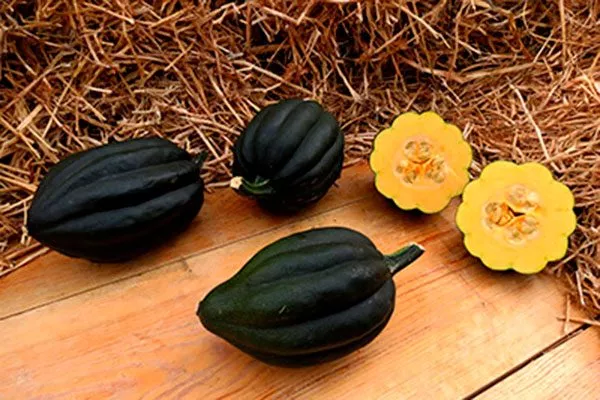
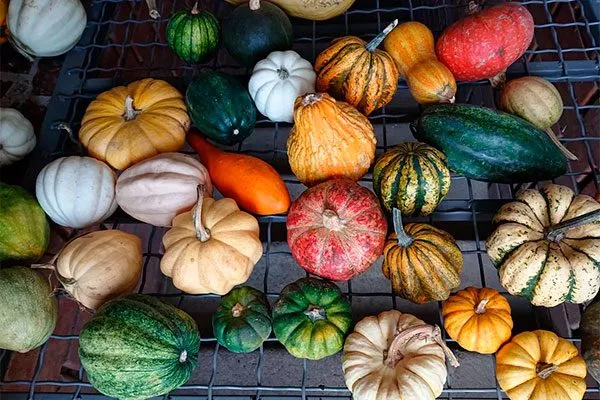
Acorn squash is a winter squash species in the Cucurbitaceae family. Its appearance resembles an acorn, with distinctive grooves on its skin, which ranges in color from deep green to light white, although the most common varieties have dark green skin and a bright orange top.
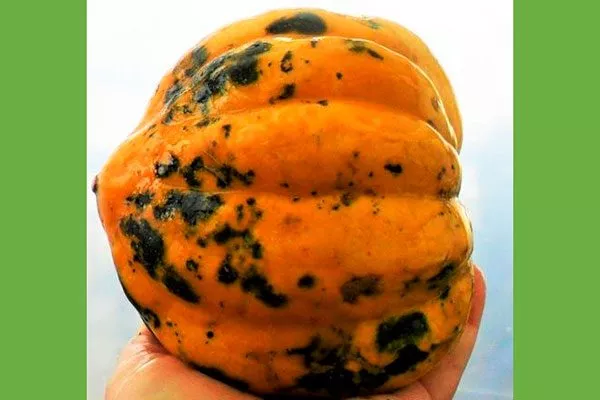
The flesh has a sweet flavor, a yellow-orange color, and a delicate nutty aroma. This vegetable is widely cultivated throughout the world, but it has gained particular popularity in North America.
Acorns are prized by gardeners for their ease of cultivation and long-term storage—up to 6 months under proper conditions—making them a valuable source of nutrition during periods when fresh vegetables are scarce.
Origin and characteristics
This plant originated in North and Central America, where it was cultivated by indigenous tribes. Through selective breeding, it has been adapted for cultivation in various climates, including temperate climates.
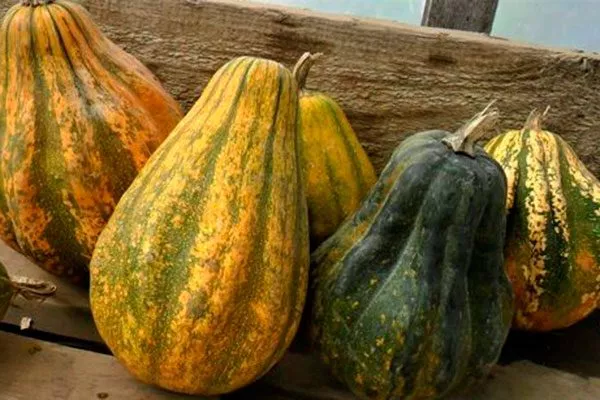
Today, the acorn variety thrives both in open ground and in greenhouses, demonstrating high resistance to infections common to the pumpkin family.
Varietal characteristics:
- The appearance is sure to attract attention: it is distinguished by numerous vertical grooves and a unique shape that resembles an acorn – the pumpkins are elongated and tapering towards the base.
- The size of the fruits of this plant is not too large: their weight ranges from 500 g to 1 kg, while the length of the pumpkin varies from 10 to 20 cm.
- Another distinctive feature of acorn squash is that most varieties are bush or semi-bush, allowing for efficient use of garden space. Despite their compact size, acorn squash often boasts impressive productivity, reaching almost fantastic levels.
- It grows quickly, allowing for the first harvest to be harvested within 80-85 days of planting. Under ideal conditions, yields range from 10 to 15 fruits per bush. To extend shelf life, the fruits are usually cut off with the stems attached and stored in a cool, dry place.
- Young acorns, like zucchini, can be eaten until fully ripe. However, for long-term storage, they should be left on the root to allow the rind to thicken and strengthen.
Popular varieties of acorn squash
Acorn has several varieties:
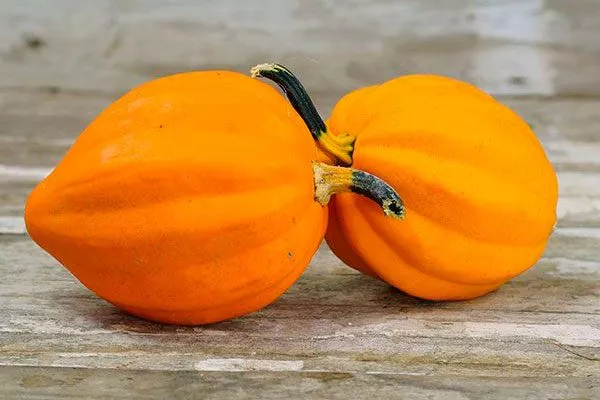
- Gills Golden Pippin – It is distinguished by short shoots, no more than 120-150 cm long. It has a slightly nutty flavor and a hint of sweetness, making it ideal for frying. It is considered one of the most delicious acorn squash varieties. The fruits weigh approximately 0.8-1.1 kg and are bright orange.

- Ukonn – This bush pumpkin variety forms dense bushes up to 70 cm tall and is considered a high-yielding variety. The fruits weigh about 1 kg and have the traditional acorn pumpkin color—dark green with an orange tint on the side. The flesh is sweet. This variety has a short ripening period—just 80 days from sowing.
- Table Queen Bush – This highly productive variety produces dark-green, acorn-shaped fruits approximately 12 cm in diameter with deep grooves across the surface. The flesh is sweet, orange, and buttery.
Each fruit weighs approximately 0.7-1 kg and reaches maturity 80 days after sowing. This variety is ideal for container growing due to its compact size.
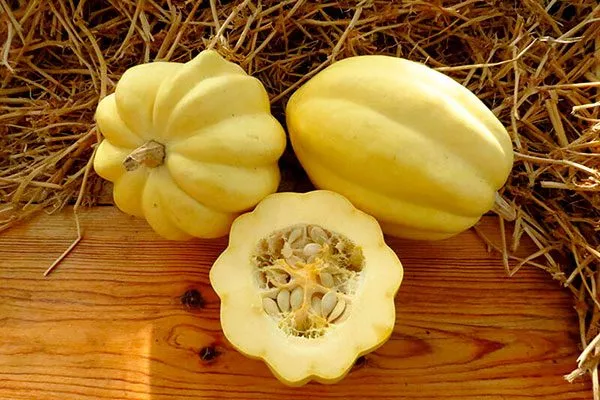
- Cream of Crop – A mid-early variety that produces compact plants. The fruits are oval, weighing between 700 and 800 grams, and the skin has a delicate creamy hue. The flesh is firm, but after cooking it becomes particularly starchy and dry. The flavor is fairly neutral, with a slight nutty note.
- Table Gold Acorn Squash – This early-ripening variety reaches maturity within 85 days of sowing. It is characterized by its compact size. Its fruits are deep orange, with an average weight of 500 g per pumpkin. The flesh is yellowish in color, intensely aromatic, and slightly dry in texture.
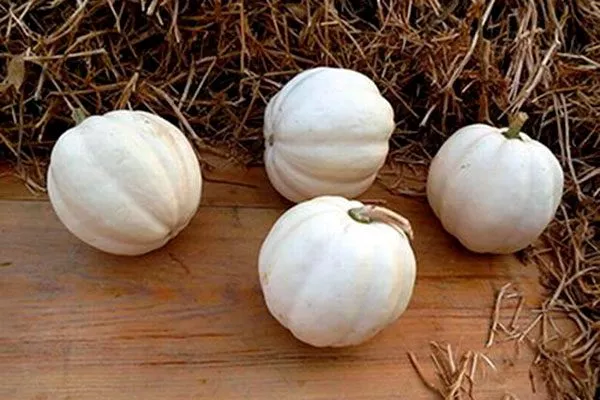
- White Acorn – Stands out from other pumpkins with its snow-white hue. Its color can range from pure white to slightly yellowish tones, and the bark has a smooth, matte surface with shallow ribbing. It attracts attention with its decorative qualities and can be used to create exquisite arrangements. The harvest reaches maturity in 80 days, yielding a high yield, and fruits can weigh up to 900 g.
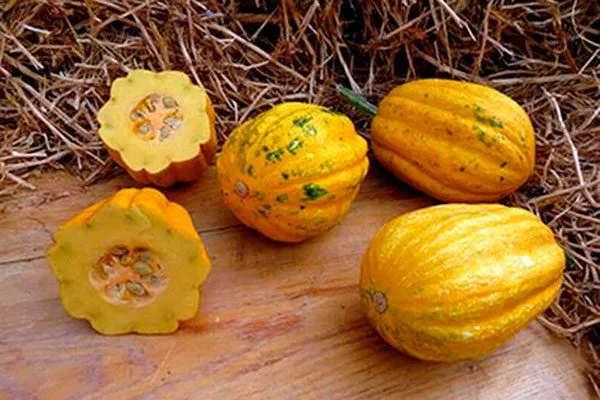
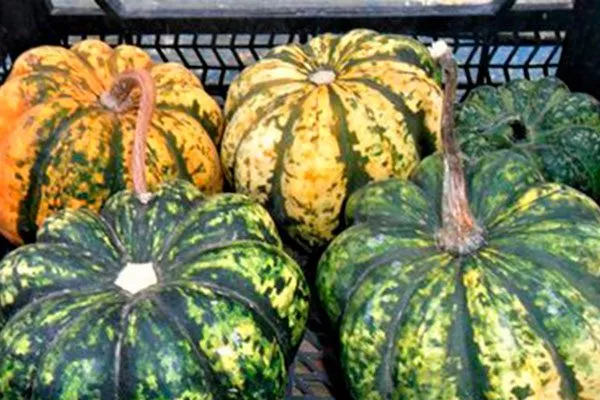
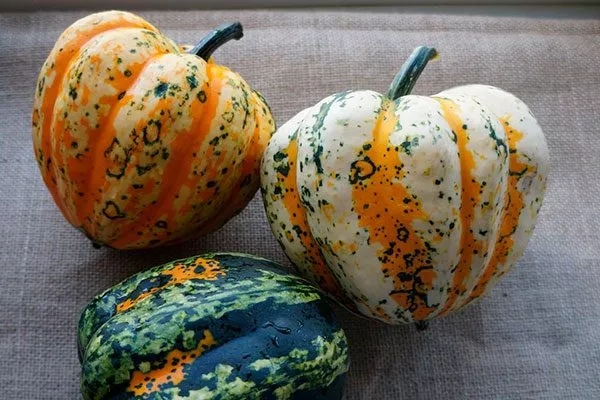
- Festival (Festival Hybrid) – This is an exclusive variety, often sold as a pumpkin-squash. Its fruits are decorated with a complex pattern: spots of various shades of yellow and orange, as well as dark green circles, are scattered on a creamy background. This mid-season variety is ready for harvest in 100 days.
Nutritional value, composition and calorie content of acorn pumpkin
Acorn pumpkin isn't just delicious; it's also rich in nutrients, a source of vitamins, minerals, and fiber. 100 g contains:
- calories: 55-57 kcal;
- carbohydrates: 15 g;
- proteins: 1 g;
- fiber: 4.5 g;
- provitamin A: 9%;
- Vitamin C: 18.5%;
- thiamine (vitamin B1): 11.5%;
- Pyridoxine (vitamin B6): 10%;
- folate (vitamin B9): 5%;
- iron: 5.5%;
- magnesium: 11%;
- potassium: 13%;
- Manganese: 12.5%.
Although acorn pumpkin is low in calories, it contains a wide range of beneficial substances.
Health Benefits of Acorn Pumpkin
Acorn pumpkin attracts attention with its unique composition of nutrients, which gives it many beneficial properties:
- strengthens immune cells and protects the body from infectious agents;
- promotes the synthesis of red blood cells and the normal functioning of the electrolytes magnesium and potassium, which are important for muscle activity and blood pressure stability;
- promotes proper digestion and also helps to avoid a number of gastrointestinal diseases;
- regulates blood glucose levels and creates a feeling of satiety;
- reduces the risk of developing cardiovascular diseases and some types of cancer;
- can prevent the development of type 2 diabetes, improve cognitive functions and protect vision;
- prevents constipation and ensures regular bowel movements;
- promotes the growth of beneficial bacteria in the gut, known as probiotics, which strengthens the immune system and protects against disease;
- prevents atherosclerosis – the formation of cholesterol deposits in the arteries, and the development of neurodegenerative diseases such as Alzheimer's disease.

Including it in your daily diet helps improve health and reduce the risk of chronic diseases, including cardiovascular and neurodegenerative diseases.
What is acorn squash used for and how to cook it?
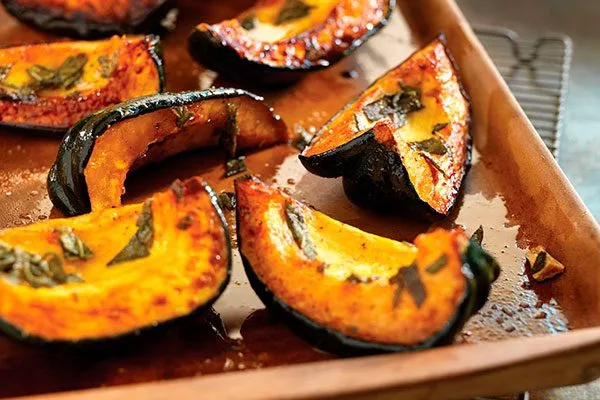
Its sweet, slightly nutty flavor and compact size make acorn squash a versatile food. It's used for baking, stuffing, making purees, and in desserts. Due to its small size, it's often served whole.
Its original shape and bright colours make it suitable for use in autumn arrangements and even as lamps.
There are many ways to prepare acorn squash:
- bake;
- fry;
- cook in a microwave;
- stew or steam.
It can be easily filled with a mixture of cereals (rice, millet, barley), meat or vegetables.
Some cooking features:
- In desserts, maple syrup is often used to enhance the pumpkin flavor, drizzled over the halves before baking.
- The seeds can be eaten after roasting.
- The pulp of the acorn, when cooked, acquires a starchy consistency, which makes it ideal for making any type of puree – sweet, or as a side dish for main courses.
- To cut the hard fruit, use a strong, sharp knife. A simple trick that makes the process easier is to pierce the skin in several places with a fork or the tip of a knife, then microwave the pumpkin on high for two minutes.
After this, the fruit should be allowed to cool slightly, after which it will be easy to cut.
What do you need to grow an Acorn pumpkin?
To ensure that your acorn squash grows quickly and produces a good harvest, it's important to consider several key aspects:
- Climate conditions. Prefers warm temperatures ranging from 18°C to 24°C – a frost-free period of 75 to 100 days is necessary for its successful growth.
- Soil characteristics. Acorn squash thrives in well-drained soil rich in organic matter. The optimal pH is between 6 and 7. A soil test should be performed to determine its nutrient content and adjustments made if necessary.
- Illumination. It requires at least 6-9 hours of direct sunlight per day. Choose a location in the garden or field where it will receive sufficient direct sunlight.
- Neighborhood with other plants. It thrives alongside corn, beans, and herbs, which is consistent with organic farming principles. However, avoid growing it near other pumpkins to prevent cross-pollination.
To attract pollinators, you can plant flowering annuals nearby, such as marigolds or calendula. - Humidity. Pumpkin is highly dependent on moisture throughout the growing season, so regular and moderate irrigation is critical for the plants and ensuring a good harvest.
Sowing seeds and planting seedlings
The best time to plant seedlings or seeds is from May 20 to June 10, once the danger of frost and sudden cold snaps has passed. The plant prefers warm temperatures but can tolerate short-term drops to -2°C.
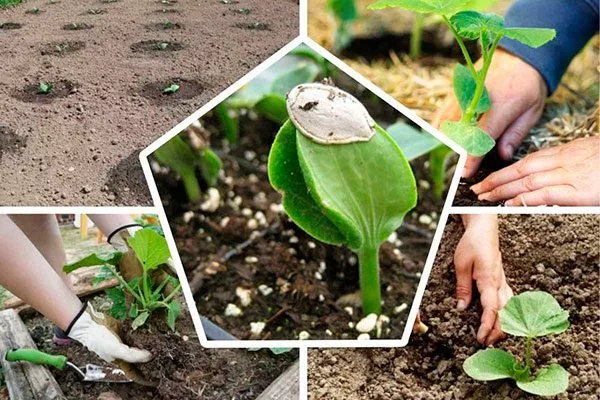
To plant seedlings, follow these recommendations:
- Use a soil mixture based on neutralized peat with a pH of 5.5-6.5, improved by adding leaf soil and mature compost in a ratio of 1:2:1.
- Sow the seeds 20 days before transplanting. If the seeds haven't been treated with thiram, soak them in a solution of brilliant green (1 tablespoon per 200 ml of water) for 30 minutes. Pumpkins don't like being transplanted, so plant the seeds directly into individual cups.
- Begin hardening off the plants after the first shoots emerge. The air temperature should be above 18°C. Start with one hour of exposure outside and increase the time by one hour daily.
- By the time of transplantation, the seedlings should adapt to night conditions; if the nights are cold, protect them with film caps.
- Add 2 tablespoons of wood ash and 200 g of compost to each hole. Transplant the plants together with the root ball from the seed container to avoid damaging the root shoots. Do not bury the root collar.
- After planting, water with warm water and cover with dry chopped straw. If nighttime temperatures drop below 15°C, temporarily protect the seedlings with a cut-off bottle or cover the installed arches with plastic film, agrofibre, etc.
Planting directly into the ground
Acorn squash, like most of its relatives, is easy to grow. For direct planting, it's recommended to choose a time after the last threat of frost has passed. In temperate climates, this typically occurs in mid- to late May.
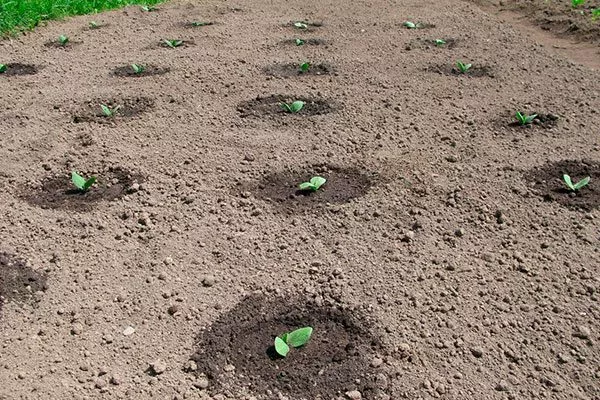
To plant seeds you need:
- Dig holes to a depth of about 2.5 cm. The distance between holes should be at least 90 x 90 cm.
- Before planting, the soil should be enriched with organic matter. Under favorable, warm weather conditions, the first shoots may appear within a week.
For bush pumpkin varieties, leave a one-meter gap between plants. For climbing Acorn varieties, a distance of 2.5-3 meters is recommended.
Care Features
Caring for pumpkins involves regularly loosening the soil, using peat or compost to improve its structure, and periodic fertilizing:
- At the beginning of the growing season, nitrogen fertilizers are used to stimulate plant growth; during the ripening period of the fruits, they switch to preparations with a potassium-phosphorus composition.
- There is no need to trim the leaves, but it is advisable to remove damaged/yellowing leaves to prevent diseases.
- When growing pumpkins, it's important to regularly monitor shoot development. For larger-fruited Acorn varieties, leave one main shoot, removing all side shoots. Leave 2-4 ovaries on the main shoot and pinch them out.
Small-fruited varieties of acorn squash are grown in three main shoots for portioned nutritional intake: three ovaries are left on each of them, after which they are also pinched. - It is recommended to place a layer of dry grass or planks under the hanging fruits.
- The crop requires moderate humidity, and overwatering can have negative consequences. Watering should be done every 8-10 days. Irrigation should be stopped a month before harvest to avoid excess moisture in the fruit, which can lead to rotting during storage.
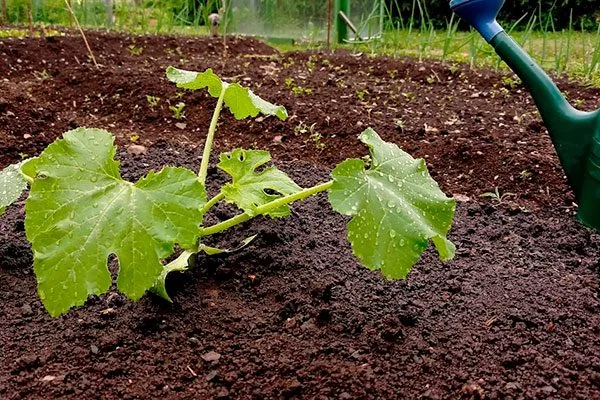
There is an optimal technique for fertilizing Acorn, which is used by experienced gardeners:
- begin with the use of compost solutions a few weeks after planting;
- then every two weeks the pumpkin is watered with a herbal solution;
- After the formation of ovaries, they switch to mineral preparations, using 10 g of potassium monophosphate per 10 liters of water - this feeding is carried out twice with an interval of 16-20 days.
Pros and cons
Acorn squash represents a profitable approach to cost-effective farming in several key ways:
- High level of productivity. The vegetable is capable of producing a significant amount of produce per unit area, making it profitable for farmers.
- Long-term preservation. Acorn squash retains its quality for a long time after harvesting, allowing large industrialists to sell it over a significant period of time, minimizing the risk of quality loss and surplus.
- Stable demand. It is a popular culinary ingredient in many countries and enjoys stable market interest, which guarantees constant demand for the product and a reliable source of income for producers.
- Minimal maintenance costs. It requires little maintenance and has low investment requirements for fertilizers and protective equipment, which reduces overall production costs.
No critical flaws were found.
Reviews
Acorn squash is distinguished by the unique shape of its fruits, reminiscent of acorns. These compact bushes are an excellent choice for small gardens where aesthetics and functionality combine. This variety attracts attention not only for its exotic appearance but also for its excellent agronomic characteristics, making it especially popular among gardening enthusiasts.