
Apricot pumpkin thrives in garden plots across our country. It attracts gardeners not only with its delicate, sweet flavor and beautiful, vibrant color, but also with its strong disease resistance and tolerance to adverse weather conditions. The fruits ripen early, and the seeds germinate quickly, making this variety highly sought after.
Where is it grown?
The Apricot pumpkin variety is popular due to its low maintenance and adaptability to a variety of climatic conditions. It is successfully grown in both the southern regions and the central part of the country.
Maximum yields are achieved in the following locations: the Black Sea coast, the Urals, Eastern Siberia, and Central Asia. The bushes grow well in the Moscow region, providing gardeners with high-quality vegetables.
Description of fruits and plants
Belongs to the annual melon family of pumpkins and is a herbaceous plant. The variety is cultivated primarily for food, and less commonly for animal feed. Its key advantage is the high oil content of its seeds.
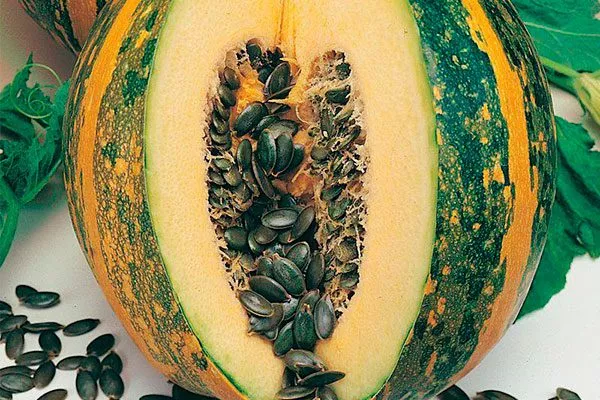
Characteristics of the Apricot variety:
- Bush - Long-vine, with shoots 7-8 m long. Requires shaping or garter.
- Stems – powerful, hollow.
- Root system – branched, goes to a depth of 3.5 m.
- Leaves - rich green color, medium size, slightly dissected.
- Fruits – weighing about 6-7 kg, pulp thickness 5-7 cm.
- Seeds – medium-sized, covered with a greenish film.
Culinary uses
Characterized by beige or light yellow flesh with a distinctive apricot flavor, dishes prepared with this pumpkin leave a pleasant sweet aftertaste.
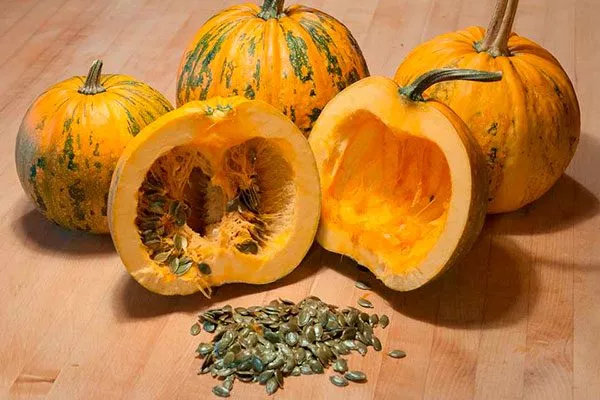
Distinctive features:
- Apricot pumpkin is valued for the high oil content in its seeds and is considered a dessert variety.
- It is actively used in cooking both fresh and after heat treatment.
- The vegetable is used to make juices, purees, vegetable side dishes, salads, and is also used to decorate main dishes.
Ground seeds are used as an ingredient in sauces and homemade baked goods, giving dishes an unusual taste and pleasant aroma.
Characteristics of gymnospermous pumpkins
This is a variety of pumpkin plant distinguished by its seeds, which are not covered by a hard shell. Only a thin film is visible, making them convenient to eat without further peeling.
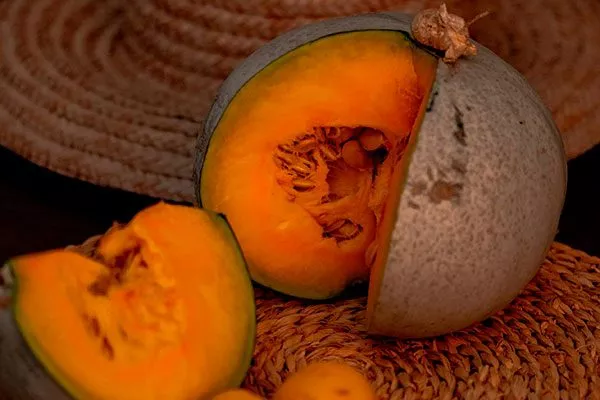
This type has become popular due to its unique characteristics:
- High oil content. The seeds are rich in high-quality oil, which is used for both food and cosmetic purposes.
- Food and dessert purposes. The pulp has a delicate taste and is suitable for making desserts, purees, soups, juices and side dishes.
Gymnospermous pumpkin seeds are used fresh, roasted, or ground. They are popular in baked goods, sauces, and as a healthy snack.
Key Features
Despite its many advantages, the apricot variety is not particularly productive. Key features:
- It is a climbing shrub with multilocular ovaries. Being monoecious, it is pollinated by bees. To improve pollination, plant honey plants, herbs, or shrubs nearby, which can increase the yield to five fruits per bush.
- In northern regions and temperate climates, limit the number of ovaries to no more than three per plant. This promotes larger fruit, which can weigh up to 8 kg.
- In southern regions with abundant sunshine and hot weather, yields are significantly higher. Under these conditions, all fruit ovaries are preserved, and vegetables can grow to 10-14 kg.
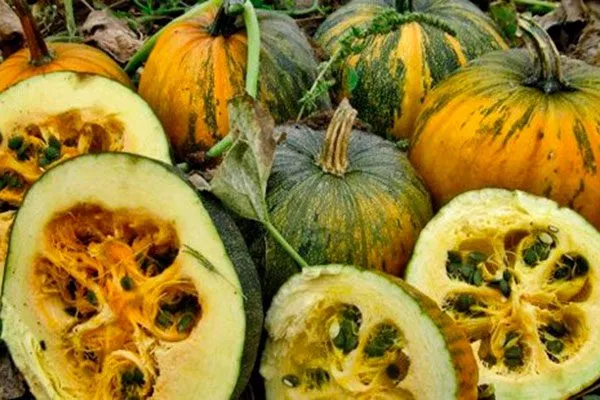
Pumpkin seed oil, obtained from the seeds, contains vitamins, proteins and more than 50 macro- and microelements, including:
- phosphorus;
- iron;
- calcium;
- magnesium;
- zinc;
- selenium.
Landing rules
The crop's yield directly depends on climatic conditions, as this heat-loving plant requires plenty of light. It is recommended to choose an open, sunny, wind-protected site facing south for cultivation.
- ✓ Soil pH levels should be strictly between 5.5-6.5 for optimal growth.
- ✓ The depth of groundwater is at least 3.5 m to prevent root rot.
How to choose seeds for planting, when and how to plant?
Purchase seed from reputable manufacturers, such as Semko, Semena Prestige, and Russkiy Ogorod. Pay attention to the expiration date—it should be at least one year old at the time of purchase.
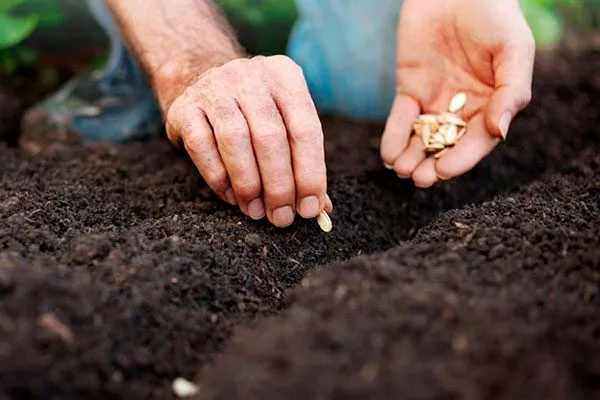
Gymnospermous pumpkins are most often grown from seedlings, as the lack of a protective shell makes the seeds vulnerable to fungal and bacterial infections.
Follow the recommendations:
- Sow the seeds at the end of March to see the first shoots in just two weeks. The seedlings will grow for 30 days, after which you can transplant the four-leafed seedlings into open ground (weather permitting) or a greenhouse.
- Use individual peat pots, as the plant does not tolerate transplanting well. When planting, cut the pots to allow the roots to adapt to the soil more quickly.
- Prepare the soil: mix 10 kg of peat and 5 kg of sand. To improve the soil's nutritional value, add rotted compost and 500 g of wood ash per 1 kg of the mixture to suppress the growth of pathogenic microflora. Heat the soil to 25°C before use.
- Select large seeds, rinse them, and disinfect them in a solution of potassium permanganate, boric acid, hydrogen peroxide, or an ash solution. To moisten them, place them on wet cheesecloth or in a container with minimal contact with water to prevent rotting.
Start sowing:
- Fill the cups with the prepared soil mixture.
- Pour boiling water over the soil and let it cool.
- Make a 3cm deep hole and place the seed.
- Cover with soil and moisten slightly.
- Cover with plastic wrap to create a greenhouse effect.
Maintain a temperature of around 30°C. Air the soil daily to prevent fungus and blackleg. If stem rot appears, replace the soil and repeat sowing. Transplant strong, healthy seedlings into raised beds or a greenhouse after the seedling growth period is complete.
How to care for seedlings?
When sprouts appear, remove the film. Provide the crop with proper care, following simple agricultural practices:
- Moisten once a week using a watering can with a fine spray or water at the roots.
- Loosen the soil after each watering to break up the soil crust – this is important for improving aeration.
- Feed with a mineral complex or growth stimulant, for example, Potassium Humate (5 ml per 10 bushes).
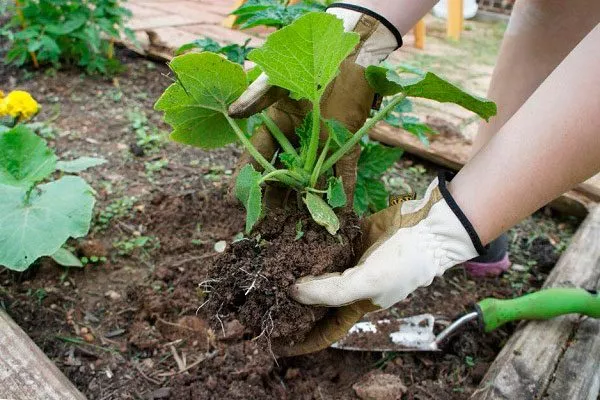
Provide seedlings with 10-12 hours of light per day. If the plants become very leggy, reduce this to 8 hours. Regularly aerate the soil to avoid excess moisture. Harden off the seedlings before planting: during the first few days, take them outside for 1 hour, gradually increase the time, and then leave them in the garden for 24 hours.
How to plant?
In southern regions, transplant seedlings into open ground in mid-May. For successful cultivation, prepare the site and follow certain agricultural practices:
- In the fall, add rotted compost to the soil to increase fertility and nitrophoska to prevent pests.
- In the spring, apply potassium, nitrogen, and phosphate fertilizers. Check the soil pH and maintain it at a neutral level (5.5-6.5 pH).
- Maintain a spacing of 60x60 cm between plants.
- In the fall, add rotted compost and nitrophoska to increase fertility and protect against pests.
- In spring, check the soil acidity and adjust it if necessary to a pH level of 5.5-6.5.
- Apply potassium, nitrogen and phosphate fertilizers to provide plants with the necessary nutrients.
Step-by-step instructions:
- Place a layer of sand and wood ash in each hole.
- Lower the seedling or peat cup, deepening it to the level of the bottom leaf.
- Sprinkle with soil and thoroughly moisten with warm water (up to 1 liter under each bush).
- If necessary, cover the seedlings with film to protect them from the cold.
The optimal temperature for seedling development is 18 to 20°C. If temperatures drop below freezing in May, consider heating the greenhouse.
Caring for pumpkin
Apricot trees are easy to care for, so they're easy to maintain. Follow a few simple steps:
- Water plants once a week in dry weather or less frequently in humid conditions. Mulch the soil to maintain optimal levels.
- If the bushes are not developing well, apply phosphate and potassium fertilizers.
- A solution containing weeds and baker's yeast is suitable for feeding.
In greenhouses, carry out artificial pollination for a good harvest.
Resistance to diseases and pests
Apricot trees can be susceptible to certain problems that need to be addressed promptly to maintain the plant's health. The main diseases and pests that can affect the crop are:
| Disease/Pest | Signs | Treatment |
| Powdery mildew | White powdery coating on leaves and stems. | Remove the affected areas and treat the bush with a solution of colloidal sulfur or Bordeaux mixture. |
| Peronosporosis | Yellowing and wilting of leaves. | Remove infected leaves and spray the plant with a solution of copper oxychloride or Bordeaux mixture. |
| Melon aphid | Deformation of leaves and stems, presence of mites. | Use soapy or alkaline solution to kill pests. |
| Spider mite | Cobwebs on leaves, yellowing and dryness. | Treat the plants with Aktarofit. |
Harvesting Apricot Squash: Timing and Storage
When the fruits reach technical maturity, which usually occurs 100-110 days after germination, you can begin harvesting. Signs of maturity include thick bark and a color change from green to orange with dark green stripes.
Collection rules:
- Perform the activity in dry weather.
- Cut whole ripe vegetables together with the stalk, being careful not to damage the vine.
- Place the collected fruits in boxes or carts lined with soft material to avoid damaging the bark.
- Store the harvest indoors at a temperature of 2-5°C and humidity of 85-90%. Ventilation should be good. Under these conditions, pumpkins can be stored for 3-4 months.
When the temperature rises, the period is reduced, as intensive respiration occurs, weight loss and deterioration of the fruit quality occurs.
Pros and cons
Before planting a pumpkin, carefully familiarize yourself with all its characteristics, even its drawbacks. Apricot pumpkin has the following advantages:
Among the negative qualities, gardeners note sensitivity to low temperatures when direct sowing in a permanent location and low productivity rates.
Reviews
Apricot pumpkin is a variety that combines many positive qualities. It tolerates temperature fluctuations well and rarely gets sick. This cultivar deservedly remains one of the most popular, making it suitable for both beginners and experienced gardeners. With timely care, it will strengthen the immune system and achieve the desired results.