
Growing beets from seedlings is the most recommended method for cultivating this crop. It allows you to advance harvest by 20-30 days and improve the quality and flavor of the root vegetable. The entire growing process is straightforward, but it does require attention and commitment. We'll explain how to grow seedlings and reap a bountiful harvest in the article below.
Selection and preparation of seeds
| Name | Ripening period | Disease resistance | Recommended growing region |
|---|---|---|---|
| Cold-resistant | Early | High | Siberia, Urals |
| The merchant's wife | Average | Average | Siberia, Urals |
| An ordinary miracle | Late | High | Siberia, Urals |
| Mulatto | Average | High | Central region |
| Bordeaux | Early | Average | Central region |
| Cylinder | Late | High | Central region |
- ✓ The seed germination rate must be at least 85% to guarantee a harvest.
- ✓ Seeds should be adapted to the specific soil conditions of your site, including pH and soil type.
The final result of growing beets depends on the very initial stage—the choice of planting material and proper preparation, so take this seriously.
Determine the variety that is suitable for cultivation in your region. To do this, check the zoning information on the packaging. If you choose the wrong variety, unfavorable weather conditions will prevent the beets from ripening, and the roots will be unfit for consumption.
In Siberia and the Urals, grow "Kholodostoikaya," "Kupchikha," and "Obyknovennoye Chudo" (Ordinary Miracle); in the Central Region, grow "Mulatka," "Bordeaux," "Tsilindru," and others. The Southern District allows for the cultivation of virtually any variety.
Seeds, especially if they were sold loose, obtained independently, or shared with a neighbor, need to be prepared for sowing. To do this, follow these steps:
- Calibration.Sort the planting material, reserving the largest and most intact specimens. To check for viability, pour them into a container of water and let them sit for 5-10 minutes. Discard any seeds that float to the surface—they're useless; there's no embryo inside, or it's badly damaged.
- Disinfection.Soak the seeds in a light pink solution of potassium permanganate for 15-20 minutes. This time is enough to combat the infection without burning the seeds. Don't make the solution too saturated, as the chemical will ruin the seeds. After soaking, drain the solution and replace it with clean, warm water. Soak the seeds in this solution for 4-5 hours.
Instead of manganese, you can use a solution of Fitosporin, Maxim, or Vitaros. - Stimulation. Soak the beetroot seedlings in any growth stimulant for 4-6 hours. For this procedure, choose products with multiple properties: anti-stress, immunomodulatory, and stimulating. These effects are typical for Ecogel, Epin-Extra, Zircon, Novosil, and others.
Factory-packaged beet seeds require no preparation. They are often already calibrated and treated with special disinfectants and stimulating compounds. They can be germinated or planted immediately.
After completing the key preparatory steps, dry the beetroots until they regain their flowability. To shorten the germination time, beet seeds can be sprouted. To do this:
- Line the saucer with several layers of cotton cloth or gauze.
- Wet the material and spread the seeds over the surface.
- Cover the top with a layer of material and moisten it thoroughly by spraying water with a spray bottle.
- Place the container in a warm place (20-22 degrees) and make sure that the fabric does not dry out.
- When the seeds sprout, they can be planted in cups.
Planting dates
The timing of sowing seeds depends on the growing region. The further south the region, the earlier you can begin sowing. To determine the right time to sow, count back 21-25 days from the planned date of planting the seedlings outdoors.
Don't rush planting. If the spring is cold, transplanting the seedlings to their permanent location would be rash. Exposure to possible frosts will slow the beetroot growth, causing it to bloom. And keeping overgrown seedlings in containers for more than 1.5 months is impossible.
On average, it is recommended to start sowing beets for seedlings no earlier than April, so that they can be transferred to open ground with the arrival of warmer weather in May.
Soil requirements
Beets prefer loose, non-acidic soil. For sowing, purchase special planting soil or prepare it yourself. It's not advisable to simply take soil from the garden—seedlings need healthy, safe, and rich soil. Soil from the garden contains weed seeds, potential bacteria, and viruses. Its composition and acidity are questionable.
To prepare the soil for sowing beets yourself, mix the following ingredients:
- peat - 2 parts;
- humus or compost - 1 part;
- turf - 1 part;
- river sand - 0.5 parts;
- wood ash - 1 part.
Mix the planting mixture thoroughly and sift it through a sieve to remove large particles. Disinfect the resulting soil using one of the following methods:
- Bake the soil in the oven for 20 minutes at 200°C.
- Steam the soil in a steamer system for an hour.
- Pour boiling water over the area, allowing time for the water to drain and the soil to dry.
- Fill the mixture with a weak solution of potassium permanganate or a solution based on Fitosporin.
- Check the soil acidity with litmus paper 2 weeks before sowing.
- Add corrective additives (lime or sulfur) depending on the test results.
- A week before sowing, water the soil with a solution of phytosporin to prevent fungal diseases.
All these actions are aimed at destroying fungal spores, pathogenic microorganisms and pest larvae, and rendering weed seeds unusable.
Choosing a container for seedlings
Plastic yogurt, sour cream, and cottage cheese cups, cut-off PET containers, peat pellets, and pots are all suitable for growing beet seedlings. Wooden troughs are best avoided due to the difficulty of disinfection, which increases the risk of mycosis or other fungal infections.
Planting containers should have at least 10 cm of height and a drainage hole. Wash and treat the containers with a potassium permanganate solution, then dry thoroughly.
Growing methods
Every gardener has their own time-tested and reliable methods for growing beet seedlings. Let's look at the most popular ones.
Warm bed
This method involves growing seedlings outdoors or in an unheated greenhouse. First, create a heated bed:
- Dig a pit of the planned dimensions and depth - 30-35 cm.
- Cover it halfway with manure, straw, and rotted plant residues (compost).
- Add a layer of soil on top of the organic matter to create a bed height of 35-40 cm. To maintain its shape, create a fence using boards, plastic bottle pickets, or other materials.
The bottom layer will rot, releasing heat, which in turn will warm the soil layer. The raised bed will protect the plantings from the cold ground.
Sowing seeds:
- Make seed rows. If the soil is dense and heavy, plant 15-20 mm deep; for light soil, make furrows 30-40 mm deep. Maintain a distance of 25 cm between rows.
- Spread the seeds 10-12 cm apart.
- Fill the rows, compacting the soil lightly.
- Water the planting.
At first, cover the seedlings with plastic wrap to prevent them from freezing. On warm days, leave the edge slightly open to allow the young plants to ventilate and harden off. When the air temperature reaches 18-20°C and nighttime temperatures rise above 7-10°C, you can plant the beets in their main location.
In cups
Experienced gardeners prefer to grow beet seedlings in individual containers. This makes caring for the plants easier and reduces trauma to the young plants during transplantation. Cultivation in peat pots or pellets is particularly effective. The seedlings are transferred along with their containers. The nutrients in the peat continue to reach the roots even after transplanting into open ground.
Sowing work is reduced to the following points:
- Fill the cups with soil, leaving 1 cm below the surface.
- Water the soil with melted or settled water at room temperature.
- Make a hole in the middle, 2.5-4 cm deep.
- Place 2-3 fruit pods in the hole and cover them with soil.
- Moisten the soil using a spray bottle.
In "snails"
The "snail" method of growing seedlings is gaining popularity. It's especially useful when space and soil are at a premium. A drawback of this method is the impossibility of cultivating young plants before transplanting them into the ground. Seedlings must be pricked out.
Sowing seeds:
- Cut strips of polyethylene or other dense material 1 m long and 10-12 cm wide.
- Lay the bases on a flat surface and, sprinkling soil on top, roll the strips into a roll. Tie them with rope to maintain their shape.
- Place the snails upright on a tray and gently pour warm water over them.
- Add soil to the rows as needed.
- Distribute the beet seeds in spiral furrows, pressing them deep into the soil. Leave 4-6 cm between each seed.
The "snail" method can be used without soil. Instead, moistened toilet paper, folded in several layers, can be used. The seeds are spread directly onto the paper, before the base curls into a spiral.
Growing conditions
To grow healthy beet seedlings, they need to be cared for, maintaining optimal conditions. Simple, timely agricultural practices will help young plants strengthen their immune system, allowing them to quickly gain strength and grow during transplantation.
Illumination
Sunlight is essential for proper seedling growth. Place the seedlings on a south-facing windowsill. Daylight hours should be at least 12-14 hours. During long, cloudy periods, provide supplemental light to the young plants using fluorescent lamps or grow lights.
Humidity
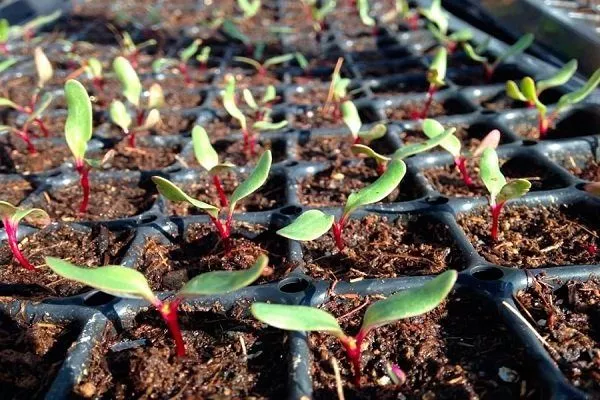
Drought is stressful for beet seedlings, so don't let the soil dry out. Keep the soil moist, but avoid overwatering. Overwatering can cause root rot and stunt the growth and development of young plants.
For watering, use melted or well water at room temperature. Chlorinated water should only be used after it has settled.
Temperature
The optimal temperature for beet seed germination is 18-21°C. Once solid seedlings emerge, reduce the temperature to 15-17°C.
Hardening
Hardening off seedlings increases their immunity to environmental conditions (temperature fluctuations, sun, wind, etc.), preparing them for planting outdoors. Hardening off should begin no earlier than two weeks before planting. Perform the procedure gradually:
- During the first day, reduce the room temperature by 2-3 degrees.
- For the next couple of days, leave the window slightly open during the day, closing it at night.
- After 4-5 days, allow the room to air out and at night. You can also move the seedlings to a closed balcony.
- A week after the start of hardening, take the container with young beets outside, if warm weather permits.
- From the 10th day, you can no longer bring the seedlings in, but leave them on an open balcony or outside.
Don't rush hardening. Don't change conditions too abruptly—this could lead to the death of the plants.
Top dressing
Quantity beetroot fertilizing The nutrients and their concentrated composition depend on the initial soil quality. The more valuable and rich the planting mixture, the less additional nutrition the seedlings need.
The first feeding should be done no earlier than the first two leaves have formed. At this stage, water the plant with a chicken manure infusion or apply any complex fertilizer.
The second feeding is done after transplanting. Use complex fertilizers containing additional elements such as boron, copper, and molybdenum. Sprinkling ash on the soil surface or dusting the plants with it is also effective.
A simple option for feeding is to water the plants with liquid fertilizers (Fertika, Sotka, Krepysh, etc.). Use them strictly according to the instructions. Remember that an excess of micronutrients is just as harmful to seedlings as a deficiency.
When to transplant seedlings?
Pricking out is the process of transferring seedlings from a common container to individual containers or transplanting plants into a greenhouse. Planting seedlings in a garden bed is not considered pricking out. This process is performed at the stage of cotyledon leaf formation. Pricking out allows:
- optimal development of each beet seedling;
- do not allow plant roots to become entangled;
- make seedling care individual;
- cull weak plants.
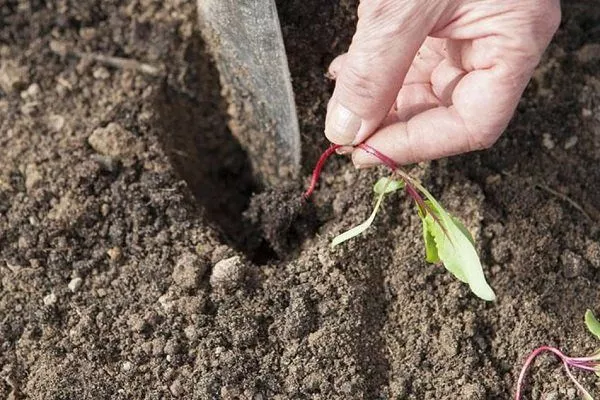
When picking beets, there is no need to shorten the root! It's enough to thin the planting, leaving a distance of 7 cm between plants. If you plan to replant the uprooted plants, remove them after watering, gently helping them with a wooden stick.
Growing seedlings in a greenhouse
Growing beet seedlings, as well as cultivating them at home, requires:
- Preparing the beds and soil. Warm beds are most often used in greenhouses. The soil in these beds is gradually enriched with nutrients, but the organic matter needs to be replaced every four to five years. The soil quality before planting should be close to what beets need: looseness, low acidity, and a rich composition.
- Seed preparation. Selection of the best specimens, disinfection and soaking in stimulating compounds.
- Sowing. Stick to the pattern: 5 cm between fruits, 12-15 cm between rows.
- Thinning. Since several plants grow from the fruit, you need to leave the strongest and healthiest one, and remove or replant the rest.
- Agrotechnical measures and maintaining optimal conditions for growth and development.This includes loosening and weeding, watering beets, feeding, providing light and temperature conditions.
When the seedlings reach a height of 30-35 cm and have developed two pairs of true leaves, they can be transplanted into open ground or left in a greenhouse until fully mature. The greenhouse method does not require pricking out.
Transplanting beet seedlings into open ground
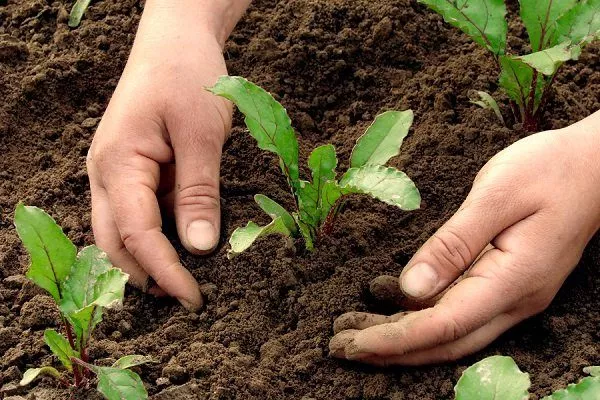
You can transplant the seedlings to their permanent location once they have developed 3-4 true leaves and weather conditions permit. Follow these tips:
- Choose the right location—it should be a sunny, level bed. Dig the soil beforehand and add fertilizer and alkalizing agents.
- Plant seedlings on a cloudy day or during light rain. Otherwise, postpone the work until evening to avoid sun exposure causing additional stress.
- Make the holes deep enough so that the root fits completely into it, and the stem does not need to be bent.
- Before rooting, cover the beet bed with non-woven material, loosen the soil and moisten the ground.
What difficulties might arise?
Growing seedlings isn't difficult. However, without proper care, some challenges can arise. Let's take a closer look.
The seedlings have stretched out
Seedlings stretch when there's insufficient light. This can be corrected by thinning the plantings in the shared container. If young plants are planted in individual containers, move the containers further apart as they grow to avoid shading the seedlings. Rotate the container periodically on the windowsill to prevent stems from bending and the seedlings from developing lopsidedly.
Pests have appeared
Pests thrive under favorable conditions: overwatering, dense plantings, weeds, and dense soil. If proper agricultural practices are followed, the risk of seedling infestation is minimal. If pests attack, treat the plantings with appropriate treatments as soon as possible.
Minor pest infestations can be controlled using folk remedies:
- soap-ash solution;
- onion peel infusion;
- tobacco dust, etc.
If the pest attack is large-scale, use chemicals to avoid wasting time.
Growing beets from seedlings allows you to advance the ripening period and improve the quality of the harvest. There are several methods for growing seedlings. The cultivation techniques for each method are identical, with the difference being the need for pricking out the plants. This will ensure strong and healthy plants, and a bountiful and delicious harvest.