
White beets are an exotic addition to Russian gardens, summer cottages, and the menu. This root vegetable is as rich in vitamins and minerals as its red relative, is similar in cultivation, and has a more delicate and sweeter taste.
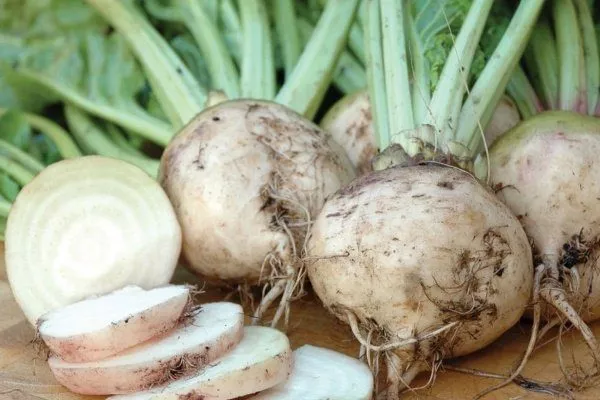
Description of white beetroot
White beetroot is a biennial herbaceous plant belonging to the Amaranthaceae family. In the first year of cultivation, it produces a large root, and in the second, a flower stalk on which the seeds ripen.
White beetroot is divided into subgroups:
- Stern — one of the components in the diet of livestock and farm animals. Both the roots and the tops of the plant are used as food.
- Sugar Beetroot is an industrial crop containing 18-22% sugar. The root weight, depending on the variety, ranges from 300 g to 3 kg. Beet processing is waste-free. All by-products are used in sugar production.
- Dining room - in agriculture, in vegetable gardens and summer cottages this beets are being planted mainly as an annual for growing root crops for sale or for personal consumption.
Below, we'll discuss white beets specifically. In Russia, red beets are primarily popular, while in Europe and the US, white beets are in demand. The vegetables are similar in taste, but white beets are more tender and sweeter, and have a more pleasant aroma. The external differences between white and red beets are:
- light green petioles, not crimson;
- leaves are completely green (no purple tint);
- light yellow skin and flesh.
White beets differ from red beets in that they lack the pigment betacyanin. Sometimes, when preparing dishes, the goal is to prevent ingredients from becoming red, so this table vegetable is used.
Varieties of white beetroot
There are only three varieties of white beetroot available on the Russian market:
- North Star;
- Avalanche;
- Albino.
| Name | Ripening period | Productivity | Disease resistance |
|---|---|---|---|
| Polaris | 70-80 days | Average | Resistant to fungal diseases |
| Avalanche | 70-75 days | High | Resistant to cercospora leaf spot |
| Albino | 103-107 days | Average | Resistant to fungal diseases |
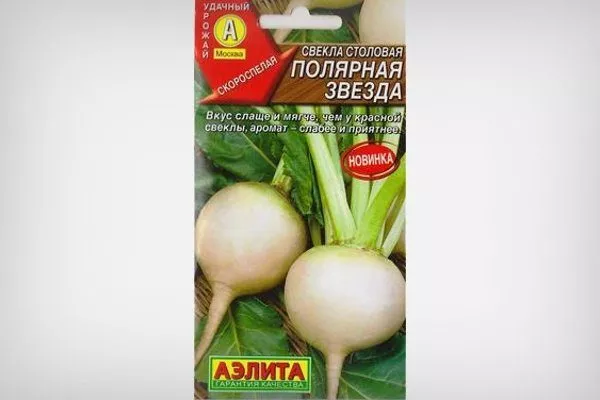
Polaris
This variety is distinguished by the following features:
- Early maturingRoot crops are dug up for testing as early as 70 days after sowing. If the weather was unfavorable for growth and development, the vegetables are given an additional 10 days. During this time, they have time to ripen and accumulate vitamins and microelements, their skin becomes thicker, and the flesh becomes juicier.
- UniversalBoth the root vegetable, young beet leaves, and fleshy stalks are used as food.
- Demanding in care. Loves timely watering, weeding and fertilizing.
- Cannot be stored for long periods of time. Root crops remain suitable only for the first 1-2 months after harvest.
Avalanche
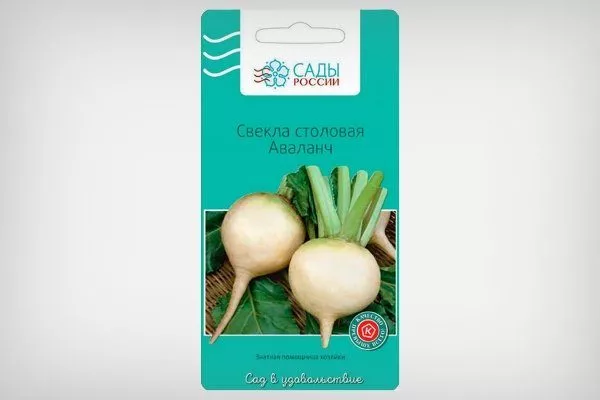
This is the 2015 All-American Selection winner. This variety has the following characteristics:
- Early ripeningRoot crops reach technical maturity 70-75 days after planting.
- FruitfulThe average weight of one root crop is 250-300 g. 6-7 kg are collected from 1 square meter.
- Resistant to fungal diseases. It is resistant to cercospora leaf spot, a fairly common disease of beets.
- Demanding of soil fertilityPrefers fertile, slightly alkaline, and well-drained soil. It grows more productively with the addition of fertilizer.
Albino
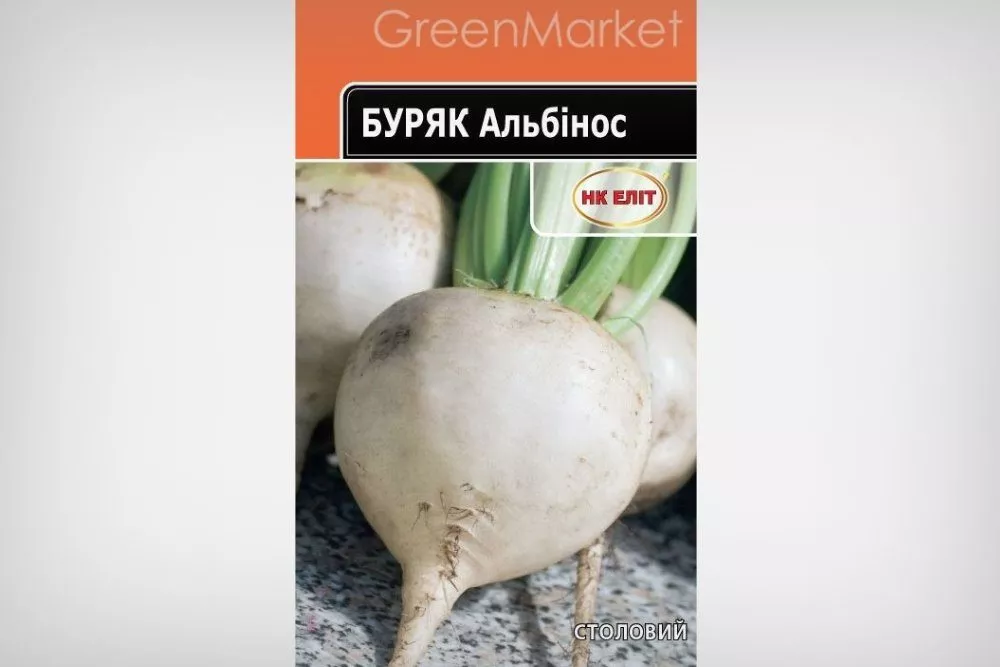
This variety was bred in Ukraine and is distinguished by the following characteristics:
- Mid-early ripening period. Harvesting begins 103-107 days after planting.
- Medium-yielding. The root crops weigh 250-350 g. 3-3.7 kg of vegetables are harvested from 1 sq. m.
- Universal. Both the root and the tops can be eaten. Suitable for canning and freezing.
- Light-loving. It is preferable to plant in a sunny place.
- Disease resistanceNot susceptible to fungal diseases.
Features of cultivation
The crop is grown in two ways: by sowing seeds directly into open ground or by first growing seedlings and then transplanting them into open ground.
- ✓ Optimum soil temperature for sowing seeds: +6…+8°C, for transplanting seedlings: +12…+15°C.
- ✓ The need for mulching to prevent waterlogging and retain moisture.
Weather conditions determine the start of beet sowing. For uniform germination of seeds planted directly into open ground, the soil must warm to 6–8°C. Transplanting seedlings requires the soil to warm to 12–15°C. This is typically in late April or early May.
Soil preparation
Plan your root crop growing in advance. First, prepare the soil for planting:
- In the fall, allocate a plot for beet planting, choosing sunny locations. Consider crop rotation as well. It's unacceptable to sow the crop in the same spot two years in a row due to soil depletion and the risk of development of diseases.
The best predecessors are legumes, cereals and pumpkins.
- Clear the area of fruit and plant debris to prevent pests from attracting them. Treat the soil with Nematorin before planting. Apply it as dry granules, then dig the soil to a depth of 10-15 cm.
Fertilization
It is permissible to fertilize the soil both in advance and immediately before planting:
- If you plan to plant in the spring, then in the fall add dolomite flour (2 tbsp. per 1 sq. m) and rotted manure (1-1.5 buckets per 1 sq. m), and mix the clay soil with sand;
- If there was no preliminary soil preparation in the fall, then in the spring, 2 weeks before planting, use complex fertilizers (according to the instructions on the package), and also add ash (0.5 kg per 1 sq. m);
- If the deadline is already pressing and there is no time to wait 2 weeks, then immediately before planting, add saltpeter, potassium sulfate and superphosphate to the furrows formed for sowing, 10 g per square meter (sprinkle the fertilizer with soil and only then sow or plant seedlings);
Fertilize sandy and sandy loam soils twice – in spring and autumn.
Landing
When the soil warms up to the optimal temperature, start sowing beet seeds in rows:
- Dig the bed to the depth of a bayonet shovel.
- Level the surface layer with a rake, breaking up large clods of soil.
- Mark out the rows, keeping a distance of 25 cm between them.
- Lightly moisten the soil.
- The distance between seeds in a row is 10 cm. The planting depth is 3-4 cm.
- Cover the crops with soil.
- Cover the beds with film if there is a threat:
- frosts;
- rain washout;
- pecking by birds.
- Open the plantings when emergence of seedlings.
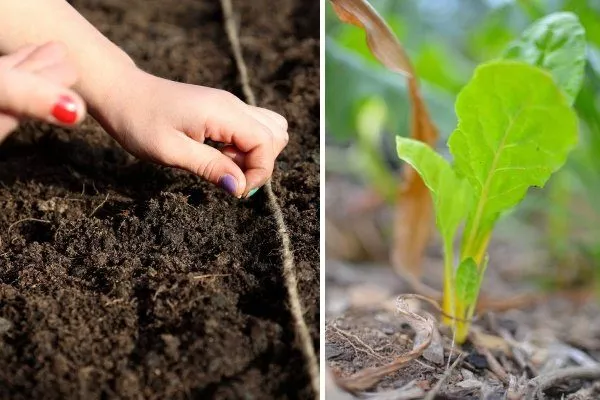
Using seedlings, plant beets in pots or under plastic tunnels. Remove the cover or plant them outdoors once the danger of frost has passed and the temperature no longer drops below 12°C.
Don't forget to actively weed your beets. Start doing this as soon as the sprouts appear and continue until the beets have developed abundant foliage.
Watering
As your culture grows, follow these simple guidelines:
- Water the beets with sun-warmed water depending on the plant's growth phase:
- seedlings at the rate of 4 liters per 1 sq. m;
- grown sprouts with 4-6 leaves - up to 10 liters per 1 sq.m;
- mature plants - 20 liters per 1 sq. m.
- Avoid surface watering, moisten the soil in 2-3 stages.
- Use a watering can to avoid washing away the soil and exposing the roots.
- Loosen the soil and mulch after each watering to avoid soil crust formation.
- Mulch the beds to prevent waterlogging. Use hay or sawdust as a surface covering.
- Stop watering 3 weeks before harvest.
Find more information about beetroot watering rules. Here.
Top dressing
To nourish plants and get a good harvest, use:
- Nitrogen fertilizers — during the green mass growth stage. Ammonium nitrate or urea are suitable.
- Potassium-phosphorus fertilizers — when forming root crops, use superphosphate, potassium sulfate, and potassium chloride.
- Boric acid — 0.5 g per 1 liter of water at the stage of development of the underground part of the plant.
- Table salt as a source of sodium — Take 1 tablespoon of salt per 10 liters of water. Water the plantings with the salt solution three times:
- at the stage of formation of the 6th leaf;
- after the root crops have risen 3 cm above the ground;
- 2 weeks after the second feeding.
- Potassium permanganate - dilute a light pink solution and spray the plant up to 5 times per season.
- Apply nitrogen fertilizers at the stage of green mass growth.
- Use potassium-phosphorus fertilizers when forming root crops.
- Apply boric acid to develop the underground part of the plant.
You can read more about the secrets of beetroot feeding here. here.
Disease control measures
Beets are most often affected by fungal diseases. White beets are resistant to them. However, if this does occur, use fungicides:
- chemicals - Bordeaux mixture, HOM, Rovral, Propiconazole;
- biological - Actofit, Planriz, Mikosan, Trichodermin, Bitoksibacillin, Fitodoctor.
Remember to follow safety precautions when handling plants.
Treat affected beets twice, 2 weeks apart. Stop all treatments 20 days before harvest.
Harvesting and storage
Harvesting begins in late August and continues through mid-October. White beets don't keep well, so eat them within the first few months after harvest.
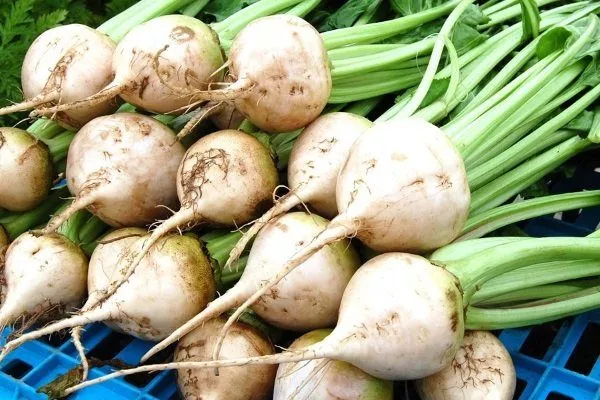
To keep vegetables fresh for as long as possible, store the harvested vegetables in a basement or cellar. Small quantities of root vegetables can also be stored in the refrigerator.
White beetroot is worthy of being grown in gardens everywhere. Its short shelf life is compensated for by its delicate flavor, sweet, juicy flesh, and more pleasant aroma.