
Cylindra is a beetroot with a distinctive, elongated shape that's easy to grow in temperate climates. This variety is not only easy to grow, but also boasts excellent flavor, high yields, and good shelf life. Read on for more information on its characteristics and cultivation methods.
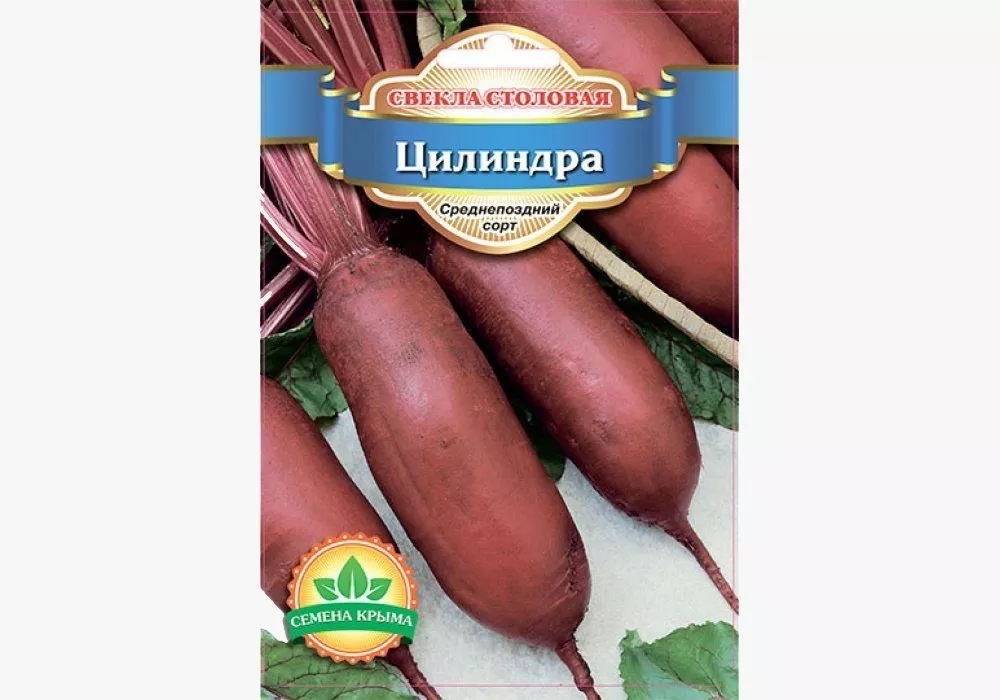
Beetroot Cylindra
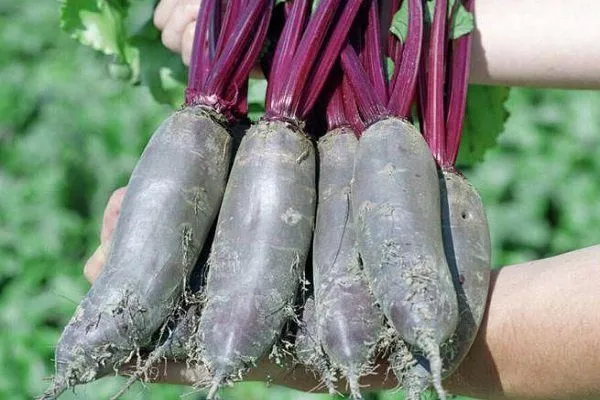
Cylindra beets can be stored for a long time
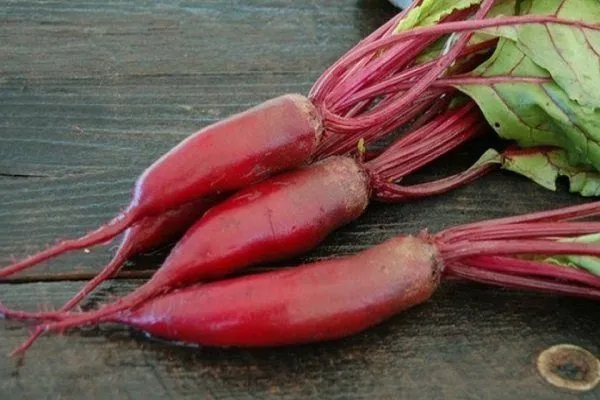
The pulp of the Cylindra beet is juicy and sweet.
Description of the variety
The Cylindra beet was developed by Dutch breeders in the last century, and in 1998, it was included in the State Register of Plants of the Russian Federation at the request of the Marinda agricultural firm. Its characteristics can be found in the table:
| Parameter | Description |
| Ripening period | This variety is mid-season, with the period from germination to technical maturity being 110-130 days. When grown from seedlings, the root formation period is reduced by 3 weeks. |
| Cultivation regions | The crop is widely cultivated throughout Russia, Ukraine, and Moldova. It is grown in garden plots, homesteads, and small farms. Cylindra beetroot is drought-resistant and grows successfully in southern regions even with limited irrigation. Furthermore, it tolerates light ground frosts, making it a popular choice in northern regions. |
| Growing method | The variety's key feature is that the roots form above the soil surface, with only a third of their length buried in the ground. This significantly simplifies harvesting and saves space in the garden bed. |
| Tops | The rosette of leaves is small and semi-erect. The medium-sized leaves themselves are elongated, glossy, and bright green with contrasting pink-purple veins. Their edges are wavy. The petiole is not very long and, like the veins, is intensely colored with anthocyanins. |
| Appearance of root vegetables | The Cylindra beet produces root crops with the following characteristics:
|
| Taste and purpose | This beetroot has a great sweet taste and pleasant aroma, making it suitable for a variety of purposes:
A unique property of this beet is that it cooks quickly without changing color. After boiling, the vegetable can also be stewed. |
| Productivity | On average, 1 square meter of garden bed can yield up to 8-10 kg of root vegetables, but with proper care and compact placement of root vegetables in the bed, this figure can jump to 12 kg. |
| Shelf life | The variety exhibits resistance to the main species diseases and, under favorable storage conditions, can remain without signs of rot for 4-7 months. |
The characteristics of the Cylindra variety are also discussed in the video below:
Planting methods and timing
The primary method for growing beets is planting seeds in open ground. Seedlings are used less frequently because they are ineffective for two reasons:
- young shoots take root painfully;
- seedlings do not tolerate low temperatures well.
Planting beets from seedlings is rarely used in the Northern regions, the Volga region, and Siberia, as it allows for the root crops to ripen by almost a month.
As for planting times, it can be done in two periods:
- In the springSevere frosts can cause flower stalks to form, so planting should begin after the onset of consistently warm weather. By this time, the soil should warm to 6–8°C, and the air temperature should be at least 13°C. These conditions typically occur in April or the second to third ten days of May. In spring, seeds are sown on a level surface.
- In the fall before winterWinter sowing is best in late October – early November. In the fall, seeds are sown in furrows spaced evenly.
If the crop is grown using seedlings, then the seeds for seedlings should be sown in April so that the hardened seedlings can be planted in the garden in May.
Site selection and soil preparation
Beets are best grown in a bed 100 cm wide and at least 20 cm long. When choosing a suitable site, consider the following parameters:
- IlluminationIt should be in a well-lit area: the more sunlight the leaves receive, the richer the color of the roots. Therefore, beets should not be planted behind fences or on the north side of tall crops or trees that cast shade.
- ElevationIt's best to plant beets in a raised bed. This prevents them from being overwatered, protecting the plant from root rot.
- PredecessorsIf other beet varieties or spinach were grown in the area last season, you'll need to find a different location. The following crops are the best predecessors:
- cabbage;
- early potatoes;
- cucumbers;
- onion;
- pumpkin;
- zucchini;
- carrot.
- SoilThe soil should be loose and fertile, with a slightly or neutral acidity (pH 6-7). High soil acidity will negatively impact the yield, flavor, and shelf life of the beets. Therefore, before sowing the seeds, it is essential to lower the soil acidity using limestone or dolomite flour at a rate of 0.5-1 kg per square meter.
- ✓ The site should be protected from northerly winds to minimize the risk of frost.
- ✓ The soil must have good drainage to avoid water stagnation.
A site with suitable parameters must be properly prepared, adhering to the following technology:
- In the fall, dig over the bed and remove all plant debris. Large clumps of soil should not be broken up, as they will better withstand winter frosts and will kill off any infections or pests.
- In spring, apply mineral fertilizers (per 1 sq. m):
- 15-20 g of ammonium nitrate or 20-30 g of ammonium sulfate;
- 30-40 g of superphosphate;
- 10-15 g of potassium chloride.
In case of low-fertility soils, it is worth adding organic fertilizers to beets:
- In autumn – 4-5 kg of fresh manure per 1 sq. m.
- In the spring, just before planting – 2-3 kg of humus or 3-4 kg of compost per 1 sq. m.
Applying manure should be done only in extreme cases, as it promotes the formation of numerous roots but prevents the roots from filling out and developing their characteristic qualities. Furthermore, manure can cause root deformation and reduce the variety's yield.
Seed treatment
The planting material must be sorted by size and subjected to pre-sowing treatment, adhering to the following guidelines:
- Check the seeds for germination by soaking them in salt water. Any seeds that float to the surface are hollow and should be discarded, and the remaining seeds should be processed further.
- To harden the seeds, first soak them in hot water for 2-3 hours, and then in cold water for the same amount of time.
- To disinfect, treat the seeds with wood ash infusion or a pink solution of potassium permanganate. Growth stimulants (Zircon, Epin) can also be used. Rinse the seeds after treatment.
- If you plan to use the seedling method of growing, place the planting material in a humid environment for 1-2 days for germination.
- Soak seeds in warm water (40°C) for 2 hours to stimulate germination.
- Treat the seeds with a solution of potassium permanganate (0.1%) for 30 minutes to disinfect.
- Rinse the seeds under running water and dry until they are free-flowing.
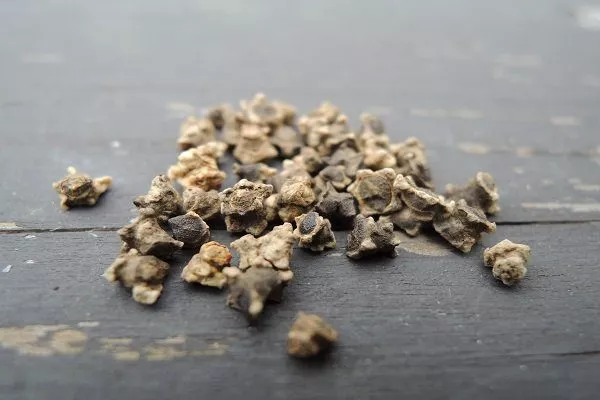
Planting beets
Before sowing seeds, the bed should be thoroughly watered, then mulched and moistened. The optimal sowing pattern is as follows:
- the distance between seeds in a row is 8-10 cm;
- row spacing – 25-28 cm;
- The seeding depth for spring sowing is 2-3 cm, and for winter sowing – 3-4 cm.
It is worth throwing 3 seeds into each hole to ensure that root vegetables grow in each of them.
In consistently warm weather (20°C or above), sprouts will appear in 4-5 days. On cooler days, it may take weeks. To speed up germination, cover the seedlings with plastic film or spunbond.
If beets are grown from seedlings, keep in mind that for good survival, seedlings with tops at least 7 cm long should be used. The main root should be trimmed slightly and placed in the holes prepared according to the previously described scheme, then moistened and gently compacted. Planting is best done in cloudy weather.
Caring for beets
The Cylindra variety is not demanding, but requires timely implementation of a number of agricultural manipulations.
Watering
Watering should be generous only during the seed germination, root system formation, and root filling stages. During the rest of the year, the plantings should be watered as the soil dries out.
Over the summer, beets should be watered 2-3 times at a rate of 2-3 buckets of water per square meter. However, in dry weather, the plant can be watered 5-6 times, but be careful not to overwater the soil, as this can lead to root rot.
It's best to water the beets in furrows dug every 25 cm from the planting site. You can add table salt to the water at a rate of 1 tablespoon per 10 liters. This will protect the crops from pests, increase the sugar content of the beets, and give them a rich burgundy color.
Watering should be completely stopped 2 weeks before the planned harvest, otherwise it will negatively affect the shelf life of root crops.
Soil cultivation
Weeding and loosening the space between rows must be carried out systematically so that plant roots receive the necessary amount of oxygen and moisture.
During the beet germination period, the bed should also be mulched twice to maintain an optimal microclimate in the soil and retain nutrients.
Thinning
Beets need to be thinned twice according to the following scheme:
- In the phase of 1-2 true leaves – at a distance of 3-4 cm.
- In the phase of 4-5 true leaves, when the root crops reach 3-5 cm in diameter, plant at a distance of 8-10 cm (it is not worth maintaining large intervals, as this can cause the root crops to grow up to 2 kg).
Thinning should be done on cloudy days in moist, loosened soil. The roots can be slightly torn off during this process. The tops should not be more than 8 cm tall, otherwise the plant will not be able to establish itself.
Top dressing
The soil must always be maintained with the proper amount of micronutrients. To achieve this, beets need to be fertilized at least twice:
- After the first thinningAs a first feeding, it is better to use nutrient compositions containing nitrogen.
- By the time the greenery between the rows closesDuring this period, root vegetables are actively developing, requiring potassium, phosphorus, magnesium, and boron. To compensate for these deficiencies, beets can be fed with wood ash or fermented herbal infusion.
It is better not to use chemical fertilizers to feed the crop, so that the fruits do not accumulate nitrates.
Protection from diseases and pests
The Cylindra beet has good immunity to various diseases, so there is no need for any preventative measures if crop rotation and cultivation rules are followed.
However, there are factors that can lead to the development of various diseases. These include:
- soil composition overloaded with chemical elements;
- errors in cultivation and processing of the planting site;
- excessively tight fit;
- moisture stagnation, humidity;
- young shoots exposed to frost.
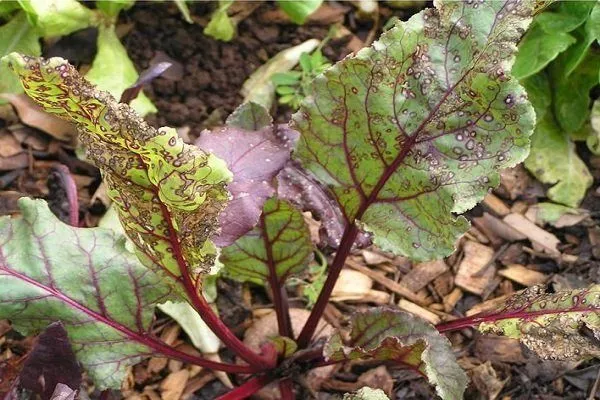
All this can lead to diseases such as:
- FomozA fungal disease that causes rot of the fruit's core and spots on the lower leaves. It progresses due to boron deficiency. To protect the harvest, treat the beds with boric acid.
- Root lice or "black leg"This is the result of a lack of oxygen and heavy, overly wet soil. Diseased plants should be destroyed immediately, and the soil between the rows should be loosened and fertilized with chalk or lime to increase acidity. Adding boron would also be helpful.
- False dewIt leaves a lilac-gray coating on the tops of the plants. It causes the plant to dry out and rot. Only fungicides can prevent this disease.
- Brown rotIt appears as a white coating on the roots due to excess moisture and nitrogen in the soil. All affected plants must be destroyed. Beet cultivation in this area should be avoided for several years.
- Leaf spot (cercospora)It destroys tops and roots. It develops due to a potassium deficiency. To improve the health of the area, it needs to be weeded regularly and fertilized with ash or potassium chloride.
In addition to diseases, the following pests pose a danger to beets:
- beet fly;
- aphid;
- fleas;
- shield bearer.
To prevent their invasion, dig the garden bed deeply in the fall and weed regularly. If pests do attack the planting, insecticides (Inta-VIR) will help control them.
Harvesting and storage of crops
Beets, with their incomparable flavor and rich color, can be harvested from August to September/October. Meanwhile, the root vegetables can be used gradually as early as mid-July. For beetroot soups and cold borscht, they can be picked with young leaves and stems still attached. The following signs indicate beetroot maturity:
- the root vegetables have reached the length and weight stated by the manufacturer;
- small roots formed on the sides;
- The lower leaves began to turn yellow and wither.
Harvesting should be carried out in dry weather according to the following instructions:
- Use a shovel to dig up the soil around the fruit a little.
- Carefully remove the beets from the soil with your hands. Be careful not to damage their thin skin, as this will reduce their shelf life.
- Trim the tops, leaving stumps of 2-3 cm.
- If there are soil spots on the fruit, do not remove them. They will dry out if you air-dry the fruit in partial shade or a well-ventilated area, and they will fall off on their own.
Beets can be stored in a pit, cellar, or basement. The optimal temperature is 0 to 2°C, and the humidity is 90-95%. The fruits can also be stored in 10-12 kg boxes, sprinkled with dry sand. They can be stored with potatoes until the next season.
Pros and cons of the variety
The strengths of the Cylindra beet are as follows:
- It has a rich composition of useful substances, therefore it has a healing effect on the body - it normalizes the functioning of the gastrointestinal tract, urinary organs and cardiovascular system;
- has strong immunity and is resistant to flowering;
- allows you to save land in the garden thanks to its small volume and unusual shape;
- easily extracted from the ground due to partial immersion;
- has a pleasant taste and aroma;
- has a universal purpose, so it can be used for preparing salads, soups and other preparations;
- it is easy to store, transport and store without losing its commercial properties;
- produces a good harvest with minimal care.
Reviews of Cylindra beets
A review of the Cylindra beetroot is provided in the video below:
The Cylinder beetroot will delight you not only with its unique, elongated shape but also with its excellent taste and marketability. This makes it a popular choice among many gardeners. Even inexperienced gardeners can grow it, as it's easy to care for and produces a good harvest, even with a few mistakes.