
Pablo F1 beetroot is a hybrid table variety native to Holland. It is a mid-early crop with a growing season of 1-2 months. It is very popular among residents of cold regions because it is cold-hardy and easily tolerates frost. Beetroot has a sweet flavor and can be used for any type of processing. It can be used to make salads, entrees, vegetable side dishes, and even caviar.
Description of characteristics
Pablo's Hydride was developed in the Netherlands by Bejo Zaden. Its main characteristics are listed below:
| Property | Description |
| Purpose | Pablo is suitable for long-term storage, processing, and fresh consumption. It is a popular hybrid table beet variety. |
| Ripening period | The growing season (from the emergence of the first shoots to the ripening of full-fledged root crops) is on average 100-115 days. |
| Productivity | Up to 7 kg of root vegetables can be harvested from 1 square meter of planting area. Due to its high yield, this hybrid is often grown commercially on an industrial scale. |
| Growing area | It can be grown in any climate zone, including cold regions, as it exhibits resistance to adverse weather conditions. It is often grown throughout Russia, Moldova, and Ukraine. It does not require high-quality soil or meticulous care. |
| Plant | The plant's medium-sized leaves are light green, with purple veins and wavy edges. The rosette is medium-sized and upright. The plant is resistant to drought and bolting. |
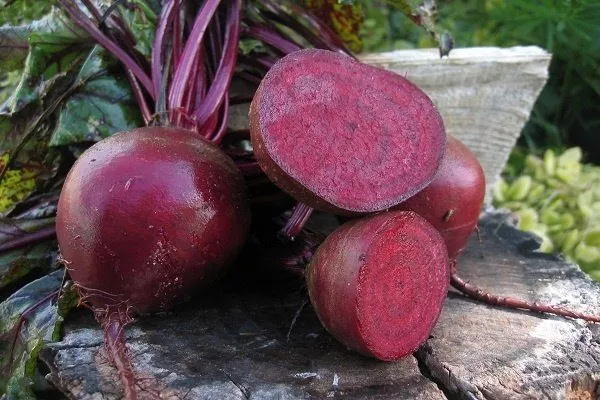
| Roots | Pablo produces rounded roots with thin stems. Each firm beetroot averages 110 to 180 g in weight and 10 to 15 cm in diameter. The roots have a smooth, thin, burgundy-colored skin. The flesh itself is juicy, ruby-red with a purple tint, without the inclusions or light ring divisions typical of many other beet varieties. The flesh contains a high amount of sugar (approximately 18%) and betaine (128.7 mg per 100 g), giving it a rich, sweet flavor. It retains its aroma and sweetness even after cooking. |
| Shelf life | The hybrid is distinguished by its excellent shelf life—it can be stored for several months without losing its shape or flavor. Furthermore, it is resistant to rot and mold. |
| Disease resistance | Pablo is resistant to many diseases that affect beets, including cercospora leaf spot. |
Pablo beetroot is valued for its high yield, good marketability, and excellent taste.
Planting dates
Pablo beets are planted in late spring to early summer, approximately from late April to the first ten days of May or the first third of June. Experienced gardeners recommend using air temperatures as a guide when determining the optimal planting time. These should range from 18 to 20°C.
In addition, the soil itself must be well warmed – at least +5…+7°C, but up to 10°C. Overall, the hybrid is suitable for early sowing.
If you plant beets later, when the soil temperature reaches 15°C, the seedlings will appear with a delay of one week.
Site selection and soil preparation
When growing beets, choose a site that receives good sunlight. Insufficient light will cause the beet to stretch excessively, reducing yield.
Ideally, the soil in the area should be loose, loamy, and neutrally acidic. If it's too acidic, the beets will struggle, which will impact the quality of the root vegetables.
- ✓ The optimal soil pH level should be between 6.0-6.8 to ensure maximum yield.
- ✓ The soil must have good drainage to avoid water stagnation and root rot.
The best predecessors of beets are the following crops:
- onion;
- tomatoes;
- potato;
- cucumbers;
- salad;
- radish;
- radish;
- garlic;
- kohlrabi.
You cannot grow beets in an area where the following crops were previously grown:
- carrot;
- cabbage;
- chard;
- beans;
- spinach;
- corn.
It's best to prepare the selected plot in the fall. To do this, after the previous harvest, completely remove plant debris and fertilize the soil with compost or humus at a rate of 5 kg per square meter of planting area. If necessary, the acidity can be reduced by adding 200-400 g of lime per square meter of the plot.
How to prepare seeds?
Pre-treatment of seeds should never be neglected, otherwise the plant will grow weak and be susceptible to various diseases, even though Pablo is a hybrid resistant to many ailments, making it a popular choice for many gardeners.
Pre-sowing seed treatment is carried out according to the following instructions:
- Select high-quality seedlings and remove any hollow seeds. To do this, soak them for 20-30 minutes in a salt solution prepared at a ratio of 30 g of salt per 1 liter of water. Use only the seeds that remain at the bottom of the container for planting.
- Disinfect suitable seeds. Prepare a solution of 1.5 g of boric acid per 1 liter of boiling water, then soak the seeds in it for 12 hours.
- Soak the seeds for 24 hours in a solution prepared by dissolving 10 drops of Energen or 1 teaspoon of superphosphate in 1 liter of room-temperature water. This will speed up future germination.
- Rinse the seeds, cover with a damp cloth, and leave for 2-3 days at 20°C. As the seeds dry out, re-moisten them.
Only after such treatment will the seeds be ready for planting.
Planting methods
There are two ways to plant beets: without seedlings or with seedlings. Let's look at each method separately.
Seedless
Sowing of prepared seeds is carried out according to a single-line scheme:
- Prepare furrows 2-3 cm deep in the area. The optimal distance between them is 30-40 cm.
- Throw 2 seeds into each hole at a distance of 7-10 cm, and then cover with soil.
- Lightly moisten and loosen the soil by making a furrow with a hoe at a distance of 10 cm from the sowing line.
Each beet seed produces two or more sprouts, so thinning will be necessary in the future. When two leaves emerge, leave 3-4 cm between plants, and when three or four leaves emerge, leave about 8-10 cm. Thinning is best done in the evening after watering or rainfall.
Seedling
To improve plant survival and protect them from possible future frosts, some gardeners plant seeds using the seedling method. This method involves first planting the seeds in special containers and then transplanting them into open ground when they reach the seedling stage.
Sow seeds for seedlings 3 weeks before transplanting outdoors. Follow these instructions:
- Prepare containers approximately 10x20x20 cm in size.
- Mix equal parts coarse sand, peat, and turf soil to create a nutrient-rich seedling growing medium. Add 200 g of wood ash per 10 kg of the prepared mixture.
- Fill the containers with substrate, leaving a 2-3 cm gap between the edge and the soil mixture. Make a hole in this part of each container to prevent moisture from accumulating in the soil.
- Moisten the substrate and sow the seeds to a depth of 1-1.5 cm and at a distance of 3 cm, then sprinkle with soil.
- Spray the substrate with water and cover the container with glass or film.
When growing seedlings, there is no need to pick them, but you should follow a number of other rules for caring for seedlings:
- Before sprouting, seedlings don't require light, but they do need a humid environment. Therefore, water the substrate as the top layer dries out.
- Maintain a room temperature of 22 to 25°C. As soon as sprouts appear, remove the glass or film and move the cups to a bright location.
- Provide mature seedlings with two or more leaves with light from morning until 7:00 PM. If beets are grown in a dark area, the shoots will be thin and weak, and productivity will be significantly reduced. If necessary, provide additional lighting using fluorescent lamps, placed 20 cm from the seedlings.
- There is no need to feed the seedlings, as the substrate contains sufficient nutrients.
- A week before transplanting into the ground, begin hardening off the seedlings. Take them outside for 3-4 hours each day, then extend the time to 5 hours. The ideal temperature is between 8 and 10°C. In an apartment, hardening off can be done on a balcony or loggia. Avoid exposing the seedlings to direct sunlight.
Seedlings with 5-7 leaves can be transplanted into open ground. Nighttime temperatures should remain at 15°C. Plants should be planted with a root ball, 4-5 cm apart, and about 30 cm between rows.
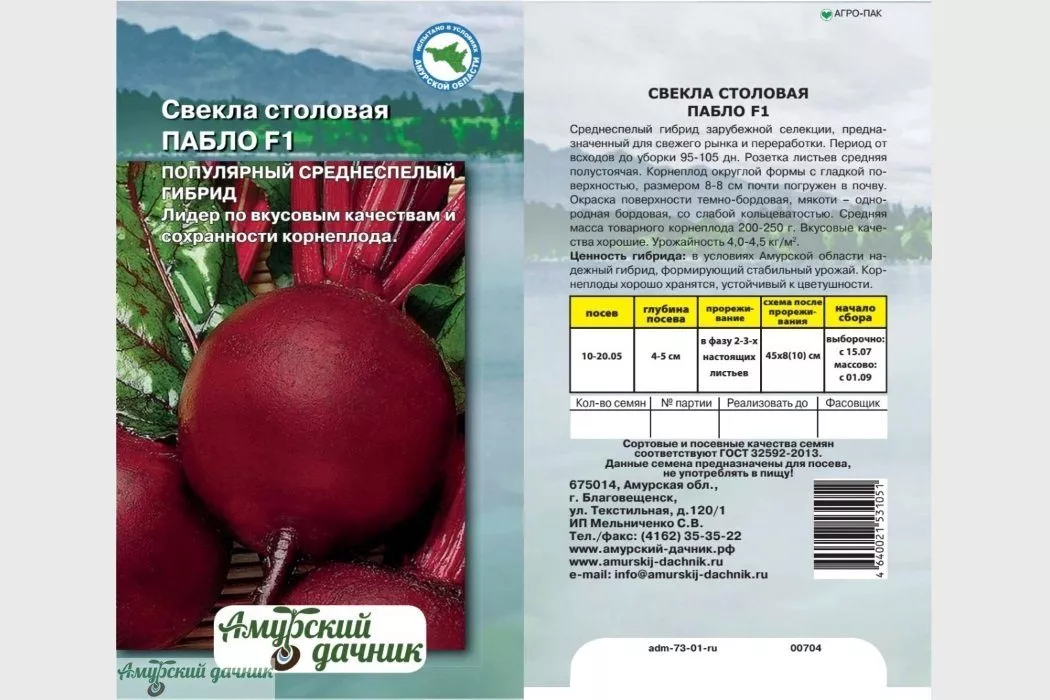
When the seedlings take root and the root crops grow to 1.5-2 cm, the beets should be thinned to an interval of 10 cm.
Wind and sun can damage fragile and delicate plants, so they should be covered with non-woven material. To do this, install metal arches around the perimeter of the bed, and stretch protective film over them. This can be removed in June as the leaves close in on the tops.
How to care for the planting?
Pablo is an easy-to-grow hybrid, but to get a good harvest, you should follow simple care rules:
- WateringPablo tolerates prolonged periods of drought, but don't neglect watering. In cool weather, water once a week, and in dry weather, 2-3 times a week. In either case, the recommended watering rate is 15-25 liters per square meter of plot. Allow the water to steep for 1-2 days before watering. Apply it to the roots using a watering can or a drip irrigation system. Stop watering in mid-August, as this will encourage root growth.
- Loosening and weedingAfter watering or rainfall, the soil between rows should be loosened to a depth of 5-10 cm, as the formation of a soil crust around the plant reduces the quality of the harvest. Loosening also improves air circulation. Weeding should also be done regularly, especially during the initial stages of seedling germination, as this is when they have the greatest need for light, moisture, and nutrients.
- HillingIf the root crops are not completely covered with soil, they need to be hilled.
- Top dressingFertilizers are applied to beets 2-3 times. The first application is done after thinning, with 10-15 g of nitrogen fertilizer (urea, sodium or calcium nitrate, ammonium sulfate) applied per square meter. However, don't overdo it with nitrogen fertilizers, as nitrogen can penetrate and accumulate in the roots, which can negatively impact human health. The second application is done 2-3 weeks after the first, with 8-10 g of potassium chloride and superphosphate applied per square meter.
If beet leaves become covered in red spots, this indicates a sodium deficiency in the soil. In this case, the plant should be watered with salt water (1 tablespoon per 10 liters). Three such treatments are sufficient over the entire growing season.
- Protection from diseases and pestsThe Pablo F1 beetroot is resistant to many diseases, including cercospora leaf spot and bolting. Furthermore, the hybrid is rarely affected by scab or rootworm. To minimize the risk of damage, weeds should be removed promptly and potassium-phosphorus fertilizers should be applied to the soil. Rodents pose a major threat to beets, as they can damage both the tops and roots. To repel them, planting furrows should be sprinkled with tobacco dust, ash, or specialized preparations. Furthermore, to combat rodents, the soil should be dug deeply in the fall and spring.
- Two weeks before planting, add compost to the soil at a rate of 5 kg per 1 sq. m.
- Three weeks after germination, feed the plants with a solution of mullein (1:10) or chicken manure (1:20).
- During the period of root formation, apply potassium-phosphorus fertilizers according to the instructions on the package.
With proper care, you can get an excellent harvest as early as mid-August – early September – an average of 2 kg per 1 square meter of plot.
Harvesting and storage
It takes about 100 days for the beets to fully mature. Delaying harvesting or leaving them in the ground for too long is highly undesirable, as this will reduce their flavor and marketability.
You can determine whether root vegetables are ready for harvesting by a number of signs. These include:
- the condition of the lower foliage (it begins to dry out, wither, turn yellow and fade);
- the size of the root vegetables (their diameter reaches 10-15 cm, and characteristic growths appear on the skin).
To harvest, the beetroots should be removed from the soil using a pitchfork. This removes the top layers of soil without damaging the beetroots themselves. Trim the leaves from the removed beetroots, leaving stems no larger than 1 cm to prevent excessive growth during the winter, which could cause the beetroots to die.
Root crops should be cleared of soil, placed in 10-20 cm boxes, and covered with sand to a depth of 3 cm. Alternatively, the harvest can be stored in pits 1 m wide and deep. Before storing the root crops, line the bottom with boards. Beets should be covered with sand, then dry leaves, peat, or straw, and then a layer of soil.
Beets should be stored at a temperature of 0…+2°C and humidity up to 90%.
Video: Why choose Pablo F1?
In the following video, an experienced gardener will explain why he tries to grow Pablo beets every year:
Beneficial properties
Pablo's beetroot is rich in vitamins, organic acids, and microelements, and also contains increased amounts of sugars and betaine, which explains its beneficial properties:
- removes radionuclides, waste and toxins from the body;
- has a beneficial effect on metabolic processes;
- normalizes the functioning of the gastrointestinal tract;
- reduces blood cholesterol levels with regular use;
- strengthens the walls of blood vessels and stimulates hematopoiesis, therefore the vegetable is especially recommended for consumption in cases of blood diseases;
- reduces inflammation and accelerates wound healing;
- Prevents swelling by removing excess fluid.
Pablo F1 can be confidently used in cases of anemia, cardiovascular diseases, ulcerative lesions, digestive system problems, general exhaustion of the body, and the appearance of characteristic symptoms of asthenia.
Contraindications
Despite all its beneficial properties, Pablo F1 may pose a health risk if consumed under the following conditions:
- metabolic disorders (beet consumption should be kept to a minimum, especially in cases of genitourinary or kidney diseases, as it is rich in oxalic acid);
- diabetes mellitus of any type (the consumption of boiled beets is especially contraindicated, since it contains a large amount of sugar);
- gastritis with low or zero acidity and other diseases of the gastrointestinal tract.
Pablo F1 beetroot is a mid-early hybrid bred in the Netherlands, distinguished by its high and stable yield, increased sugar and betaine content, and enhanced ability to remove radionuclides from the body and lower blood cholesterol. Any gardener can grow this healthy vegetable in their own garden by following simple planting and care guidelines.