
Beetroot Rafinad is a new sweet variety bred domestically. It has an excellent flavor, ideal for creating culinary masterpieces, and excellent agronomic characteristics, allowing you to successfully grow these vitamin-rich root vegetables in your own garden.
Description of Refined Beetroot
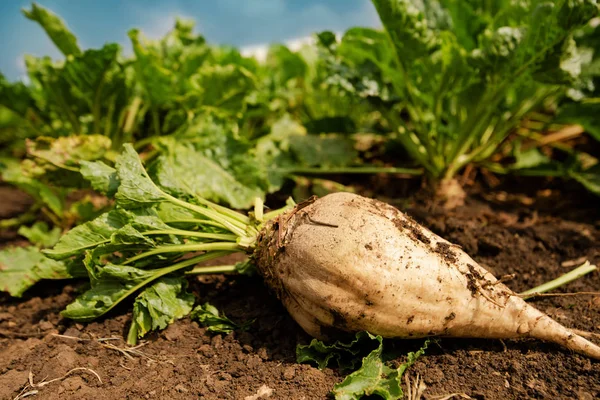
The plant's rosette is compact and upright, with long petioles tinged with anthocyanin. The leaves are elongated, wavy at the edges, lanceolate in shape, and have a pimply surface with burgundy veins.
Description of root vegetables:
- size - medium;
- weight - 200-350 g;
- shape - round;
- the surface is flat and smooth;
- ringness - absent;
- the pulp is dense, dark burgundy;
- axial root - thin.
Breeding history
The Rafinad F1 beetroot is a hybrid; there's no precise information about who created it or when. The only thing we know for sure is that this variety is a product of Russian breeding, apparently developed by one of the breeding firms.
Taste and purpose
Suitable for any type of processing, it can be boiled, baked, or eaten raw. It is ideal for home cooking, processing, and long-term storage. The root vegetables have a sweet flavor and juicy flesh. They are rich in iron, magnesium, boron, and vitamin B6.
The total sugar content is 15-17%. This beetroot is added to borscht and beetroot soup, and is used to make a variety of salads. Cooking the root vegetables takes only half an hour. Refined beets store well all winter.
Main characteristics
Sugar beets are early maturing. They reach technical maturity 110 days after germination. The roots can be harvested for food as early as 80 days.
This variety is high-yielding, yielding 7 to 11 kg of root vegetables per square meter. The marketable yield of this variety is 92-97%. Its shelf life is 88%. It is ideal for winter storage. Both the roots and the tops can be used for summer consumption.
Beets are very cold-resistant, with the optimal temperature for their development being between 15 and 18°C. They thrive not only in the central part of the country, but also in the Far East, Eastern Siberia, and Western Siberia.
Pros and cons
The Rafinad beetroot has many advantages that experienced gardeners immediately appreciated. Thanks to these benefits, the variety quickly gained popularity among lovers of vitamin-rich root vegetables.
Advantages:
The culture has only one drawback - its demand for soil fertility.
Landing features
Beetroot can be grown by direct seeding or from seedlings. In the southern and central regions, the former method is commonly used, while seedlings are used primarily in regions with short summers and harsh climates.
- ✓ Soil pH should be between 6.0-7.0 for optimal growth.
- ✓ The soil should be well drained to avoid water stagnation.
Landing features:
- The soil for planting is prepared in the fall. It is dug over, adding nitrophoska and wood ash. In the spring, it is also recommended to add urea and a phosphorus-potassium fertilizer.
- The seeds are sown in pre-dug furrows. The planting depth is 4 cm, with intervals of 10-15 cm between seeds and 25 cm between rows.
Before sowing, do not water the furrows; cover the seeds with dry soil and only then water. It is recommended to cover the seedlings with mulch, such as sawdust.
If beets are grown from seedlings, the seeds are sown in individual cups filled with a mixture of high-quality garden soil (be sure to sift it), peat, and humus, and supplemented with mineral fertilizer. The seedlings are planted outdoors in mid-May, spaced 10x30 cm apart.
Caring for beets
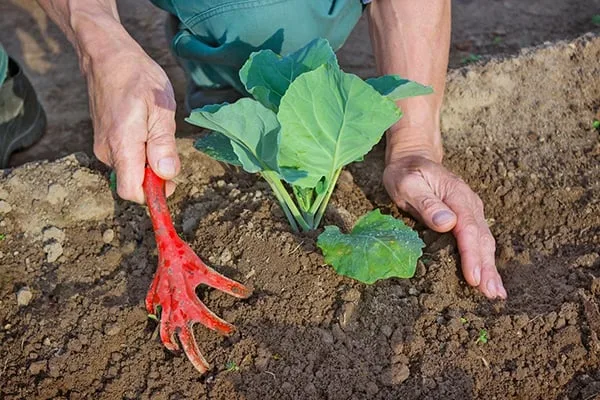
Beetroot "Refined" isn't particularly demanding in terms of care. It requires minimal attention—infrequent watering, weeding, and fertilizing. The only thing that might be a bit laborious is thinning the beds.
How to care for Refined beets:
- The Rafinad beet seeds have two shoots, so the beds need to be thinned. The first thinning is done at the second leaf stage, and the next thinning is done after the fourth leaf has formed.
- If you fertilize the area well, you can get by without additional fertilizers. If the soil is poor, you'll have to resort to fertilizers. After thinning, apply urea and grass infusion.
During the formation stage, potassium and phosphorus are added to the soil. It is recommended to apply Kristalon to the soil 20 days before harvesting. - A few days before harvesting, the soil is sprayed with a 5% boric acid solution. This treatment will improve the shelf life of the root vegetables and protect them from rot.
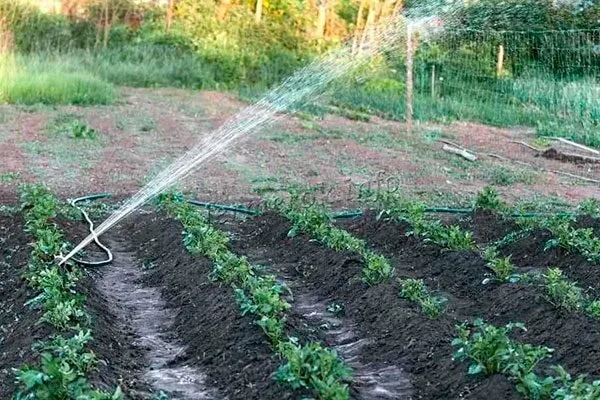
- Beet beds are watered once a week. Water consumption depends on the growing stage. Young plants require 4 liters per square meter, then increase to 6 liters. During the fruiting stage, beets require 12-15 liters of water per square meter. The water should be settled and warmed in the sun.
Pest and disease control
The Rafinad variety is resistant to various pathogens, but under unfavorable conditions (damp weather, poor care, etc.), the crop can be affected by leaf spot, cercospora leaf spot, and downy mildew. Copper oxychloride or fungicides are used to combat fungal infections.
Among the insect pests, weevils and beet aphids pose the greatest threat. They are easily controlled using common insecticides, such as Iskra, Skor, Fitosporin, and others.
Harvesting and storage of crops
Harvesting should be done according to the ripening time; there's no need to rush, but don't delay harvesting until frost sets in. The dug-up roots are cleaned of soil and laid out in the garden to dry within 3 hours. Leaving the roots in the sun for longer is not recommended, as they will begin to wilt.
Beets can also be dried indoors, but this takes several days. The room where the roots are stored should be well ventilated. Then trim the beet tops with a sharp knife or garden shears, leaving a small stalk.
Reviews
Beetroot Rafinad is an excellent choice for gardeners. This sweet variety will provide you with fresh root vegetables all summer and winter; it not only grows well but also stores well. This beetroot has a wonderful flavor that will surely be appreciated by cooks and lovers of vitamin-rich root vegetables.