
How do you plant beets in the spring? To answer this question, you need to learn more about the optimal timing and methods for planting. You'll learn about this, as well as preparation for planting and plant care, in this article.
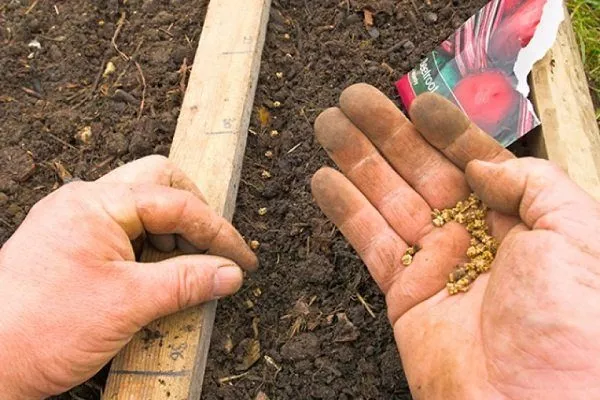
Spring beet planting times in different regions of Russia
The germination of crops is influenced by climatic conditions and soil temperature, which should not fall below +6 degrees.
Therefore, there are frames for different latitudes:
- South. Work can begin as early as the beginning of April.
- Middle zone. It is better to wait until the second half of April - beginning of May.
- North. Beetroot is rarely sown before mid-May.
What is important to consider when choosing a variety for planting?
| Name | Ripening period | Disease resistance | Need for watering |
|---|---|---|---|
| Early ripening | 50-80 days | High | Moderate |
| Mid-season | 80-100 days | Average | High |
| Late | 100+ days | Low | Moderate |
Particular attention is paid to the ripening period:
- Early ripening. The harvest is collected 50-80 days after emergence.
- Mid-season. Fruits are formed in 80-100 days.
- Late. It takes 100 days or more for vegetables to ripen.
Other parameters:
- Form. It can be round, elongated, cylindrical, or flattened.
- Purpose. Only table beets are used for food. Fodder beets are grown for livestock. Beetroots of the same type are grown for sugar production.
Pre-sowing activities
Proper preparation for beet planting is the key to a good harvest. Below are the main steps to take.
Choosing a location
Must meet the criteria:
- Soil. Loose, nutritious soil with a neutral pH. Avoid areas where groundwater is close to the surface.
- Place. A well-lit area should be provided throughout the day. Avoid placing the bed in the shade of trees. A source of moisture should be nearby. If the area is marshy, move the crops to higher ground.
- Crop rotation. Suitable predecessors include onions, garlic, and potatoes. Planting after beets, tomatoes, and carrots will have a negative effect.
- Neighborhood. They are planted next to beds of carrots, radishes, and cucumbers.
Seed treatment
The following events are held:
- Sorting. Remove any empty or small seeds. This can be done with an electrified stick, which will attract the defective seeds. Another option is to drop them in a glass of water and discard any that float to the surface.
- Soak. Place the seedlings in water at a temperature of approximately 30-35 degrees Celsius. You can add a growth stimulant. For example, mix 1 tablespoon of wood ash with 1 liter of water. Wait 1 day. For easier removal, wrap the seeds in a light cloth beforehand.
- Germination. Wrap the seeds in a layer of damp cheesecloth and place them in a container with sawdust. Cover with glass. Avoid letting the cloth dry out and maintain a temperature of 20-22 degrees Celsius. Wait 4-6 days. This method increases the germination rate of the seeds and allows you to remove any non-viable ones beforehand. You can also use napkins or cotton cloth.
- ✓ Use only hardwood ash, as it contains more potassium and phosphorus, which are essential for plant growth.
- ✓ The ash must be completely cooled and sifted to remove large particles.
Additionally, the following can be carried out:
- Hardening. This helps make the seeds more resilient to cold temperatures. Wrap them in a cloth and place them in the freezer for 30 minutes. The seeds should be dry.
- Disinfection. Prepare a weak solution of potassium permanganate and soak the seeds in it for 1-2 hours.
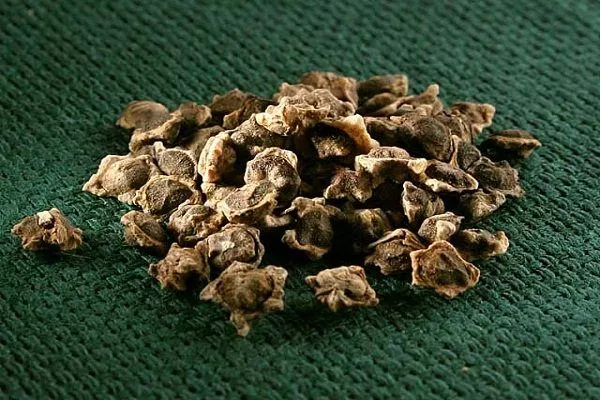
If the material is purchased in a store, it does not require additional processing.
Preparing the soil in autumn and spring
Before winter, the area is dug up and fertilized.
The composition of the fertilizer depends on the soil type:
- Clayey. Use rotted sawdust, humus or peat.
- Sour. Add dolomite flour or wood ash.
- Loamy. Distribute 300 g of potassium fertilizer per square meter.
In the spring, the work consists of the following:
- Cleaning. Remove debris and weeds from the area.
- Digging. The soil is loosened and leveled.
- Top dressing. Nitrogen-based fertilizers are applied.
Sowing seeds in open ground
Instructions:
- using a hoe or shovel, make grooves up to 3 cm deep;
- water the soil thoroughly with warm water, wait until the liquid is absorbed;
- Place the seeds at a distance of 4-10 cm from each other, depending on the size of the future root crops;
- sprinkle with soil, compact it a little;
- water again;
- Mulch with sawdust or peat.
There are 4 main methods of sowing, the differences between which lie in the arrangement of the rows:
- Lowercase. The grooves are placed at equal distances from each other, approximately 20-25 cm.
- Ribbon. The gaps between the furrows are reduced, but at the same time large passages are left – about 50 cm.
- Finished rows. You can purchase a special tape with beet seeds spaced at an optimal distance. Simply press them into the soil and water them thoroughly.
- Joint landing. Rows of beets can be alternated with other crops, such as beans, lettuce, and kidney beans. The main thing is to ensure ease of maintenance.
You can learn about the proper preparation of seed material and planting beet seeds in open ground by watching the video below:
Planting beets using seedlings
This option is more suitable for residents of northern regions. It can also be used by those who want to harvest 2-3 weeks earlier.
Now about the main features of the method.
Sowing for seedlings
What you need for this:
- Priming. Buy ready-made compost at a specialty store or make your own. Mix 1 part compost and garden soil, add 2 parts peat, and 0.5 parts sand. Add 100 g of ash for every 5 kg of the mixture.
- Capacity. Can be grown in combined containers or separate cells.
Egg cartons can be used to separate the seeds. Holes are made in them, and one seed is placed in each hole.
The steps are as follows:
- fill the container with soil and compact it well;
- using tweezers, place the seeds at a distance of 3-4 cm;
- cover with a layer of soil about 1 cm thick;
- water it;
- cover with transparent glass;
- Place it on a well-lit windowsill.
Caring for seedlings
Basic rules:
- Temperature. Before germination, the temperature should be kept at 16-18 degrees Celsius. After germination, the temperature should be reduced to 14-16 degrees Celsius.
- Picking. It is carried out with dense sowing at the stage of cotyledon leaves.
- Top dressing. It is carried out every 2 weeks using ready-made store-bought fertilizers.
- Watering. Necessary as the soil dries out.
Planting seedlings in open ground
Plants are repotted when they have 3-4 true leaves. The desired soil temperature is around 10 degrees Celsius. Ideal weather is a light drizzle to ensure adequate moisture in the soil and air.
How it happens:
- make holes along the length of the root;
- plant the plants at a distance of about 5-10 cm from each other;
- If the weather is dry, water the sprouts well;
- Cover with non-woven material for 2-3 days to protect the seedlings.
For better growth, the central root is shortened by a third before planting.
Spring care for planted beets
It is necessary to take proper care of crops in order to get a rich harvest.
Thinning
This procedure is necessary even if the optimal spacing between seeds was observed. Weaker and smaller seedlings are removed. Before removing the plants, the soil is thoroughly moistened to facilitate removal.
It is carried out several times:
- Phase 2 of true leaves. The distance between plants becomes 2-3 cm.
- Stage 4 leaves. The interval increases to 4-6 cm.
- Setting of root crops. Leave about 10-15 cm.
Watering
Basic information:
- Frequency. After emergence, beets need regular, abundant watering. wateringto help the plants establish themselves better. Then, reduce the frequency to 1-2 times a week. In hot weather, water more frequently—3-4 times a week.
- Way. Root crops respond best to sprinkling, but hand or drip irrigation is also possible.
- Water. It should be left to stand at room temperature.
- Quantity. Mature plants require approximately 10-15 liters per square meter. The normal penetration of liquid into the soil is 15-20 cm.
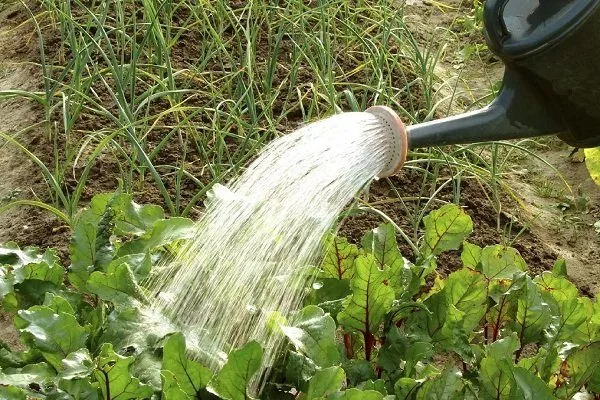
Watering is stopped 20-30 days before harvesting to allow the root crops to accumulate sugar.
Weed control, loosening
The soil around the beets must be loosened regularly after each watering, otherwise a crust may form, which will hinder active growth. While the seedlings are still small, use an old fork. Weeding is usually done along with loosening the soil. Spraying with kerosene can help reduce the need for this treatment. Apply 100 ml per square meter.
Top dressing
Held twice per season:
- Phase 4 leaves. This is done after transplanting into the soil. Use 1 kg of mullein per 10 liters of water. Let it steep for 10 days. Then dilute it with another 10 liters of liquid.
- A month later. Apply 1 tablespoon of chloride and superphosphate mixed with 1 bucket of water. This amount is enough for 1 square meter.
Pest and disease control
The following pose a threat to beets:
- Fomoz. A boron solution is used. 3 g is added per 10 liters of water.
- Spotting. Fertilization is carried out using potassium chloride.
- Downy mildew. The seeds are soaked in the preparation "Apron".
Spraying with onion, garlic, and ash infusions helps against parasites.
Other planting and growing features
Experienced gardeners adhere to the following recommendations:
- Orient yourself by the moon. The optimal time for planting is considered to be the waning moon. However, during the full moon, root vegetables fail to take root, grow poorly, and produce a small harvest.
- Avoid dense planting. Vegetables planted too close together will grow poorly and more slowly. This is due to a lack of moisture and nutrients. If you want to grow large beets, maintain a minimum distance of 10-15 cm between them.
- Purity. The area should be free of debris and weeds that interfere with normal crop growth. Weeds also attract pests that cause irreparable damage to the crop.
- Protection. Beets are very heat-loving, so they should be grown at a constant air temperature of about 20 degrees.
- Accommodation. Root crops grow better at the edges of the bed.
Beet planting time depends on the region and weather conditions. There are two methods of planting: seedlings and seeds, each with its own advantages. To ensure a good harvest, follow proper planting and growing practices and consult with experienced gardeners.