
Beetroot tolerates cold temperatures well, making it widely grown outdoors. It doesn't require much care, but standard farming practices will ensure large, juicy, and delicious beets.
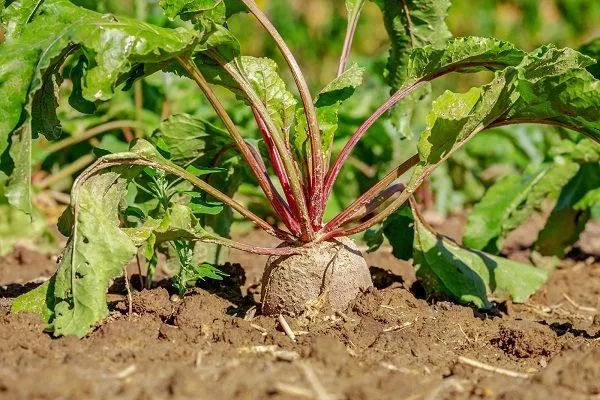
Choosing a beet variety
| Name | Ripening period | Shelf life | Taste |
|---|---|---|---|
| Carillon | 80-110 days | Low | Average |
| Bolivar | 80-110 days | Low | Average |
| Egyptian | 80-110 days | Low | Average |
| Red ball | 80-110 days | Low | Average |
| Nastenka | 80-110 days | Low | Average |
| Vinaigrette | 80-110 days | Low | Average |
| Sonata | 110-130 days | Average | Good |
| Crimson Ball | 110-130 days | Average | Good |
| Delicatessen | 110-130 days | Average | Good |
| Globe F1 | 110-130 days | Average | Good |
| Matron | 130-145 days | High | Great |
| Citadel | 130-145 days | High | Great |
| Front | 130-145 days | High | Great |
| Cylinder | 130-145 days | High | Great |
- ✓ The level of disease resistance that affects shelf life.
- ✓ Thickness of the peel, which protects against moisture evaporation.
When choosing beets for planting, they are evaluated according to several criteria: ripening time, taste, color and shape.
Beet varieties according to different criteria:
- By ripening time. Varieties are divided into three categories:
- Early beetroot. From germination to harvest takes 80 to 110 days. Popular early varieties include: Karillon, Bolivar, Egyptian, Red Ball, Nastenka, and Vinegret.
- Average. The growing season is 110-130 days. Popular mid-season varieties include Sonata, Bagrovy Shar, Delikatesnaya, and Globus F1.
- Late. Root crops mature in 130-145 days. The best late varieties are Matrona, Citadel, Frona, and Tsilindra.
- Keeping quality. Not all beet varieties store well. Late varieties are most often stored. However, early and mid-season beets also have good shelf life. The following varieties are recommended for storage: Nosovskaya Ploskaya, Crosby, Rocket F1, Madame Rougette F1, Nezhnost, and Tsyganochka.
- Taste. The sweet taste of beets depends on their sugar content. Beets with a high sugar content are not only delicious but also suitable for processing. They make delicious juices and are included in children's menus. The sweetest beet varieties include Bravo, Obyknovennoye Chudo, Kozak, Vysokaya, and Mulatka.
Experts have compiled a beetroot rating list, highlighting the best varieties:
- Andromeda F1. An early-ripening, single-sprout hybrid. The root is cylindrical, growing up to 6.5 cm in diameter. It weighs 600-700 g. The juicy, quickly-cooking flesh retains its color after cooking. Cons: susceptible to cercospora leaf spot, rot, powdery mildew, and rootworm.

- Kedri. A mid-season variety with long-lasting roots. Cylindrical in shape, weighing 300-320 g. Highly resilient. 7 kg per square meter. Two-thirds of the roots protrude above the soil.
- Rival. A mid-season, high-yielding variety with excellent flavor. The roots are medium-sized and dark red. Diameter: 4-6 cm, weight: 200-300 g. The flesh is tender and juicy. This variety requires watering. 5-7 kg of beets are harvested per square meter.
- Black woman. A mid-season variety with spherical roots. Sugar content is average, but this doesn't affect the taste. 5-8 kg of beets are harvested per square meter.
- Opolska. A mid-season variety bred in Poland. The roots are elongated and weigh 180-440 g. The roots are half-buried. The variety is susceptible to phoma and cercospora leaf spot. Yields 3-5 kg per square meter.
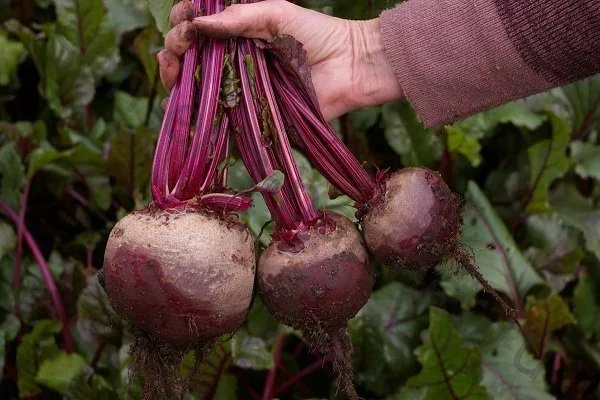
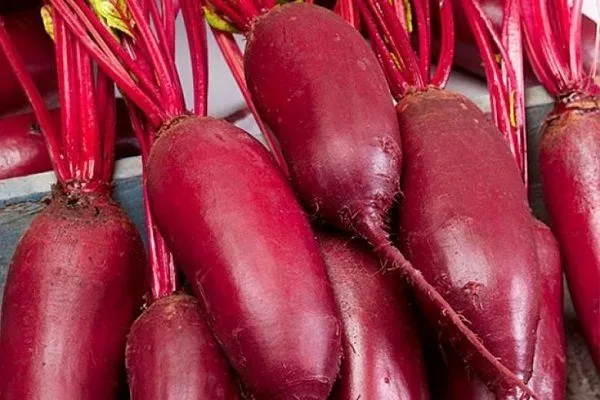

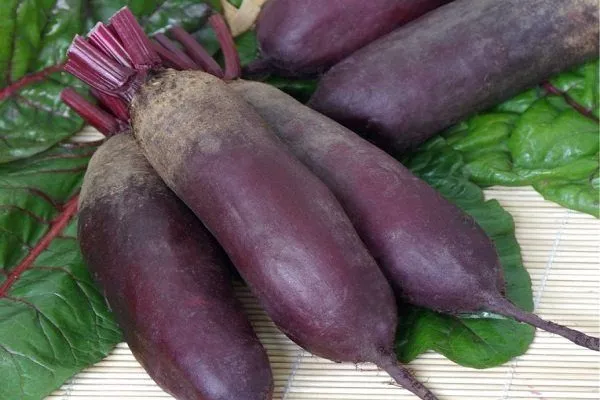

Preparing for landing
Successful beet growing depends largely on soil quality and planting timing. Let's learn how to prepare the soil and seeds for planting, and how to choose the right site.
Optimal timing
Beets are a relatively heat-loving crop, so there's no need to rush their planting. When determining planting times, consider the region's climate.
Temperatures recommended for sowing beets:
- Air temperature – from +15 to +18 °C.
- Soils – from +6 to +10 °C.
Approximate sowing dates in different regions:
- Southern regions – in the second half of March or in April.
- Middle zone (Moscow region) – mid-May.
- Urals and Siberia – second half of May.
The planting time is also influenced by the variety: early varieties are sown first, late-ripening ones are sown last.
If late beets are sown too early, their roots will grow tough and tasteless.
Beets can be sown before winter. This is done before the onset of frost. Only special varieties are used for winter sowing. The crops are covered for the winter. Winter beets emerge early, ensuring an early harvest.
Crop rotation
When choosing a site for beetroot planting, it's important to consider what crop was previously grown there. Table beets have favorable and unfavorable predecessors.
Beets grow well after:
- potatoes;
- Luke;
- pumpkins;
- peas;
- cucumbers;
- beans;
- garlic.
It is not recommended to plant beets after:
- cabbage;
- carrots;
- celery;
- beets.
Neutral precursors:
- zucchini;
- pepper;
- radish;
- green;
- radish;
- tomatoes.
It's not recommended to plant beets in the same spot. At least 3-4 years should pass between plantings.
Selecting a site and preparing the soil
To ensure beets grow large and tasty, they need favorable growing conditions. This process begins with site selection.
When selecting a site, the following requirements are taken into account:
- Good lighting is required.
- Soils should be nutritious and loose. Peat, sandy loam, and loamy soils are suitable for beets.
- Beets need space to grow, so there should be enough space between adjacent plants for the root crop to grow.
- The crop can be planted in a “border” along potato or cucumber plantations, near beds with onions or herbs.
- Beets require frequent irrigationTo prevent water stagnation, the crop should be planted in well-drained areas.
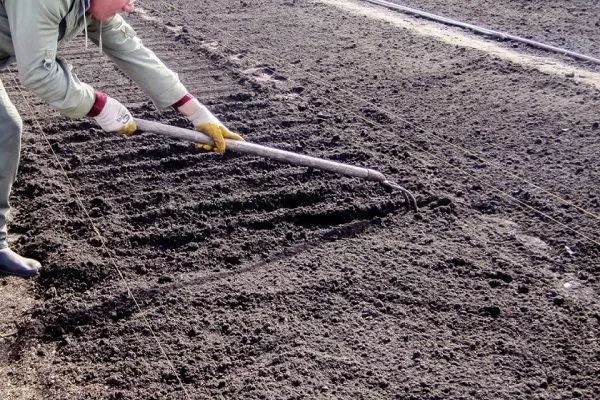
It is recommended to prepare the soil for planting beets in the fall:
- Remove plant debris and till the soil, adding organic matter such as manure or compost. Fertilizer should be worked into the soil to a depth of 30-35 cm.
- If the soil is highly acidic, sprinkle slaked lime over it – 0.5-1 kg per 1 sq. m. You can also use crushed eggshells, dolomite flour, or wood ash.
- Apply mineral fertilizers in the fall—potassium sulfate or superphosphate. Sprinkle the granules over the soil and dig the beds. Apply 300 g of fertilizer per square meter.
- In the spring, dig up the bed again and scatter peat or rotted sawdust on top.
Fertilizer dosage when preparing soil for beets:
| Fertilizer | Quantity, g per 1 sq. m |
| Ammonium sulfate | 20-30 |
| Ammonium nitrate | 15-20 |
| Potassium chloride | 10-15 |
| Superphosphate | 30-40 |
If you exceed the fertilizer doses, the root crops will be of poor quality - with loose flesh, cracked, and voids.
It is recommended to make the planting beds right before sowing the seeds, then there will be more moisture in the soil and the seedlings will appear faster.
Preparing seeds for planting
Beets have large seeds that are easy to plant at appropriate spacing. If store-bought seeds are pink or green, they've already been treated with fungicides and stimulants and are ready for planting.
Treated store-bought seeds should not be soaked or sprouted; they must be planted in the soil dry.
Untreated seeds are brown or sandy in color. This seedling must be prepared for planting.
How to prepare seeds:
- Checking for germination. Soak the seeds in salt water. Check the results after a few hours. Discard any seeds that float to the surface; they are either non-viable or will produce small roots.
- Disinfection. Soak the seeds for 12 hours in a light pink solution of potassium permanganate.
- Hardening. Soak the seeds alternately in hot and cold water for several hours.
- Treatment in a stimulator. After the seeds have passed the germination test, wrap them in cheesecloth and soak them in a solution of Zircon, Epin, or another germination stimulant. Soak for 30 minutes to 4 hours, depending on the solution.
- Drying. Remove the seeds from the stimulator, rinse them thoroughly, and place them in a warm place for 24 hours. During this time, the seeds will swell, and some will even begin to peck—they're now ready to sow.
If seeds are planted before winter, preparation consists of checking for germination and disinfecting them. Overly swollen seeds may germinate, which will lead to their death.
Disembarkation instructions
Beet seeds are relatively large, so planting them is straightforward. Unlike carrots, radishes, and many other crops, beet seeds don't need to be mixed with sand—they can be evenly distributed over the planting area without it.
Sowing seeds
If the soil has warmed up, you can begin sowing. Don't rush; the soil should warm to a depth of 8-10 cm. Seeds planted in cool, damp soil may rot before they have a chance to sprout.
The procedure for sowing beets in open ground:
- Make furrows 2 cm deep in the beds. To ensure they are even and have a firm bottom, use a board. Press the end of the board into the loosened soil. The distance between the furrows depends on the size of the root vegetables:
- for small beets – 10-15 cm;
- for large beets stored – 20-30 cm.
- Water the furrows with a watering can. Water carefully to avoid washing away the soil.
- Once the water has been absorbed, spread the seeds into the furrows. Space the seeds 4 to 10 cm apart. The spacing is determined by the variety and intended use of the root crop.
- Fill the furrows with soil or rotted humus.
- Water the plantings using a rain nozzle.
Planting seedlings
To obtain early beet harvests, beetroot is grown from seedlings. The first root crops appear as early as July. Seeds are sown for seedlings in March-April and planted in the ground in April-May, depending on the region.
- ✓ Air temperature not below +15°C at night.
- ✓ Sufficient lighting for 12-14 hours a day.
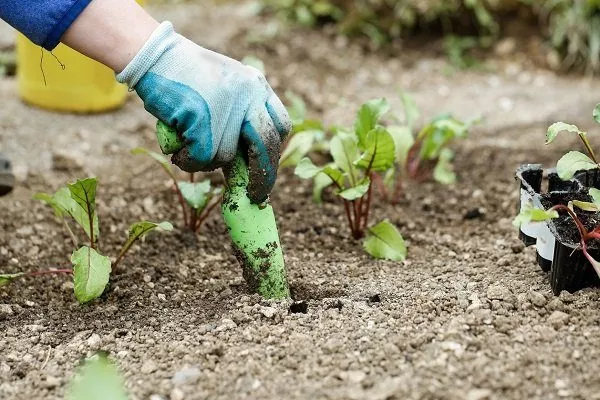
Beet seedlings are transplanted into open ground when they have 2-3 true leaves.
When growing beet seedlings, be careful not to allow them to overgrow. If the roots of the seedlings touch the bottom of the seedling container, the roots may grow deformed.
The order of planting seedlings:
- Make holes in the prepared beds. They should be large enough to accommodate the seedlings' roots comfortably. The spacing between holes depends on the variety:
- cylindrical beetroot – 10-12 cm;
- small beets – 12-15 cm;
- beets with large round roots – 15-20 cm.
- Water the holes and wait for the water to soak in.
- Plant the seedlings in the holes, placing the roots evenly, without bending.
- Water the seedlings again.
- Cover the plantings with covering material for 2-3 days until the seedlings take root.
If the weather is hot, water the plants daily. Once the plants are established, reduce the frequency to once a week.
When growing beets using seedlings, there is no need to thin out the plantings.
Features of winter and spring sowing
Beets are a crop that can be planted both in spring and before winter. If the seeds survive the winter, you can grow early beets without growing seedlings.
Winter sowing
In late autumn, when winter crops are sown, beet sowing begins. Winter beet harvests mature 2-3 weeks earlier than their counterparts. sown in spring.
Features of winter sowing:
- The optimal time for sowing is the end of October or the beginning of November, when the soil has already cooled.
- Even if snow has already fallen, you can sow. The main condition is cool soil to prevent the seeds from sprouting. They should only swell in the soil, nothing more.
- For winter sowing, select seeds that are resistant to cold.
- In autumn, the number of seeds planted should be 20% more than in spring.
- The varieties most suitable for winter sowing are those that are resistant to flowering and bolting.
- To ensure early germination in the spring, seeds are planted on raised beds. Furrows 5-6 cm deep are made in the raised beds.
- The seeds are placed in furrows and covered with a mixture of substrate and humus. The crops are insulated with compost.
Spring sowing
Spring sowing is the most common among gardeners. It's the simplest and most foolproof option for growing beets, virtually free of risks and surprises.
Features of spring sowing:
- You can plant dry seeds without soaking them, especially if it rained shortly before planting and the soil is moist.
- The looser and lighter the soil, the deeper the seeds are planted. The seeding depth for spring sowing varies from 2 to 4 cm.
You can learn about the intricacies of beet planting in the following video:
Caring for beets in open ground
Beets are an easy-to-grow and drought-resistant crop that doesn't require much attention from the gardener. However, to ensure a good, high-quality harvest, it's important to provide them with proper care.
Temperature and light conditions
Beets are a light-loving crop. They require good lighting throughout the growing season.
Features of the light mode:
- The optimal length of daylight is 13-16 hours per day.
- When daylight hours are reduced to 10-11 hours, beets stop growing their roots, and only the above-ground part grows.
How does temperature affect beets:
- Beets can germinate in soil temperatures as low as 3°C to 5°C. However, germination is delayed, with the first shoots appearing only after 23-24 days.
- The higher the temperature, the sooner the beets will sprout. At temperatures of 20–25°C, the vegetable will sprout in a week.
- If the temperature rises above +25 °C during beet germination, the seedlings may die.
- When plants have 3 or more leaves, they will be able to withstand unfavorable temperatures more reliably.
- If the temperature drops by several degrees below the minimum permissible level, the growth of root crops stops, and the quality and quantity of the harvest decreases.
Subtleties of watering
Beets are drought-tolerant, but this quality should not be overused, as a lack of moisture can negatively impact yield.
Features of watering beets:
- If the weather is hot and dry, the plantings are watered using the sprinkler method.
- It is better to use warm and settled water for irrigation.
- The frequency of watering immediately after emergence is once every 2-3 days.
- To retain moisture in the soil and reduce the frequency of watering, the soil is mulched, for example, with dried grass.
Alternate watering with soil loosening. Loosening the soil should be done very carefully to avoid damaging the growing roots. Beets do not require hilling.
Thinning
A single beet seed can produce 2-4 sprouts at once, so the plantings need to be thinned. Without this, the roots will not develop normally and will not reach their full varietal size.
During the planting season, beets are thinned twice:
- When the seedlings have formed 2-4 true leaves, the plants will reach a height of 7-8 cm. First, remove the weakest shoots, and at the same time, remove any weeds.
- When plants are in the root formation stage, leave 8-10 cm between adjacent plants. Large-root varieties should be thinned further, leaving 15-20 cm between plants.
Top dressing
Beets need enough fertilizer applied before planting. Apply fertilizers This is necessary only when plants are noticeably lagging behind in growth.
Beet roots are capable of actively accumulating nitrates, so it is recommended to feed the crop with natural fertilizers.
How to feed beets:
- Periodically water with herbal infusions diluted in water or yeast solutions.
- 2-3 times during the planting season, you can water with a weak salt solution - dissolve 1 tablespoon of salt in 10 liters of water.
- Apply any complex fertilizer, observing the dosage indicated in the instructions.
- If ash wasn't added in the fall, it can be used in the summer. Add ash to the irrigation water every two weeks—one cup per 10 liters.
- Ready-made mineral fertilizers can be added to soils that are not fertile enough:
- Potassium. Apply twice a month. Any potassium fertilizer is suitable, except manganese, which makes the soil acidic.
- Nitrogen. Apply only when needed. Apply the fertilizer into furrows dug at least 5 cm from the roots.
- Boron. Apply twice per season. Dissolve 2 g of boron in 10 liters of water.
Harvesting and storage
Beets ripen in 50-70 days. However, during the growing season, the roots can be used for food throughout the season.
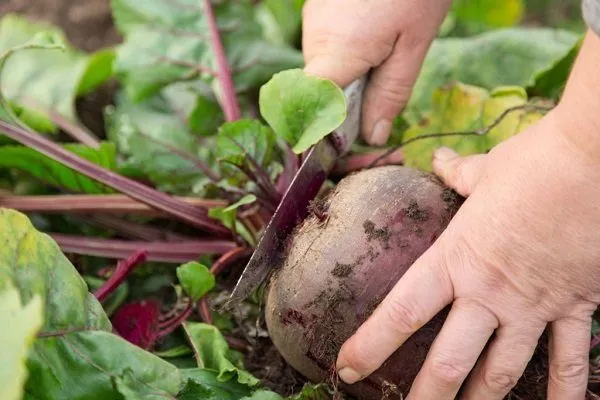
Cleaning and storage features:
- Beets should be harvested before frost sets in. If the roots freeze, they will quickly spoil during storage.
- Unripe beets do not store well, while overripe beets are coarse in taste and prone to cracking.
- Beets are harvested in dry weather, when the soil can be easily shaken off the roots.
- It is recommended not to cut off the tops, but to twist them off so as not to damage the root vegetables.
- Root crops that are diseased or have signs of damage, as well as those that are too small or excessively large, are not stored.
- Beets removed from the ground are immediately placed into storage.
- The optimal temperature in the basement is +2…+3 °C.
- If the root crops are dusted with chalk - 250 g per 10 kg, or sprayed with an infusion of pine needles - 50 g of pine needles are infused in 1 liter of water for 4 days, then they will be stored better.
Diseases and pests of beets
Beetroot has high vitality and immunity. Most of its diseases associated with poor agricultural practices and nutrient deficiencies.
Diseases of table beet and measures to control them:
| Diseases | Symptoms | How to fight? |
| Fomoz | Yellow-brown spots with a concentric pattern appear on the leaves. Root crops infected with phomosis rot during storage. | The seeds are treated with Fundazol. |
| Cercospora leaf spot | Red spots appear on the leaves, and a grey coating appears on the back side. | Fertilize with ash or potassium chloride. Treat the seeds with a seed dressing, spray with copper-containing preparations every 10 days, and treat with fungicides. |
| Fusarium | The leaves turn yellow and wither. The fungus also attacks the root vegetables. | Spray with boric acid. Lime treatment is applied to acidic soils. |
| Root lice (black leg) | Affects seedlings. Stems become thin, turn black, and the plant dies. | There is no cure. Prevention involves improving soil aeration. |
The main pests of beets:
- Mole cricket. It lives underground, digs tunnels, and damages root crops. Treating burrows and paths with a boric acid solution is recommended. Sprinkle granular poison, such as "Thunder."
- Nematodes. The larvae consume the beet root system. The leaves of affected plants wilt. Plants affected by nematodes are uprooted and destroyed.
- Beet fly. On affected plants, leaves turn yellow and wilt, eaten by fly larvae. Control measures include deep pre-winter tilling, weeding, and spraying heavily infested plants with any contact insecticide.
| Pest | Method of struggle | Efficiency |
|---|---|---|
| Mole cricket | Boric acid | High |
| Nematodes | Destruction of plants | Average |
| Beetroot fly | Contact insecticides | High |
Flea beetles, slugs, and wireworms also damage beet crops. These are controlled primarily through preventative measures and natural remedies, such as sprinkling tobacco dust, ground pepper, or wood ash on the soil.
What to do if the beets have grown too big?
Only inexperienced gardeners will appreciate overly large beets. Abnormally large roots often have a fibrous texture and poor flavor. They take a long time to cook and do not store well.
To prevent root crops from growing too large:
- Leave intervals between adjacent plants appropriate to the variety.
- Dig up the roots when they reach the size typical for the particular variety. The optimal size for most varieties is 5-6 cm in diameter.
Large root vegetables can be used as livestock feed. They can be added to mash or cut into pieces.
Helpful tips
The taste of beets depends not only on the variety but also on growing conditions. The taste characteristics of the root vegetable are influenced by the composition of the soil, watering, feeding and much more.
How to get tasty and sweet beets:
- Choose a variety with a high sucrose content.
- Plant beets after onions or potatoes.
- Deacidify acidic soils—it's impossible to grow tasty root vegetables there. But the tastiest beets grow in alkaline soils.
- Salted water increases the sugar content of beets. Dissolve 2 cups of ash and 1 tablespoon of salt in 10 liters of water. Water the plants with this solution.
You can watch the following video to learn about what not to do when growing beets and why spots on leaves may appear:
The main challenge in growing beets is producing tasty and sweet root vegetables. Strict adherence to agricultural practices and careful plant care are essential to achieving this goal.