
Beets are relatively easy-to-water crops, but they still need adequate moisture. This affects the size of the roots, their flavor, and their yield. Beets can be watered in a variety of ways. The common factors are water requirements, frequency, and intensity.
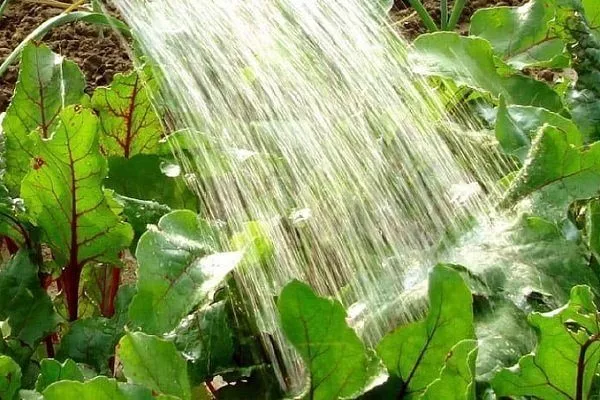
General rules for watering beets
To successfully grow beets, you need to water them properly. Here are some general recommendations:
- use the right water – its temperature, chemical composition, and hardness are important;
- during hot periods, water the beets after 6 pm, when the sun's activity decreases;
- in cold, cloudy weather, water the crop in the evening;
- mulch the plantings - this reduces moisture evaporation and reduces the frequency of watering;
- use spray nozzles rather than watering the crop with a pressurized stream;
- If the soil is too dry, water it in several stages to properly assess the result;
- observe watering standards - they are different for each period of crop cultivation;
- Water the beets regularly, avoiding sudden changes in soil moisture levels.
To ensure effective irrigation, the beds must be formed correctly. Water should moisten the roots of the crop, rather than run off between the rows.
Features of watering beets at different stages of their cultivation
Beets need to be watered regularly. The frequency of watering depends on the crop's growth stage:
- the soil must be well moistened before sowing;
- After planting beets in the ground, it is necessary to water them frequently, but in small portions - the frequency and intensity of watering should be based on the condition of the soil: it should be moistened to the depth of the roots of the crop, 10 liters per 1 sq. m every 2 days is enough;
- at the active growth stage, beets need to be watered 2-3 times a week;
- at the beginning of June, water the beets weekly; you can reduce the frequency of watering to once every 1.5 weeks, but increase the water consumption;
- when the root vegetables fill out, beets need to be watered once every 1-1.5 weeks, using 15 liters per 1 sq. m;
- if hot weather sets in, then water consumption should be increased to 20 liters per 1 sq. m;
- at the beginning of August the intensity of watering should be reduced;
- From mid-August onwards, beets no longer need to be watered, as preparations for harvesting begin; the root crops need to dry out for long-term storage.
The frequency of watering depends on the soil type and its condition. A good test is to insert a wooden stick into the soil in several places. Watering is not necessary if only the top 2-3 cm of soil is dry.
It is also important to consider the following points:
- the appearance of water droplets when pressing on the soil ball indicates excess moisture, so the area should not be watered for at least 2 weeks;
- if the soil sticks to your hands and can be easily rolled into a ball, then watering is not needed for the next week;
- If the soil does not stick, it can be collected in a bag, but it does not break when dropped, then the moisture is sufficient, but in hot weather watering is necessary.
Excess moisture reduces the amount of oxygen in the soil and increases its acidity. This damages the beet root system, causing rot. High humidity creates a favorable environment for the growth and reproduction of pathogenic bacteria.
Water requirements
The success of beet growing depends largely on the water used for irrigation. It must meet the following requirements:
- the temperature is similar to the ambient or soil temperature; water that is too cold is detrimental to the crop; the optimal range is 12-23 degrees;
- water, regardless of its source, must be allowed to settle, which ensures the settling of harmful impurities and heating of the water to the required temperature;
- The water should not be too hard; to soften it, you can add wood ash at 3 g per liter, peat at 100 g per liter, or oxalic acid at 1 g per 5 liters.
- ✓ Check the pH of the water: the optimal level for beets is 6.0-7.0.
- ✓ Avoid water with high chlorine content: let tap water sit for at least 24 hours.
Water of various origins can be used for irrigation:
- Rainwater Rainwater harvesting is the optimal irrigation option, provided there are no hazardous industries or other negative factors nearby. Rainwater harvesting is accomplished using drains and clean containers.
- Tap water, if its temperature meets the requirements. If the source is a natural body of water without treatment facilities, it is recommended to check the chemical composition of such water. It may be unsuitable for irrigation due to the presence of pathogenic bacteria or fungi.
- Spring water, rich in nutrients, is effective when used when possible. It is very cold, so it needs to sit for a longer period of time to warm naturally.
- Salt water It's used to water beets when they're sodium deficient. This can be seen by the reddened leaves. Water using a fine-mesh watering can. To prepare the solution, add a tablespoon of table salt to a 10-liter bucket of water.
Be sure to wait until it dissolves completely. Use regular salt without additives. It's effective to water the beets with salt water when the roots are ripening. This fertilization has a positive effect on the taste of the crop, increasing sugar content and juiciness.
- Fill containers with water 24 hours before watering to allow it to settle.
- Check the water temperature: it should be close to the soil temperature (12-23°C).
- If necessary, add water softeners (wood ash, peat) according to recommendations.
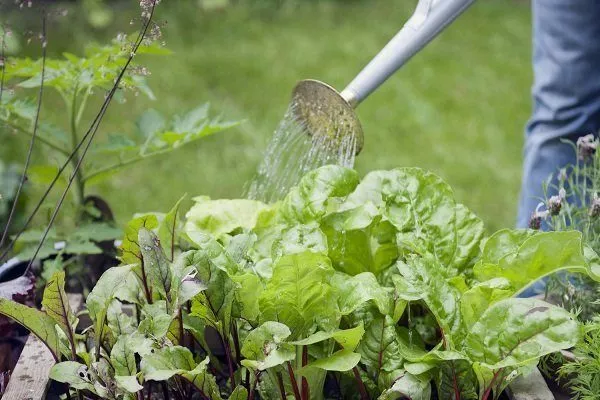
The saline solution should be applied no more than three times during the entire growing season. Overuse will result in soil salinization, which is harmful to all plants.
Watering methods
There are different ways to water beets. Each has its own characteristics, advantages, and disadvantages.
Manual watering
This option is ideal for small areas and involves using a watering can or hose.
It's important to ensure uniform water distribution and pressure, and stop watering beyond the edge of the bed to avoid damaging the plants. When using a watering can, the diameter of the holes on the nozzle is important: for seedlings, they need to be small, but for mature plants, this is not necessary.
It's best to use a watering can for individual beds or for the first few weeks, while the seedlings are still developing. For mature plants and larger areas, a hose is better. Use a special nozzle to spray the water.
The disadvantage of manual watering is the effort and time required. The advantage is the ability to combine watering and fertilizing.
Drip irrigation
This is one of the most effective ways to water not only beets but also other garden crops. You can purchase a ready-made system or build your own using pipes or hoses. The method involves constantly applying water to the soil in small amounts.
The main disadvantage of drip irrigation is the cost of purchasing the system. The advantages of this method outweigh the costs: no soil crusting, saving time, effort, and water. Drip irrigation is suitable for any soil type.
Sprinkling
Water droplets falling on beet leaves don't pose a risk of disease, so sprinkler irrigation is safe for watering. This method requires the installation of a special system. High and consistent water pressure is essential for its proper operation.
Sprinkling prevents a crust from forming on the soil. The soil is well saturated with moisture, and there's no need to loosen it.
Automatic watering
In this case, watering is provided by special sprinklers. The water is turned on by special timers; modern systems include humidity-sensitive sensors.
An automatic irrigation system requires a certain amount of investment, so it's only practical for larger areas. It requires a stable electrical network.
How to tell if beets need moisture?
It's important to regularly inspect your plantings and monitor the soil condition to identify any problems promptly. Moisture deficiency can be determined by the soil texture:
- If the collected lump of soil crumbles when it falls, you need to water the beets;
- If the soil cannot be collected into a lump, it is dry and crumbling, abundant watering is required.
A lack of moisture affects the appearance of plants. They become more limp and wilt. Beetroot tops become smaller and turn burgundy.
Yellowing of the plant's leaves also indicates a moisture deficiency. They begin to wilt and fall off. These are only the first signs of water shortage; the plant's condition will deteriorate over time.
Common mistakes when watering beets
When watering beets, the following mistakes are most often made:
- the wrong time of day for watering - morning watering in the heat can cause burns to the tops, and evening watering in the cold period can damage the root system;
- a large number of weeds that take away the moisture and nutrients needed by the beets;
- watering with a pressurized stream - the soil is washed away, the roots are exposed, the risk of disease increases;
- using poor quality or dirty water, which increases the risk of disease, and the plant may wither and wilt;
- too cold water;
- ignoring loosening – water remains on the surface and evaporates, the root system does not receive moisture;
- excess moisture - in this case, rotting begins, various diseases develop, excessive watering before harvesting reduces the shelf life and increases the percentage of spoilage;
- moisture deficiency, which prevents the plant from growing and developing properly.
You can learn how to water and feed beets in the following video:
Properly managed beet watering and care ensure a bountiful harvest of delicious root vegetables that can be stored for a long time. The irrigation method should be chosen according to the specific characteristics of your plot. It's important to remember basic water requirements and avoid common mistakes.