
The Podzimnyaya beetroot is ideal for early spring and winter sowing. This cold-hardy, mid-early variety produces dark-burgundy, ringless roots. They have excellent flavor and are ideal for cooking, as they retain their attractive color well.
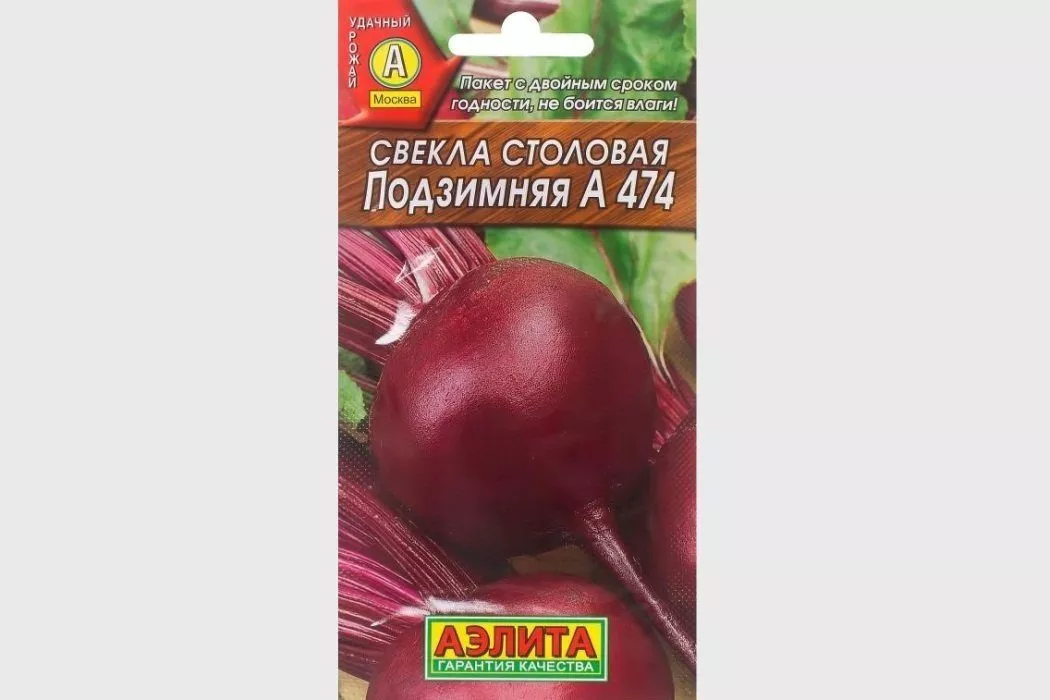
Beetroot Podzimnyaya A 474
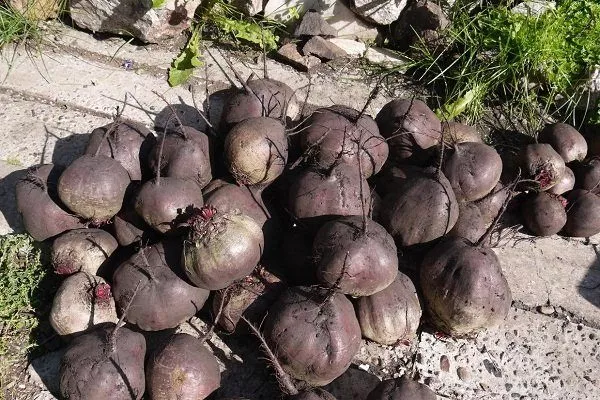
Beetroot Podzimnyaya A 474 has juicy sweet pulp
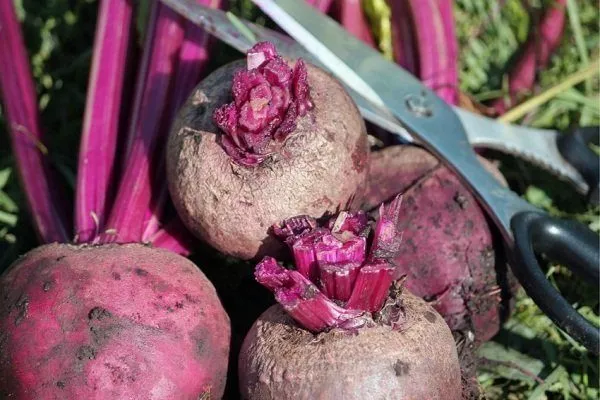
Beetroot Podzimnyaya A 474 tolerates frost well
Description of the variety
The Podzimnyaya A 474 beetroot was developed at the All-Russian Research Institute of Vegetable Crops Selection and Seed Production. Since 1952, the variety has been recommended for cultivation in several regions:
- North-West;
- Central;
- Volga-Vyatka;
- Central Black Earth;
- Middle Volga.
The crop is prized for its flavor and commercial qualities. Its characteristics are detailed in the table below:
| Parameter | Description |
| Ripening time | The variety is mid-early – from the first shoots to technical maturity it takes 55-101 days. |
| Rosette of leaf blades | The bushes are semi-erect and vigorous. The leaves themselves are heart-shaped, elongated, and dark green, becoming pigmented in autumn. The petioles reach 25-35 cm in length and take on a rich pink-red color. |
| Roots | As the growing season ends, the Podzimnyaya beetroot forms small heads with the following parameters:
|
| Purpose | This variety is recommended for early spring and winter plantings. Mature table roots are suitable for processing and canning. They retain their original color after cooking. |
| Keeping quality | Podzimnyaya beets can be grown for long-term storage. Under favorable conditions, the bulbs can last until the following season without deteriorating in flavor or marketability. |
| Productivity | The variety is valued for its high yield – 1 square meter of garden bed can yield up to 6.5-7 kg of fruit. |
| Sustainability | The plant is cold-hardy, so it can easily withstand frost and low temperatures. The variety also exhibits relative resistance to cercospora leaf spot and rhizome rot. The roots themselves are resistant to cracking. |
A representative from the AgroMERA laboratory briefly describes the characteristics of the variety in the video below:
Advantages and disadvantages of the variety
Podzimnyaya beetroot is one of the best options for fall sowing. It offers the following advantages:
- This eliminates the need for pre-soaking seeds and other pre-planting treatments, such as treating them with special preparations and lengthy drying times. This cold-hardy crop undergoes natural hardening right in the soil during the winter months. This allows young seedlings to withstand potential spring frosts and also develop immunity to diseases and lack of water.
- It yields an earlier harvest than varieties planted in the spring after frost. During winter, the seeds' hard seed coats swell more quickly, allowing for much faster germination. This ensures earlier emergence.
- It grows in any weather, so you won't have to postpone sowing, as is the case with spring-grown varieties, whose seedlings may lag in growth due to cold weather.
- Autumn sowing allows you to free up the spring period, allowing you to devote more time to other vegetable crops.
The variety has no known drawbacks, so many gardeners choose it for sowing in their garden plots.
Sowing dates
Beet seeds Podzimnyaya can be sown outdoors twice a year:
- In the fallSowing should be carried out when soil temperatures are between -4 and -2ºC. By this time, air temperatures may drop to 0ºC. These conditions typically occur in late October to mid-November. In early spring, when frosts have passed and temperatures warm to 10ºC, the seeds sown before winter will begin to sprout. Early produce can be harvested as early as late June.
- In the springGiven the crop's cold tolerance, gardeners sow seeds in early spring—from late April to early May. By this time, the soil should have warmed to 8–10ºC. Beets can be sown immediately after carrots.
Podzimnyaya beetroot can be grown from seedlings to speed up the production of mature root crops by 2-3 weeks. In this case, sow the seeds in late April and transplant the hardened seedlings into open ground a month later.
Agricultural technology
Following simple agricultural practices will allow you to successfully grow dark-burgundy Podzimney beetroot:
- It's best to sow seeds in rich, fertile soils with a slightly acidic or neutral pH. Loamy and clayey soils are ideal. In heavier soils, the vegetable should be grown in raised beds.
- It is best to grow beets in areas where the following crops grew last season:
- early potatoes;
- cucumbers;
- zucchini;
- onion;
- pumpkin.
- The area for sowing beets must be prepared in advance: dig it up in the fall, add humus and lime if necessary, and feed it with complex mineral fertilizers in the spring.
- To fill the seed furrows, prepare a nutritious, loose soil in advance. A mixture of garden soil, sand, and rotted compost has proven effective. It's also a good idea to prepare peat moss in advance, which will be used as mulch for the bed. It should be filled into bags or buckets and placed in the beet planting soil shelter.
- ✓ Check the soil pH before planting; the optimal level for Podzimnyaya beets is 6.0-7.0.
- ✓ Make sure the area is well drained to avoid waterlogging and root rot.
Sowing pattern and depth
Sowing activities must be carried out within the pre-set timeframe, adhering to the following instructions:
- Level the surface of the garden bed. If the first snow falls on the garden, be sure to clear it away with a stiff broom.
- Prepare furrows approximately 20 cm long, not extending beyond the edges of the bed, otherwise they may be damaged by possible precipitation. Here's the optimal sowing pattern:
- the intervals between furrows in a row are 8-10 cm;
- row spacing – 25-30 cm;
- sowing depth – 2-4 cm.
- Throw seeds into the furrows and fill them with pre-prepared nutrient soil.
- Compact and level the soil thoroughly, then mulch with peat. The optimal mulch layer is about 4 cm.
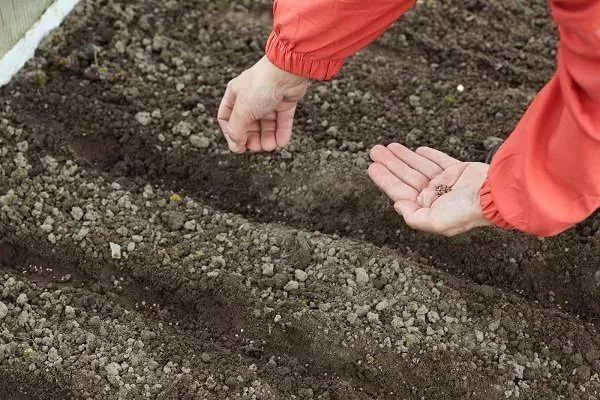
When sowing seeds in the fall, the beds should be covered to prevent the seeds from freezing over the winter. Pine needles, leaves, or sawdust can be used for this purpose.
Planting care
Podzimnyaya beetroot is not a demanding variety, so it only requires basic care, following these rules:
- In the spring, when the snow begins to melt from the garden bed, remove the covering made from available materials so that the fragile sprouts that appear can fully emerge and develop;
- After frost, loosen the top layer of soil and add nitrogen-rich fertilizer, then cover the bed with film, which will need to be removed as seedlings emerge;
- with the development of 2 pairs of true leaves, carry out the first thinning of the seedlings, and when the root crops reach a diameter of 2-3 cm, the second, increasing the distance between the bushes to 8-10 cm;
- As a dry crust forms, water the bed, loosen it and clear it of weeds.
Harvesting
When the plant's tops wither and turn yellow, and the fruits reach the manufacturer's stated weight, harvesting is ready. This is a simple procedure, as the roots are only half-buried in the soil. Simply pull them out by hand, after digging under them with a shovel. The harvested roots should be air-dried and then used for their intended purpose or stored.
Reviews of the variety
The Podzimnyaya A 474 beetroot is prized by gardeners for its fast ripening, cold tolerance, excellent flavor, and resistance to major diseases. It can be planted in early spring and before winter, followed by basic care to harvest the dark-red, all-purpose root vegetables approximately 100 days after emergence.