
The Mulatka beetroot is one of the most sought-after varieties for table use. Its popularity among gardeners is due not only to its taste but also to its high nutrient content and productivity. To achieve this, it's important to strictly follow the growing guidelines, taking into account the specific characteristics of this variety.
Selection
Although Mulatka was added to the State Register in 2003, its development began much earlier, in the 1980s. Under the leadership of S. V. Maksimov, a renowned Russian breeder, the goal was to develop a variety with uniform tubers that were easy to transport.
Introduction to the variety
Mulatka beetroot is a mid-season variety, ideal for long-term storage. It boasts high productivity, product quality, and durability during transportation. An additional feature of Mulatka is the absence of white rings on the fruit, making it particularly attractive to consumers.
The plants are resilient to various weather conditions and have no special soil requirements. However, adequate light is crucial for successful cultivation. Mulatka is not very resistant to almost all diseases and pests.
Distinctive features of tops and fruits
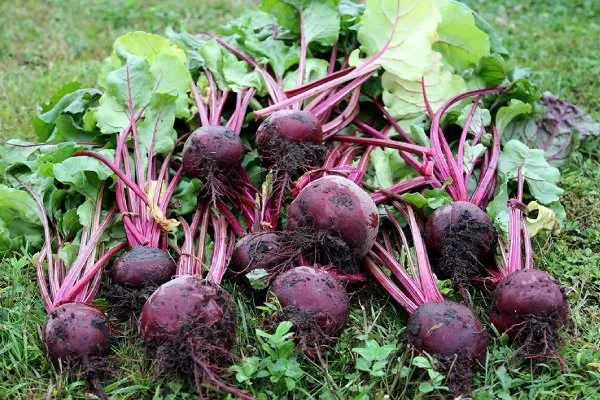
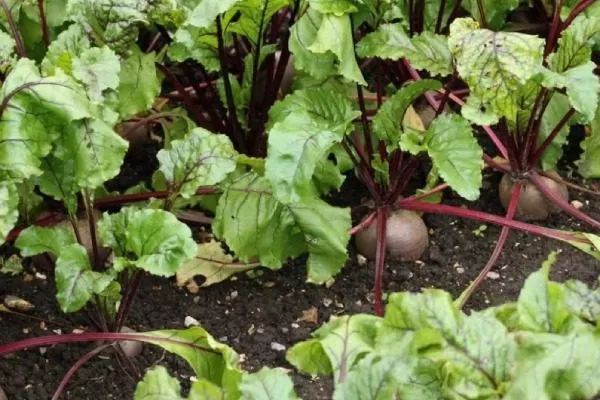
The Mulatka beetroot variety is distinguished by its upright, not overly large rosette of leaves. The leaves are oval with slightly wavy edges. The green surface of the leaves is slightly bubbly, while the underside of the petioles always has a purple tint.
No less important are the characteristics of Mulatka root crops:
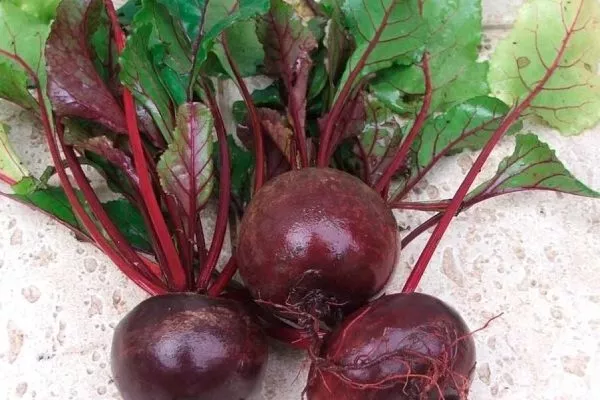
- the beets are round in shape, with a maximum diameter of 15 cm and a minimum of 11-12 cm;
- the weight of root crops usually ranges from 160 to 360 g, although there are also larger specimens weighing up to 400-420 g;
- the skin is dark red in color and is smooth;
- the cork structure of the heads is very rare, and if it does appear, it is very weak;
- there are no ring zones typical for other varieties;
- The pulp is red, with a uniform and juicy composition.
Taste, purpose and use
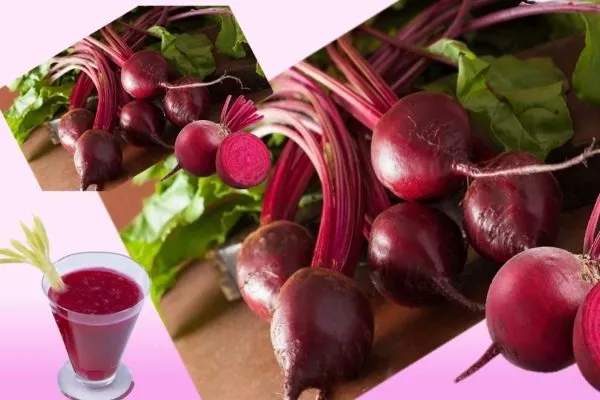
Beetroot is popular in cooking due to its lack of bitterness and its ability to retain its original color even when heated. These roots are an ideal ingredient for the traditional Russian dish borscht, which acquires a rich red color.
Other use cases:
- Mulatka is excellent for preserving and adding to salads, including the famous vinaigrette.
- This variety is often found in dietary recipes due to its high content of nutrients that help strengthen blood vessels, regulate blood pressure, and support cardiac function.
- Beetroot is a multifunctional home remedy. It has anti-inflammatory, diuretic, and healing properties.
- The iodine, B vitamins and minerals contained in beets help improve digestion and reduce excess weight.
- Using beets in food is beneficial for the health of children and people following diets.
- Beetroot is considered an effective remedy for improving the appearance of hair and skin.
Maturation
Mulatka reaches full maturity in 90-120 days, although this timeframe may vary depending on local climate conditions. This variety is classified as mid-season.
Ironically, in Ancient Rome, beets were associated with family quarrels. Nevertheless, they remained a popular food. The Romans consumed the roots, tops, and even young roots, soaking them in water and then sprinkling them with pepper.
Crop yield indicators
The variety is characterized by increased fruiting, but specific indicators depend on a specific region:
- in the Volga-Vyatka region gardeners can expect 440-450 centners per hectare;
- in the Central Black Earth Region – by 250-405 centners;
- in the Moscow region the harvest can be about 200-300 centners per hectare.
Gardeners harvest approximately 5 kg of ripe fruit per square meter. The yield is very high, reaching 98%.
Regions suitable for cultivation
Mulatka is successfully cultivated in the central part of the country and the Volga-Vyatka region, as well as in the Central Black Earth Region, where it shows good results. In the Far East, farming conditions are somewhat more challenging, but even there, vegetable growers report no serious problems.
What is the difference with other types?
The Mulatka beet variety demonstrates significant differences compared to other representatives of this crop.
It manifests itself in the following:
- Its dense, juicy flesh is free of whitish cylindrical rings, ensuring a uniform consistency. This positively impacts the flavor after cooking.
- Mulatka differs from other varieties in that it retains a pleasant taste and does not lose its bright color even after heat treatment.
How to plant Egyptian flat beetroot?
Growing beetroot outdoors requires knowledge and attention to detail. But first, you need to purchase seeds, which are available at specialty gardening stores or online.
Requirements, preparation
Before sowing in the ground or pots, it's advisable to treat the seeds to speed up germination. To do this, prepare a solution of 1 liter of water, 0.5 teaspoon of baking soda, an equal part of superphosphate, and wood ash. Soak the seeds in this solution for two hours, then rinse under a gentle stream of hot water and dry in a ventilated area.
Beets should be planted in April or May, when the soil temperature at a depth of 10 cm reaches 10-13 degrees Celsius. Here's how to determine the location of the beds and prepare them:
- To ensure beetroot roots have a rich color, choose a location with unobstructed sunlight. Therefore, an open, sunny area is ideal.
- Beets are undemanding about soil structure, but avoid waterlogged, marshy areas. It's also important to consider soil pH—the crop prefers a neutral or slightly acidic soil.
- Follow crop rotation guidelines. The best predecessors are onions, tomatoes, potatoes, and cucumbers. Avoid planting where cabbage or carrots were previously grown.
- Beets will do well with neighbors such as onions, radishes, beans, and cucumbers, while spinach, leeks, potatoes, celery, and corn will not get along well together.
- Beets can be returned to their original location no earlier than after three to four years.
- ✓ The optimal soil pH should be in the range of 6.0-7.0. Acidic soils require preliminary liming.
- ✓ The soil should be well drained, avoid areas with stagnant water.
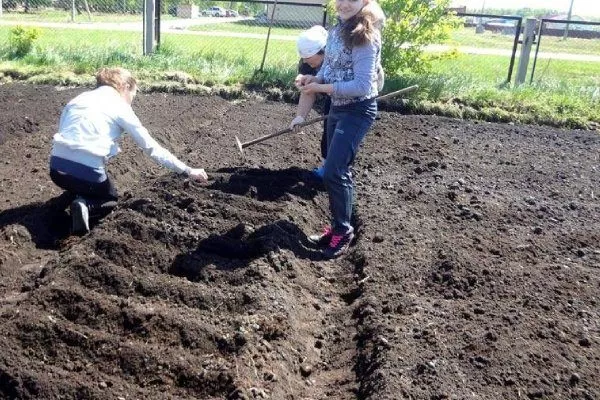
Start preparatory activities in the fall:
- Remove the weeds first.
- Then dig up the soil.
- Apply fertilizer – 10-13 kg of compost or manure per 1 sq. m. If the soil acidity is too high, add 400-450 g of slaked lime.
Seedling cultivation option
This method allows you to harvest beets a month before the grower's stated harvest date, preventing damage to the crops. Furthermore, Mulatka, grown from seedlings, has increased resistance to diseases and insects.
Let's outline the steps:
- Fill the containers with a mixture of compost, manure, sand and sawdust in proportions of 1:1:0.5:0.5.
- Distribute the planting material over the surface of the substrate at intervals of 2 cm.
- Sprinkle the seeds with a thin layer of soil mixture.
- Moisten with a spray bottle or watering can with a fine mist.
- Cover the containers with plastic wrap, glass or a transparent lid and transfer to a room with a temperature of +20-22°C.
- After the seedlings appear, remove the cover and reduce the temperature to +14-15°C.
- A decade before transplanting, acclimatize the seedlings by exposing them to fresh air for an hour at first, and then increasing the time to 5-8 hours.
- A week before replanting, reduce the frequency of watering, and a day before planting, moisten the soil with a solution of potassium chloride (6 g per 3 liters of water).
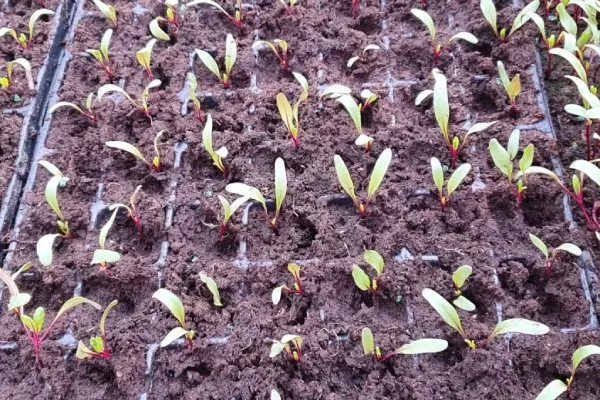
- ✓ The presence of 4-5 bright green leaves, 8-9 cm high.
- ✓ Powerful root system without signs of rot.
Planting in open ground
There are two main methods for sowing beets in an open field:
- One line landing. With the single-row method, seeds are planted in rows that are spaced 40-50 cm apart.
- Two-line option. Includes the creation of two rows spaced 25-30 cm apart and an additional pair of rows spaced 50-60 cm apart from the first pair.
The landing process is as follows:
- First, the furrows are moistened, then they wait until the moisture is completely absorbed;
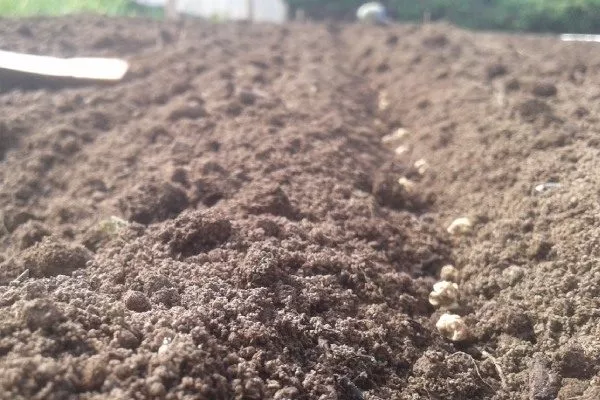
- the seeds are placed in the soil to a depth of 3 cm, with a gap of 5-10 cm from each other, after which they are covered with a layer of soil;
- Weeding is done 10-12 cm from the plantings to ensure air access to the plants.
Please note that each seed can produce several plants, so thinning is inevitable. The first thinning is performed when the shoots have two leaves, leaving a 2 cm gap between them. The second thinning process begins when the seedlings have four or five leaves.
Caring for Egyptian Flat Beets
The basic agronomic practices required for optimal development of Mulatka beets include proper soil moisture, careful weeding, careful loosening of the space between plants, and adequate fertilization. It's important to consider weather conditions, the physical condition, and appearance of the seedlings when choosing methods:
- Excessive drought isn't a serious problem for Mulatka beets, but regular soil moisture is still necessary. Monitor the moisture level of the topsoil and water when it begins to dry out.
During the initial care period, it is recommended to water the seedlings daily, then progress to watering twice a week. This procedure should preferably be combined with weeding, loosening the soil, and mulching.
When choosing a time to plant, it's preferable to use evening hours, which not only ensures adequate soil moisture but also renews the foliage, giving it a fresh appearance. To increase the sugar content of root vegetables, stop irrigating two to three weeks before harvest. - Using mineral fertilizers can cause cracks and voids in the roots. To "feed" the Mulatka beet, it is recommended to use liquid organic fertilizers—a mullein infusion solution (1:8 ratio) or a mixture of bird droppings (1:12 ratio).
The consumption rate of this fertilizer is 1.1-1.2 liters. The solution is introduced into specially dug channels located at a distance of 5-10 cm from the plantings.
At the same time, add dry wood dust (150-250 g per 1 sq. m). - If there are two or three plants growing in the same spot, it's necessary to sort them, retaining the healthiest specimen. If the distance between seedlings during the development period with 4-5 leaves is less than 5-6 cm, thinning becomes necessary.
Features of cultivation and possible difficulties
It's difficult for beginning vegetable growers to grasp all the intricacies of cultivating each crop, which can sometimes lead to problems. To avoid this with Mulatka beets, carefully review the main mistakes:
- Be careful when applying nitrogen fertilizers, as too much can increase nitrate levels in produce. Be sure to regularly add copper, boron, and molybdenum-containing compounds to maintain the fruit's nutritional value.
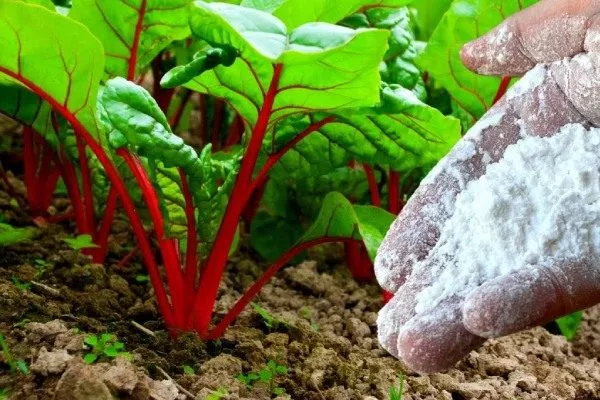
- If beet leaves become pale, apply potassium immediately. Sometimes, bright red foliage may be observed, indicating sodium deficiency or excessive soil acidity.
To correct this, gardening experts recommend covering the beds with ash and spraying the bushes with salt water.
Control of diseases and pests
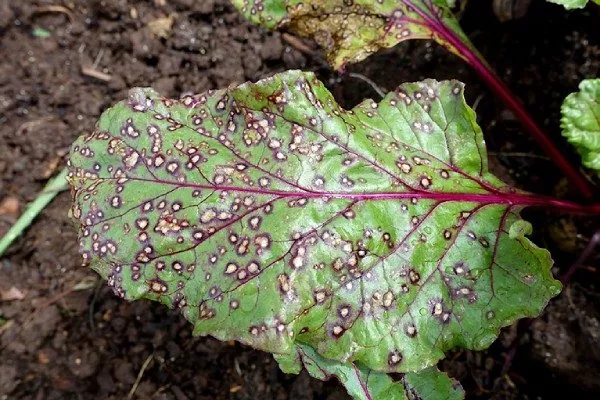
Mulatka has a moderate resistance to many diseases. Improper care can lead to fungal or viral infections. The most common diseases include:
- Powdery mildew, manifested as a white coating on leaves and stems. This problem is caused by high humidity, soil contamination, or delayed weeding of the beds.
To prevent it, it's recommended to regularly water the bushes with aloe vera juice infusion and follow crop rotation rules. If powdery mildew is detected, treat the affected areas with a creamy solution of ground sulfur. - Fomoz - It attacks leaves, causing yellow spots. After 2-3 days, the disease spreads to root vegetables, causing them to rot. To prevent leaf spot, it is recommended to regularly spray the garden with a Bordeaux mixture solution.
For treatment, spray the beds with a 0.4% solution of copper oxychloride. - Pests. Vegetable gardens are often infested with harmful insects, such as beet midges and aphids. These pests attach themselves to leaves and suck out the fluids needed for normal growth. As a result, fruit development is inhibited and their flavor is diminished.
To prevent this, spray the bushes with a soapy solution, regularly loosen the soil and remove weeds. - Mole cricket – The insect lives in the soil and can survive even the winter cold. The mole cricket lays eggs and builds its nests under garden beds. The hatched larvae begin to eat the beet roots, disrupting their biological processes.
To combat mole crickets, you can use dry eggshells or spray the beds with a solution of copper sulfate.
Harvesting and storage
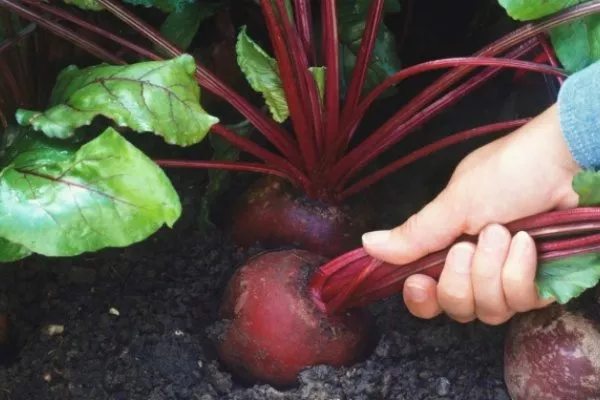
Mulatka's beet harvest begins before the first frosts of winter. The tubers are removed with a pitchfork, carefully cleared of soil, and laid out to dry. The root is then removed, leaving a small stub. For long-term storage, select fruits with uniform shapes, free from damage and rot.
How to save:
- Wooden or plastic boxes covered with plastic film are ideal for this.
- Mulatka is best stored at temperatures between 0 and 2 degrees Celsius. Optimal humidity is 85-90%.
This variety is used in a variety of culinary delights. A garlic and prune salad makes a great side dish for dinner, and a liver and beetroot pie is a perfect gift for a holiday. Beetroot salads with nuts, borscht, herring under a fur coat, and vinaigrette are popular.
Positive and negative qualities
The Mulatka variety impresses with its diverse advantages, which far outweigh its potential drawbacks. Its advantages include:
Reviews
The Mulatka beetroot is easy to care for and grows well in any soil, except acidic and flooded ones. With minimal effort, this variety produces a consistent harvest of excellent-tasting root vegetables, making it a long-standing favorite among gardeners.