
The Mona beet is a promising table variety, a member of the Cylindra cultivar. This single-sprout beet is tasty and attractive, productive, easy to grow, and, most importantly, stores very well.
Who and when developed the Mona beet?
The Mona beet was developed by Russian breeders and added to the State Register in 1999. It is recommended for cultivation in gardens and on farms. The originator of the Mona beet is the company "Semko-Junior." The authors of the variety are Yu. Khoral, P. Klapste, and Yu. Alekseev.
The variety is recommended for cultivation throughout almost the entire territory of the Russian Federation, including the Northern, Ural, West and East Siberian, Volga-Vyatka and Far Eastern regions.
Description of the variety
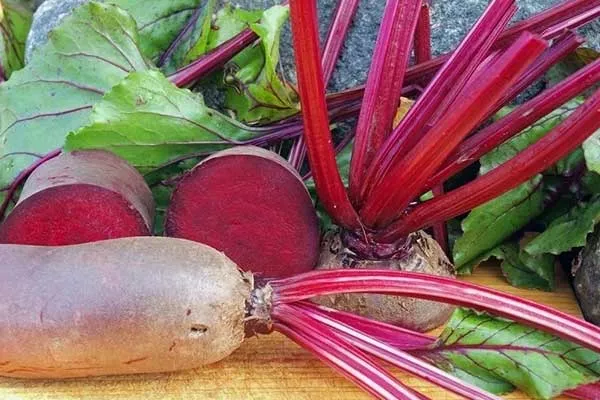
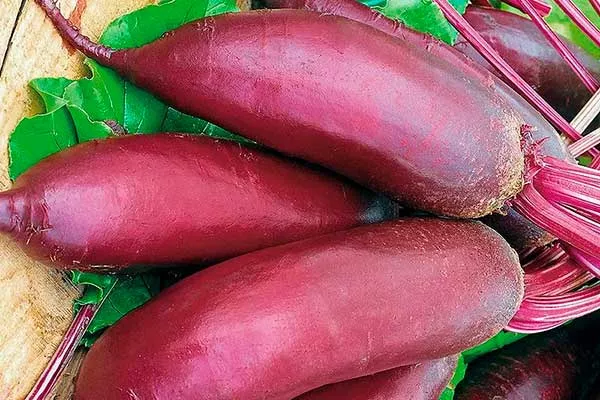
The leaves of the Mona beet are large, green-red, oval-shaped, with a slightly wrinkled surface and slightly wavy edges. The roots are elongated, smooth, and cylindrical. They weigh from 200 to 330 g.
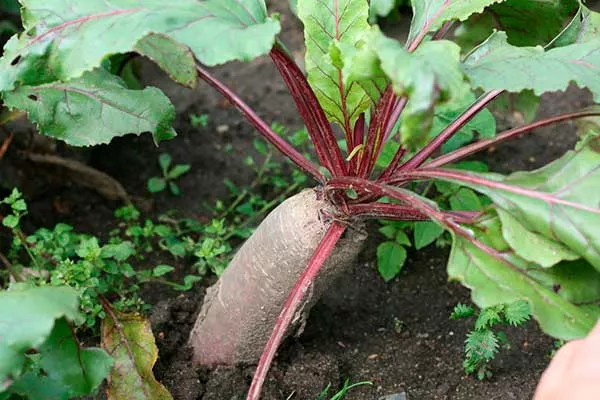
The roots are red, and the flesh is dark red. The skin is thin and the surface is smooth. They are about a third buried in the soil. The rings are faintly visible.
The taste and purpose of root vegetables
The Mona beetroot has tender, juicy flesh with a pleasant flavor. This variety is suitable for fresh and canned consumption, as well as for culinary use. It stores well, and is also recommended for growing bunched produce.
Characteristics of the Mona variety
This variety is a single-sprout variety, meaning each seed produces only one sprout instead of several, eliminating the need for thinning. This beetroot produces uniform roots, develops quickly, and yields consistently.
The Mona beetroot is a mid-early variety. It takes 65 to 105 days from germination to technical maturity. The average yield of this variety in commercial cultivation is 550 to 580 centners per hectare. A garden plot yields 5.5-5.8 kg of root vegetables per square meter.
Pros and cons
The Mona beet has many advantages that no seasoned gardener could ignore. Before choosing this variety for your garden, it's helpful to familiarize yourself with all its pros and cons.
No defects were found in the Mona beetroot.
Landing features
To grow a good harvest of Mona beets, it's important to plant them correctly. It's essential to select and prepare the planting site correctly, and to plant according to the recommended technology.
- ✓ The soil temperature for sowing should not be below +7°C, optimally +10°C for rapid germination.
- ✓ The illumination of the area should be maximum, even minimal shading reduces the yield.
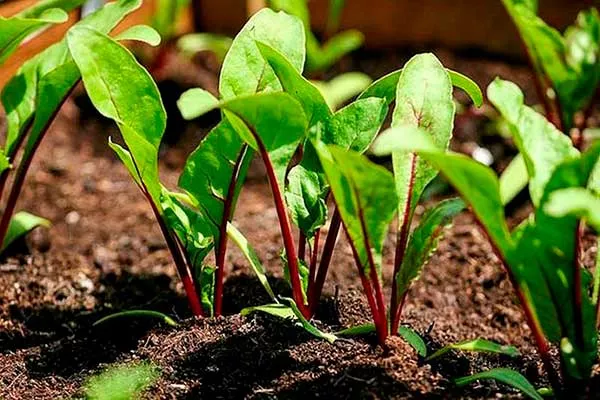
Beets are typically grown by direct sowing into the ground, but in regions with cool climates and late spring, the seedling method is often used to obtain an earlier harvest.
How to plant beets correctly:
- For planting, select a well-lit, warm, and draft-free location. Shade, even minimal, is not recommended for this variety.
- Planting takes place in April-May (the timing depends on climatic conditions), when the soil warms up to +7°C.
- In the fall, prepare the soil for planting by digging it over, adding organic matter, rotted manure, or compost. Beets grow best in loose, neutral soil. If the soil is acidic, add dolomite flour, lime, crushed eggshells, or wood ash.
- Beets are planted on a dry, cloudy day, preferably in the late afternoon. Furrows with firm, flat bottoms are dug in the beds for planting. Before sowing, water the furrows and allow the water to soak in.
- The optimal sowing pattern is 10 x 30 cm. Sow seeds at 10 cm intervals; single-sprout beets require no further thinning. Plant the seeds no more than 4 cm deep. The denser the soil, the shallower the planting depth. Water the crops carefully with a watering can.
- During the initial planting period, you can cover the seeds to speed up germination and prevent rapid moisture evaporation. The film will also help protect the crops from subsequent frosts.
If the soil temperature does not drop below +10°C, seedlings will appear in about 10 days.
How to care?
Mona beets require simple but regular care. This care determines not only the quantity but also the quality of the harvest.
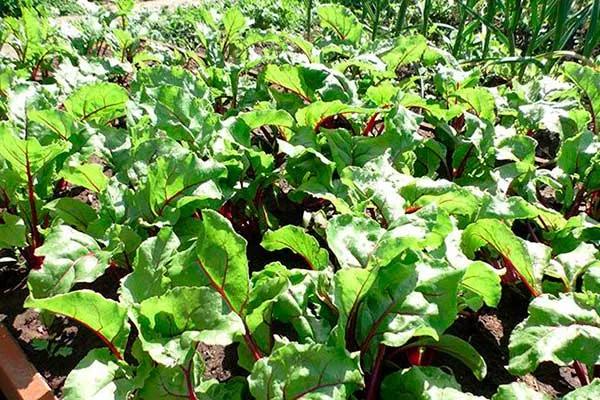
Care instructions:
- The beds are regularly weeded and carefully loosened, trying not to damage the root crops.
- Beets are watered depending on weather and soil conditions. In normal weather, about six irrigations are required per season. It's important to avoid overwatering. Reduce watering two weeks before harvest.
- After 4-5 leaves have formed, beets are fed with manure, ash solution, diluted bird droppings, boric acid, and calcium nitrate.
Diseases and pests
Beetroot Mona is resistant to diseases and pests, and is rarely affected by them, but under unfavorable circumstances and poor agricultural practices, the risks increase.
Beets, in particular, are susceptible to rust, downy mildew, beet flea beetle, and slugs. To combat these, popular fungicides and insecticides, as well as readily available folk remedies, are used.
Harvesting and storage
Selective harvesting of bunched beets begins in mid-July. The main harvest begins in late August. Beets are pulled from the ground by hand; this variety is also suitable for mechanical harvesting.
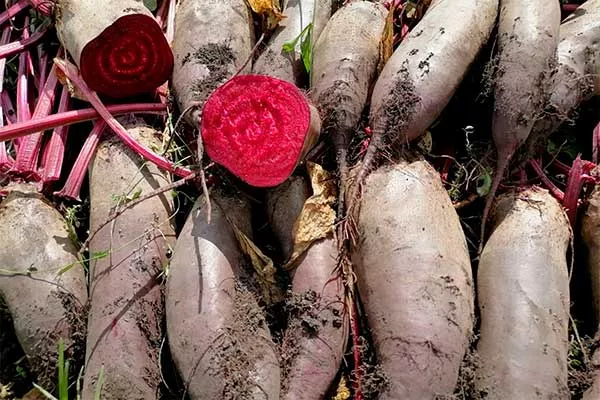
The Mona variety stores well, virtually resisting rot and mold. If provided with good storage conditions, the roots will keep well until spring. The optimal temperature is 0 to +1°C, and the humidity is 90-95%.
Reviews
The Mona beet is a reliable, tasty, and productive variety that will surely be appreciated by fans of cylindrical root vegetables. This Cylindrical variety possesses all the qualities and characteristics to become one of the most beloved beet varieties in your garden.