
Lada beetroot is a reliable choice for those seeking a stable harvest and high-quality root vegetables. Its resistance to adverse conditions and diseases guarantees excellent results even in challenging conditions. With proper care, you can increase productivity and produce high-quality vegetables.
History of origin
It was developed by Belarusian breeders N. G. Goryachikh, V. A. Bychkov, V. V. Nuzhdin, and S. I. Skachkov. In 2004, it received official recognition in Belarus, and two years later, the seeds were delivered to Russia and entered into the State Register of the Russian Federation.
Introduction to the variety
Lada beetroot is a forage variety and has been in production for over 15 years, earning recognition among many livestock farmers. Farmers praise its nutritional value and high yields.
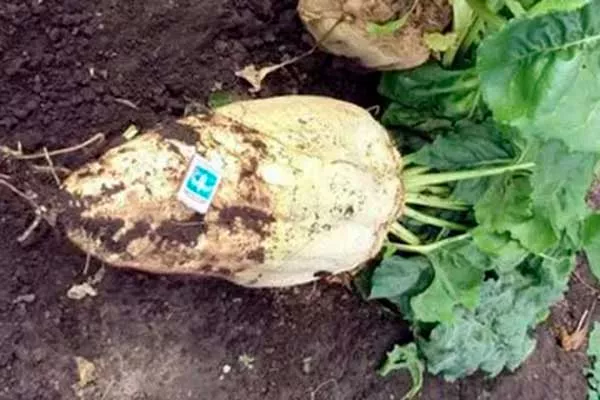
Description of appearance and taste
The semi-erect, dense rosette consists of several dozen leaves and a strong petiole. The leaves are elongated ovoid-shaped, moderate in length and width, with a wavy margin and a glossy surface. It bears yellow-green flowers, usually 2 to 6 in number.
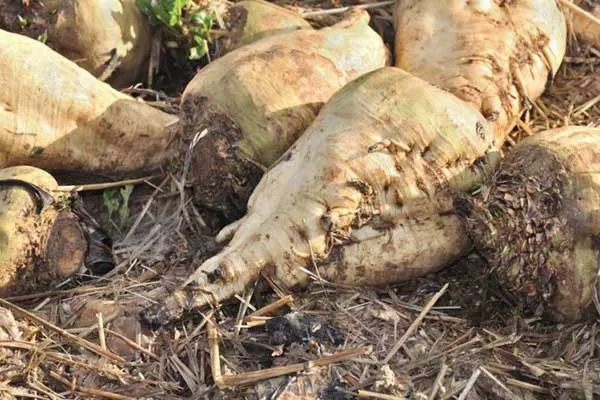
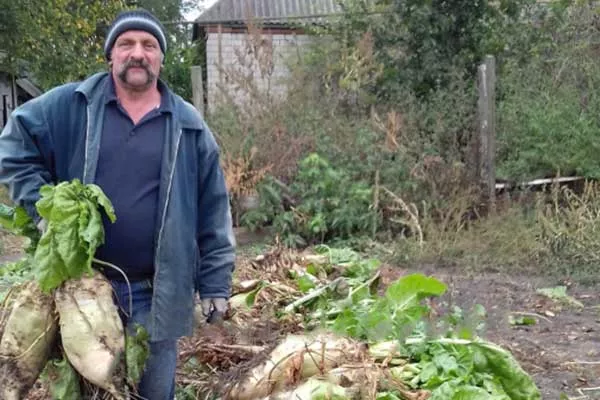
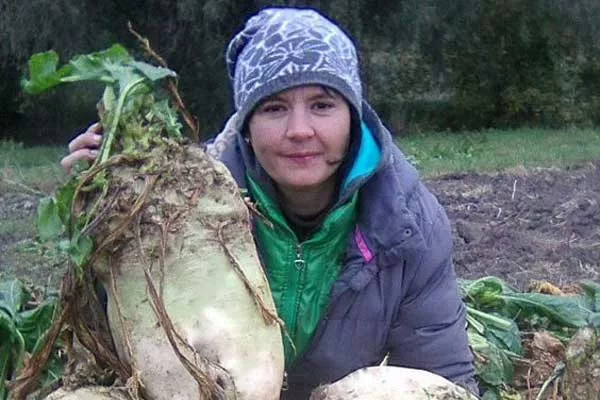
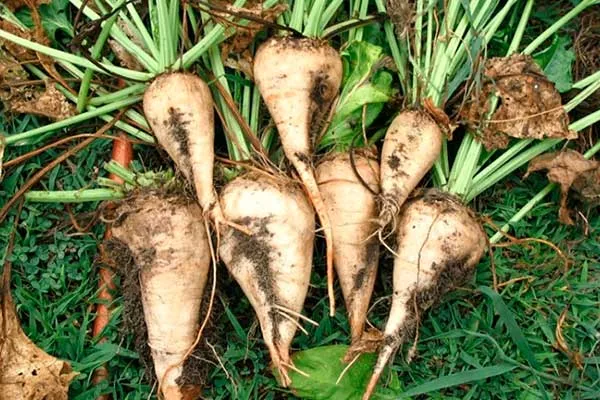
The medium-sized, cylindrical root vegetable has an elongated tip, with a white-pink coloration below ground and a slightly greenish coloration above ground. The flesh is fleshy and juicy, white in color. Tuber weight varies from 428 to 469 g, but in black soil they can grow to 10-15 kg, and sometimes up to 25 kg.
Ripening and yield
The vegetable takes 4 to 5 months to fully ripen, so harvesting usually occurs in September-October.
The timing depends on the region, weather conditions, and planting time. Determine maturity by the foliage: at this stage, new green leaves stop forming and old ones begin to turn yellow.
Suitable climate and region
The crop is successfully cultivated in various regions, especially in temperate climates. It thrives in Siberia, the Volga region, the Central Black Earth Region, and the Urals.
Shows good results when grown in warmer regions where there is sufficient sunlight and optimal growing conditions.
What is it used for and by whom?
This variety is intended for use as an energy and stimulating supplement for cattle. Cows, goats, sheep, pigs, and rabbits fed this product experience a 70% improvement in the digestibility of roughage (straw, corn meal).
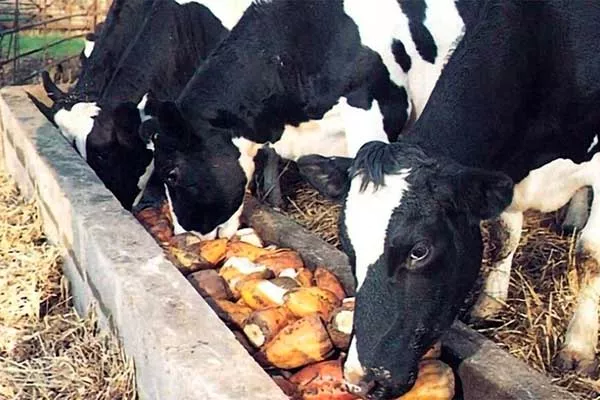
Milk yield in goats, cows, and sheep increases by 13-15%, while milk protein and fat content increases. A positive effect on offspring is noted. In agriculture, Lada is used as dry feed, as a standalone supplement, or as a supplement to primary feed.
The effect of fodder beet on the body of animals
Cattle are fed beet tops, either fresh or pre-dried for winter use. The leaves contain minerals, amino acids, carbohydrates, alkaline substances, and vitamins.
However, the effect of the crop on livestock can vary. It is recommended to feed beets to cows only after heat treatment. Before introducing them into the diet, the forage variety is soaked in boiling water, crushed, and mixed with straw or hay to reduce stomach acidity.
Step-by-step instructions for care and cultivation
Successful home cultivation requires certain conditions. It's important to follow the recommendations of experienced agronomists.
Where and for how much can I buy seeds?
You can purchase planting material at specialized stores or online—online markets deliver nationwide, including to Moscow and St. Petersburg. Beets are packaged in 800g bags, priced at 440 rubles per package.
Planting time and temperature
The optimal time for sowing seeds outdoors is late March to early April. During this period, the likelihood of cold weather returning decreases, and temperatures rise to 15°C or higher.
Choosing a location
Lowlands and floodplains with good light are ideal. Insufficient sunlight can cause root crops to begin flowering as they gain weight.
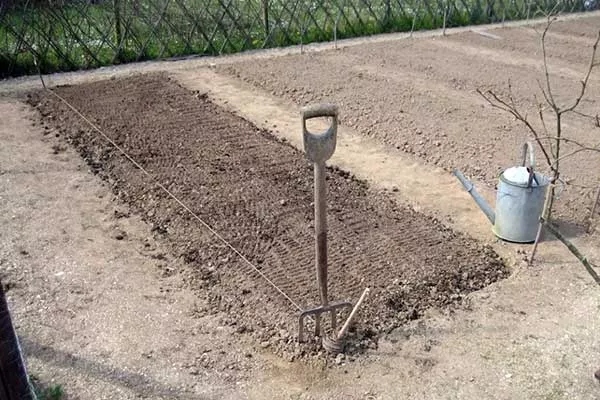
- ✓ Soil acidity level must strictly correspond to 6.2-7.5 pH for optimal growth.
- ✓ Chernozem soils are preferable, but if they are not available, additional fertilizing of loams is required.
What should the soil be like?
This variety was developed and tested on black soil. Loam soils require fertilization. Clay, sand, and acidic soils are unsuitable, although adding sand can help prevent rootworm. The optimal pH is 6.2-7.5.
Landing
Soak the seeds in water for 12-24 hours to speed up germination. To improve germination, pre-stratify the seeds by placing them in the refrigerator for several days.
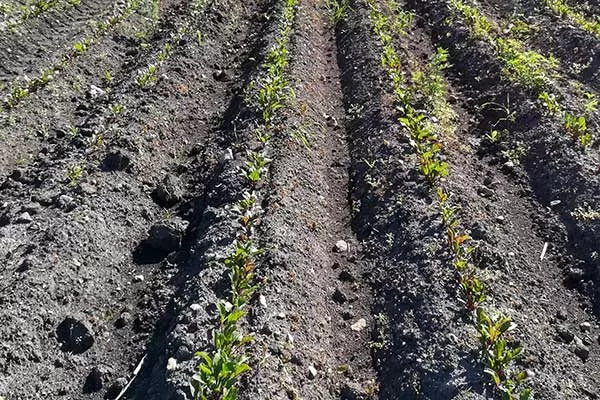
Step-by-step algorithm:
- Make furrows 1-2 cm deep and 30-40 cm apart.
- Place the seeds 5-10 cm apart.
- Fill with soil and compact gently.
- Moisten with warm, settled water. Keep the soil moist until germination, but avoid overwatering.
When the seedlings appear (in 2-3 weeks), thin the plants, keeping a distance of 10-15 cm.
Watering
Regular watering becomes important from the third week, when the vegetable's flesh begins to form. Water the plants at least once a week.
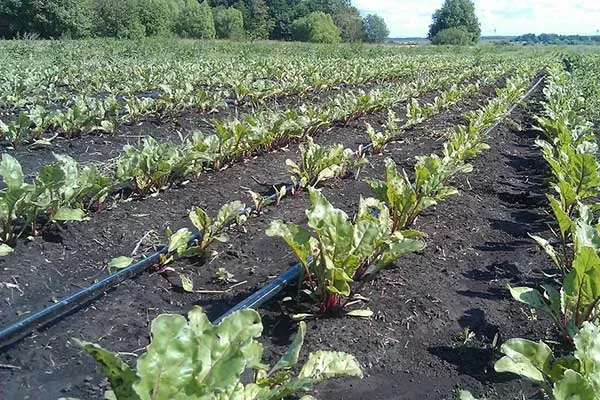
From the fourth month, reduce the frequency to once every 10 days. Stop watering two weeks before harvesting to allow the soil and fruit surface to dry out.
- The first feeding with mineral compounds is carried out 2 weeks after thinning.
- The second feeding is carried out 20-30 days after the first, with an increase in the dose of potassium fertilizers.
- The third feeding is during the period of active growth of root crops, with an emphasis on phosphorus fertilizers.
Top dressing
Fertilize the plants for the first time during the thinning period. Use a mineral fertilizer. Repeat after 20-30 days. Feed and fertilize the plants at least 2-3 times throughout the season, and more often if needed.
Other measures for vegetable care
Loosen the soil after each watering to ensure good aeration of the roots. Regularly remove weeds between the rows. Hill up the beets when the tops reach 3-4 leaves.
Harvesting
To avoid loss of volume, harvest root vegetables before the first frost, in late September or early October. Signs of ripeness include yellowing foliage and the cessation of new growth.
Storage
Pre-dry the harvest under a shelter protected from sunlight. Carefully trim the leaves, leaving small stumps, and remove any small roots.
For winter storage, place beets in a basement or specially equipped warehouse where the air temperature does not exceed +3-5°C.
Features of cultivation and possible difficulties
The crop requires plenty of sunlight to prevent flowering and to achieve optimal vegetable size. It prefers loose, fertile soil with a suitable pH level. Planting in clayey or acidic soils will not yield the desired results.
Control of diseases and pests
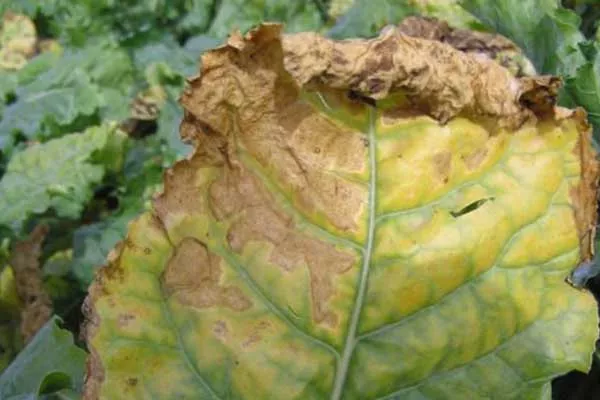
The plant has a strong immune system, but without proper care, it can be susceptible to various problems. The most common diseases are:
- Cercospora leaf spot: brown spots on leaves with a white coating.
- Fomoz: drying of tops, root rot.
- Rust: rusty spots on leaves.
- Cage rot: rotten areas on root crops due to dampness during storage.
- Powdery mildew: white powdery coating on leaves.
Pests:
- Click beetle: eats the pulp of root crops.
- Root eater: affects young seedlings, causing root rot.
Beets can suffer from attacks by beet bugs, flea beetles, beet weevils and bean aphids.
Prevention and treatment:
- Add mineral fertilizers to the soil.
- Spray with pesticides.
- Add hexachlorane to the soil to prevent beet flea beetles.
- If aphids appear, treat the plants with nicotine or anabasine.
To control larval pests, use chloroform or dust.
Positive and negative qualities
Geneticists have developed a variety that consistently yields in all climates. Its advantages include:
The variety's only drawback is its sensitivity to soil type. Optimal results are achieved only in black soil. Other soil types require additional fertilization.
Reviews
Lada is one of the most sought-after beet varieties, gaining popularity thanks to its excellent characteristics. Genetically developed to ensure a stable yield in all climates, it combines drought tolerance, high germination, and disease resistance. Proper care is essential.