
Fodder beet is an easy-to-grow crop grown for livestock feed. Its succulent roots, rich in pectin and fiber, are especially valuable during periods of fodder scarcity. Let's learn about popular varieties of this crop, how to plant, grow, and store it until spring.
The history of fodder beet
Beets have been known in Europe since the 13th century, and the Germans were the first to cultivate them for livestock feed. Farmers noticed that feeding beets to livestock had a positive effect on milk yield and flavor.
In the 16th century, beets were divided into two types in Germany: fodder beets and sugar beets. The former was widely grown for livestock feed. Since the 18th century, fodder beets have been cultivated throughout Europe.
Description of the culture
Fodder beet is a biennial crop. In the first year, a thickened root and a rosette formed by basal leaves grow. In the second year, shoots appear, producing seed-bearing fruits.
Description of the plant:
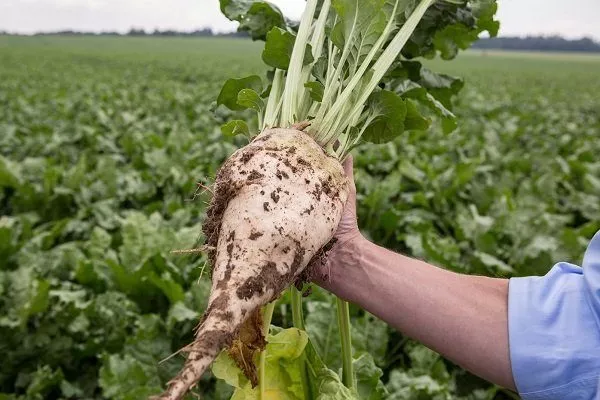
- Roots. They can be saccular, oval-conical, cylindrical, or spherical in shape. Average weight is 0.5-2.5 kg. The roots come in a variety of colors—red, pink, yellow, greenish-white, purple, and orange.
- Escapes. In its first year, the plant develops a lush rosette of green, heart-shaped leaves, reaching up to 1 m in height.
- Inflorescences. Paniculate inflorescences grow on leafy peduncles, in which the seeds ripen.
Advantages and disadvantages
The forage crop in question has its pros and cons, which are useful for livestock breeders to know.
Advantages of fodder beet:
- Ideal for feeding livestock;
- high yield;
- promotes improved digestion in animals;
- increases soil fertility, reduces weed infestation;
- has lactogenic properties.
Flaws:
- regular watering and fertilizing are required;
- demanding soil quality;
- relatively low protein content;
- If you feed a dairy cow more than 10 kg of beets per day, the fat content of the milk drops and its taste deteriorates;
- the need to change the growing location every year.
Comparison of fodder and sugar beets
The two related cultures have a lot in common, but also differences between fodder and sugar beets enough.
Comparison of fodder and sugar beets:
| Signs | Stern | Sugar |
| Appearance | The fruits are dark, the leaves are shiny. | It is distinguished by a large number of leaves. |
| Root crop growth | The degree of immersion in the ground depends on the variety. | The fruit is completely submerged in soil and has a more powerful root system. |
| Usage | Livestock feed. Both the root and the tops are used. | For sugar production. The tops and roots can be used as feed. |
| Compound | Inferior in energy value. | 20% more sucrose. |
Fodder beet varieties
Fodder beet varieties cultivated by farmers differ in ripening time, root shape and color.
| Name | Root shape | Root color | Average weight (kg) | Yield (c/ha) |
|---|---|---|---|---|
| Jamon | Cylindrical-conical | Orange | 5 | 80-85 |
| Starmon | Conical | Yellow (underground), green (aboveground) | 10 | 70 |
| Lada | Not specified | White or pinkish-white | 10 | 120 |
| Milana | Not specified | White (lower part), green (aboveground) | Not specified | 140 |
| Poly's Record | Not specified | Pink-red | 6 | 130 |
| Eckendorf Yellow | Not specified | Yellow | 0.9 | 150 |
Jamon
Yield: 80-85 centners per hectare. The root shape is cylindrical-conical. The fruits are medium-sized. Color: orange. Weight: up to 5 kg. 30% of the root is buried in the soil. The flesh is white and juicy. The roots are shelf-stable, storing until May.
Starmon
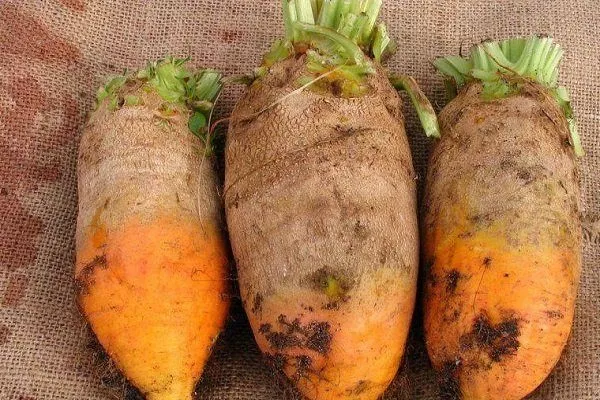
Yields up to 70 tons per hectare. Does not grow in saline or acidic soils. The plant has an upright rosette, with elongated leaves. The fruit is conical in shape. Fruit color: the underground portion is yellow, the aboveground portion is green. Average weight: 10 kg.
Lada
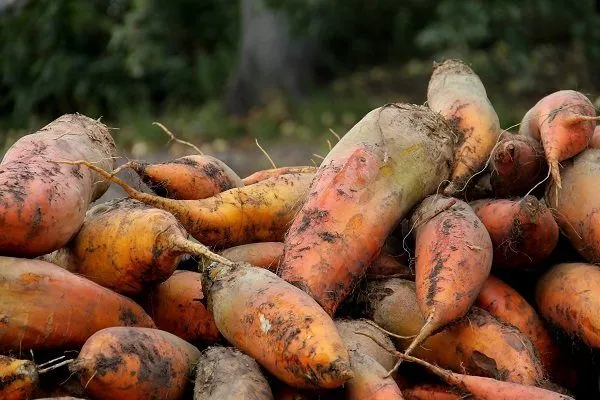
This variety has good shelf life. Yields are 120 tons per hectare, with a maximum yield of 170 tons per hectare. The variety is resistant to late flowering. Weight: up to 10 kg. Color: white or pinkish-white. The flesh is juicy, white, and firm.
Milana
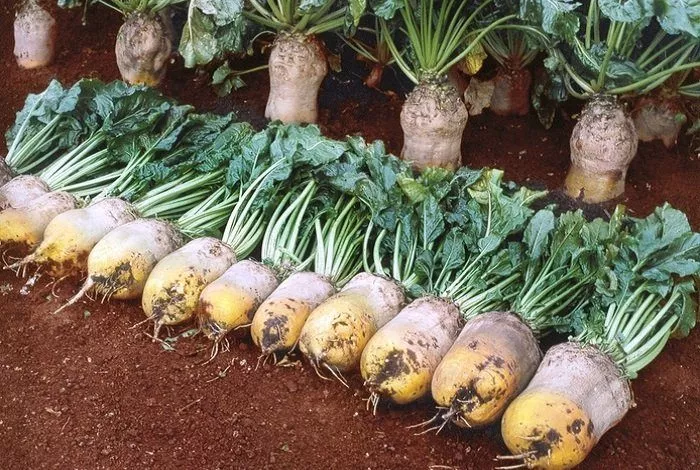
A Belarusian hybrid. Root yields up to 140 tons per hectare. The underside of the roots is white, while the aboveground portion is green. The rosettes are erect, with medium-wide leaves with white veins. The roots are 60% buried in the soil. It is characterized by low soil contamination. The roots are shelf-stable and can be stored until late spring.

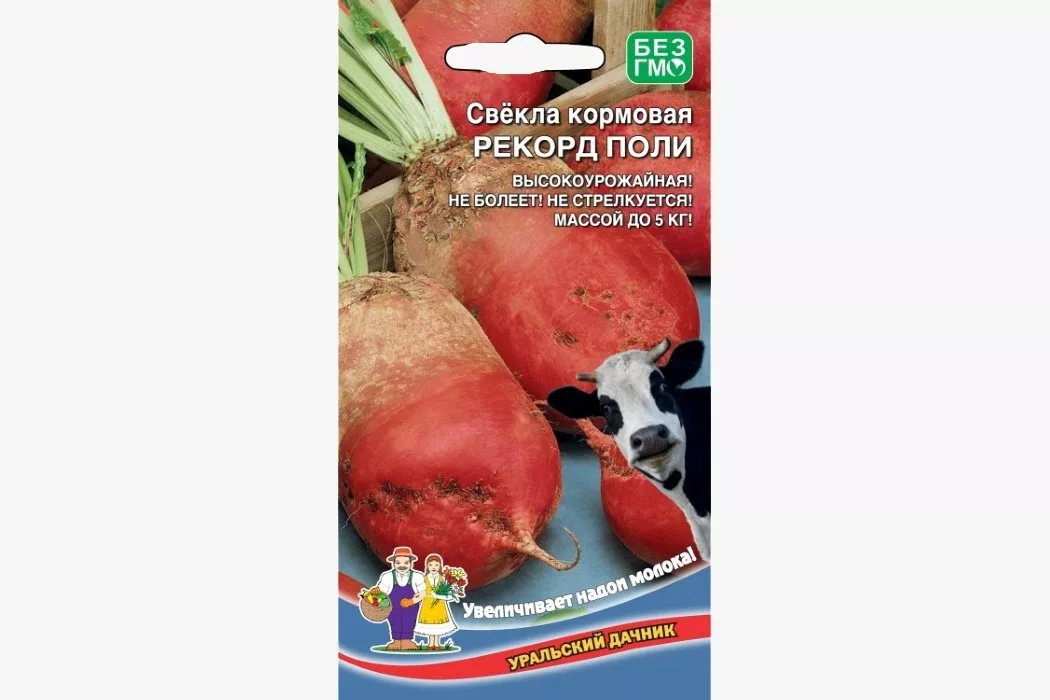
Poly's Record
A multi-stemmed, mid-late variety. Yields up to 130 tons per hectare. The roots are 40% submerged and have little soil contamination. The color is pinkish-red. The flesh is juicy and white. Roots weigh up to 6 kg.
Eckendorf Yellow
A cold-hardy variety. Yields up to 150 tons per hectare. It is resistant to bolting and does not produce bolts. The roots are yellow and 30% submerged in soil. Weight: up to 900 g.

Preparatory work
To grow large fodder beet roots, it is necessary to properly prepare the soil and seeds.
Where to plant beets?
The crop grows well in soils with a neutral to slightly acidic reaction (up to 7.5 pH). Growing fodder beets in waterlogged, clayey, rocky, and sandy soils does not produce the expected yields.
- ✓ The optimal depth of the arable layer should be at least 25 cm to provide sufficient space for root crops to grow.
- ✓ The humus content in the soil must be at least 2.5% to ensure the required level of fertility.
Beets grow well after cereals, corn, and vegetables. In forage crop rotations, the best predecessors are:
- silage corn;
- cereal and legume mixture;
- melons and gourds.
Fodder beets can be replanted in the same field after 3 years, but not earlier.
Soil preparation
The crop is demanding of soil fertility, so before sowing it is necessary to carefully prepare the soil, improve its structure and composition.
The procedure for preparing soil for sowing:
- Clear the area of weeds. Pull out the weeds, and repeat the process in two weeks when new shoots appear. To get rid of perennials such as couch grass and sow thistle, treat the area with herbicides such as Buran or Roundup.
- In the fall, add organic matter during tillage. For 1 hectare, add 35 tons of humus or compost and 0.5 tons of ash.
- Before planting, dig up the soil again, adding nitroammophoska - 15 g per 1 linear meter.
The ideal soil for sowing fodder beets is loose, moist soil with small clods.
Seed preparation
To prevent seeds from rotting in the soil, they need to be treated. Treatment will also prevent many diseases.
Processing order:
- Soak the seeds in a saturated solution of potassium permanganate. 30 minutes is sufficient.
- To ensure that the seeds germinate at the same time, place them in a growth stimulator.
- Dry the seeds.
Landing
The success of growing forage crops largely depends on the timeliness of sowing operations and adherence to the sowing schedule.
Deadlines
Fodder beets have a fairly long growing season—120-150 days—so they should be planted early, as soon as favorable weather conditions arise. Sowing fodder beets begins after the soil warms to 7°C, not earlier.
When determining sowing dates, the characteristics of a particular variety and climate are taken into account:
- Regions with a temperate climate. Sowing takes place from March 15 to 30. In case of unfavorable weather conditions, sowing is postponed until early April.
- Northern regions. Beets are sown here from the beginning of April until mid-May.
Sowing
If the soil has warmed up to +7..+8°C, and the seeds have been processed, you can start sowing.
Sowing order:
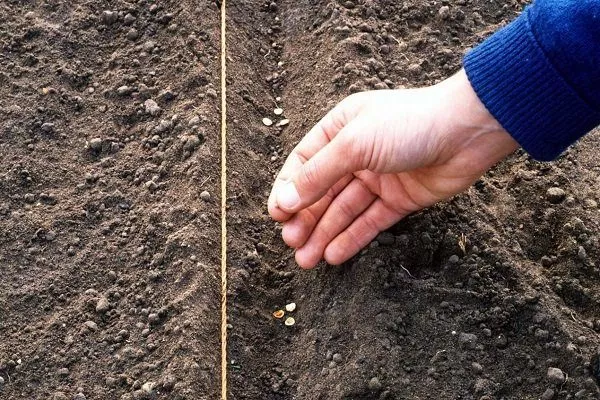
- Make furrows on the plot at intervals of 60 cm from each other.
- Place the seeds 3 cm deep into the soil. 15 seeds per linear meter.
- Cover the seeds with soil.
At 8°C, seedlings emerge in approximately 12-14 days; at 15°C, in 4-5 days. If the air temperature drops to -3°C, seedlings may be damaged.
Care Features
Agrotechnical measures:
- WateringWatering frequency depends on the weather and growing season. Watering guidelines:
- the water requirement increases during the period of growth and formation of root crops;
- Watering should be stopped a month before harvesting.
- Weed control. Weeds can cause up to 80% crop losses. Rows are weeded until the plant tops close.
- Thinning. The plant grows slowly for the first month and a half. However, as soon as the seedlings develop a pair of true leaves, thin them out. No more than 4-5 plants should remain per linear meter. Space adjacent seedlings 25 cm apart.
- Loosening. The soil is first loosened two days after sowing, and then after each watering. A subsoiler is used for loosening.
- Fertilization. To increase yields during the growing season, the crop is regularly fertilized. The composition and amount of fertilizer used depends on the soil type. Commonly used fertilizers include:
- nitrogen fertilizers – 130 kg per 1 ha;
- potassium-phosphorus mixtures – up to 150 kg per 1 ha;
- boron-containing fertilizers – 180 kg per 1 ha.
- Conduct a soil analysis before sowing to determine the exact composition of fertilizers.
- Apply nitrogen fertilizers in two stages: half the dose before sowing, the second half in the 4-6 leaf stage.
- Potassium-phosphorus fertilizers should be applied completely before sowing for better absorption.
If you do not stop watering 30 days before harvesting, the sugar content in the root crops will decrease and their shelf life will be impaired.
Diseases and pests
Fodder beets are often not treated with insecticides or fungicides to avoid harming livestock. Disease and pest control are primarily achieved through preventative measures.
Common beet diseases:
- Powdery mildew. It appears as a dirty white coating on the leaves. The following helps combat this dangerous fungal disease:
- timely destruction of plant residues;
- compliance with crop rotation;
- application of mineral fertilizers;
- spraying with fungicides;
- timely watering.
- Cercospora leaf spot. The leaves are affected, developing light spots with a brownish-red border. Control involves promptly removing plant debris, fertilizing beets with mineral fertilizers, and maintaining soil moisture (tilling, snow retention, and weeding).
- Fomoz. It typically appears at the end of the growing season, primarily damaging root crops. The pathogen penetrates the root, causing rot of the core. Phoma blight is often caused by a lack of boron in the soil. Control measures include seed treatment with polycarbacin and soil application of boron (3 g per square meter).
- Root eater. This disease causes rot of shoots and roots. It thrives in waterlogged, humus-poor soils. Crop rotation, soil loosening, and seed treatment are essential.
- Cage rot. Root vegetables are affected by this disease during storage. The pathogen can be bacterial or fungal. Affected roots first rot from the inside out, later developing a gray or white coating on the surface. To prevent rot, it's important to prevent wilting and freezing of root vegetables and ensure optimal storage conditions.
The main pests of beets:
- Beet flea beetles. They chew through leaves and can destroy seedlings. Measures:
- compliance with agricultural technology - early sowing, loosening, fertilizing;
- seed treatment;
- In case of a massive flea attack, spray with 40% "Phosphamide".
- Beet aphid. It sucks the sap from the above-ground parts of plants. It is recommended to spray the plantings with a 50% malathion solution (800 liters per hectare).
- Beet fly. Its larvae damage leaves. Deep autumn plowing and insecticide spraying are necessary.
- Beet weevil. It feeds on leaves and roots. Control measures include loosening the soil, autumn plowing, and spraying with insecticides. Poisonous bait can also be used.
Harvesting and storage
To ensure root vegetables are stored for a long time without spoiling, they must be harvested in a timely manner and favorable storage conditions must be created.
Recommendations:
- The harvesting is completed before frost sets in.
- The root vegetables are dried, the tops are torn off and the adhering soil is removed.
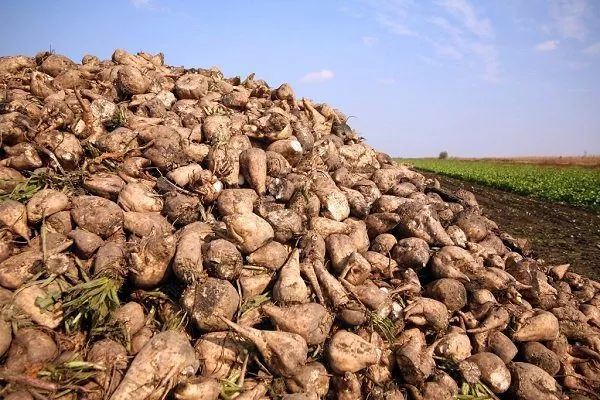
- Root vegetables are stored in well-ventilated cellars in clean containers. The temperature is maintained at +2…+4°C.
- Beets can also be stored in piles—large heaps—that are 3 m wide, 25 m long, and 1.5 m high. Straw and soil are placed on top of the beets to a depth of at least 60 cm.
How does fodder beet affect animals?
Fodder beet is a valuable source of nutrition for a wide variety of animals. It can be fed to cows, goats, pigs, and chickens.
Fodder beet has different effects on animals:
- Cows. Regularly including beets in the diet increases milk yield. The maximum daily intake is 10-18 kg. Beet feeding is stopped two weeks before calving.
Root vegetables are served steamed. They are chopped and steeped in boiling water, then mixed with hay or straw. - Goats. Improves digestion. Increases milk yield and fat content. A goat needs 3-4 kg of beets per day.
- Chickens. Replenishes calcium deficiency in birds. Eggs develop thick shells, their color deepens, and the yolk becomes bright yellow. Feed no more than 40 g per bird per day.
- Pigs. Beets are given raw or cooked. Pigs readily consume root vegetables. Beets normalize digestion in animals and promote weight gain. The root vegetable improves fat metabolism, which leads to a reduction in the fat content of meat.
Growing fodder beets is simple and requires little investment. Under favorable growing conditions, this crop produces high yields, which are essential for high milk yields and successful fattening of livestock for meat production.