
Kestrel beetroot is a popular hybrid that delights gardeners worldwide. It is favored for its ease of cultivation, shelf life, and ease of transportation. Despite adverse weather conditions, this variety always promises a bountiful harvest. Outside Russia, it is considered a model of high-quality and productive harvesting.
Origin of the variety
The Kestrel F1 beet is the result of the work of a Japanese breeding team based in the south of France, at the premises of Sakata Vegetables Europe SAS. Registration documents for this hybrid were submitted in 2004.
The variety underwent rigorous breeding tests over three years. In 2007, Kestrel F1 beetroot was registered in the Russian State Register and quickly became a recognized beet crop. Since 2008, it has been cultivated in Eastern European countries, including Ukraine, Moldova, and Belarus.
Introduction to the variety
Beetroot Kestrel stands out for its ability to withstand adverse weather conditions and successfully survive short-term cold spells.
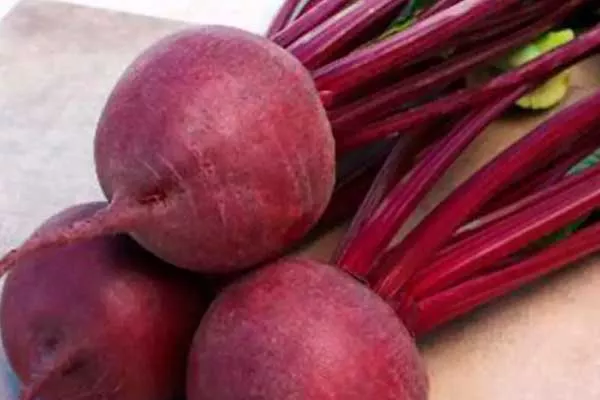
It's resistant to mild drought, and its roots remain intact. Beets contain many beneficial minerals, including potassium, magnesium, iron, and iodine.
Distinctive features of tops and roots
The Kestrel beet's rosette of leaves is graceful. The plant's leaves are typically vertical, although horizontal blades are also common.
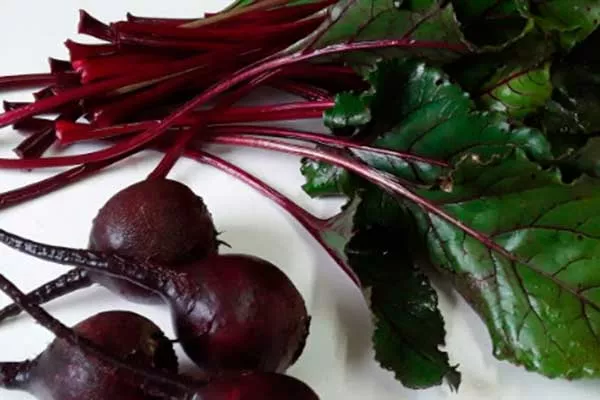
You can also recognize the variety by other characteristics:
- The height of the tops ranges from 30 to 35 cm.
- The leaf mass has a rich greenish hue.
- The leaves are oval-shaped, with a long petiole.
- The surface of the leaf is shiny and slightly bubbly.
- The edge of the leaf is distinguished by pronounced wavy lines.
- The central and lateral veins are colored in pink tones.
- The petiole is of medium thickness and is covered with anthocyanin color underneath.
- The plates of this hybrid variety retain their beauty until harvest.
- The rosette is strong enough to withstand damage during harvesting, but it can be easily separated during root processing.
- The tubers are round in shape and have an almost perfectly smooth surface.
- The spine is strictly central, medium-sized and does not stretch in width.
- The hybrid is famous for its juicy, rich pulp, which is characterized by uniform density and at the same time delicate velvetiness.
- The color of the fruit is bright, deep, very dark red with a raspberry hue.
- The variety is distinguished by the absence of a ring pattern on the fruits.
- The average weight ranges from 203 to 375 g, but sometimes larger specimens are found, the weight of which can exceed 400 g.
Kestrel root vegetables have received high marks in the Russian Federation State Register for their good to excellent taste. The sweetness of these vegetables is enhanced by their high sugar content, which reaches up to 12% per 100 g of pulp.
Where and how is it used?
This beetroot variety is distinguished by its versatility: it's ideal for creating a variety of culinary delights, preparing winter reserves, making purees, and extracting juices. Beets are used in both commercial and home cooking.
Ripening time
This mid-season hybrid can be used for early beet cultivation in open ground to produce fresh, edible beets (both the fruits and tops are eaten when young). It is also suitable for producing larger root crops, which are harvested in the fall.
Ripening features:
- It takes 55 to 60 days to produce fresh bunch beets that can be eaten whole.
- Full ripening takes about 120 days from sowing.
Productivity
According to information published by the State Register, the yield of root crops of the Kestrel variety ranges from 253 to 308 centners per hectare, which corresponds to the standards established by the mentor variety (Bordeaux 237).
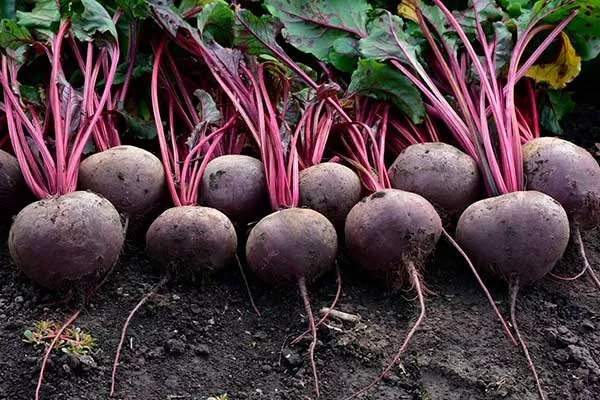
Other indicators and nuances:
- In the Rostov region, crop yields have reached record highs – up to 336 centners per hectare.
- This variety is distinguished by a high level of tubers harvested using mechanical technology, when the proportion of preserved root crops ranges from 85 to 96%.
- In regular garden beds, you can dig up from 3 to 6 kg per 1 square meter.
The harvest remains stable even under unfavorable weather conditions, including drought.
Keeping quality
Kestrel root vegetables easily withstand long-distance transportation and are resistant to mechanical damage.
Beets retain their quality throughout the winter without spoiling or losing their flavor.
Suitable regions
This variety is ideally suited for farming in all regions of Russia, regardless of their climatic conditions, although at different times:
- In warm regions of the countryIn areas where spring comes early and the summer period is long (southern Russia, the Volga region and the North Caucasus), beet sowing can be carried out as early as April 20 using seeds in open ground.
- In colder climates, including the Central Belt, the Urals, Siberia and the Far East, planting is carried out through seedlings and begins no earlier than May 15.
What makes this variety special?
Kestrel F1 stands out for its increased resistance to sudden temperature fluctuations. It has the highest sugar content of any beet crop and a high fiber content, while other varieties have lower levels of these components.
How to plant beets?
In some climate zones where conditions for growing beets are not suitable, there may be no harvest at all, so gardeners prefer to grow the Kestrel F1 hybrid using the seedling method.
Requirements
Kestrel is a heat-loving plant, so planting material should be introduced into open ground only after the danger of spring frosts has passed and the soil has warmed to at least +8 degrees Celsius.
- ✓ The optimal soil temperature for sowing should not be below +8°C to avoid delayed germination.
- ✓ To prevent damage by phomosis and ascochytosis, it is necessary to strictly observe crop rotation, avoiding planting after cabbage, radishes, potatoes or horseradish.
Please note the cellular subtleties:
- Experienced gardeners advise using protective covers to retain heat in the beds in the first days after planting.
- The best predecessors are carrots, greens, garlic and legumes.
- Avoid planting Kestrel after plants such as cabbage, radish, potato or horseradish.
- It is not recommended to grow beets in the same area more than three times in a row.
Seedling cultivation option
For growing beets in containers, either ready-made commercial soil or homemade soil is suitable. The recommended soil composition includes:
- garden soil and compost - one part each;
- peat - two parts.
Kestrel F1 hybrid seedlings do not tolerate acidic conditions, so 100 g of wood dust should be added to every 5 kg of soil mixture. To disinfect the soil, heat it in an oven or steamer for an hour.
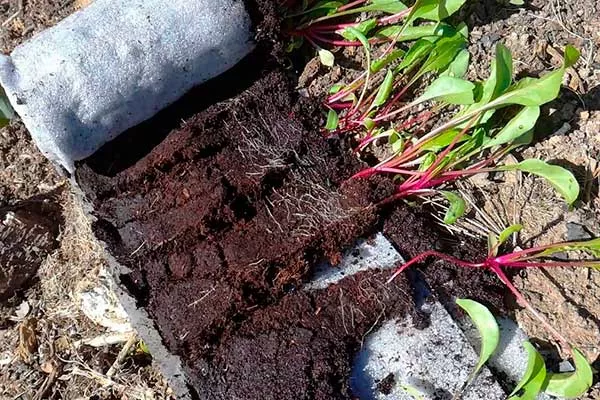
The process of sowing and caring for beets using the seedling method looks like this:
- Compact the substrate in the container.
- Spread the seeds evenly.
- Cover the planting material with a layer no more than 1.5 cm thick.
- After this, lightly compact the soil and spray with water using a spray bottle.
- Cover the container with transparent film or glass material and place it in a warm place at a temperature of +20°C.
- After the seedlings appear, remove the film and reduce the temperature to +15°C.
- If the seedlings don't form a dense canopy, you can skip pricking them out. Simply add a little soil to strengthen the roots. When removing excess seedlings, don't throw them away; replant them in a different container.
Planting in open ground
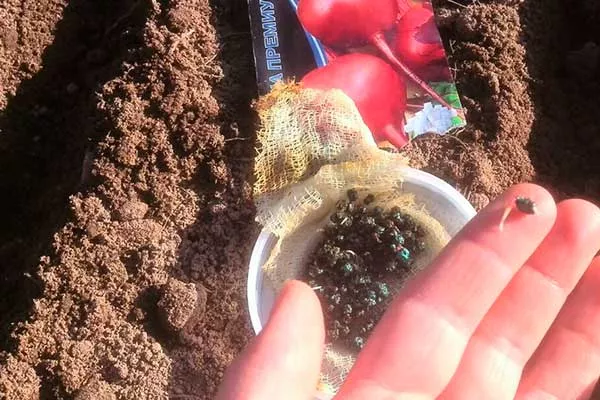
Before planting seeds outdoors, they need to be sorted. The seeds are poured onto a clean sheet of paper and sorted by size, eliminating damaged or overly small ones.
Peculiarities:
- To ensure seedlings emerge simultaneously, soak the seeds overnight. Place them in a container of water, changing the water periodically every 6-8 hours.
- After the seeds have swollen, place them in a container with any solution to stimulate growth.
- For sowing, create furrows 15 to 35 cm apart, depending on your growing goals. If you plan to store the beets, it's recommended to increase the spacing between rows.
- The sowing depth should not exceed 3.5-4 cm.
- Water the holes and when it is absorbed into the soil, distribute the seeds evenly at a distance of 5-6 cm from each other.
- Then sprinkle the surface with soil, covering the seeds with a 2 cm layer.
Agricultural technology
To ensure the growth of sugar beets, careful care is essential. This includes a number of important steps:
- Watering is adjusted according to weather conditions. During hot and rainy periods, water every seven days, and during dry and rainy periods, every three to five days. The water is preheated in the sun. Each plant requires approximately 800-900 ml initially and approximately 3-5 liters thereafter.
- Weeding should consist of two steps: loosening the soil and removing weeds. This makes the soil more breathable, maintains healthy microflora, and prevents pest growth.
- Mulching is a process in which sand, sawdust, peat, leaves, or wood shavings are scattered around the stem. This promotes nutrition for the root system, protects it from freezing, and prevents moisture evaporation in the soil.
- Sugar beets are fertilized 3-4 times during the growing season. Fertilizers alternate between organic and mineral fertilizers, as well as root and foliar applications (directly applied to the plant using a spray bottle).
- Thinning is performed 2-3 times during the growing season.
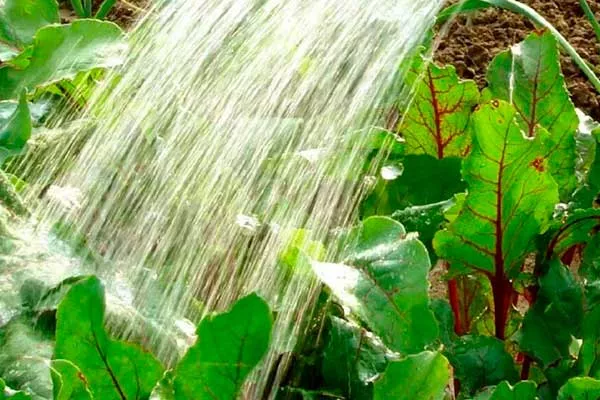
It's important to emphasize that salt fertilization has a positive effect on the quality of beets. To do this, dissolve 50-60 g of table salt in 10 liters of water. It is recommended to water the vegetable with this solution in June, during root development.
Harvesting
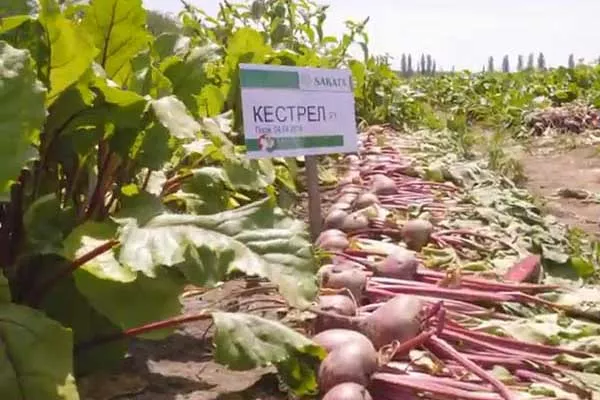
When the beet leaves begin to yellow, dry out, and fall, it's time to dig up the harvest. Remove the vegetables from the ground on a dry, sunny day:
- Using a pitchfork, carefully lift the soil, pull up the root vegetables and leave them in the bed to dry out a little.
- Then trim the tops, leaving no more than 2.5-3 cm of petioles, shake the root vegetables from the ground and proceed to sorting them.
Storage
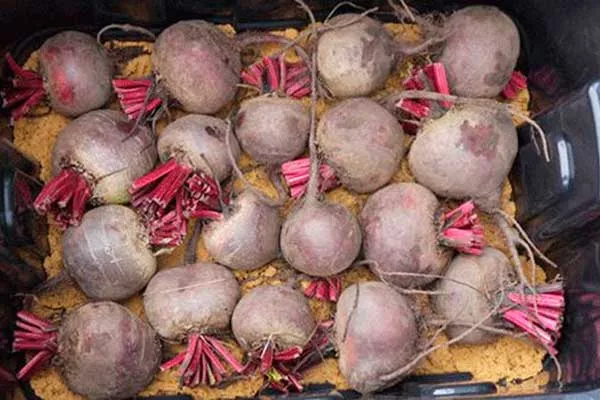
Storing beets requires special attention. Prepared beets should be laid out to dry in a sheltered area or a well-ventilated room. Afterward, the harvest can be transferred to a storage area with 90% humidity and a temperature of 0 to 2 degrees Celsius. Wooden or plastic containers are used for this purpose, and it is recommended to fill them with sand for best preservation.
Control of diseases and pests
The key qualities of the Kestrel variety include its high resistance to diseases such as cercospora leaf spot, powdery mildew, and fusarium. However, the following problems can sometimes affect crops:
- When affected by phoma, yellowish marks may be visible on the leaves. These problems most often arise when basic crop rotation guidelines have not been followed. Treatment is essential, otherwise the roots may dry out.
At the first signs of damage, immediately spray the beets with Bordeaux mixture or copper sulfate. - Brown spots on the green foliage indicate ascochyta leaf spot, a disease that often occurs under conditions of extreme temperature fluctuations and inadequate moisture. To restore the plant's health, use fungicides such as Maxim, Quadris, or Oxyhom.
| Disease | Beetroot resistance Kestrel | Recommended control measures |
|---|---|---|
| Cercospora leaf spot | High | Preventive treatment with Bordeaux mixture |
| Powdery mildew | High | Treatment with fungicides at the first signs |
| Fusarium | High | Crop rotation |
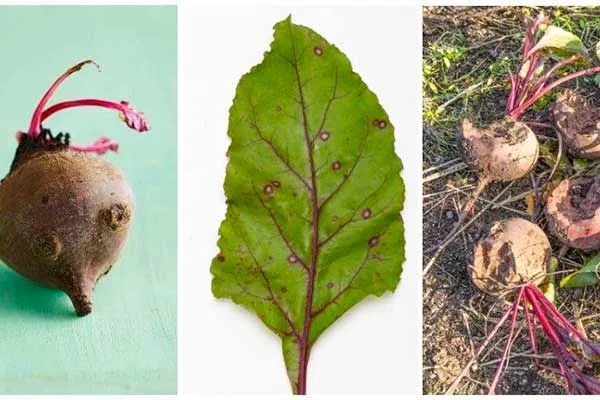
Among the pests that can harm the variety, the following insects are especially worth noting:
- beet flea beetle, feeding on young leaves and especially active in hot and dry conditions, it can cause significant damage to plants;
- beetroot fly, which eats leaves, lives in them and subsequently turns into a pupa;
- leaf aphid, feeding on the sap of stems, leaves and young shoots.
To protect Kestrel beets from pests, it is recommended to use Decis, Proteus, Calypso or Confidor.
Positive and negative qualities
Kestrel is considered one of the most successful hybrids, although it has a number of characteristics—both positive and negative. The variety's positive aspects include:
However, the Kestrel variety does have certain drawbacks, particularly its low resistance to pests. To protect the crops from pests, it is necessary to strictly follow agricultural recommendations and regularly treat the plants.
Reviews
Kestrel beetroot is ideal for canning and long-term storage. Even novice gardeners can grow this vegetable. This hybrid's roots are prized for their consistent yield and excellent flavor. This easy-to-grow crop performs best in sunny, spacious beds fertilized with cow manure.