
In arid regions and areas with extreme temperature fluctuations, Action F1 beets can be grown in the garden. They offer a pleasant and delicate flavor, early ripening, and a long shelf life. Read on to learn more about the characteristics and cultivation techniques of this hybrid.

Beet Action
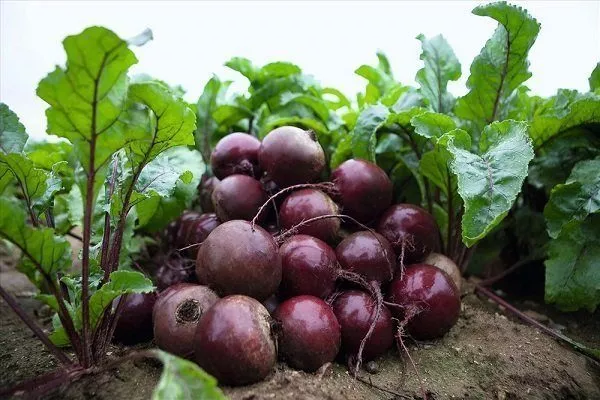
Action beetroot tolerates temperature fluctuations well.
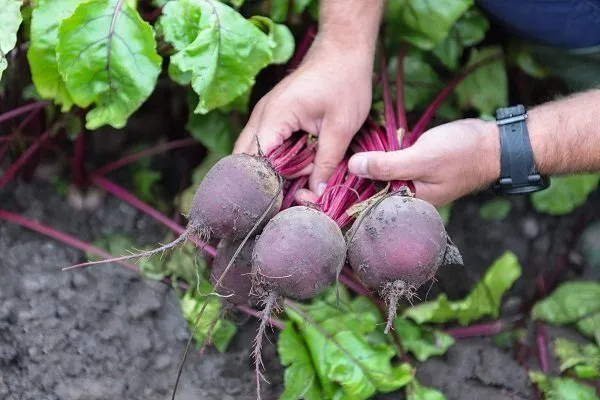
Beetroot Action is an early variety
Description of the variety
Action F1 is a table beet hybrid from Dutch breeders at the world-renowned Bejo Zaden, a company specializing in breeding, seed production, and sales of vegetable seeds. The variety is listed in the State Register of Plants of the Russian Federation and is recommended for cultivation in the Central Russian region. Its characteristics are presented in the table:
| Parameter | Description |
| Ripening period | The hybrid is early maturing—the period from germination to technical maturity of the roots is 90-105 days. The harvest can be made from August to September. |
| Plant | Action beetroot has a strong root system and foliage, allowing it to withstand sudden temperature changes and even dry weather.
The rosette of leaves is semi-erect and compact, growing from a single point. The succulent leaves grow vertically, are bright green, and narrowly oval in shape. They are characterized by moderate blistering and slight wavy edges. As for the petiole, it is quite strong and red on the underside. |
| Roots | The hybrid bears fruit in heads with the following parameters:
Some gardeners value the hybrid because the root vegetables only have a small, neat cut from the tops. |
| Application | Beets with excellent taste qualities can be grown for bunch production, as well as for fresh consumption, any processing and long-term winter storage. |
| Productivity | The hybrid has a high yield – from 3.5-5 to 9.4 kg per square meter. Marketable yields range from 350-510 c/ha, which is comparable to the TSKhA two-seeded standard and 105 c/ha higher than the Pablo F1 standard. Maximum yields were recorded in the Republic of Tatarstan at 938 c/ha. Marketable yields are 87-94%. |
The Action F1 hybrid is similar in properties to the Pablo variety, but has stronger foliage and a powerful root system, which guarantees high yields and excellent germination in any conditions.
The video below explains the varietal characteristics of the Action F1 beetroot:
How to plant?
Beets should be planted in sunny, sunlit areas with neutral or slightly acidic soil. Sandy soils are not suitable. To improve soil fertility, add potassium fertilizer or ash during fall tillage.
- ✓ The optimal soil temperature for sowing should not be below +10°C, despite the +6…+8°C indicated in the article, to ensure better germination.
- ✓ To prevent root rot, it is important to ensure drainage in the area, especially in areas with high humidity.
Seeds should be sown in well-warmed soil (6…8°C). This temperature typically sets in at the end of April or the second half of May.
Purchased planting material does not need to be soaked before planting, as it has already been treated with Thiram fungicide. At the designated time, it can be planted directly into the soil. The optimal planting pattern is as follows:
- the distance between seeds in a row is 8-10 cm;
- row spacing – 25-30 cm;
- seeding depth: 2-4 cm.
After sowing, the soil must be rolled for better plant development.
Beetroot care and harvesting
Action F1 is a hardy and undemanding variety, so caring for it is very simple and involves the following steps:
- water as the soil dries out, avoiding excess moisture, as it can cause root rot (during a drought, 5-6 waterings are sufficient);
- a week after planting, thin out the seedlings, leaving 8-10 cm between plants;
- periodically loosen the space between rows and remove weeds;
- During the growing season, feed with potassium fertilizers and ash.
In late summer or early fall, you can begin harvesting. This is a simple task, as the roots are only half-buried in the soil and are easily pulled out. After harvesting, they should be allowed to dry slightly and stored in a cellar or basement.
Pros and cons of the variety
The Dutch hybrid Action F1 has no known drawbacks, but it has many advantages:
- exhibits tolerance to diseases and flowering;
- gives a stable harvest;
- has cold resistance;
- tolerates drought conditions well;
- bears fruit with even root crops with a small cut at the place where the tops were removed;
- Suitable for bunch production.
Action F1 Reviews
Action F1 is a first-generation hybrid from the Netherlands, characterized by a well-developed root system and resistance to cold and drought. It can be grown without much effort, yielding a harvest of delicious root vegetables rich in vitamins and microelements in about 100 days.