
Despite the centuries-old history of this variety, Egyptian flat beetroot remains in constant demand among gardeners. Its popularity stems from a number of advantages: exquisite flavor, abundant yield, and ease of propagation. However, to ensure the beetroot retains its flavor, strict adherence to agricultural guidelines is essential when growing it.
History of origin
Many believe the name indicates an Egyptian origin, but this variety was created by Russian breeders at the V.V. Dokuchaev Voronezh Federal Agricultural Research Center and was first submitted for testing in 1937.
The Egyptian flat variety gained wide popularity after 1943, when it was included in the State Register of Approved Varieties.
Introduction to the variety
This variety is renowned for its excellent flavor and can be successfully cultivated throughout Russia, making it a favorite among gardening enthusiasts. Egyptian Flat is a mid-season variety.
This beetroot variety is suitable for eating raw, boiled, and stewed. It is resilient to short-term droughts and various adverse weather conditions. It produces a reliable and abundant harvest and is resistant to the problem of bud rot.
Distinctive features of tops and fruits
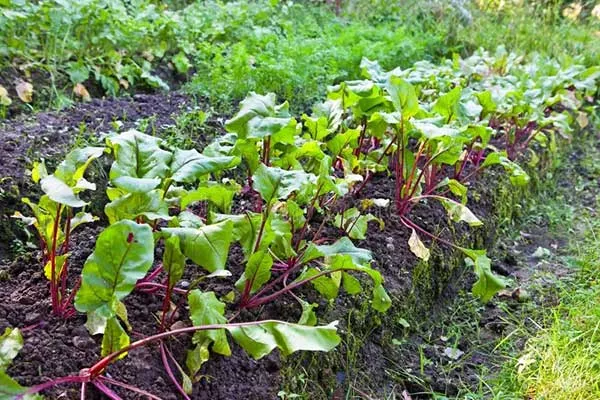
The shrub has a straight trunk and forms rosettes of leaves reaching 45 to 55 cm in height. The cultivar can be identified by other characteristics:
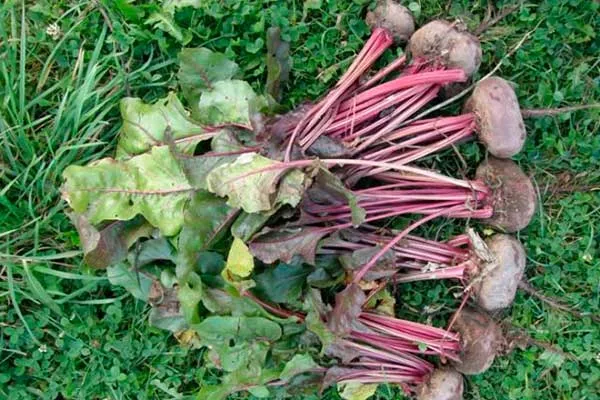
- The petioles are 20-30 cm long and up to 1-1.5 cm in diameter, and their pinkish-red color indicates a high level of anthocyanins.
- Over time, the color of the leaves becomes more and more intense, reaching its peak intensity at the end of the growing season.
- The leaves of this beet variety are dark green. They are medium-sized, reaching 21-23 cm in length and 12-15 cm in width. They are elongated, with slightly wavy edges.
- The leaf blade has a slightly glossy surface and slight bulging. The central and lateral veins are colored in reddish-purple tones.
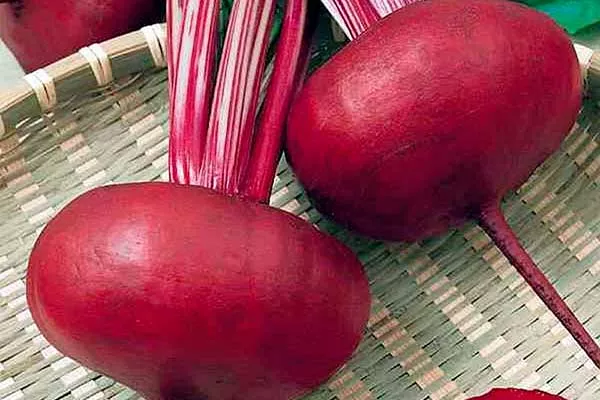
- The roots of this beet have a characteristic flattened-round shape, which is where the variety gets its name. They are strongly flattened laterally, contain a small head, and an elongated, medium-sized axial root.
- The roots reach 6 to 13 cm in diameter and up to 7-8 cm in height. The average weight of beets ranges from 200 to 400 g, but sometimes specimens weighing up to 500-520 g are found.
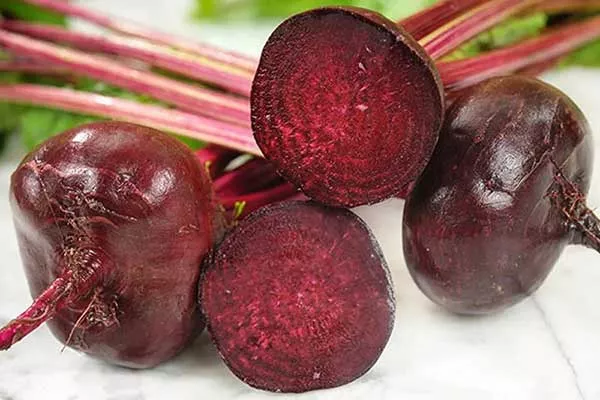
- The flesh is dark red, sometimes with a purple tint, has a firm texture, is juicy, and lacks whitish veins. The rings in the flesh are faintly visible.
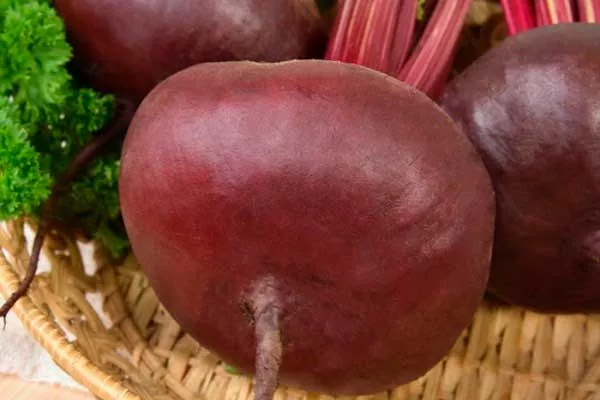
- The skin of the fruit is thin, but quite strong, with a smooth surface, a dark burgundy hue, and is easy to peel.
- ✓ The presence of pinkish-red petioles indicates high levels of anthocyanins.
- ✓ Characteristic flat-round configuration of root crops, strongly flattened from the sides.
Taste qualities, purpose
Their exceptional flavor, moderate sweetness and sufficient moisture content allow them to be used in fresh salads, soups, and hot dishes, as well as for feeding babies and people with limited diets.
Maturity
The popular Egyptian Flat beet variety is a mid-season variety, meaning that it takes 100-120 days from sowing to harvesting, which is equivalent to approximately 4 months.
This ripening period typically occurs between June 20 and July 10 if seedlings are planted in the first ten days of March. Ripening time may vary slightly depending on weather conditions and climate, but these changes are usually minor.
Productivity
This variety is highly productive – 5 to 9 kg of roots can be harvested from a single square meter. During growth, they remain in the soil at a depth of approximately half their length or slightly deeper.
Key points:
- Egyptian flat beetroot is resistant to sudden cold snaps and droughts, allowing it to be successfully cultivated throughout Russia.
- The variety is characterized by a lack of tendency to bloom, which ensures a stable yield of root crops, excluding the formation of flowers, which is the reason for its high productivity.
- Root vegetables have good shelf life and transportability, allowing them to be used for further sale or processing. When stored properly, beets retain their quality throughout the autumn and winter, with official storage rates ranging from 75% to 89%.
- Smaller Egyptian flat beetroot fruits tend to lose weight and become less attractive, so it is recommended to use them immediately after harvesting or to store them for winter.
Suitable regions
Recommended for planting across a vast territory of Russia: from the Central Belt to the Far East, including the Black Earth and Volga regions, as well as the Urals.
For many years, the variety has been successfully cultivated not only in Russia, but also in the lands of its neighbors, including Ukraine, Armenia, Tajikistan, and Kyrgyzstan.
Distinctive features
The Egyptian Flat variety is distinguished by its robustness and rapid growth, producing a 10-row bed from just 5 grams of seeds. It has a good germination rate, even under unfavorable weather conditions, such as frequent rainfall and abundant weeds. Root crops grown in such conditions remain strong and healthy.
Beets in their natural form (without additives) are particularly valuable due to their content of beneficial elements such as magnesium, iodine, and manganese, which help remove radionuclides and heavy metals from the body. Beetroot juice is used in medicine to treat various ailments.
How to plant Egyptian flat beetroot?
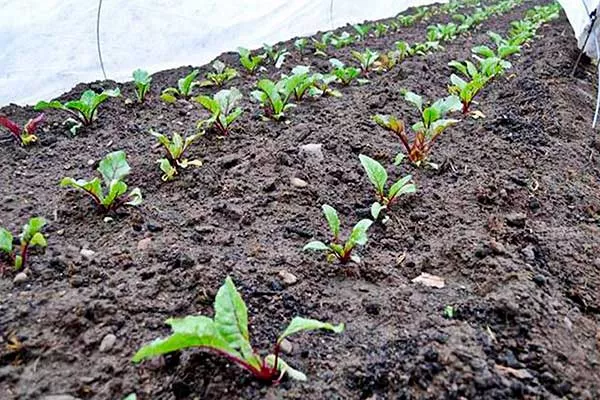
Egyptian flat beetroot is grown using two methods: using seedlings or direct sowing in open ground. This process can be started at any time of year—spring or fall.
Requirements
An average of 11 grams of seed is required for an area of 10 square meters. Crop rotation is important, so it's best to grow beets in areas previously occupied by cabbage, cucumbers, or tomatoes.
Other varietal rules must also be followed:
- The plant should be placed in a well-lit area to ensure maximum yield.
- Soil with a neutral reaction, that is, with a pH of about 7, is best. Acidic soils are not suitable for beets, but their acidity can be reduced with lime additives and phosphate fertilizers with boron.
Alkaline soils are acidified using compost made from maple and oak leaves, peat moss, and pine or spruce needles. It's important to remember that without alkalinity adjustments, beets may develop problems with fruit rot. - Preparation of planting holes begins in advance – the soil is dug up and fertilized.
- The sowing period depends on the planting method and the climatic conditions of a particular area:
- For seedlings, the time chosen is from March 5 to April 15, and transfer to the ground or greenhouse is assumed immediately after the appearance of the first green shoots.
- Planting in open ground is carried out from April 20 to May 15, when the soil temperature reaches at least 6 degrees Celsius.
- Winter sowing is carried out from October 15 to November 10, and only dry seeds are used.
- The best conditions for seed germination are 10 degrees.
- The optimal temperature for seedling development is 26 degrees, but increasing it can have a negative impact on the plants.
- To determine the soil temperature, simply bury the thermometer to a depth of 5-8 cm and leave it there for 5-10 minutes.
Seedling cultivation method
In comments on the variety description, gardeners often mention the problem of low seed germination. This is usually due to insufficiently careful seed selection and preparation.
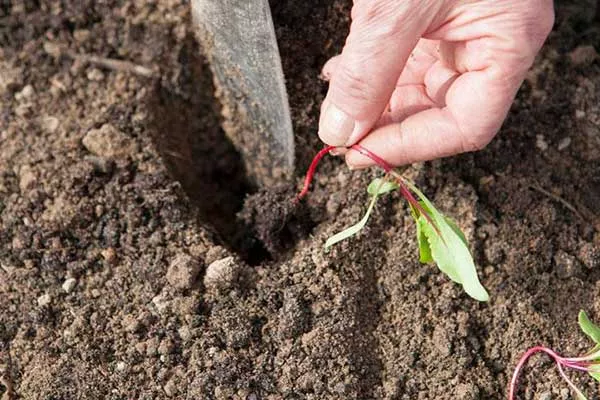
Before you begin planting, you should complete several steps:
- Check the seeds' germination by placing them in a salt solution and waiting 5-6 minutes. Any seeds that don't sink should be discarded.
- Place the seeds in warm water and leave them there until they swell completely, which takes several hours.
- Place the container with planting material in the bottom of the refrigerator for a week.
- After completing these procedures, proceed with planting.
To do this, follow these recommendations:
- Mix a soil substrate consisting of a turf base, black peat, humus and sand in a ratio of 2:1:1:1.
- Pour the mixture into boxes or containers.
- Sow seeds 1.5-2 cm deep, 3-5 cm apart.
- Water, cover with glass and keep at a temperature of 18-20 degrees.
Seedlings appear within 15-20 days, which is normal. After this, it is recommended to reduce the temperature to 15 degrees Celsius.
Planting in open ground
In the spring, fertilize the soil: when digging, add 1.5-2 tablespoons of superphosphate, 1 tablespoon of potassium sulfate, and the same amount of ammonium nitrate per 1 square meter.
In case of increased soil acidity, dolomite flour or lime is added to the fertilizer.
If soil resources are not rich enough in nutrients, organic compounds are used.
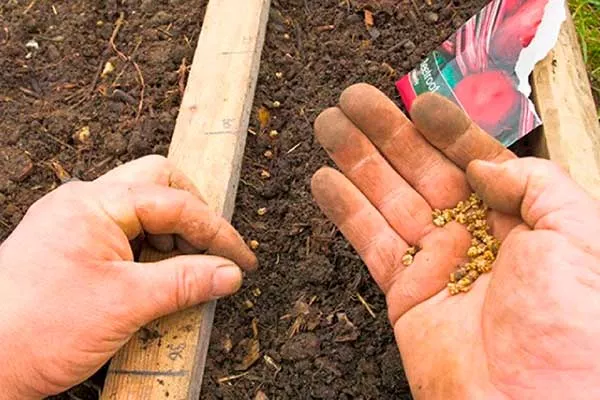
To grow Egyptian flat beetroot, plant according to the following scheme:
- planting depth 2-3 cm;
- the gap between furrows is 15-20 cm;
- the interval between grains in a row is 6-7 cm.
The sowing process includes several stages:
- First, calibrate the seeds, choosing whole and large specimens without damage.
- Then harden by dipping in warm water and placing on the bottom shelf of the refrigerator for a week.
- On the prepared area, create beds with a gap of 20 cm.
- Place the planting material into the soil to a depth of 3 cm, maintaining a 10 cm gap between the seeds.
Thinning begins when the seedlings reach 10-12 cm in height. If space permits, excess plants are transplanted to an adjacent bed.
Caring for Egyptian Flat Beets
Beetroot cultivation techniques are simple, but to achieve large, flavorful, and long-lasting fruits, you need to follow simple care recommendations:
- Once the young plants have developed two true leaves, the second thinning stage should begin. The spacing between beet rows is determined based on the desired root size: for larger plants, a 10 cm gap is recommended.
But keep in mind that medium and small root vegetables have a richer color and a more pronounced flavor. - After thinning, feed the beets for the first time with a liquid fertilizer made from manure or chicken manure. Once the plant has developed leaves, fertilize with potassium-rich compounds, such as wood ash, which promotes root development.
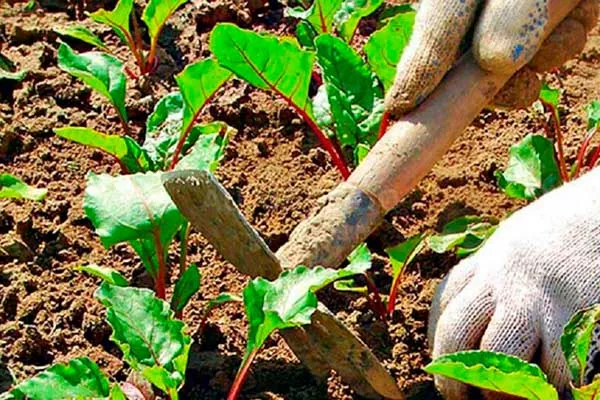
Beets respond particularly well to foliar spraying, when fertilizers are applied to the tops using complex mineral preparations with microelements, but in a weakly concentrated solution. - Regularly tend the soil, from the moment the first green shoots appear until the leaves close. Loosen and weed the soil to a depth of about 4-6 cm to prevent crusting on the surface.
Particular attention should be paid to loosening after each watering or after rain to ensure sufficient soil ventilation. - To make the beet rows easier to maintain, you can use mown grass to improve the soil. This will eliminate the need for weeding and loosening, and will also reduce the risk of the soil drying out.
- Beets require moderate watering. Water only when necessary, when the soil begins to dry out. For irrigation, use a sufficient amount of water – at least 20 cm deep and 20-30 liters per square meter of bed area.
Features of cultivation and possible difficulties
When taking their first steps in gardening, young gardeners may encounter a number of problems when growing:
- Don't rush into sowing - sowing too early can disrupt the formation of root crops, which in turn can lead to disease and slow down the overall development of the bush.
- Planting beets in peat-rich soil (which is typically highly acidic) can jeopardize the harvest. The plants will be weak, the roots unattractive, and they won't store well. Therefore, don't ignore this preparatory step.
- Young beet sprouts are prone to toppling over after watering. This should be prevented by carefully lifting and straightening them.
- Beets, like all root vegetables, can accumulate nitrates, making it extremely important to follow recommended rates when applying fertilizer in the spring and subsequently fertilizing according to the instructions.
Beets respond well to watering with a salt solution: 2 tablespoons of table salt per 20 liters of water. This treatment promotes a richer flavor and better winter preservation.
Control of diseases and pests
This beet variety has a good resistance to most diseases and insects. However, Egyptian flat beet is susceptible to:
- The risk of developing phoma rot and cercospora leaf spot is high if not properly cared for. To prevent this, improve the acidity if it is too high, and at the first signs of disease, treat with fungicides such as Acanto Plus, Rias, Benorad, Sfera Max, Falcon, Skalpel, and others.
- Egyptian flatweed can become a target for mole crickets, bugs, aphids, flies, and other pests. To minimize the risk, follow watering guidelines, loosen the soil regularly, weed, and remove damaged parts of the plant.
In case of insect infestation, it is recommended to use folk remedies, such as tobacco dust infusion, decoctions of tomato and potato tops, ash solutions, as well as insecticides, including Medvetoks, Biotlin, Aktara, Confidor, Inta-Vir and others.
Harvesting and storage
Egyptian flat beets can be dug up as early as mid-summer. However, the main harvest occurs during August. This variety is distinguished by its increased tolerance to long-term storage, making it suitable for winter storage.
Yellowing and wilting of leaves is a sign that harvesting is about to begin. Specifics for digging and storing:
- It is recommended to choose a clear sunny day for collection.
- Using shovels, carefully remove the root vegetables, being careful not to damage them.
- The leaves are cut off with a sharp tool, and the beets themselves are thoroughly cleaned of soil.
- The harvest is then spread out in an open space to dry.
- Vegetables are sorted, removing damaged and rotten fruits.
- For long-term storage, a dark and ventilated room is required, where the temperature is from 0 to 2 degrees Celsius, and the humidity does not exceed 90%.
- Damaged and unsuitable root vegetables are immediately processed and used for food purposes.
Cooks have a whole arsenal of ideas for preserving food for the winter: from borscht dressing to pickled beets and a variety of salads. The Egyptian flat beetroot variety, with its richly colored flesh, is a wonderful complement to marinated cabbage and other vegetables.
Positive and negative qualities
Gardeners highly value this variety for a number of advantages:
Experienced gardeners note that one of the drawbacks is delayed seed germination, which can lead novice gardeners to suspect defective or insufficient planting material. There are also other drawbacks:
Reviews
The Egyptian Flat beet variety is attractive due to its consistently high yield, ease of cultivation, and drought tolerance. Its convenient shape, vibrant color, and excellent flavor contribute to its market demand. The beets store well until spring, allowing for consistent product distribution.