
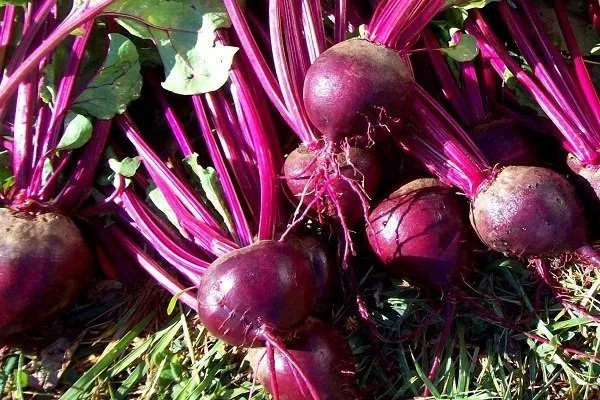
Many gardeners grow Detroit beets for fresh consumption, storage, and processing. About 100 days after germination, the medium-sized, rounded roots are ready to harvest, boasting a beautiful dark burgundy color and excellent flavor.

Detroit beetroot
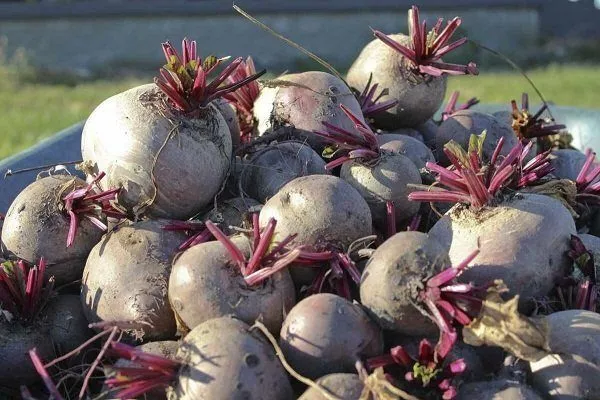
Detroit beets have juicy flesh.
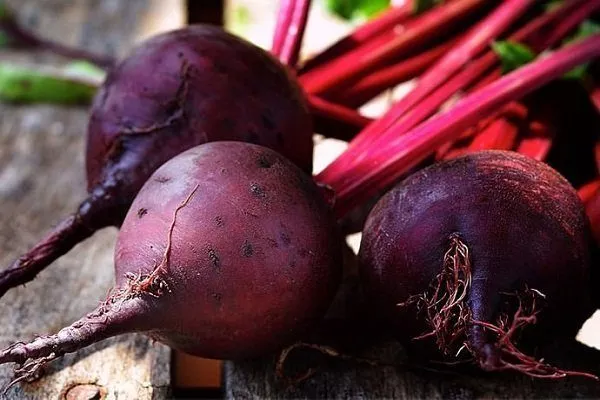
Detroit beets are dark in color and have no white veins.
Description of the variety
Detroit beetroot is the pride of Italian breeding. It was registered in 1994 and, just three years later, was included in the State Register of Plants of the Russian Federation for cultivation in the Central and Far Eastern regions. The variety is also successfully grown in Moldova and Ukraine. Its characteristics are listed in the table below:
| Parameter | Description |
| Ripening time | The variety is mid-season – the period from germination to technical maturity is 85-105 days. |
| Cultivation regions | The crop is suitable for open-ground cultivation in regions with moderate and warm climates. It has vigorous foliage and a strong root system, making it drought-tolerant. It can also be grown in cool and moderately harsh climate zones under film cover, as it adapts well to climate changes, tolerates minor frosts and emerges even when sown in winter. |
| Plant | The medium-height rosette of leaves is semi-erect and consists of small oval leaves that sit on long petioles. The leaf blade is bright green, punctuated by reddish-purple veins tinted with anthocyanin. Its surface is slightly bubbly, and the edges are wavy. The petiole, tinged with a reddish-purple hue, is also eye-catching. |
| Roots | The crop bears root crops with the following parameters:
|
| Application | Table beets can be eaten fresh and used in cooking, including making decoctions and juices. They can also be grown for sale in bunches. |
| Productivity | From 1 square meter of garden bed you can get up to 9 kg of fruit, and from 1 hectare – 362-692 centners. The yield is at a good level – 82-91%. |
| Shelf life | Root crops can be stored until the next season without losing their taste or commercial qualities. |
The characteristics of Detroit beets are described in the video below:
The official breeder of the Detroit variety is TM Clause (France). Seeds can be ordered on the company's official website or purchased at branded gardening stores.
Detroit Beet Varieties
| Name | Ripening period | Frost resistance | Lighting requirements |
|---|---|---|---|
| Detroit Dark Red | Early ripening | High | Average |
| Detroit 6 Rubidus | Early ripening | Very high | Low |
| Detroit 2 Nero | Mid-late | Average | Tall |
Given the excellent characteristics and popularity of the crop, breeders used it as the basis for creating the following beet subspecies:
- Detroit Dark Red (dark—red)An early-ripening variety that produces roots weighing between 80 and 250 g. They have a characteristic round shape and dark-red flesh with a high sugar content and no veins.

- Detroit 6 RubidusAnother early-ripening variety, it's frost-resistant and tolerates minimal amounts of natural light, making it suitable for cultivation even in shaded areas. It's ideal for early sale, making it popular with gardeners. It produces round, uniform fruits with a thin rachis.
- Detroit 2 NeroA mid-late, high-yielding variety that produces burgundy-fleshed roots that are resistant to nitrate accumulation. Excellent long-term storage.
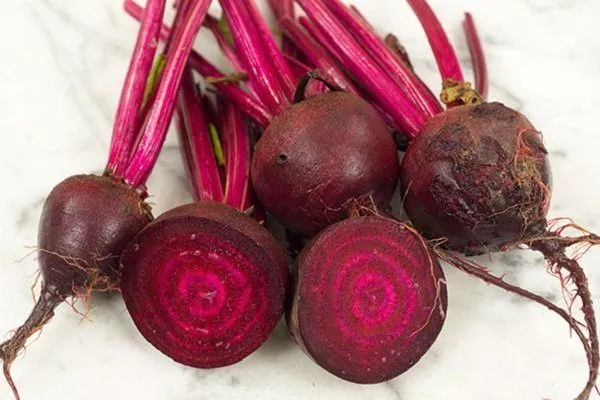
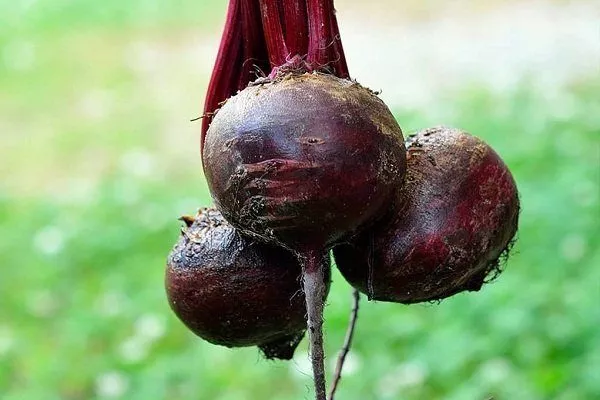
You can plant all varieties of Detroit beets in a bed at the same time, so that next season you can choose the variety that will produce the largest harvest and demonstrate resistance to diseases and pests.
Planting methods and timing
Detroit beets can be grown in two ways:
- By direct sowing of seeds into the soilThis popular technique allows for two-season cultivation, as seeds can be sown in both spring and winter. In the first case, the optimal sowing time is from late April to early May (after the soil warms to 10–13°C), while in the second case, it's early November.
- SeedlingsThis method allows you to save seed and get an earlier harvest, as root crops ripen 2-3 weeks faster than with direct sowing. However, this technique also has its drawbacks: it increases the seedlings' sensitivity to temperature fluctuations and reduces their resistance to diseases. Seeds for seedlings should be sown in early April. After about a month, the seedlings can be transplanted into the garden bed.
Site selection and preparation
To get a bountiful harvest of root vegetables, beets need to be grown in a properly selected and well-prepared plot. When choosing a planting site, consider the following requirements:
- the area should be sunny and protected from drafts, as the plant does not tolerate shade well and is demanding in terms of light intensity;
- the place should have good humidity, since Detroit beets are moisture-loving vegetables;
- It is desirable that cucumbers, tomatoes, potatoes or onions grew in the area last season (all types of cabbage and carrots are unacceptable predecessors);
- The soil in the garden bed should be loose, fertile and with slightly or neutral acidity.
- ✓ Soil pH should be between 6.0-7.0 for optimal growth.
- ✓ The soil should contain a high level of organic matter (at least 3-4%).
The crop bears fruit best in medium loamy and sandy loam soils with sufficient organic matter.
A suitable site for beets should be prepared in advance: in the fall, dig the soil to a depth of a spade, remove plant debris, and add organic fertilizer (humus, rotted manure). If the soil is highly acidic, add ash, dolomite flour, or lime.
Seed preparation
Beet seeds germinate slowly, so they need to be treated before sowing them outdoors or for seedlings. Here are some effective methods:
- Soak the seedlings in warm water for 24 hours. Change the water 2-3 times during this process, then dry and sow them in the soil. If the seeds become stuck together during soaking, do not separate them, as this can cause irreparable damage.
- Fold a piece of cloth in two layers and soak it in water or a weak solution of potassium permanganate. Place it on a saucer. Place 50-100 seeds on it and cover with another damp cloth. Place the saucer in a warm place (18–25°C) for 4 days. During this time, regularly moisten the cloth to prevent it from drying out. Avoid overwatering it, as this can cause the seeds to rot.
- To vernalize, place the seeds in an enamel pot to a depth of 3-4 cm and cover with 50 liters of water. After 32 hours, add the same amount of water. Keep the pot at a temperature of 15-20°C for 2-3 days, covering it with a damp cloth. Next, spread the seeds in a box to a depth of 3 cm and store in a cool room for 10 days.
Prepared seeds will germinate better, show resistance to many diseases, and produce an earlier harvest.
Planting beets
Before sowing, the bed should be watered generously at a rate of 10 buckets of water per 20 m. If sowing on a flat surface, it is best to prepare double-row strips.
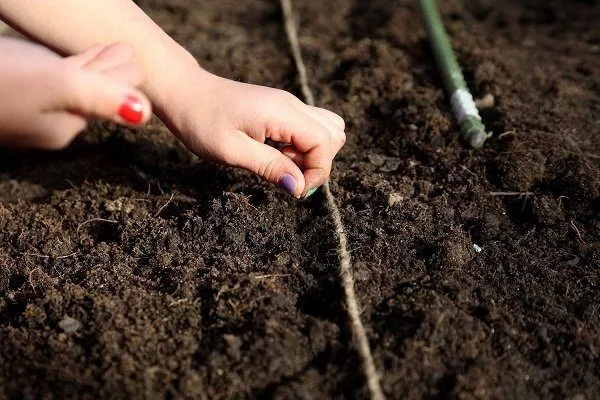
The seed sowing scheme is as follows:
- the distance between seeds in a row is 15 cm;
- row spacing – 35-30 cm;
- planting depth in normal soils is 3 cm, and in peat – 5 cm;
- seeding rate: 1-1.5 g per 1 sq. m.
After sowing, cover the seeds with soil, mulch the bed, and, in cooler regions, cover with plastic. Under optimal conditions (4-5°C), the first shoots will appear within a week.
When sowing, beet seeds can be mixed with spinach seeds. This will help prevent the rapid growth of weeds that are dangerous to Detroit. Once the first shoots appear, the spinach should be removed or left for another month before harvesting.
If beets are grown from seedlings, the seedlings should be transplanted to their permanent location when the soil warms to 15–20°C. Leave 10–12 cm between furrows and 45 cm between rows.
Planting care
The Detroit variety is easy to care for, but requires timely implementation of a number of agricultural practices, which is especially important when growing beets from seedlings. Proper care involves the following:
- WateringWater the bed thoroughly until root crops form, then reduce the frequency to once a week at a rate of 15 liters of water per square meter. It's best to water the area early in the morning or in the evening. The soil should be neither excessively dry nor excessively wet. Stop watering completely one month before the expected harvest.
- Loosening and weedingA damp bed must be loosened to improve gas exchange and soil aeration. Avoid allowing soil "clumps" to form, as they prevent nutrients from penetrating the soil and slow down plant growth. It's equally important to constantly "clean" the area, as weeds choke out young plants, reducing the quality of the harvest.
- MulchingTo retain moisture in the soil and suppress weed growth, mulch the bed. Root crops have been observed to grow larger in mulched areas.
- ThinningThis procedure should be performed twice a season and only in cloudy weather. Thinning beets should be done according to the following schedule:
- in the phase of appearance of 2-3 true leaves – remove grass and weak shoots, leaving 3-4 cm between bushes;
- in the phase of formation of 4-5 leaves – widen the spaces between plants to 7-8 cm.
- Top dressingFertilizer should be applied several times during the season, but avoid overdoing it, as this will cause the roots to crack and develop voids. Here's the optimal fertilizing schedule:
- in the 2-3 leaf phase (after thinning) – add organic fertilizers to saturate the soil with nitrogen;
- At the weeding stage, add potassium fertilizers to the soil (16-20 g per 1 sq. m).
Fertilizer application plan- Two weeks before planting, add compost or rotted manure at a rate of 5 kg per 1 sq. m.
- After 4 weeks from germination, apply potassium fertilizers (20 g per 1 sq. m).
- During the period of root formation, apply phosphorus fertilizers (15 g per 1 sq. m).
The feeding schedule can be adjusted depending on the appearance of the plants: if the tops become lighter, add potassium, and if the veins on them turn red, add sodium.
- Protection from diseases and pestsDetroit beets are susceptible to rot (white and gray) and downy mildew. Among the pests, the mole cricket and winter cutworm are dangerous. To prevent these pests, feed the plants with potassium fertilizer and weed the area regularly.
Harvesting and storage
When sowing in spring, root vegetables can be harvested in the last ten days of September. By this time, they will be fully ripe and at their best quality. To ensure the harvest time is right, pay attention to the condition of the stems—on ripened roots, they dry out and turn yellow.
Beets are best harvested in dry, warm weather with no dew. This will allow the roots to dry in the sun for a while, which will improve their shelf life.
Beets are easy to store. The key is to keep them in a cool, dry place. The optimal room temperature is 2-3°C. Many gardeners store beets in the cellar along with potatoes or in 15-20 kg plastic bags. The bags should be sealed, but if condensation forms, they should be opened briefly to allow it to evaporate through a small opening.
You can see how Detroit beets are harvested in the following video:
Pros and cons of the variety
The value of Detroit beets lies in the following characteristics:
- germinates evenly and produces a consistently high yield;
- produces root crops of equal shape and size with excellent commercial qualities and universal purpose;
- exhibits resistance to diseases and flowering;
- tolerates short-term soil freezing;
- has a powerful vegetative mass and root system, so it is not afraid of heat and unfavorable growing conditions;
- It can be stored fresh for a long time without losing its taste or beneficial properties, and can easily be transported over long distances.
Unlike many other varieties, Detroit beets do not bolt when hot weather sets in.
No disadvantages have been found in this culture.
Detroit Beet Reviews
The cold-resistant Detroit variety can be grown in garden plots, homesteads, and small farms. During the warm season, you can harvest two crops of dark-red table roots. These can be used in cooking or stored for the winter.