
Turnips, thanks to the efforts of plant breeders, have recently acquired new shapes, colors, and flavors. Seed stores offer dozens of varieties of this healthy root vegetable. Let's learn how they differ and what criteria to use when choosing a turnip.
| Name | Ripening period (days) | Root crop weight (g) | Pulp color |
|---|---|---|---|
| Glasha | 40-47 | 70-100 | White |
| Golden Ball | 70 | 400 | Light yellow |
| Snow Maiden | 47-60 | 60-70 | White |
| Snow White | 70 | 80-200 | White |
| Milanese pink | 50 | 60-150 | White |
| White Night | 70-72 | 500 | White |
| Dunyasha | 65-70 | 160-190 | Golden yellow |
| Snow globe | 75-80 | 250-300 | Whitish |
| Petrovskaya-1 | 58-84 | 200-250 | Light yellow |
| Orbit | 80-85 | 120-160 | White |
| Comet | 73-75 | 150-200 | White |
| Snowball | 48-52 | 60-90 | White |
| Granddaughter | 45-50 | 300-330 | White |
| Bug | 47-55 | 120-140 | Yellow |
| Grandpa | 43-53 | 125-140 | White |
| Grandma | 60-80 | 150 | Golden yellow |
| Nurse | 80-90 | 200-250 | Yellow |
| Russian size | 35-40 | 2000 | Yellow |
| Moon | 66-74 | 130-240 | Yellow |
| Childhood dream | 65-80 | 200 | Yellow |
| May yellow | 60-75 | 1200 | Yellowish |
| Tokyo | 25-30 | Green | |
| We'll pull and pull | 65-72 | 100-120 | Yellow |
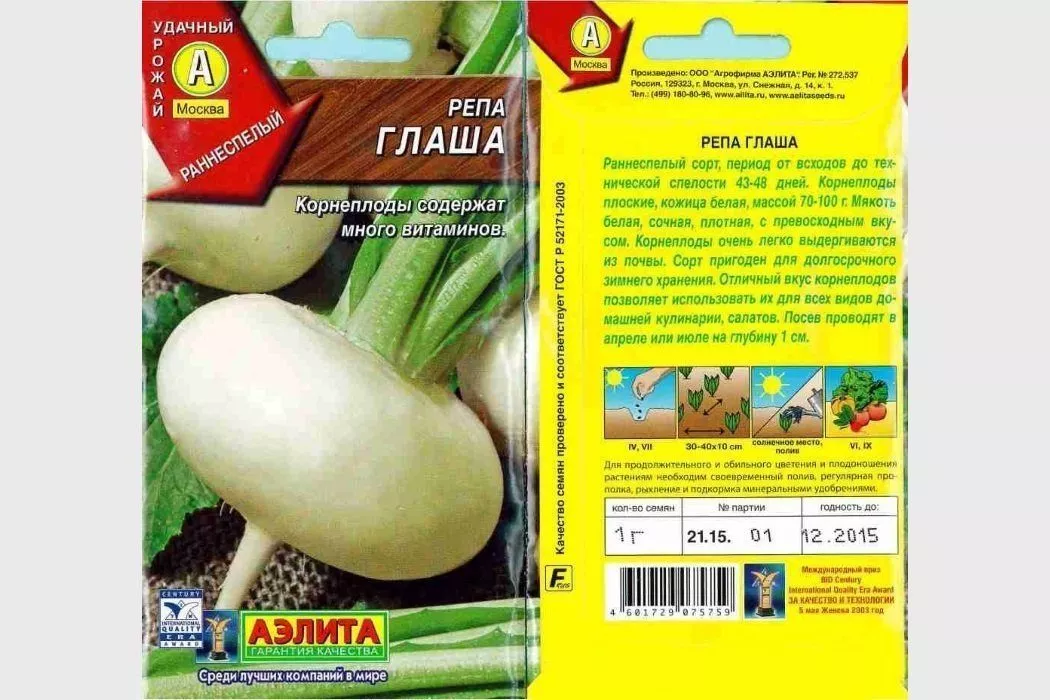
Glasha
It's no coincidence that this ultra-early variety was given a feminine, soft-sounding name. "Glasha" will live up to the best expectations of turnip lovers—it has an excellent flavor. It gains weight quickly and requires little care.
Description. Turnips have a flattened shape. The skin and flesh are white. The flesh is firm and particularly juicy. It is used in salads, in cooking, and for canning. Each root weighs 70-100 g.
Planting dates. An early-ripening variety. From sowing to technical maturity, it takes 40-47 days.
Features of cultivation. Glasha seeds are sown in April in open ground, allowing for a summer harvest. To obtain turnips for winter storage, sow in the first ten days of July. Plant at a depth of 2 cm. When the first leaves appear, remove any excess seedlings; space adjacent plants at least 10 cm apart. To ensure a good harvest, turnips require regular watering, weeding, loosening, and fertilizing.
Harvesting. Once ripe, the roots are easily pulled from the ground. Harvesting is time when the bulbs reach 5-6 cm in diameter. This variety is suitable for long-term storage.
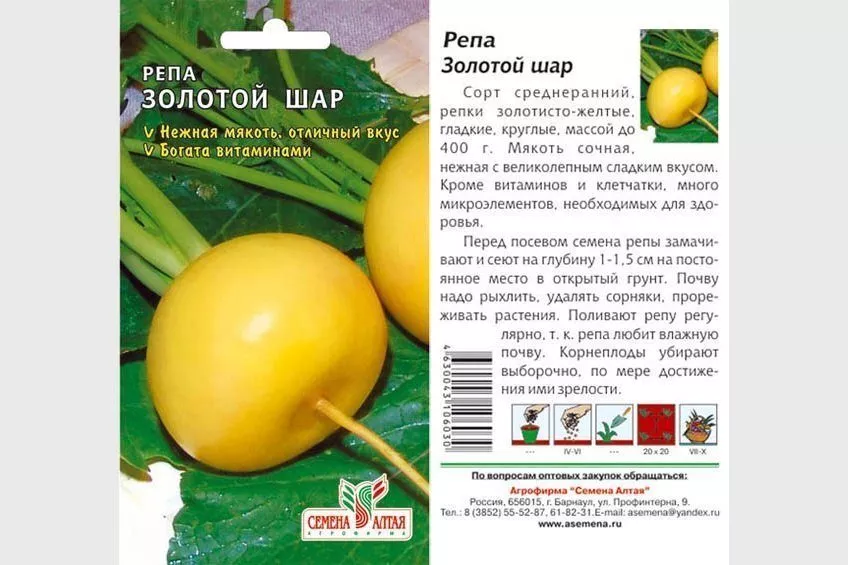
Golden Ball (Golden Ball)
This variety got its name for a reason: its roots are yellow and round. It's a mid-early variety, distinguished by its excellent taste and marketability.
Description. Weight: up to 400 g. The skin is yellowish and thin. The flesh is light yellow, juicy, and has a mild flavor. It is eaten fresh or processed—boiled, fried, or steamed.
Planting dates. Sow at a depth of 1-1.5 cm. Sowing pattern: 20x20 cm. Sowing time: from the beginning of warm spring to the end of June.
Features of cultivation. A cold-hardy variety. Grown under or without plastic. The growth period from germination to technical maturity is 70 days. Timely thinning and regular tillage between rows are recommended. Thinning begins after the fourth leaf appears. Leave 8-10 cm between plants. This moisture-loving variety responds well to complex fertilizers. It does not tolerate shade; plant in full sun only. The best soil for "Golden Ball" is light loamy soil.
Harvesting. It boasts consistently high yields of 3 kg/sq. m. and excellent shelf life. Turnips are harvested selectively, as they reach the desired size. For storage, turnips are pulled from the soil shortly before the cold weather sets in. Two harvests can be produced in a single season. It's best to store summer-sown roots for winter storage.
Scientists have discovered that turnips contain a rare element, glucoraphanin, which prevents the development of cancer and diabetes.
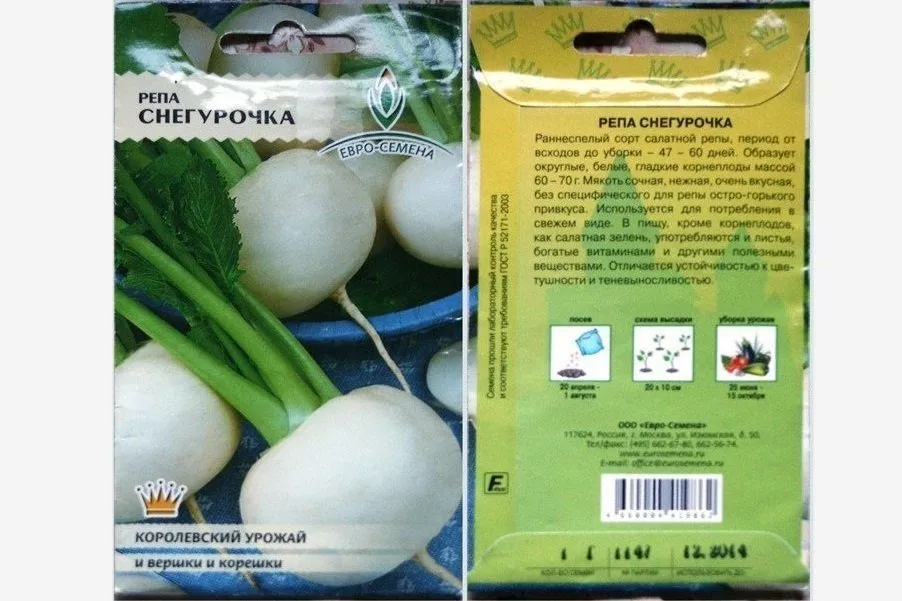
Snow Maiden
This is an early-ripening variety. Its name perfectly captures its characteristics: white turnips with a tender, slightly sweet taste, without bitterness or pungency. They are consumed in all forms. They are beneficial for diabetes and obesity. They are resistant to leaf rot.
Description. Round, white fruits with a thin axial root. Weight: 60-70 g. White flesh, juicy and tender.
Planting dates. Planting for summer consumption is in late April, for winter consumption – in late June. Seeds are planted 2 cm deep. Planting pattern: 12 x 6 cm.
Features of cultivation. It matures in 47-60 days. It can be grown both outdoors and indoors. It tolerates shade well. It thrives in loamy and sandy loam soils and prefers moisture. During the growing season, turnips are watered regularly, loosened 2-3 times, and weeded as needed.
Harvesting. From one square meter of open ground you can collect up to 3-3.5 kg of turnips, from closed ground – 7.5 kg.
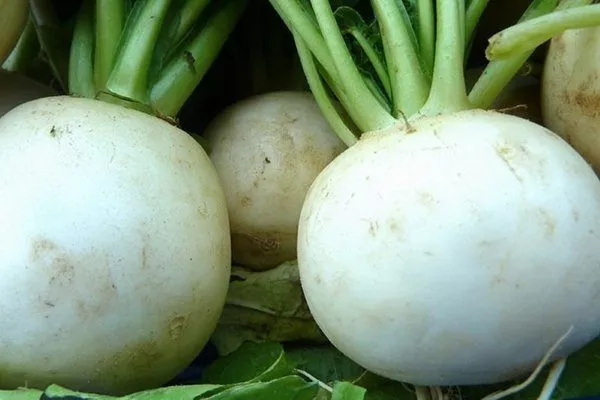
Snow White
This variety ripens early. Its name reflects its snow-white roots. Fresh young turnips can be eaten raw, boiled, or steamed. They contain a large amount of vitamin C.
Description. The root vegetable weighs up to 80 g. Depending on cultivation technology, the fruit weight can range from 80 to 200 g. The white, smooth turnips with thin skin have juicy, crunchy flesh. The foliage is bright green. The root vegetable is 3-4 cm long and 4-5 cm in diameter. The shape is round or flat-round. The flesh is tender, dense, not bitter, and the flavor is excellent. The leaves are semi-erect and green.
Planting dates. From leaf emergence to technical maturity is approximately 70 days. Sow in late April-early May. The second planting is in June-July.
Features of cultivation. This variety tolerates cool temperatures well and can grow in shady areas. Plants should be spaced 10-15 cm apart, and rows should be spaced 25 cm apart.
Harvesting. High yield. Stores well for winter storage. Stores easily for about two months. Has a marketable appearance. Easy to pull from the soil. Yields up to 4.5 kg per square meter.
Milanese pink
This turnip doesn't resemble classic varieties. Inexperienced gardeners can easily confuse the Milanese Pink turnip with a radish due to its white and pink coloring. This early-ripening variety doesn't require long to ripen—just 50 days—and the turnips are ready to harvest. It boasts high yields, disease resistance, and a prolific flowering habit.
Description. The root vegetable is flattened and compressed. The top is pinkish-burgundy, the bottom is white. The skin is smooth and even. The flesh is white, juicy, sweet, and mild. Weight: 60 to 150 g.
Planting dates. Sowing can be done at various times, from early spring to late July. Sprouts appear in just 3-5 days after sowing.
Features of cultivation. It grows well in loamy and sandy loam soils. It doesn't like heat; ideal growing conditions are 15-18°C. It's cold-hardy and can easily survive frosts down to -2°C. It enjoys watering and light. Sow seeds in a 12x6 cm pattern, planting them 1.5-2 cm deep. During the growing season, loosen the space between the rows 2-3 times.
Harvesting. Milanese turnips can be harvested up to three times per summer. Removing them from the soil is easy.
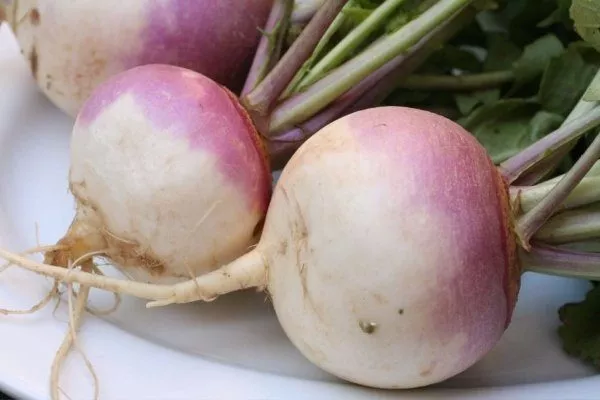
Turnips, consumed regularly, have analgesic, anti-inflammatory, antibacterial, anti-cancer and immunostimulating effects on the body.
White Night
This is a giant turnip. Its roots can weigh half a kilogram. This unique mid-season variety was developed by Czech breeders and has been grown in Russia since 1997.
Description. Weight: up to 500 g. Turnips are round, with a concave base. Color: white. They are twice the size of standard varieties, growing up to 12 cm in diameter. There is no corky layer around the skin. The flesh is juicy, white, and does not harden over time. The rosette of the plant is almost pressed. Leaves are medium-length, green. The foliage is slightly drooping. They have valuable flavor characteristics. They are used in medicinal and dietary nutrition. They can be boiled, steamed, salted, or baked.
Planting dates. Sowing works begin in May.
Features of cultivation. Technical maturity occurs in 70-72 days. Seed depth: 1.5-2 cm. It can be grown both indoors and outdoors. It requires regular watering, fertilizing, and loosening. This variety responds well to fertilizers and grows particularly well in peat soils. The ideal growing temperature is 18-20°C.
Harvesting. The roots are not fully buried in the soil, making them easy to extract. The yield is high and consistent – 8 kg per square meter. Harvest time is July. They keep well.
Dunyasha
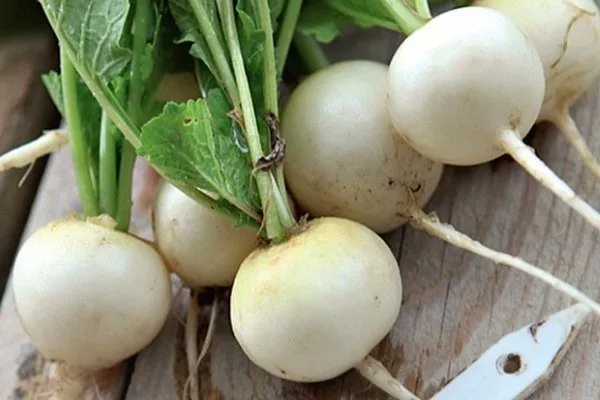
A mid-season variety prized for its nutritional value and flavor. It has a slightly sweet flavor. It's eaten raw in salads and used in cooking, such as baking, fillings, and more. "Dunyasha" is cold-resistant, hardy, and shade-tolerant.
Description. The roots are round. The skin is smooth and yellow. The flesh is golden-yellow, tender, and juicy. Weight: 160-190 g.
Planting dates. Sowing time: April to July. Planting pattern: 10-15 x 20-40 cm. Seeds are planted 1 cm deep.
Features of cultivation. From emergence to technical maturity – 65-70 days.
Harvesting. Yield 2.3-2.9 kg per square meter.
Snow globe
This is a mid-season variety. It's equally good for summer consumption and for storing for the winter. It's ideal for dietary use. The leaves are added to salads and can be eaten raw, boiled, or steamed.
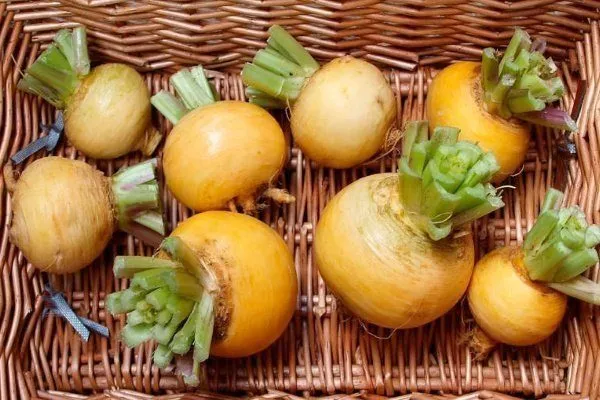
Description. The fruits are round, large, and smooth, up to 6 cm in diameter. They are creamy white in color and weigh 250-300 g. They have firm, whitish, juicy, and pleasant-tasting flesh. They are resistant to leaf spot. They are a tall variety with good commercial qualities.
Planting dates. You can sow the seeds in several stages. To enjoy turnips in the summer, sow the seeds in the spring. To obtain root vegetables for winter consumption, sow the seeds in the summer. The planting period ranges from April to early summer.
Features of cultivation. The ripening period is 75-80 days. The beds are prepared in advance. Mineral fertilizer is added to the dug soil. The seeds are sown in furrows 1 cm deep, spaced 20-25 cm apart. Once the seedlings emerge, they should be thinned out, leaving 10 cm between plants to allow the roots to develop freely.
Harvesting. It boasts consistently high yields of 3-4 kg per square meter. It also has excellent shelf life.
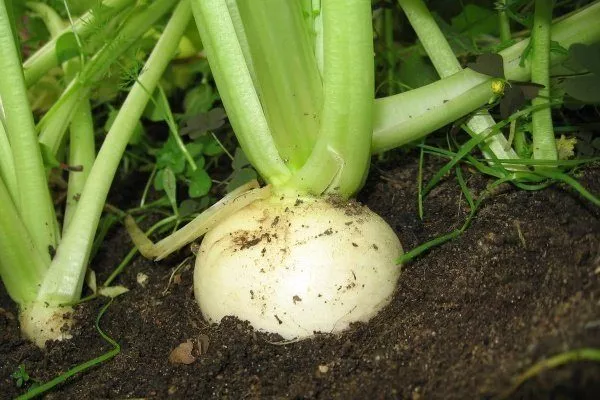
Turnips are several times healthier for the heart than raisins and dried apricots. They also possess unique healing properties—diuretic, wound-healing, anti-inflammatory, antiseptic, and anesthetic. Turnip juice is used to treat coughs, sore throats, asthma, and insomnia.
Petrovskaya-1
This mid-early variety was developed by the All-Russian Research Institute of Vegetable Crops Breeding and Seed Production. It has been grown in Russia since 1950. Petrovskaya 1 is a leader in taste. Ideal for growing in central Russia, it is enjoyed fresh, fried, and steamed in summer and throughout the fall and winter.
Description. The turnip is flattened and rounded, with a concave base. It weighs 200-250 g. The skin and flesh are light yellow. The flesh is very tasty and juicy – slightly sweet and tangy. The rosette is appressed. The leaves are dissected, green, and short.
Planting dates. Seeds are sown from April to July. The planting pattern is 10-15 x 22-30 cm. The planting depth is 1 cm. This variety has a good germination rate.
Features of cultivation. Ripens in 58-84 days. Loves moisture and responds well to complex fertilizers. Pollination with ash is recommended for pest control. Thin out the seedlings after the fourth leaf emerges. Space adjacent plants 7-10 cm apart. Grows well in loamy soils and prefers sunny locations.
Harvesting. The standard commercial yield is 3-3.5 kg per square meter. Storage quality is satisfactory. Roots are harvested selectively as they ripen. Two harvests can be produced over the summer. Roots from summer plantings are stored for winter storage.
Orbit
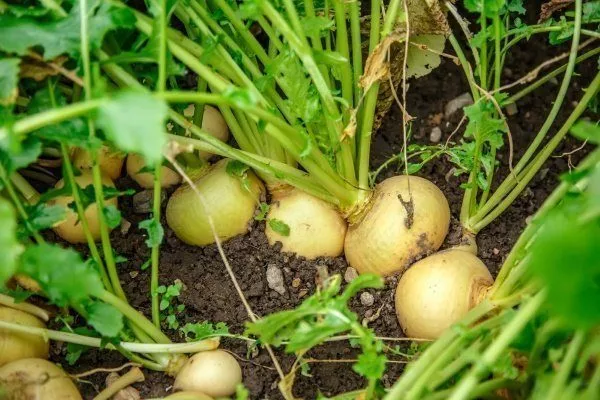
A late-ripening variety, cold-resistant and moisture-loving. Excellent taste.
Description. The root is round. Weight is 120-160 g. Color is white. The flesh is white, juicy, and tender.
Planting dates. Sowing time: April to July. Planting pattern: 20x20 cm. Seeds are planted 1-2 cm deep. The variety is cold-hardy and shade-tolerant.
Features of cultivation. From germination to technical maturity – 80-85 days. Thin at 10 cm intervals.
Harvesting. One square meter can yield up to 2.6-2.9 kg of turnips. Turnips are recommended for winter storage.
Comet
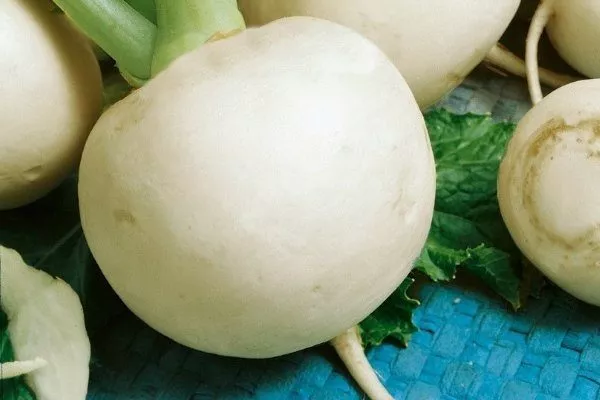
The variety apparently got its name from its unique shape—an unusually elongated turnip. It is resistant to disease and flowering.
Description. The fruits are uniform, smooth, milky-colored, and cylindrical in shape. The base is thickened. The flavor is pleasant. The flesh is juicy, white, and tender. Weight: 150-200 g. The leaves are gathered in a semi-erect rosette. The foliage is green, with a slightly curved tip.
Planting dates. Plant seeds in early May. Plant at a depth of 2 cm. Planting pattern: 3 x 10 cm.
Features of cultivation. It takes 73-75 days from the first shoots to technical maturity. Planting in full sun is recommended. The best soil for Kometa is light, slightly acidic. Fertilizing with ash is recommended. This variety is cold-hardy and grows well in the shade. The soil between rows should be loosened regularly. Kometa loves moisture. Thin the seedlings, leaving a distance of 5-10 cm between plants.
Harvesting. Two harvests are made. The first is for summer consumption, the second is for storage during the fall and winter. The harvest takes place between July 20 and August 20. Yield: 3-4 kg per square meter.
Snowball
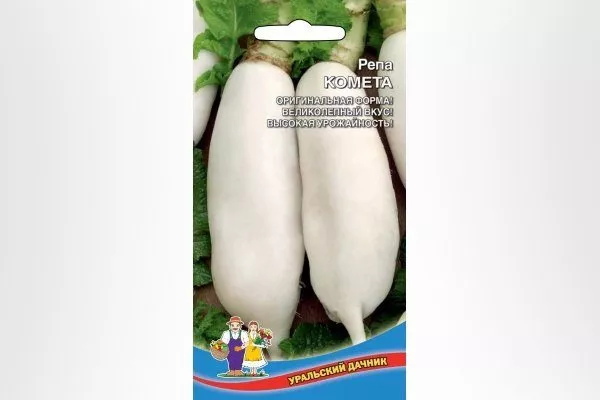
An early-ripening variety with excellent flavor. Resistant to stem rot and bacterial blight. Suitable for both raw and cooked consumption.
Description. The fruits are round and white. They weigh 60-90 g and can reach up to 200 g. The skin is thin, and the flesh is tender and juicy.
Planting dates. Planting is done in two stages: spring and summer. Seeds are planted 2 cm deep. The planting pattern is 20 x 10 cm.
Features of cultivation. From germination to maturity, it takes 48-52 days. It tolerates shade and cold well. Thin out after 1-2 leaves appear. Space adjacent plants 10 cm apart. It thrives in sunny areas.
Harvesting. Turnips are buried 1/3 of the way in the soil and are easily pulled out. They have a good shelf life. The roots are harvested when they reach 5 cm in diameter.
4 "fairytale" varieties
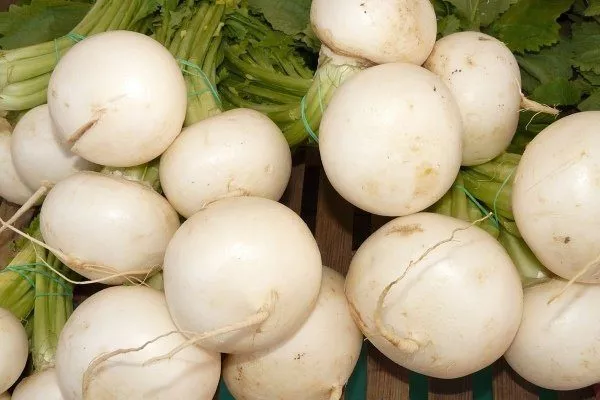
Domestic breeders developing new turnip varieties simply couldn't help but recall the legendary Russian fairy tale "The Turnip." They named the varieties they developed after its most active characters.
Granddaughter
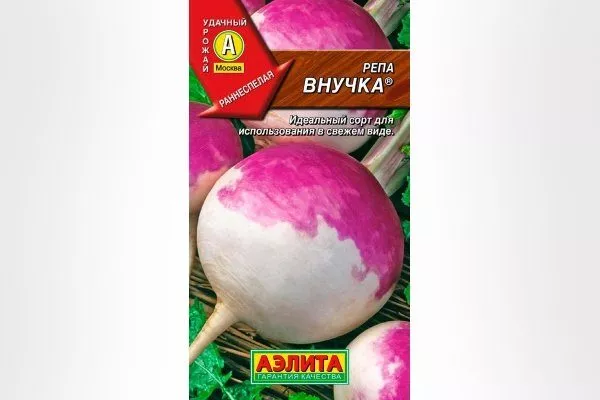
An early variety with an interesting coloring. It looks like a large radish. The turnip is delicious. "Vnuchka" is used primarily for salads.
Description. The roots are large, weighing 300-330 g. The shape is round. The skin is smooth and even, light purple on top and white on the bottom. The flesh is very juicy, white, dense, and sweet.
Planting dates. Sow in open ground. Sowing time is April. For a second harvest, sow seeds in early July. Plant to a depth of 2 cm.
Features of cultivation. It has a short growing season. It reaches maturity in 45-50 days. When one or two true leaves appear, the seedlings can be thinned out. Space the plants 10 cm apart.
Harvesting. The harvest is massive, with roots of uniform size. The turnips are harvested when they reach 5 cm in diameter. They keep well and are ready for winter storage.
Bug
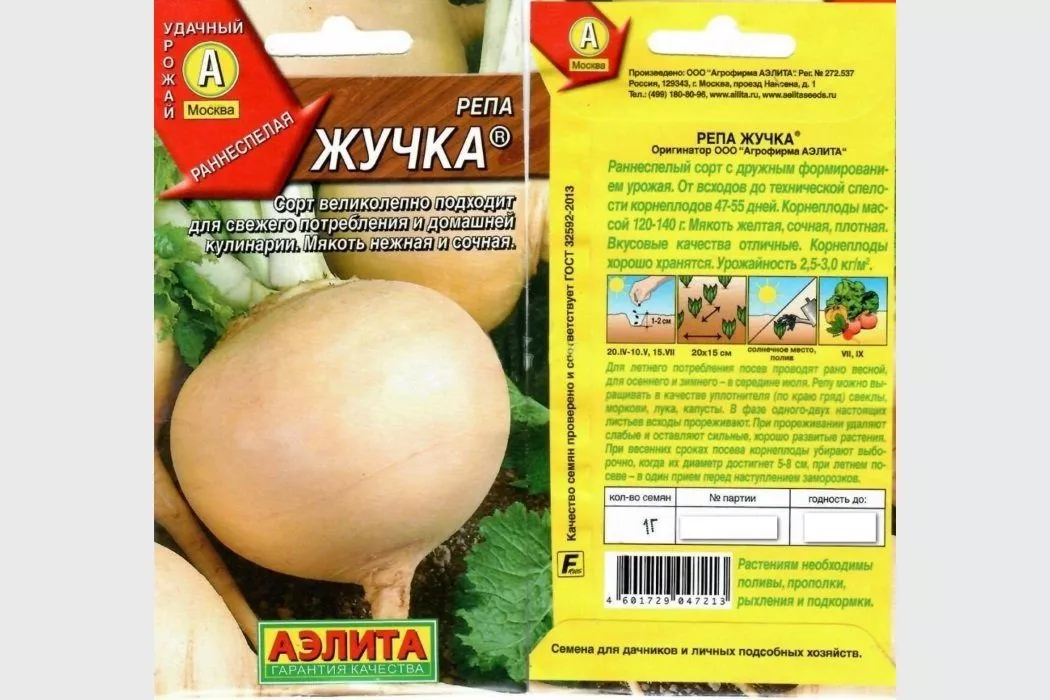
Another early-ripening variety from the "fairytale" series. It has excellent flavor. It's eaten fresh and also used in cooking for various dishes.
Description. A round turnip with smooth skin. The skin is yellow. The flesh is also yellow and juicy and tender. Weight: 120-140 g.
Planting dates. Planting for summer consumption is in early spring, for winter consumption – in mid-July. Sow seeds in furrows, planting them 1-2 cm deep.
Features of cultivation. The period from germination to technical maturity takes 47-55 days. When 1-2 true leaves appear, thin out the seedlings. The plant requires regular watering, weeding, loosening the soil, and fertilizing. It thrives in full sun.
Harvesting. The harvest is massive. The root vegetables are easily transported and stored. Up to 2-3 kg of root vegetables can grow per square meter. The first harvest is selective – when the turnips reach 5-8 cm.
Grandpa
An early variety from the "fairytale" line. Suitable for eating raw, salted, and cooked.
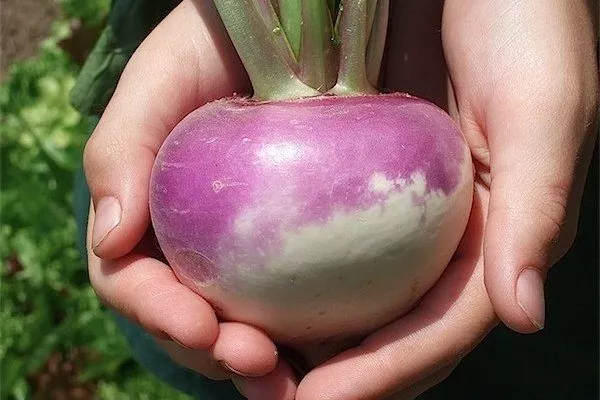
Description. Smooth, round, two-tone roots. The skin is thin and shiny. The top is purple, the bottom is white. The flesh is juicy and slightly sweet. Weight: 125-140 g.
Planting dates. For a summer harvest, turnips are sown in April; for a winter harvest, in early July. Thin out when the first pair of leaves appears. Spacings are 10 cm.
Features of cultivation. Ripening time is 43-53 days. They are grown mainly without film.
Harvesting. Up to 4 kg of turnips are harvested per square meter. They are harvested when the turnips reach 5 cm.
Grandma
This is an early, high-yielding variety with excellent flavor. It is consumed fresh and processed.
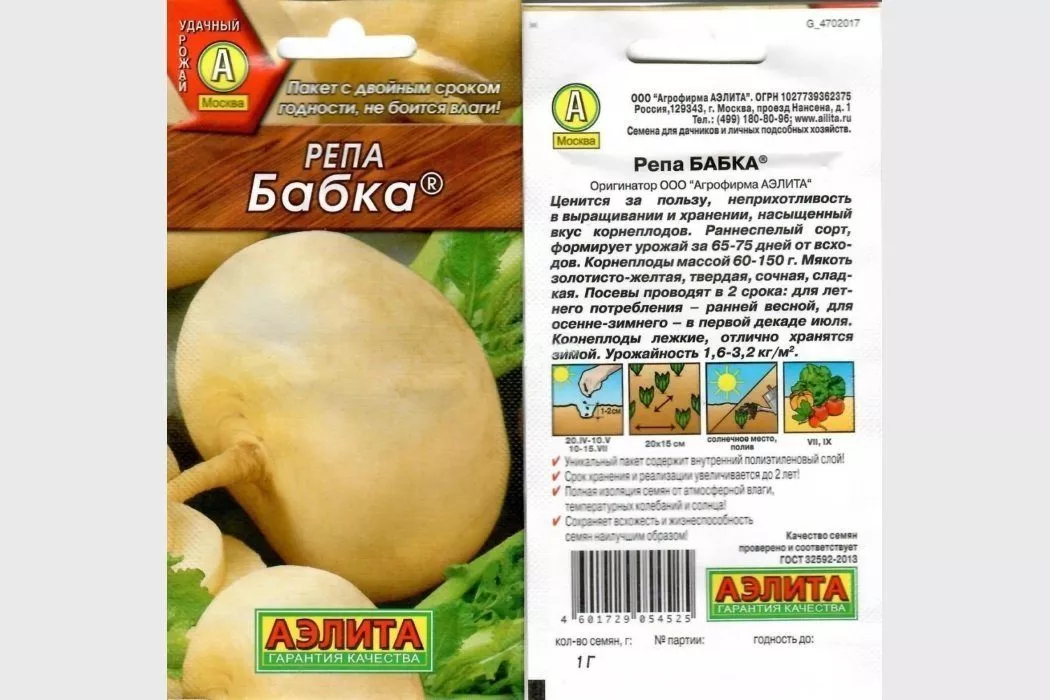
Description. It looks like a classic turnip – yellow and slightly flattened. The flat, round, smooth roots reach a weight of 150 g. The flesh is firm and juicy, golden yellow.
Planting dates. Sow twice: in spring for summer consumption, and in summer for winter consumption. Planting depth is 1-2 cm. Planting pattern: 20 x 15 cm.
Features of cultivation. Can be grown in various soil types. Thin out when the plant has 1-2 leaves. Requires regular watering and weeding. Sunny sites are recommended. Maturity is 60-80 days.
Harvesting. They keep well. The summer harvest is selective, with turnips reaching 5-8 cm tall being pulled out. In the fall, the harvest is done en masse, in one go. Turnips must be harvested before frost. Up to 5-6 kg of turnips can be harvested per square meter.
Nurse
A mid-season variety. It's used for salads, frying, stewing, baking, and stuffing. "Kormilitsa" is resistant to bacterial wilt and premature stemming. It boasts excellent taste and marketability.
Description. A semi-upright rosette of leaves. The leaves are green, with a moderately curved tip. The roots are flat-round, with a concave base. The flesh is yellow, juicy and tender. Weight: 200-250 g.
Planting dates. Planting is done from April to July. The planting pattern is 10 x 20 cm. The planting depth is 1 cm.
Features of cultivation. From the appearance of the first leaves to reaching maturity is 80-90 days. Requires moisture, loosening, and fertilizing.
Harvesting. Productivity: 3-4.2 kg per 1 sq. m. Stores well in winter.
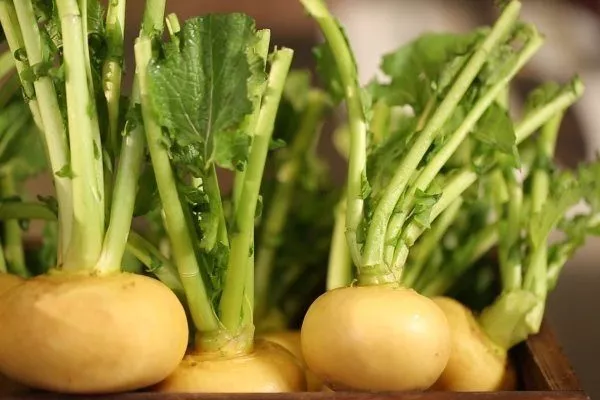
Russian size
The main advantage of this variety is the size of its roots. It's a very large turnip, and it looks just like something out of a fairy tale. However, to grow to the desired size, it requires care—watering, cultivating, and feeding. It has excellent flavor. It can be eaten raw, steamed, fried, or boiled.
Description. The roots weigh up to 2 kg. The flat-round fruits are yellow. The flesh is crisp and juicy, slightly sweet. The stem, bearing the fruits and seeds, forms in the second year of growth.
Planting dates. Seeds are sown from late April to early May. The planting pattern is 15 x 20 cm. The depth of the seeding is 1 cm.
Features of cultivation. This sun-loving variety produces best in loose, non-acidic soils. It thrives in moisture and tolerates cold well. It requires weeding and loosening the soil. It can survive frosts down to -3°C. The optimal growth temperature is 15-18°C. The ripening period lasts 35-40 days.
Harvesting. Stores perfectly – you can eat "Russian Size" all winter long. It's easy to dig out of the ground.
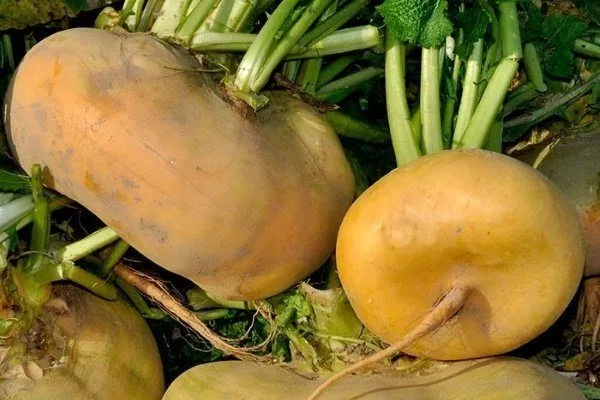
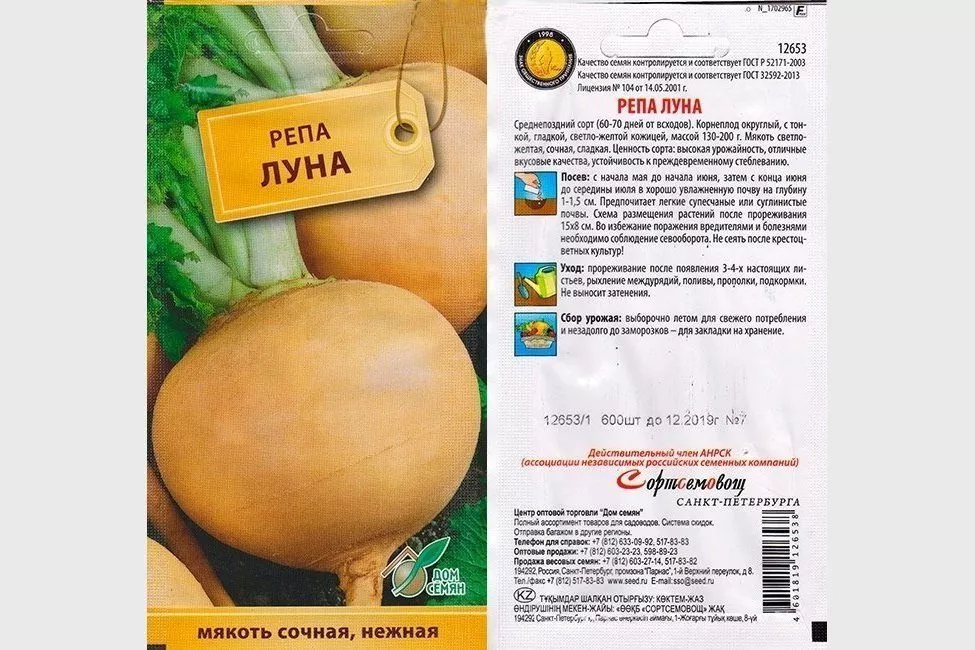
Moon
This mid-season variety is hardy and undemanding. It can be eaten raw throughout the winter. Luna is resistant to bacterial wilt.
Description. Weight: 130-240 g. The rosette is semi-erect. The foliage is green, with a slightly curved tip. The roots are round, with thin, smooth yellow skin. The flesh is tender and juicy, with a yellow hue.
Planting dates. Sow twice: in April for summer and in late June for winter. Plant the seeds 2-3 cm deep. Plant according to a 10 x 30 cm pattern.
Features of cultivation. Ripening time: 66-74 days. Grows well in light loamy soils. Prefers full sun. Can be grown in open ground or under plastic. Requires regular watering, loosening, and fertilizing.
Harvesting. The yield is 2-2.3 kg per square meter. The harvest is uniform. Two harvests can be obtained over the summer. Turnips from the summer sowing are stored for the winter.
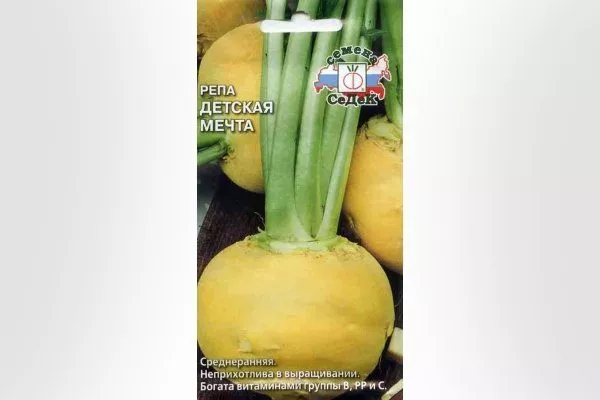
Childhood dream
A mid-early turnip. It is high in vitamins and minerals, including potassium, magnesium, sodium, calcium, iron, and phosphorus. It can be eaten raw, steamed, boiled, salted, or baked.
Description. A round, yellow turnip weighing up to 200 g. The skin is thin and smooth. The flesh is firm and juicy.
Planting dates. The first sowing is in April, the second at the end of May. The depth is 1-2 cm.
Features of cultivation. It takes 65-80 days from germination to technical maturity. It is distinguished by its cold resistance.
Harvesting. The harvest is forming smoothly. Good storage quality.
May yellow
An early-ripening table turnip that can grow up to 1.2 kg under favorable conditions. It boasts a high sugar content—up to 7%—and a good, mild flavor.
Description. The fruits are flat-round. The skin is greenish on the top and white on the bottom. The flesh is yellowish.
Planting dates. The first planting is in April, the second in early July. Plant at a depth of 1-2 cm.
Features of cultivation. Ripens in 60-75 days. Responsive to watering and fertilizing.
Harvesting. This is a medium-yielding variety. Turnips are eaten immediately after harvesting; they are not suitable for long-term storage.
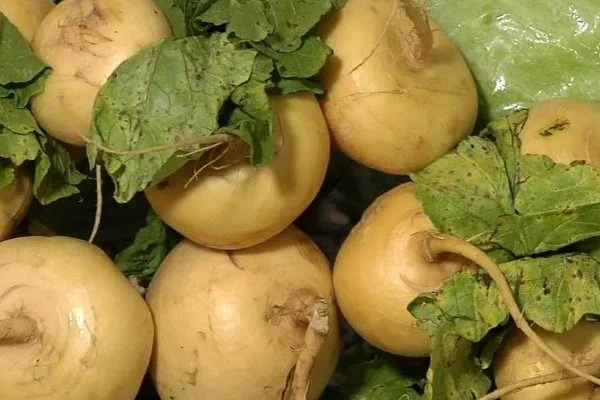
Tokyo (leaf turnip)
A very early-ripening leafy variety, it's prized for its tender, juicy greens, which can be eaten raw or added to salads. The leaves of the 'Tokyo' turnip are rich in ascorbic acid and carotene.
Description. A rosette of large, entire-margined leaves. The leaf shape is rounded-oval. The color is dark green. The leaves are pubescent.
Planting dates. Sowing seeds in April.
Features of cultivation. Fresh greens can be harvested 25-30 days after sowing the seeds. This variety is cold-hardy and prefers moist soil, requiring regular watering. To protect the plant from flea beetles, it's important to take the necessary agricultural measures.
Harvesting. You can pick greens as early as May-June.
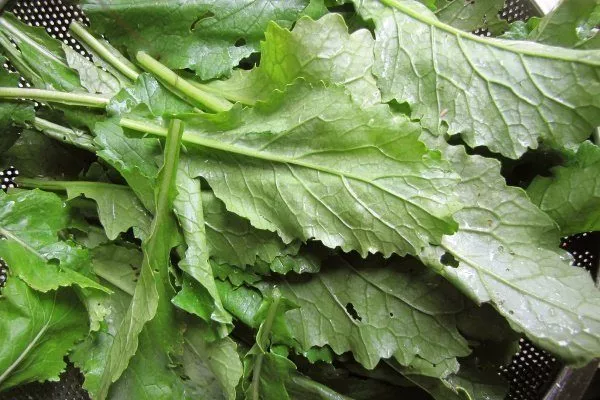
We'll pull and pull
A mid-late variety with excellent nutritional and flavor characteristics. This turnip has a slightly sweet flavor. It is used in all forms of cooking—fried, stewed, baked, and eaten raw. It is resistant to bruising.
Description. The root is round, with smooth yellow skin. The juicy and tender flesh is yellow. Weight: 100-120 g.
Planting dates. Sowing time: April to July. Planting pattern: 10-15 x 20-40 cm. Seeds are planted 1-2 cm deep. The variety is cold-hardy and shade-tolerant.
Features of cultivation. From germination to technical maturity is 65-72 days. Thinning is done at 10 cm intervals. Care is as usual: watering, weeding, loosening the soil, and fertilizing with mineral fertilizers.
Harvesting. From one square meter you can get up to 2.5 kg of turnips.
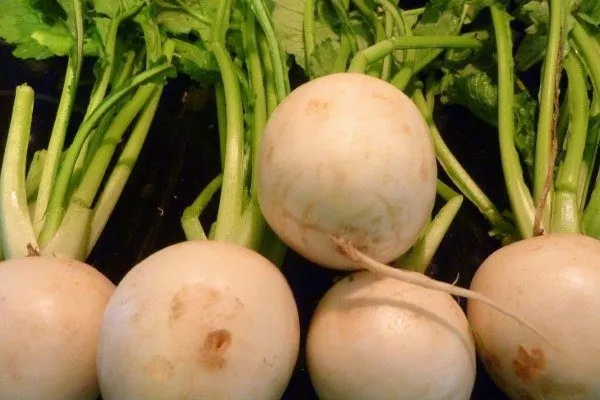
Other varieties
Turnips are available in dozens of varieties. Every online seed store offers a wide selection of turnip seeds. In addition to the most popular varieties described above, gardeners are offered the following varieties:
- Gribovskaya. A mid-season variety. The top part is purple, the bottom is yellowish. Large roots with juicy, firm flesh. Ripening period is 60 days. Stores well over winter. Cold-resistant.
- Burnt sugarThe roots are black, smooth, and do not crack. The shape is elongated. The flesh is white. Weight: 300 g. Cold-resistant, excellent presentation, recommended for salads. Requires watering, prefers full sun.
- Beanbag. Salad variety. Weight: 60-90 g, maximum: up to 200 g. Ripening period: 50 days. Round, white roots. Shade-tolerant variety with good shelf life.
- Purple. A mid-early variety. Ripening period: 55-65 days. Weight: 100-120 g. The fruit is round. The flesh is white and juicy. The upper part is purple, the lower part is white. It has a piquant flavor.
- Red Sun F1A hybrid with an amazing flavor. It lacks the typical turnip bitterness. The fruit is round and flattened. The color is raspberry-pink. Ripening period is 45-60 days. Weight: 150-300 g. A cold-hardy crop that requires watering and light.
- Geisha. Weight: 60-200 g. Vegetation lasts 45-60 days. Roots are round, white. No specific flavor. Resistant to leaf spot.
- Cake. Weight: up to 200 g. Vegetation lasts 80-90 days. Fruit shape: flat-round. The flesh is white, fleshy, tender, and extremely juicy. Excellent taste.
- Petrovskaya 1. Weight: 60-150 g. Growing season: 65-75 days. Cold- and shade-tolerant variety. Generous harvest. Flat or flat-round fruits. Color: yellow. Flesh: golden yellow, firm, sweet, and juicy.
- PurplepopWeight: 100-200 g. Growing season: 45-50 days. Smooth, flat roots. The top is purple-pink, the base is white.
- Dutch White. An early-ripening turnip suitable for long-term storage. The white fruits have juicy flesh and a pleasant flavor. They contain succinic acid, a broad-spectrum biostimulant.
- Karelian white-fleshed. A mid-season turnip with smooth, greenish-purple skin. Juicy white flesh. Mildly spicy flavor. A very productive variety with good shelf life.
- Little Red Riding Hood. A mid-season variety. The fruits are elongated, white, with a purple tint at the top. They weigh 200-250 g. They have excellent flavor. They are resistant to leaf spot. Recommended for dietary use, diabetes, and obesity.
- Snowball. An early-ripening turnip. White, round roots with juicy, firm flesh.
- Sapphire. An early-ripening variety. Leafy salad turnip. The greens are used in salads. The leaves are ready 30 days after germination.
- Sprinter. An early-ripening variety with small, slightly flattened fruits. The fruit is white, with a purple head. The flesh is white and juicy.
- Anniversary-85. An early-ripening turnip. Round, white roots. White, tender flesh. Weight: 105-120 g.
- Early purple. An early-ripening variety developed by foreign breeders. Round roots are 8-12 cm in diameter. They are white with purple tips. They weigh 65-90 g. The snow-white flesh is very juicy and sweet.
- Russian fairy tale. A mid-early variety. Round fruits. Thin, yellow skin. Excellent flavor. Even crop formation.
How to choose the right variety?
To grow juicy and delicious turnips in your garden, you need to not only take care of them—weed, water, and feed them—but also choose the right variety. There are many varieties of turnips, and before choosing seeds, you need to decide which one you're interested in.
- ✓ Resistance to diseases and pests not mentioned in the variety description.
- ✓ Soil acidity (pH) requirements for optimal growth of each variety.
Tips for choosing turnip varieties:
- Ripening periods. Thanks to breeders, early-ripening varieties now exist that mature in 45-55 days. If you want a quick harvest for summer consumption, choose early varieties. For winter storage, it's best to choose mid-season or late-ripening turnips, which mature in 60-80 and 100-120 days, respectively.
- Zoning. To maximize yields, breeders develop varieties specifically for specific climates. Some varieties thrive in central Russia, while others are suitable for the Urals and Siberia.
- Taste qualities. Every gardener can choose a turnip with the right taste – sweet, tart, with or without bitterness, spicy or not.
- Dimensions. Those who prefer large root vegetables can plant turnips, which grow to 1-2 kg. Those who prefer smaller fruits should choose varieties in the 60-400 g range.
- Appearance. Many gardeners love new, unusual shapes and colors. Turnips today come in more than just the traditional yellow and flattened-round shapes. There are varieties with long and round roots, and turnips that are green, white, purple, violet, black, pink, and bicolor.
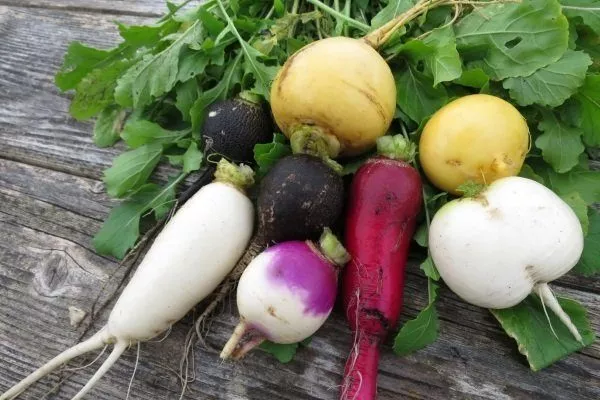
The table below presents the most popular turnip varieties, differing in ripening period, taste, zoning and size.
| Types of varieties | Turnip variety |
| Early (40-60 days) | Glasha, Snow White, Granddaughter, Beetle, Golden Ball, May Yellow, Snow Maiden, Tokyo, Snowball, Sapphire, Sprinter, Anniversary-85, Geisha. |
| Medium (60-90 days) | Snow Globe, Childhood Dream, Nurse, Karelian White-Fleshed, Little Red Riding Hood, Gribovskaya, Dunyasha, Comet, Flatbread, White Night. |
| Late (from 90 days) | Comet, Moon, Pull-Pull, Orbit |
| Large-fruited | White Night, Russian Size, Petrovskaya-1, Milanskaya. |
| Sweet | Geisha, White Night, Snow White, Petrovskaya-1, Golden Ball. |
| For the Moscow region | Petrovskaya-1, Milanskaya, Snegurochka, White Night, Geisha. |
| For the Urals and Siberia | Burnt sugar, local Gribovskaya. |
| Variety | Yield (kg/m2) | Shelf life (months) |
|---|---|---|
| Glasha | 3.0 | 3 |
| Golden Ball | 3.5 | 4 |
| Snow Maiden | 3.5 | 3 |
Turnips are an undeservedly forgotten vegetable that deserves the attention of gardeners. This root vegetable can be a wonderful addition to your table. This vitamin-rich vegetable boasts a unique combination of nutrients and a distinctive flavor. Most importantly, today every gardener can find a variety to suit their taste.