
Radish is a delicious and nutritious vegetable, prized by many people today. Those who decide to plant and grow radishes in their garden should know that there are many varieties. It's important to study each one to determine which is best for your garden. This article discusses the best radish varieties.
Varieties
| Name | Ripening period (days) | Root shape | Pulp color |
|---|---|---|---|
| Radish | 14-21 | Round, oval-cylindrical, elongated conical | White-pink, pink, snow-white |
| Daikon (Japanese radish) | 80-85 | Conical, serpentine | White |
| Black radish | 40-110 | Round, oblong, conical | White |
| Chinese (green) radish | 70-120 | Rounded, elongated | White |
| Snake radish | 45-60 | Does not form a root crop | White |
Radish
Radish is a variety of cultivated radish. The first cultivated radish varieties were developed in Asia, although no wild plants have been found to date.
Description. The root vegetable ranges from 2.5 to 7-10 cm in diameter and can be tangy in flavor due to the mustard oil it contains, or juicy and virtually free of bitterness. The root is round, oval-cylindrical, or elongated cone-shaped. The skin can be red, pink, green, white, yellow, or purple. The flesh is white-pink, pink, or snow-white.
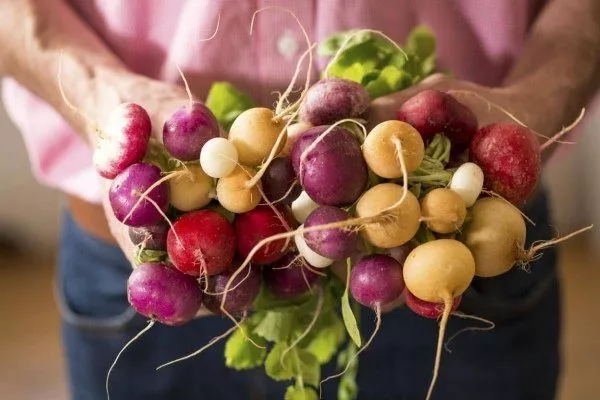
Planting dates. Radishes are considered the fastest-growing root crops: some varieties fully mature in just 2-3 weeks from sowing. This allows radishes to be planted and harvested 3-4 times per season.
Features of cultivation. Radishes are cold-hardy, sun-loving, and moisture-loving plants. Seedlings can withstand short-term frosts down to -3-4°C (-3-4°F). In cold weather, seedlings grow slowly, forming fruit 15-20 days later. Radishes require more favorable, moderately warm weather—15-18°C (59-64°F)—to thrive.
Harvesting. The vegetable ripens at different times, so the roots are harvested as they ripen. It's best to do this in the morning, but water the plants generously in the evening beforehand. The above-ground portion is trimmed back to a distance of 20-30 mm from the root.
Daikon (Japanese radish)
The plant does not absorb harmful substances from the environment, making it suitable for growing on the side of a busy road or on the premises of a factory with hazardous production.
Description. Daikon belongs to the cruciferous family of vegetables. It is an annual plant. Its shape resembles that of a radish, ranging from conical to serpentine. Its root weight ranges from 500 g to 3 kg. Its length ranges from 10 to 60 cm, with a diameter of 4 to 8 cm.
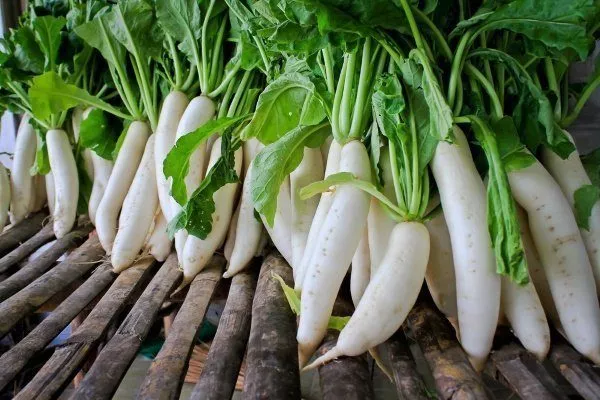
Planting dates. A mid-season variety with a growing season of 80-85 days, daikon can be planted both by seed and from seedlings. Seeds can be sown outdoors from April 20th to May 10th. When growing seedlings, sowing occurs from March 15th to April 10th.
Features of cultivation. Daikon is an easy-to-grow vegetable, adapting to any type of soil. However, it is recommended to plant it in fertile, loose soil.
Harvesting. Harvest time depends on the variety, including the growing season. Mid-season varieties ripen 1.5-2 months after planting. The root vegetables are removed from the soil by the tops.
Black radish
Black radish contains enzymes, carotene, vitamin C, magnesium, choline, essential oils, proteins, and fats. This is what makes it so prized.
Description. The root vegetable doesn't have the same flavor as many other varieties, but it does have medicinal properties. Black radish varieties produce round, oblong, or conical fruits. The roots typically weigh 2-3 kg. The flavor is pungent and slightly bitter.
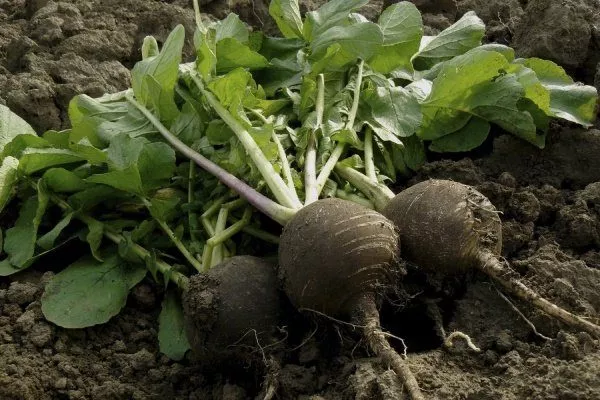
Planting dates. Since black radish comes in early, early, and late maturing varieties, planting times may vary. Early varieties are harvested in 40-50 days, early varieties in 50-65 days, and late varieties in 90-110 days.
Features of cultivation. Black radish doesn't require any special growing conditions or requirements. However, it's important to select neutral, fertile, or slightly acidic soil for planting. In spring and summer, dig the soil down to the humus layer, fertilize, and sow the seeds.
Harvesting. Harvesting summer radishes begins in mid-June to early July, when the roots reach 3-4 cm in diameter. Late-harvested radishes are kept in the garden as long as possible, but they must be dug up before cold weather sets in. Store the roots in wooden boxes filled with damp sand, lowered into a basement or cellar.
Chinese (green) radish
The radish is also called "Loba." It's not a very common variety in Russia, but it prefers moisture and organic fertilizers.
Description. The Chinese variety produces large, round or elongated roots. A single fruit can weigh up to 500 g. Green radishes have skin and a uniform color on the top. The flesh is mildly spicy, tender, and juicy. The flavor is reminiscent of radish. The growing season lasts from 70 to 120 days.
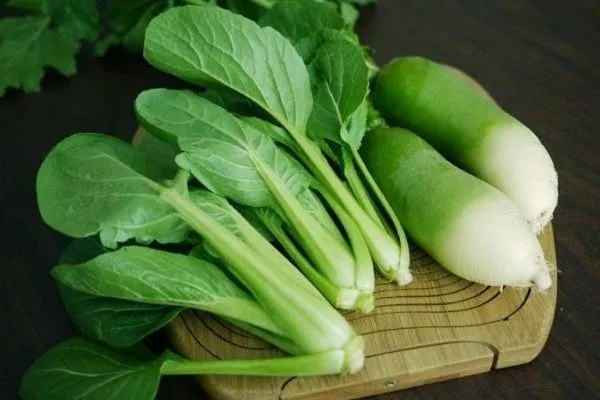
Planting dates. Sowing of radish seeds begins in late May - early June.
Features of cultivation. Chinese green radish can grow in any soil, but does best in nutrient-rich loams with neutral pH.
Harvesting. Root crops should be harvested before the first frost. Harvesting takes place in mid- to late October.
Snake radish
A true exotic for Russian gardeners, radish gets its name from its long, often curiously curved pods, which are used as food.
Description. An annual plant, no more than half a meter tall. It doesn't produce a root, but after the lilac flowers fall, fleshy, single-chambered pods begin to grow. In our climate, they range from 10 to 15 cm in length. They have a moderately pungent flavor.
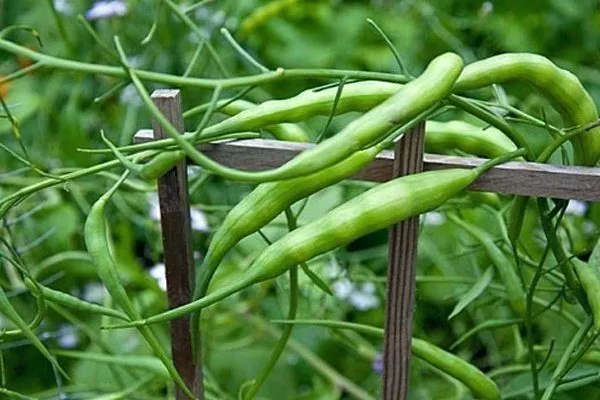
Planting dates. Just 20 days after sowing the seeds, sprouts begin to emerge, taking on the shape of a bush. This variety can be grown from seedlings, as it has a long growing season. It takes about 1.5-2 months from sowing to harvesting the first crop.
Features of cultivation. Growing snakeroot requires light, well-drained soil. The variety does not tolerate shade well, so select sunny locations.
Harvesting. By mid-July, the first fruits, resembling thin peppers, appear on the bushes. The youngest fruits have a neutral flavor.
Varieties of daikon
Below are listed popular and sought-after varieties of daikon among gardeners.
| Name | Ripening period (days) | Root shape | Pulp color |
|---|---|---|---|
| Daikon "Dragon's Tooth" | 60-70 | Cylindrical | White |
| Daikon "Vakula" | 50-60 | Cylindrical | White |
| Daikon "Rhino" | 53-57 | Conical | White |
| Daikon "Japanese Long" | 80-85 | Cylindrical | White |
| Daikon "Kalancha" | 70 | Cylindrical | White |
| Daikon "Sasha" | 35-45 | Rounded | White |
Daikon "Dragon's Tooth"
A variety that appeared relatively recently but almost immediately won the hearts of gardeners, Dragon's Tooth is an easy-to-grow radish that requires minimal attention.
Description. A high-yielding, mid-season variety. After the first shoots emerge, roots appear in 60-70 days. The radish is 40-60 cm long and cylindrical. Each radish weighs 1.1-1.5 kg. The flesh is white, dense, juicy, and crisp. The flavor is pleasant and lacks a burning sensation.
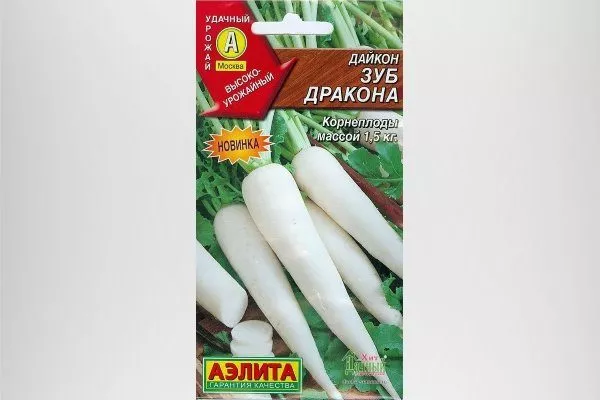
Planting dates. Seeds are sown from late April to early May.
Features of cultivation. Plants require regular watering, fertilizing, weeding, and loosening. They prefer fertile soil. Choose well-lit areas for planting.
Harvesting. Root crops are harvested in one go before frost sets in. They are stored in sand. Approximately 11-13 kg are harvested per square meter.
Daikon "Vakula"
This variety is recommended for fresh consumption and winter storage. It's especially suitable for dietary and baby food, as it has tender, non-bitter flesh.
Description. An annual or biennial plant that develops roots weighing between 800 g and 1.5 kg as it grows. These roots have a delicate, juicy flavor without being pungent.
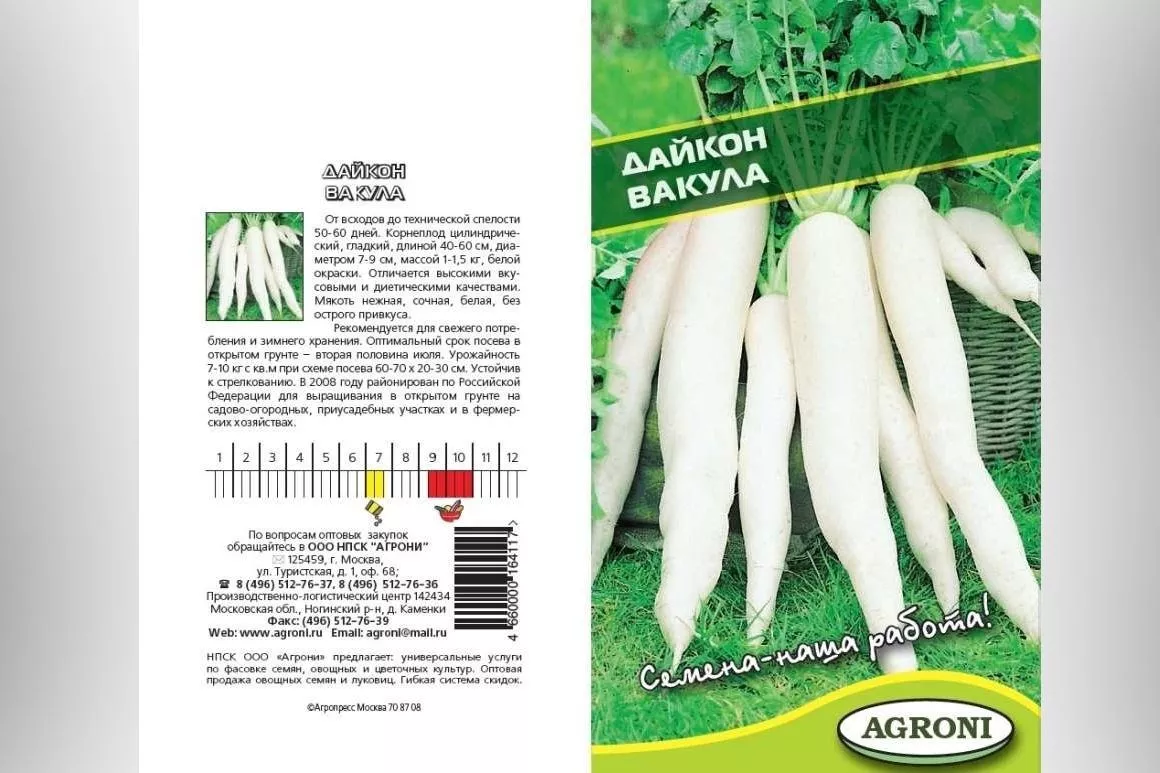
Planting dates.Sowing is done in the first half of July.
Features of cultivation. Under favorable conditions, seedlings can appear in as little as 5 days. During the seedling period, radish care involves moistening and loosening the soil as needed. When the seedlings sprout their first leaves, they are thinned out.
Harvesting. This variety produces juicy white fruits in just 50-60 days. When planted in spring, the harvest is in October, before the onset of persistent cold weather. The harvested roots are spread along the garden bed to dry, then the tops are trimmed and stored in the cellar.
Daikon "Rhino"
The variety gets its name from the interesting horn-shaped roots. It's an early-ripening variety.
Description. It has a long, conical shape and a smooth surface. A single root weighs up to 300-350 g. The flesh is white, juicy, tender, not bitter, and has a slightly sweet taste.
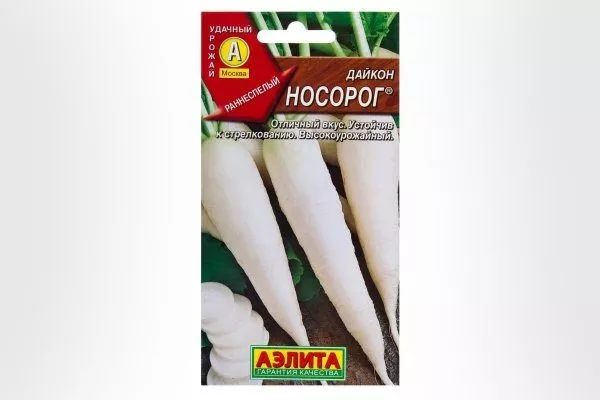
Planting dates. Seeds are sown in the ground in the second half of July.
Features of cultivation. Plants need timely watering, weeding, loosening and fertilizing.
Harvesting. The first shoots appear in 53-57 days. The harvest is completed before frost. The roots should be stored in sand.
Daikon "Japanese Long"
Gardeners value this vegetable for its low-maintenance care. Japanese radish is known for its high yield and vibrant flavor.
Description. Japanese radish roots are large, often weighing over 4 kg. The roots are white or cream-colored. The fruits are juicy and tender, with a distinct flavor without excessive pungency and no offensive odor.
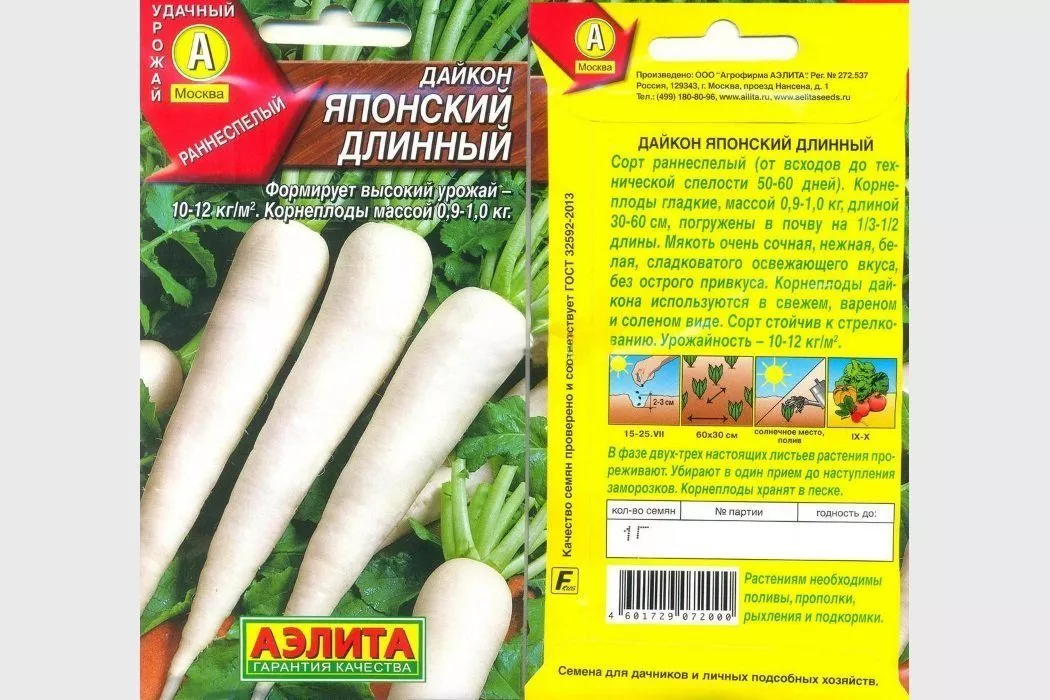
Planting dates. The most suitable period for planting Japanese radish is considered to be the second half of March or the beginning of April.
Features of cultivation. Radishes don't require much care. Just water the plants regularly, loosen the soil, remove weeds, and fertilize. Hilling up Japanese radishes is equally important, as the roots protrude significantly from the soil.
Harvesting. Harvesting begins 80-85 days after germination. Radishes planted in the spring are ready to harvest within two or three months.
Daikon "Kalancha"
Daikon Kalancha is similar in appearance to the Rhinoceros variety, with the same skin shape and color. It's an easy-to-grow plant, requiring minimal care.
Description. A mid-season variety. The roots are white and cylindrical. Each fruit reaches 45-60 cm in length and weighs 2-3 kg. The flesh is white, juicy, tender, and firm. The flavor is cloyingly sweet, with virtually no spiciness.
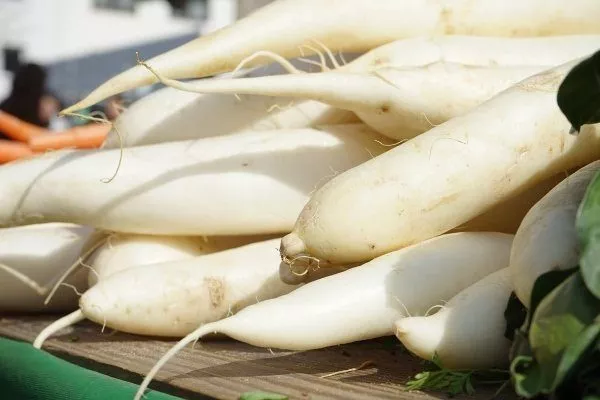
Planting dates. The best time for sowing is midsummer. Seedlings appear in 3-5 days.
Features of cultivation. The plant can grow in any type of soil, but produces more fruit in light, fertile soils. It requires regular watering, loosening, and weeding.
Harvesting. Harvesting of daikon roots begins 70 days after planting. This should be done in dry weather, before frost sets in. Daikon should be stored in sand.
Daikon "Sasha"
This is a round daikon variety. It's considered an ultra-early ripening variety, which is an advantage. When ripe, it reaches halfway above the soil surface, making harvesting easier.
Description. Radish roots are not very large—about 10-12 cm in diameter, weighing 200-400 g. The flesh is firm, without voids, crisp, snow-white at the tip and slightly greenish at the stalks. The taste is sweet and slightly spicy.
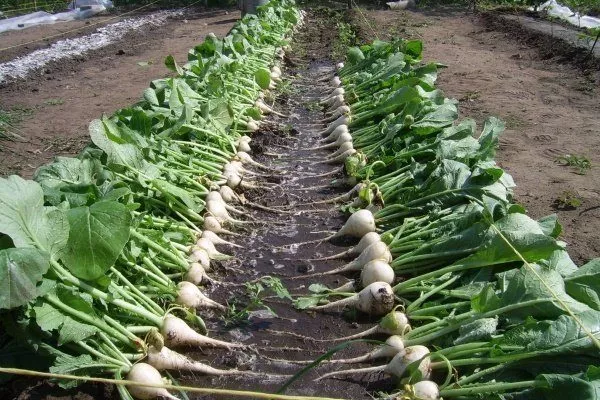
Planting dates. The first product is obtained 35-45 days after planting.
Features of cultivation. This variety is perfectly adapted to the local climate. It is suitable for both open-ground cultivation and greenhouse cultivation during the winter and spring. It can grow in any soil, but performs best in light soils.
Harvesting. Harvest radishes as they ripen, avoid leaving them in the garden too long, as the roots will become unattractive. A distinctive feature of this variety is its long-lasting greenery.
White radish "Odesskaya 5"
A delicious white radish, recommended for summer consumption. It's easy to care for and boasts a unique flavor.
Description. An early-ripening variety. Roots appear 35-45 days after the first shoots emerge. The radish is round, 9-11 cm in diameter, and weighs 40-70 g. It has excellent flavor. The flesh is white, juicy, and crisp. It has minimal spiciness.
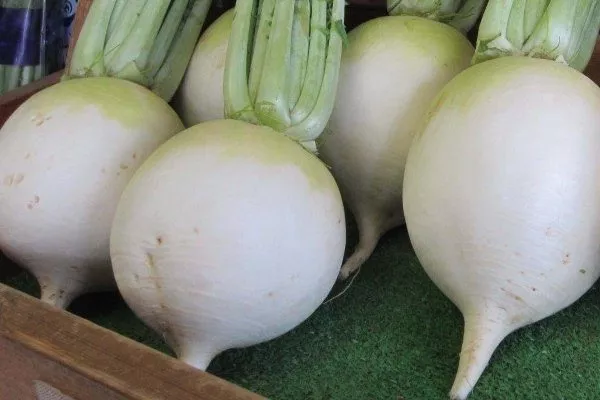
Planting dates. It is recommended to sow seeds in late April-early May.
Features of cultivation. The variety prefers well-moistened, loose soils and requires regular watering.
Harvesting. The harvest takes place at the beginning and end of July.
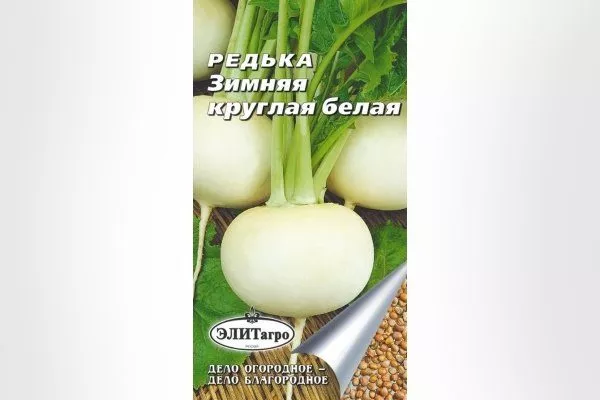
White radish "Winter round white"
Winter white radish was bred by the All-Russian Research Institute of Vegetable Crops Selection and Seed Production. Since 1950, cultivation of this variety has been permitted in Russia.
Description. The round roots reach 7-8 cm in length and 7-8 cm in diameter. The skin is white and thin, about 0.6 cm thick. Each root weighs 200-450 g. The surface is smooth. The white flesh is slightly starchy, dense, and juicy. The fruits have a medium-sweet flavor.
Planting dates. Winter radish is planted from June 25 to July 10.
Features of cultivation. This mid-season variety prefers regular watering and loosening of the soil. It bears fruit in fertile soil.
Harvesting. The first fruits appear 70-93 days after germination. The harvest is in the fall. One square meter yields 2-6 kg of fruit.
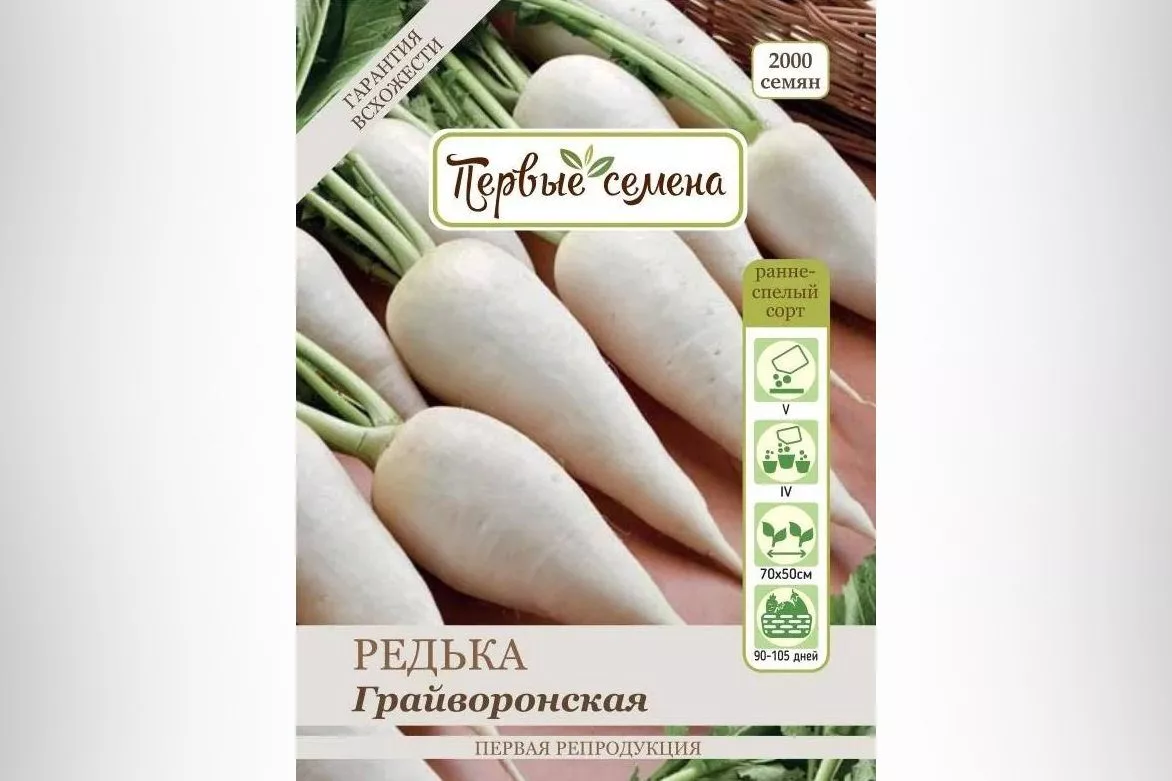
Radish "Gaivoronskaya"
Radish ripens in 110-120 days after planting. The white roots are elongated, growing up to 50 cm in length. Each radish averages 2 kg in weight. It has dense, slightly juicy, spicy, white flesh.
Planting dates. Sow radish seeds in early June to harvest in September-October.
Features of cultivation. This crop grows well in moist, nutritious loam rich in humus. Choose well-lit areas.
Harvesting. Root crops are harvested in the fall, beginning in mid-September and continuing until the first frost. One square meter yields approximately 4-8 kg of root crops. Before storing the radishes in the cellar, remove any remaining soil.
Radish "Red Long Summer"
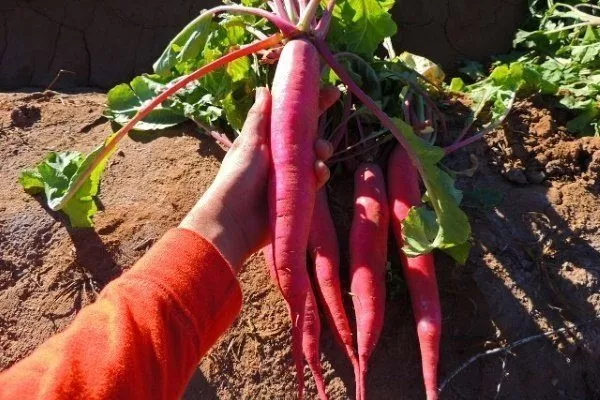
Red radish roots are a quarter above the soil surface, requiring periodic hilling. This early-season hybrid is recommended for summer consumption.
Description. An early-ripening variety, it ripens 40-45 days after planting. The root is elongated, weighing between 120 and 150 g. It is red, sometimes pink, and the flesh is white. The flavor is delicate, sweet and tangy.
Planting dates. Sowing is carried out in early spring or in the second half of summer, since the vegetable requires about 10-12 hours of daylight to grow fruits.
Features of cultivation. The crop isn't particularly demanding when it comes to soil conditions, but thrives in loose, fertile soil with a neutral pH. Its yield depends on proper watering, regular weeding, and soil loosening.
Harvesting. Radishes are harvested in several stages as they ripen in the summer. Summer radishes are dug up in September. For winter storage, it's best to dig up the fruits later.
Varieties of black radish
Black radish has been known since ancient times, so it is grown everywhere.
| Name | Ripening period (days) | Root shape | Pulp color |
|---|---|---|---|
| White radish "Odesskaya 5" | 35-45 | Rounded | White |
| White radish "Winter round white" | 70-93 | Round | White |
| Radish "Gaivoronskaya" | 110-120 | Elongated | White |
| Radish "Red Long Summer" | 40-45 | Elongated | White |
Radish "Uncle Chernomor"
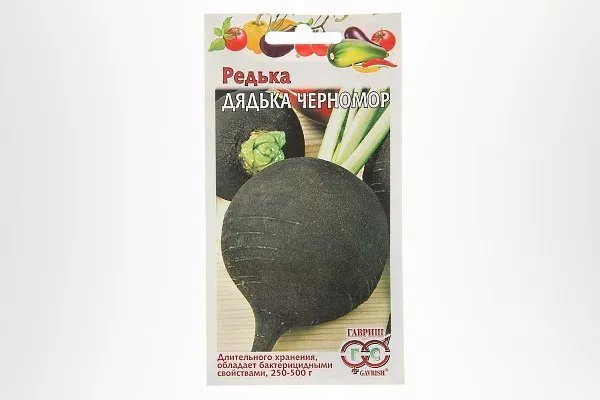
This variety has a semi-erect rosette of medium-length, ovate, grey-green leaves with medium notches on the margins.
Description. The roots are flat and round, short and fairly wide. The skin is black and the head is flat. The flesh is juicy and white. The flavor is sweet and tangy. Each root weighs 200-220 g.
Planting dates. Sowing is done after June 20.
Features of cultivation. To get a good harvest, the beds need to be kept moist. Radishes require a lot of watering.
Harvesting. Root crops are harvested 73-90 days after planting, pulled by the tops. It's best to harvest before severe frost sets in.
Radish "Divnaya"
A mid-season variety bred in Belarus. Ripens 80-90 days after planting. The roots are predominantly round, with black skin.
Description. The flesh is white, dense, and void-free. Each root weighs 300-350 g.
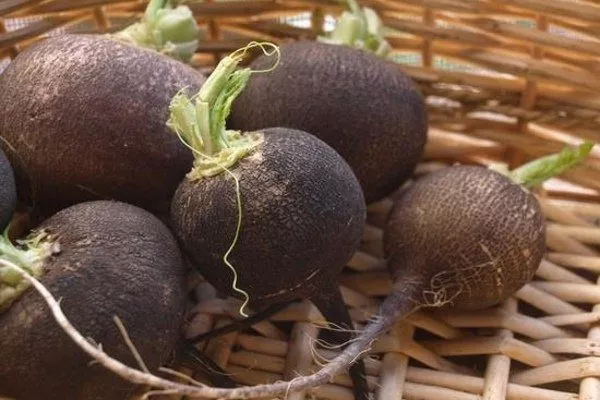
Planting dates. Sowing is done in June to ensure harvesting before frost sets in. The optimal time for planting is June 15-20.
Features of cultivation. This root vegetable requires proper care. It's undemanding of soil but prefers locations with ample sunlight.
Harvesting. It has a long shelf life; after winter storage, the taste properties remain the same.
Radish "Winter Round Black"
Black radish is especially recommended for winter and spring. It enriches the diet with vitamins and minerals. It can be eaten raw or cooked.
Description. The root vegetable is round, reaching 8-12 cm in diameter. The skin is thin and black. The flesh is juicy, tender, and soft, with a white hue. Each root vegetable weighs between 250 and 500 g. This variety is distinguished by its excellent taste.
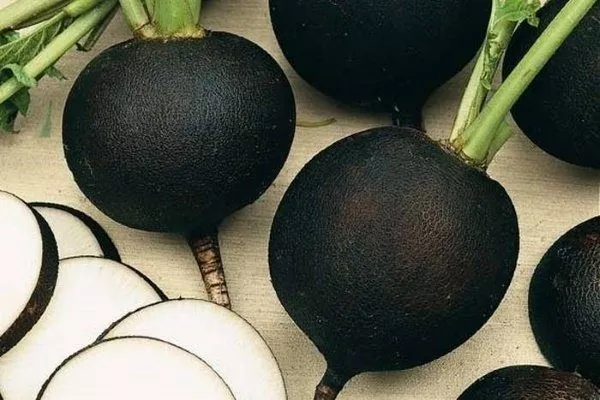
Planting dates. Radishes are sown in June-July. Planting earlier is pointless, as the roots will grow tough or there will be no harvest at all.
Features of cultivation. Radishes don't like shade. A well-lit area is ideal for planting. It can be sown in areas previously occupied by cucumbers, potatoes, carrots, and tomatoes.
Harvesting. The crop ripens 70-90 days after planting. One square meter can yield up to 6-7 kg of yield. It is harvested in the second half of September, before the onset of severe frost.
Radish "Healer"
A popular variety, especially in Eastern countries. However, it's also a common sight in Russian gardens. It's a favorite among many consumers due to its distinctive bitter flavor.
Description. This early-ripening variety ripens 65 days after the first shoots appear. The root is elliptical, about 10 cm in diameter, weighing 200-400 g. The flesh is tender, juicy, and crisp.
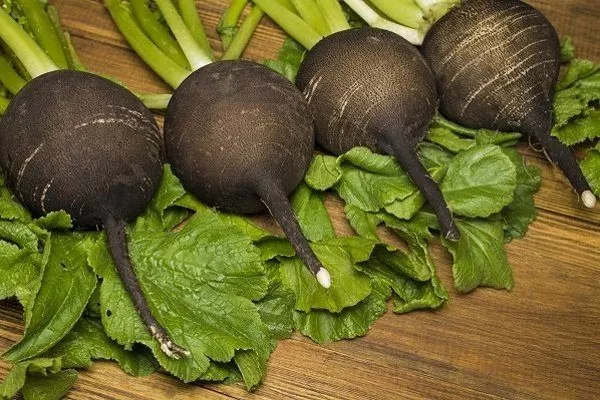
Planting dates. Sowing is done in early spring. Seeds are sown in furrows spaced 35-40 cm apart.
Features of cultivation. The Healer radish prefers light soils rich in organic matter. Soil preparation begins in the fall, adding compost or humus and mineral fertilizers.
Harvesting. The crop is harvested as the root crops ripen.
Radish "Nochka"
The plant has a semi-raised rosette of leaves. The leaves are obovate, medium-sized, with finely serrated edges and a grayish-green hue.
Description. An excellent variety for summer-fall cultivation. The harvest can be completed within 70-80 days after the first shoots emerge. The roots are black-skinned, round, 8-12 cm long, 9-13 cm in diameter, and slightly ribbed. The fruit has white, dense, juicy flesh with a tangy-sweet flavor. Each radish weighs 230-350 g.
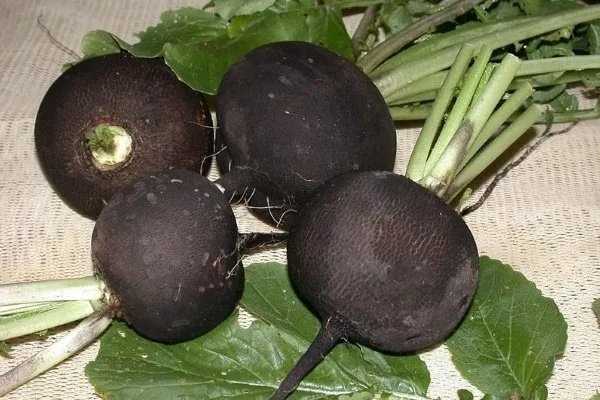
Planting dates. Planting of radishes begins in early to mid-July.
Features of cultivation. The culture prefers well-moistened, illuminated areas, well fertilized with humus or compost.
Harvesting. Radishes should be harvested before the leaves turn yellow in dry weather. This variety stores very well in a basement or cellar.
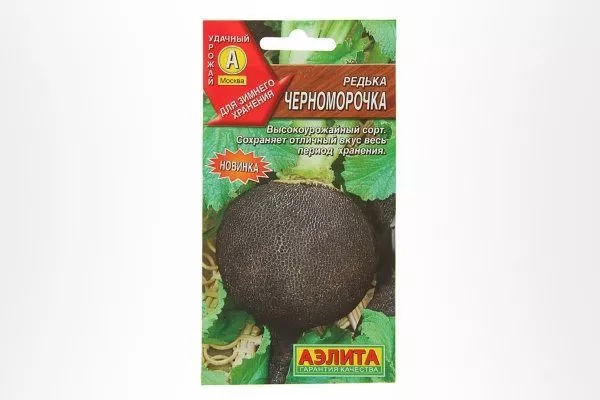
Radish "Chernomorochka"
A high-yielding, mid-season variety recommended for fresh consumption in the fall and winter. This root vegetable is popular for use as a cold remedy.
Description. The roots are flattened or rounded. The flesh is white, dense, and juicy. It has a sweet and tangy flavor.
Planting dates. The most favorable period for planting is considered to be sowing seeds from June to mid-July.
Features of cultivation. Sow seeds in open ground in furrows 1-2 cm deep. Thin the seedlings when one or two true leaves appear. Plants require regular watering, weeding, and fertilizing.
Harvesting. The harvest is 70-110 days after the first shoots emerge. All root vegetables are harvested at once, before the onset of frost. 6-8 kg of yield are harvested per square meter.
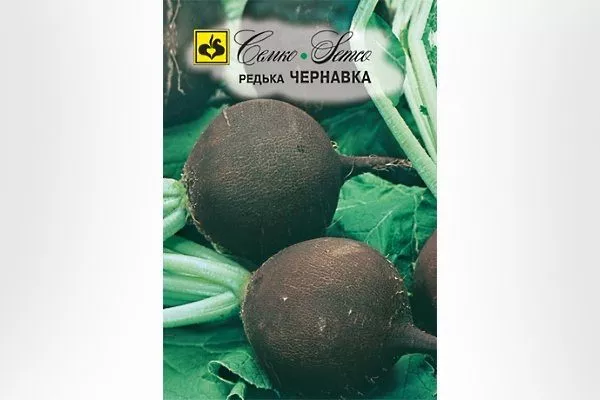
Radish "Chernavka"
A unique variety recommended for fresh consumption and storage. The fruits are smooth, tasty, and nutritious.
Description. The root vegetable is round, 10 cm in diameter, and has a black skin. The white flesh is juicy and tender. Each fruit weighs 240-260 g. This late-ripening variety ripens 72-80 days after planting.
Planting dates. Sow in late June-early July.
Features of cultivation. The variety prefers fertile soils with well-lit areas.
Harvesting. The harvest begins in late September and early October as it ripens. This variety is prized for its excellent shelf life. One square meter yields 4-7 kg of radish.
Radish "Murzilka"
The Murzilka radish is considered one of the best varieties for winter storage. Its roots boast excellent flavor and a lack of radish odor.
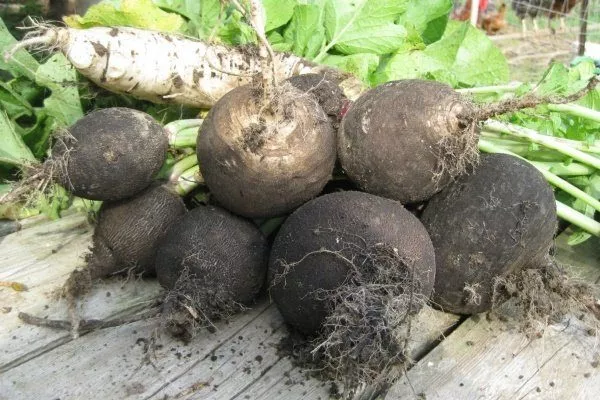
Description. A late-ripening variety. The roots are round, 8-10 cm in diameter. The white flesh is tender and juicy. The flavor is medium-spicy. Each root weighs approximately 300 g. The skin is black.
Planting dates. Sowing in open ground for summer consumption is carried out at the end of April, for autumn-winter consumption – in mid-June.
Features of cultivation. Murzilka radish requires regular watering, loosening, and weeding. Timely mineral fertilization promotes long-lasting and abundant plant growth.
Harvesting. Root crops appear 90-100 days after the first shoots emerge. Harvesting occurs as the radishes mature.
Black Medicinal Radish
Medicinal radish is prized for its unique composition and ability to prevent colds. It contains vitamins, enzymes, and essential oils that have beneficial effects on the body.
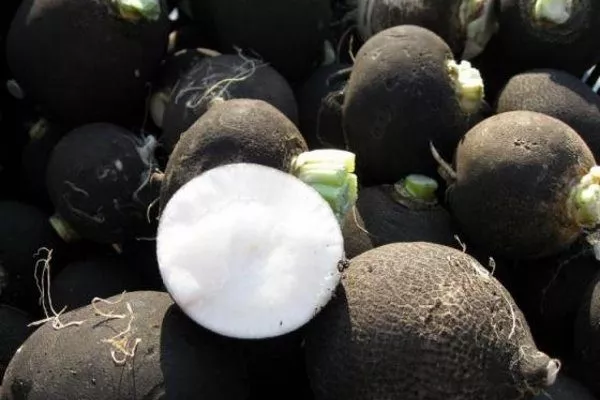
Description. Black medicinal radish is round, with black skin and white flesh. Its flavor is pungent, sharp, and slightly bitter. It has no strong odor. The roots typically weigh 300-500 g.
Planting dates. This is a late variety, ripening in 90-110 days, so it is planted in late May, early June.
Features of cultivation. Black radish doesn't require any special growing conditions or requirements. It prefers fertile soil. Fertilizing, loosening the soil, and watering are necessary.
Harvesting. Root vegetables are kept in the garden as long as possible, but they must be dug up before the cold weather sets in. They must be stored in sand and placed in a cellar.
Cylindra radish
This is a wonderful vegetable, especially beneficial to eat in winter. Radish contains many vitamins and has medicinal properties.
Description. This variety was developed over 10 years ago. The root is elongated and looks like a carrot. This mid-season variety tastes like a radish, with virtually no pungency. The weight of a single root varies from 200 to 300 g.
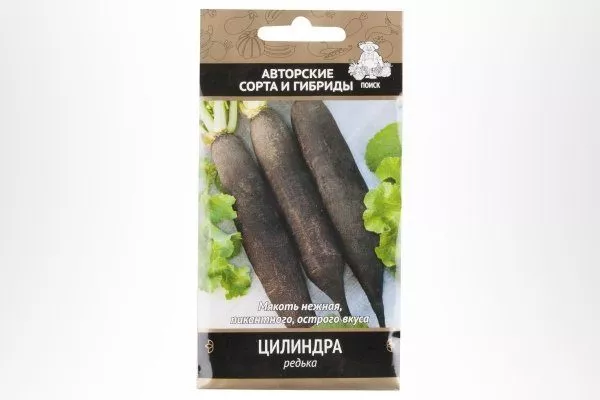
Planting dates. The period from germination to harvest is 65-75 days.
Features of cultivation. The variety responds well to organic and mineral fertilizers. Regular watering is essential. The optimal temperature for seed germination is considered to be 10-15 degrees Celsius.
Harvesting. The harvest is made as the roots emerge in early September or October. Choose a sunny, warm day for harvesting, allowing time to dry the roots and remove any soil.
Radish "Winter Black Long"
This variety contains vitamins, organic acids, proteins, amino acids, and essential oils. The presence of phytoncides helps suppress and kill harmful microorganisms.
Description. Winter black radish is elongated and has a pungent, flavorful flesh. Its skin is black and thin.
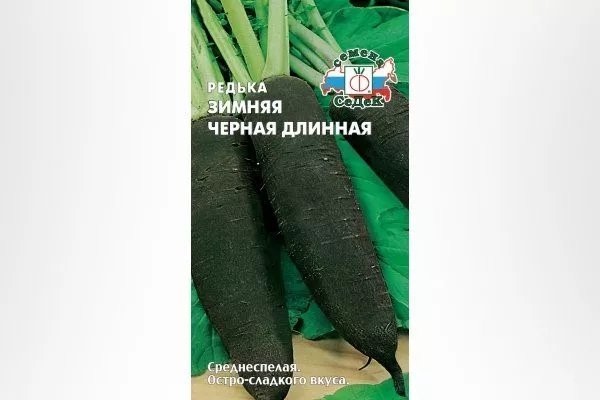
Planting dates. The best time to plant radishes is early July. Under favorable conditions, the root crop grows quickly and ripens as early as September.
Features of cultivation. It's recommended to plant in sunny areas. To increase yield, it's advisable to dig the area two weeks before planting and add humus and mineral complex fertilizer.
Harvesting. Root crops are harvested as they ripen, beginning in August. The rest of the harvest is in September and October, before frost sets in. The fruits are stored in a cellar or basement.
- ✓ Optimum soil pH for radish: 6.0-6.8.
- ✓ The depth of the fertile layer should be at least 25 cm.
Varieties of Chinese radish (loba)
Red radish "Lady"
Radish "Barynia" is considered an excellent folk remedy for the treatment and prevention of colds. It is recommended to consume it during the winter and fall.
- 2 weeks before planting, add humus at a rate of 5 kg per 1 m².
- Dig deeply to a depth of 30 cm.
- A week before sowing, loosen the top layer of soil.
Description. This mid-season variety ripens 63-68 days after planting. The roots are round and red. They weigh 80-120 g. The white flesh is tender and juicy, with a slightly sweet and tangy flavor.
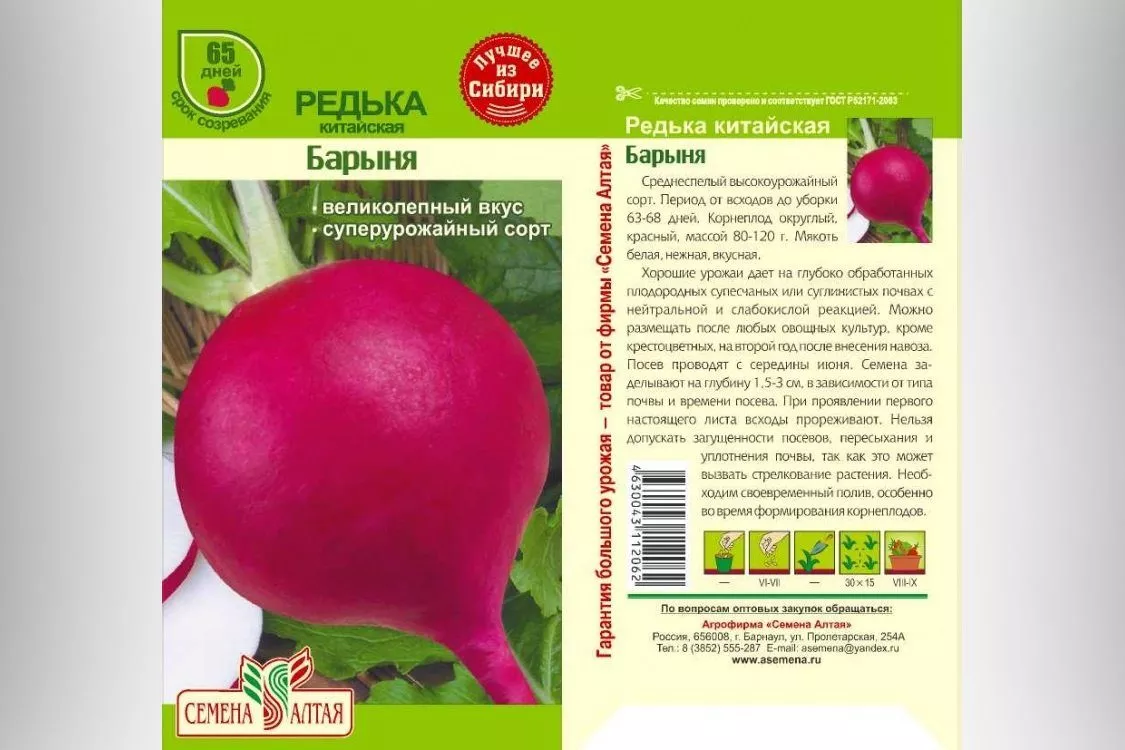
Planting dates. They begin to sow seeds from mid-June to mid-July.
Features of cultivation. The variety prefers light, fertile soil. Seeds are sown in furrows spaced 35-40 cm apart.
Radish "Red Winter"
This is a bright hybrid that appeared as a result of selective crossing of hot radish and common radish.
Description. A mid-early variety. The fruits are large and round, weighing up to 500 g. The skin is predominantly red. The flesh is mildly spicy, with a flavor reminiscent of radish.
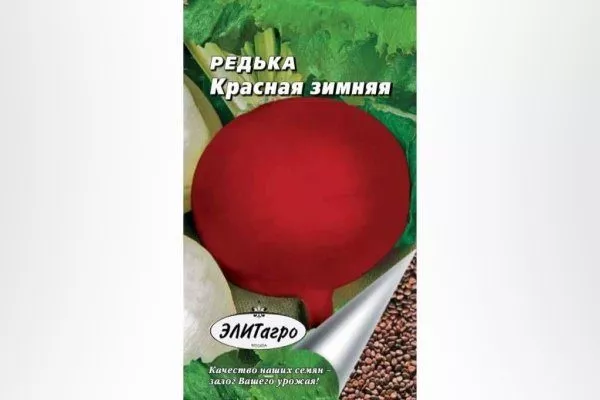
Planting dates. They begin to sow radish seeds in late April-early May.
Features of cultivation. The crop requires good soil fertility, moisture, and light. Loose soil is preferred.
Harvesting. The harvest is 60-80 days after the first shoots appear. The roots store very well.
Radish "Troyandova"
It has a rounded shape. The root is pink with a white base. The flesh has a delicate pink hue.
Description. This mid-season variety takes 75-85 days to ripen. It has a sweet and tangy flavor and is excellent for long-term storage.
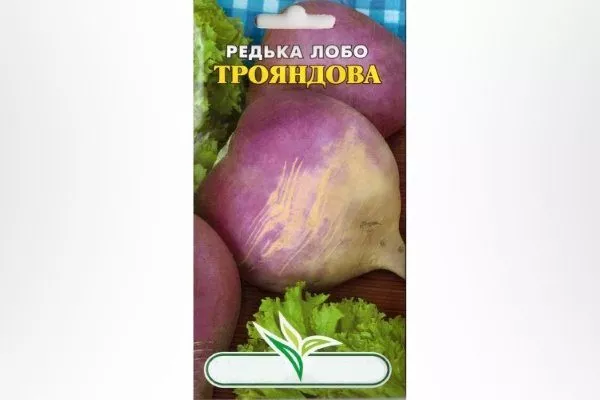
Planting dates. Radishes are planted at the end of April or the beginning of May.
Features of cultivation. This variety is low-maintenance. It requires regular watering, and the fruit should not be left in the sun without moisture for extended periods. Weeding is also important.
Harvesting. The harvest takes place in mid-summer.
Mantang Hong radish
This variety is a masterpiece of global breeding. It's appealing because it resembles a radish, only in reverse. The radish is red on the inside and white on the outside.
Description. The roots are smooth, branch-free, and do not crack. They are round in shape and up to 8 cm in diameter. The skin is white-green, sometimes white. The flesh ranges from raspberry-red to red. The flesh is dense, juicy, and crisp.
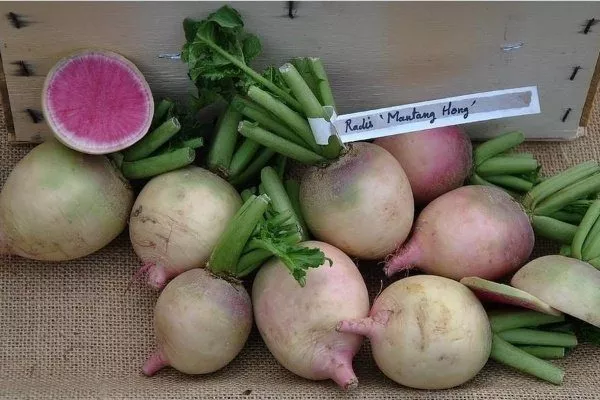
Planting dates. Sowing is done in early spring, with seeds sown in furrows. The roots fully mature within 70 days after the first shoots emerge.
Features of cultivation. Radishes prefer light soils rich in organic matter. Subsequently, the soil should be loosened and the plants watered regularly. Radish needs to be fed at least three times per season.
Harvesting. Radishes are harvested as they ripen.
Radish "Green Goddess"
A young variety that has gained popularity due to its qualities and striking appearance. The product contains trace elements, amino acids, and mineral salts.
Description. An early-ripening variety, it ripens 60 days after germination. The roots are round, with green skin and pale green flesh that is juicy, tender, and crisp. It has a mildly spicy flavor. Each radish weighs 350-400 g.
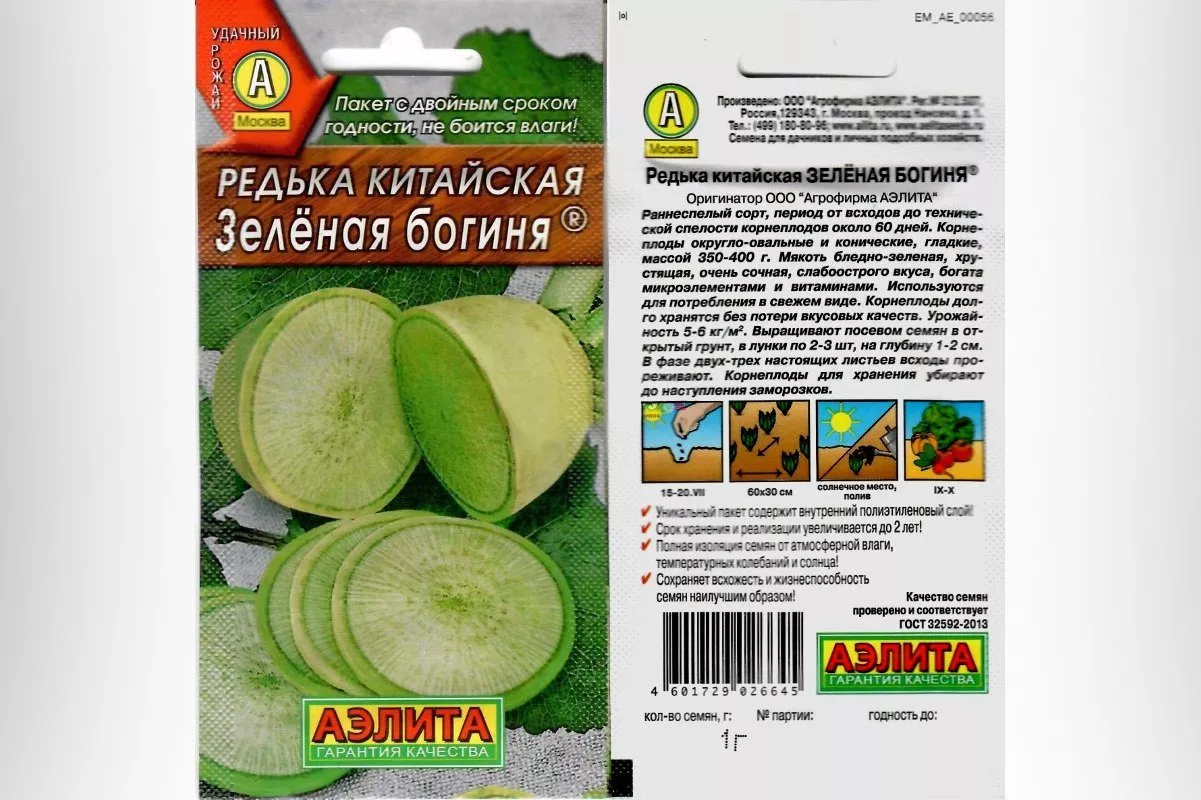
Planting dates. Planting of root crops begins in early June - mid-July.
Features of cultivation. The vegetable is grown by sowing seeds in open ground. The crop requires regular watering.
Harvesting. Root crops are harvested for storage before frost sets in. Approximately 5-6 kg of yield are obtained per square meter.
Radish "Margelan summer"
The root vegetable gets its name from the city of Margilan, located in Uzbekistan. It arrived there from China.
Description. The roots can be round, oval, or elongated. Radishes reach 16-20 cm in length and weigh up to 500 g. The skin is green. The white, translucent flesh has a greenish tint. The root is juicy and not very spicy.
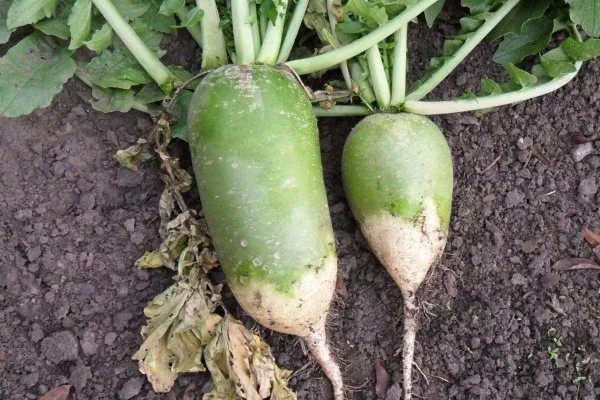
Planting dates. To obtain a summer harvest, it is recommended to plant radishes in early May.
Features of cultivation. To increase the yield, you should water the radish regularly and generously, thin out the seedlings, feed it with fertilizers and get rid of weeds.
Harvesting. Radishes are harvested 60-90 days after germination. One square meter yields 3-3.5 kg.
This is interesting: oilseed radish is not a radish at all!
Oilseed radish is a "green" fertilizer (green manure). After mowing, the plant is plowed into the ground, which improves the soil quality. It is enriched with nitrogen, becoming looser and more fertile. Furthermore, the green manure crop prevents weeds from growing quickly.
Description. Oilseed radish is an annual plant. It's a fast-growing crop that can be sown several times per season. It has excellent frost resistance.
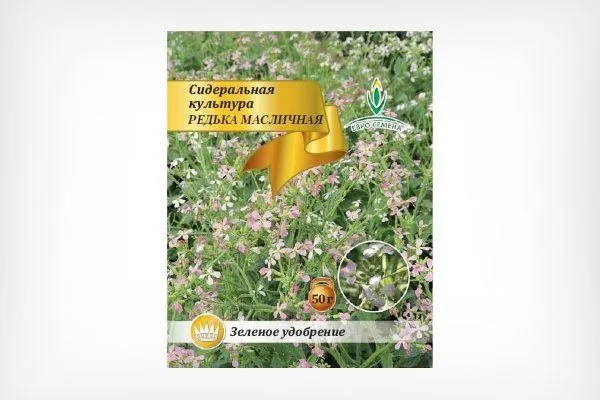
Planting dates. The growing season lasts about 60 days with spring sowing, and 15-20 days shorter with summer intercropping.
Features of cultivation. The plant is easy to care for, moisture- and cold-resistant, and can produce viable seeds in the most challenging climates.
Harvesting. This radish does not produce root crops. Green manure is harvested no later than when seeds begin to form. For winter crops, this is done 20 days before sowing; for healthy growing, 14 days before the ground freezes. The crop cannot withstand severe frosts, so there is a risk of dieback.
Classification of varieties by early maturity in the table
| Name of the variety | Ripening period (days) |
| Sasha | 35-45 |
| Winter black long | 75-85 |
| Serpentine | 45-60 |
| Vakula | 50-60 |
| Cylinder | 65-75 |
| Lady | 63-68 |
| Uncle Chernomor | 73-90 |
| Red long summer | 40-45 |
| Marvelous | 80-90 |
| Winter round black | 70-90 |
| Doctor | 75-80 |
| Gaivoronskaya | 110-120 |
| Night | 70-80 |
| Green Goddess | 60 |
| Red Winter | 60-80 |
| Chernomorochka | 70-110 |
| Margelan summer | 60-90 |
| Odessa 5 | 35-45 |
| Chernavka | 72-80 |
| Japanese long | 80-85 |
| Murzilka | 90-100 |
| Winter round white | 70-93 |
| Watchtower | 70 |
| Dragon's Tooth | 60-70 |
| Rhinoceros | 53-57 |
| Black healing | 90-100 |
| Lobo Troyandova | 75-85 |
| Manthang-Hong | 70 |
There are a huge number of radish varieties. Regardless of the variety, this root vegetable is prized for its beneficial properties, rich composition, and unique flavor. While not everyone loves radishes, they are known to be especially beneficial in the fall and winter for treating and preventing colds.