
Green radish (or Margilan radish) came to Russia from the East – traders from China brought it through the city of Margilan in Uzbekistan. This root vegetable was so popular with locals that they began growing it in their gardens. Green radish is an affordable and easy-to-grow food crop.
Description of the culture
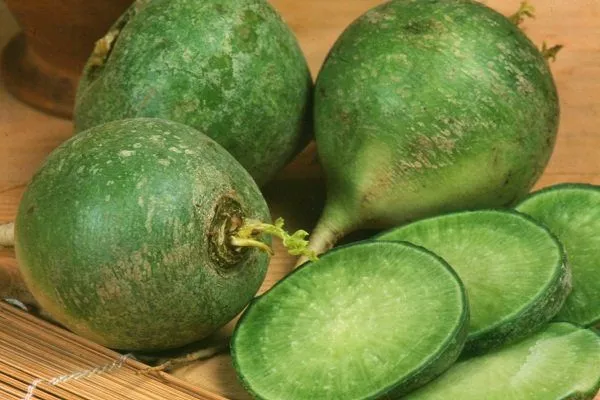
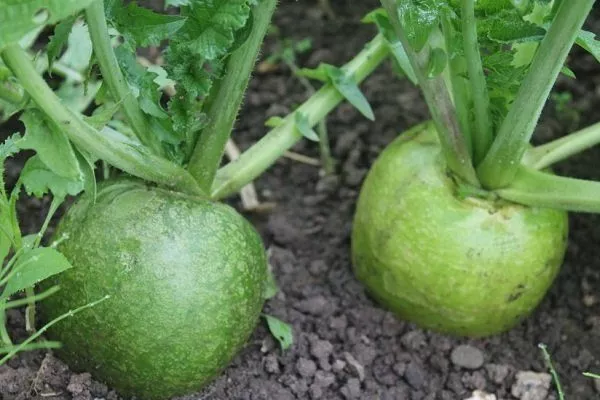
Green radishes differ from their black and white cousins in their milder flavor. They also possess the following characteristics:
- divided into early, mid-season and late varieties;
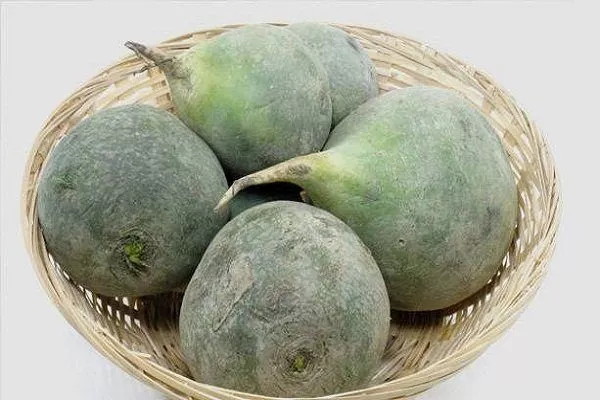
- root vegetables are round and elongated;
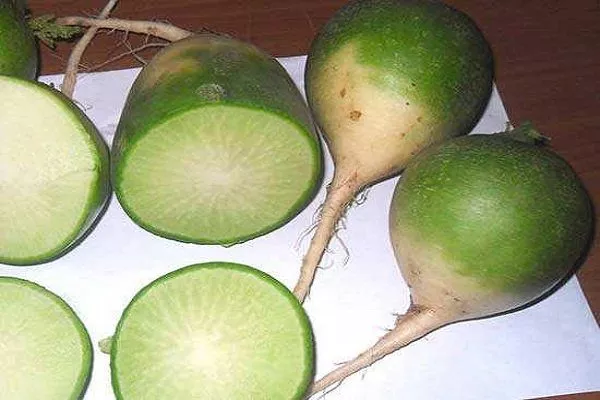
- the body of the root crop is short – up to 15 cm, and wide – up to 10 cm in diameter;
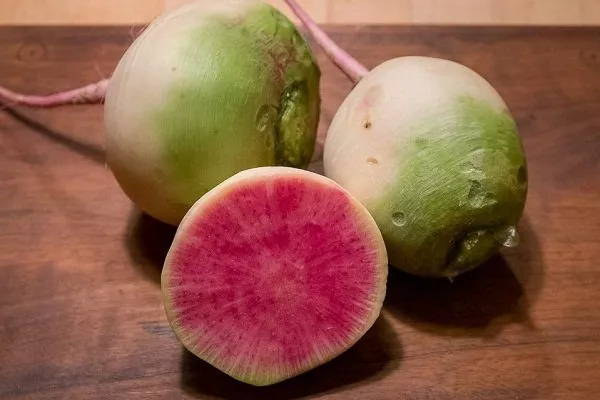
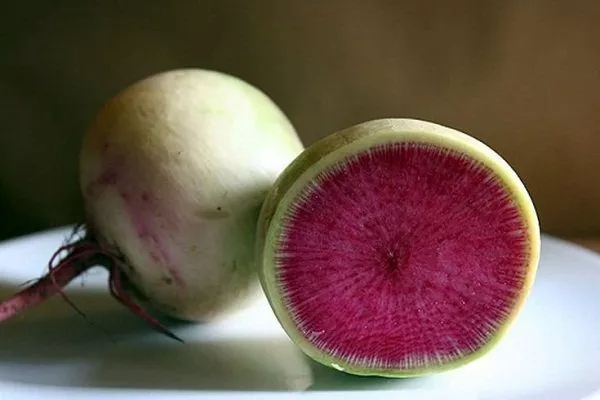
- color – white, bright green, pink, red and purple;
- the pulp can also be of different colors;
- the part near the tops is always green;
- the average weight of one fruit is 500 g, but some specimens grow up to 1 kg;
- the pulp is moderately dense and juicy, without pronounced pungency;
- average yield – 6 kg/sq.m;
- root vegetables have good shelf life;
- tolerates transportation well;
- technical maturity is reached in a period of 60 to 90 days.
The best varieties
| Name | Disease resistance | Soil requirements | Ripening period |
|---|---|---|---|
| Green Goddess | High | Loams | 60-63 days |
| Southerner | Average | Sandy loams | 60 days |
| Northerner | High | Loams | 60 days |
| Aelita | Average | Sandy loams | 65 days |
| Lobo | High | Loams | 60-90 days |
| Pink ring | Average | Sandy loams | 60-90 days |
| Oktyabrskaya-1 | High | Loams | 75 days |
| Troyandova | Average | Sandy loams | 80-85 days |
There are many varieties of this vegetable, however, the following are the most popular in our country:
- Early ripening:
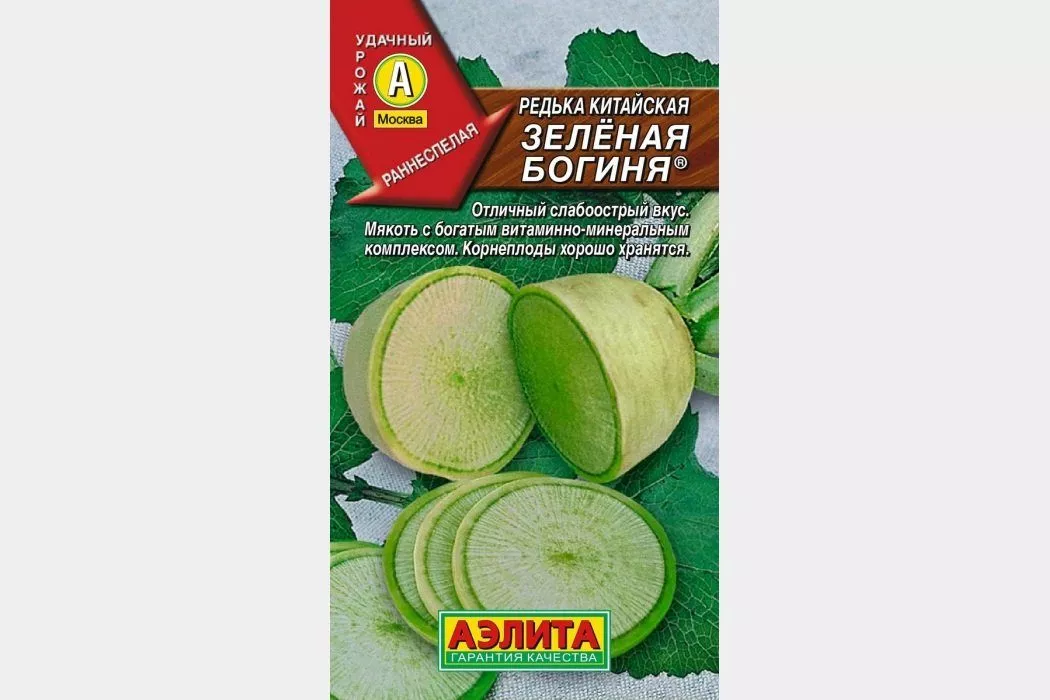
- Green Goddess – a relatively new variety characterized by an interesting flavor with a slight spiciness. It is round, green, and has tender and crisp flesh. The harvest has a long shelf life. The fruit weighs 400 g and ripens in 60-63 days.

- Southerner – characterized by high productivity, shape – oval-round, skin color – greenish, fruit weight – 250 g, pulp is juicy, color – white.
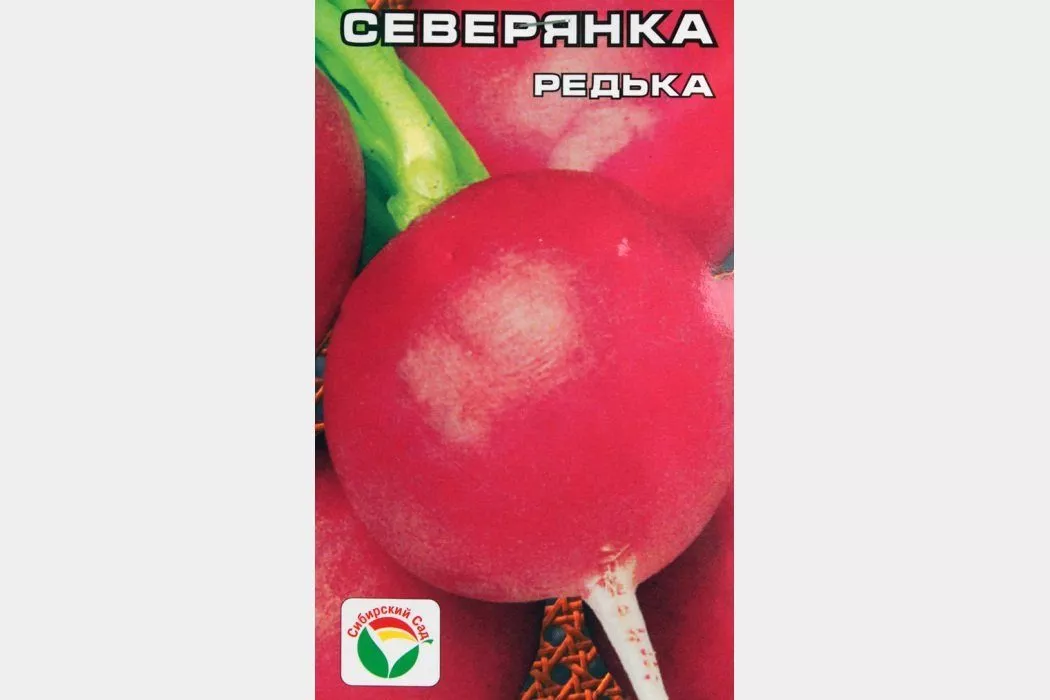
- Northerner The growing season is 60 days. The shape is obovate with a pointed base and a large pink head. The flesh is tender, juicy, with a sweet and spicy flavor. The root weight is 500-890 g.
- Aelita – ripens 65 days after the first shoots appear. The fruit is elliptical and green. It weighs 200–400 g, and the flesh is tender, sweet, and juicy, with a slightly spicy flavor.
- Green Goddess – a relatively new variety characterized by an interesting flavor with a slight spiciness. It is round, green, and has tender and crisp flesh. The harvest has a long shelf life. The fruit weighs 400 g and ripens in 60-63 days.
- Mid-season:
- Lobo – A Chinese variety with large, round or elongated fruits. The root weight is 500 g or more, and the color is light or dark green, pinkish, red, and purple. The flavor is delicate, slightly spicy, and without bitterness. It ripens in 60-90 days.
- Pink ring The root is oval in shape and has a light green skin. The flesh is pink with a red ring.
- Lobo – A Chinese variety with large, round or elongated fruits. The root weight is 500 g or more, and the color is light or dark green, pinkish, red, and purple. The flavor is delicate, slightly spicy, and without bitterness. It ripens in 60-90 days.
- Late-ripening:
- Oktyabrskaya-1 – the growing season is 75 days, the shape of the root crop is round-oval, the skin color is white, the head is green, the flesh is white, tender, juicy, the taste is delicately spicy.
- Troyandova The growing season lasts 80-85 days. The vegetable is oval in shape and pink in color. Each root weighs 670-700 g, has tender flesh, a pleasant flavor with vibrant nuances, and yields 6-7 kg per square meter.
- Oktyabrskaya-1 – the growing season is 75 days, the shape of the root crop is round-oval, the skin color is white, the head is green, the flesh is white, tender, juicy, the taste is delicately spicy.
What are the benefits of green radish?
Green radish is rich in biologically active substances, which, when consumed over a long period of time, have a positive effect on health:
- accelerates metabolism;
- cleanses the body;
- contains important minerals (iodine, phosphorus, magnesium, iron) and vitamins;
- improves the functioning of many organs.
Pre-sowing activities
Before planting radishes, carry out several pre-planting procedures. You need to select a planting site, prepare the soil, and prepare the seeds.
Choosing a location
Choose a well-lit location and follow crop rotation guidelines. Radish is tolerant of soil acidity and grows well in both neutral and alkaline soils. Choose loamy or sandy loam soils based on soil texture.
If the soil is overly acidic, it's best to deacidify it with dolomite flour at a rate of 400 g/sq. m. Dig the soil thoroughly without breaking up any clods. Lighten heavy clay soils with peat and sand. If you plan to plant in spring, you can add compost and peat at a rate of 6 kg/sq. m.
Predecessors
Green radish should be planted after the following crops:
- nightshade;
- cucumbers;
- Luke;
- garlic;
- melons.
Any type of radish can be replanted in the same location only after 3-4 years. Avoid growing this root crop after silage crops, corn, or cabbage.
Preparation of seed material
First, calibrate and sort the seeds. Keep in mind that seeds can retain their quality for up to four years. If they've passed their expiration date, discard them.
- ✓ Check the expiration date of the seeds; the optimal storage period is up to 4 years.
- ✓ Select large seeds for better germination.
Select the largest and smoothest seeds. To increase germination, soak them in a growth stimulant, such as 2 drops of Epin per 100 ml of water, and leave for 4 hours. Do this the day before sowing. Dry the seeds thoroughly.
Sowing in open ground
Factors affecting planting timing:
- period of technical maturity of varieties;
- climate;
- length of day;
- landing purpose;
- Features of care and planting method.
The optimal timeframes, depending on the region, are as follows:
- Central Russia – end of April – beginning of May. Can be planted in autumn for winter.
- Ural – second half – end of April.
- Siberia – the first half of April, if the temperature is around 4 degrees Celsius.
Planting radishes in open ground is carried out in several stages:
- Dig up the soil to the depth of a shovel blade, remove weed roots and basal tree shoots.
- Grow radishes in raised beds. Use boards to raise the soil 100-150 mm, cover the surface with a nutrient solution of organic and mineral fertilizers, and level the surface.
- In a 1 m wide bed, make three rows spaced 30 cm apart. The furrows should be 3-4 cm deep.
- Water the rows generously. Once the water has soaked into the soil, spread the seeds along the furrows, leaving 10-15 cm between them.
- Mulch the furrows with humus or peat.
- In case of nest planting, arrange the holes in a checkerboard pattern, sowing up to 5 seeds in each.
- If the seeds were soaked before sowing, the shoots appear on the 5th day; dry ones sprout a few days later.
- To speed up germination, water the bed and cover with non-woven material.
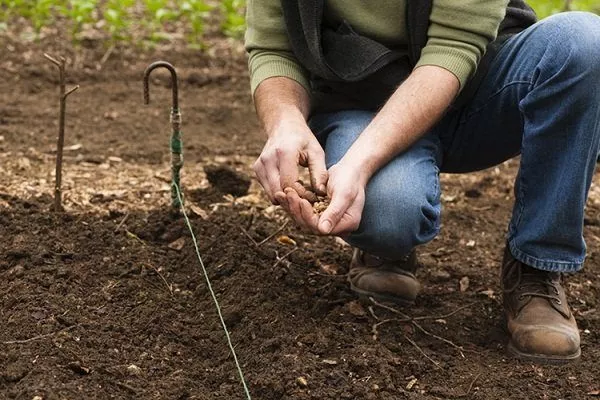
Radishes can survive cold snaps and even light frosts, and the seeds will germinate at temperatures between 3 and 5 degrees Celsius. The optimal temperature for successful green radish growth is 18-20 degrees Celsius.
Care
In addition to proper planting, proper care is also important. Although the crop is frost-hardy, it's important to monitor the temperature and avoid sudden changes.
Watering
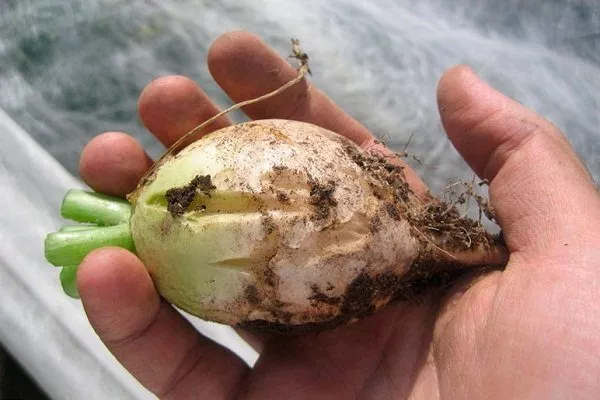
Radishes love water—they need frequent and generous watering, especially in hot and sunny weather. Insufficient water causes the roots to become coarser and less juicy, and if water is uneven, they begin to crack.
First-season plants planted in early spring should be watered at least twice a week, while summer-planted plants should be watered 3-4 times per season. The recommended watering rate is 10 liters per square meter of bed. After watering, it's advisable to mulch the soil to reduce the frequency of watering by retaining moisture longer.
Thinning
This procedure is necessary because several seeds are placed in the holes at once. It is carried out in three stages:
- First time Thin out when the seedlings have developed a few true leaves. Remove the weakest plant.
- The second time -When the beginnings of future root crops appear, remove all plants without green coloring and foliage.
- Third time -When the root vegetables reach a diameter of 0.5 cm, remove the smallest and weakest ones so that only one plant remains in the hole.
Plants should be carefully pinched off, not pulled out, so as not to disturb the sprouts, which should remain in the ground.
Loosening and hilling
It's important to soften the root ball to allow air to reach the roots. When the top of the root crop reaches 1-2 cm above the soil surface, it should be earthed up, otherwise this part will become rough.
Radishes don't tolerate a crust forming on the soil surface, so loosen the soil after rain—this disrupts the channels through which moisture collects. Remember, loosening the soil is like watering dry water.
The soil between rows and furrows should be loosened to a depth of 4-6 cm. Deeper loosening can damage the radish's root system, and weed seeds will be pulled out of the deeper layers of soil closer to the surface.
Weeding and removing tops
Excess foliage and weeds prevent fruit from developing properly and serve as breeding grounds for diseases and pests. Excessive plant growth encourages the formation of flower-bearing shoots.
Be sure to remove all dry leaves, and if the tops create dense shade, remove healthy lower leaves as well. Weeds must be removed regularly, combining this with loosening the soil.
Top dressing
During the growing season, fertilizing should be done at least twice. If a mineral requirement arises during fruit formation, additional fertilizing will be necessary:
- The first time to feed after the first thinning is to fill the bed with wood ash - 1 tbsp. per 1 sq. m.
- The second time is during fruit ripening. The plants are fertilized with nitrophoska, diluting 30 g of the substance in a bucket of water.
If the leaves begin to turn pale during ripening, you can feed the radish with a mullein solution or scatter ash over the beds again.
Major diseases and pests
Green radish is susceptible to diseases and parasites that affect members of the cruciferous family.
| Diseases, pests | Symptoms | Methods of control |
| Gray mold | A fungal disease that develops during storage. Symptoms include the formation of a gray, fluffy coating on the fruit. | Use of preparations containing Glyocladium (a fungus that eats other fungi). |
| Powdery mildew | It is characterized by a whitish-gray coating that causes plants to lag in growth. | Compliance with crop rotation rules, isolation of seedlings in space, treatment with special preparations (Bordeaux mixture). |
| Blackleg | The leaf rosette thins, and mycelium appears. The top of the fruit and the lower part of the stem turn black, and a white coating forms. | Thinning out plants, changing the soil, using 1% Bordeaux mixture with adding a layer of sand after the procedure. |
| Mosaic | Brown patterns gradually appear on the leaves. | There is no cure; the affected plants must be burned. |
| Slugs | Damage to the tops and protruding parts of root crops | It is recommended to collect and destroy pests, and also to sprinkle a thick layer of crushed eggshells or lime. |
| Cabbage flies | They feed on nectar, the larvae gnaw through tender root vegetables, build passages, the radish begins to look depressed, the tops wither. | Damaged root crops must be dug up and burned, and the soil treated with an insecticide (Aktara, Karbofos). |
| Black fleas | They scrape the skin off young leaves and stems, and the larvae eat the roots. | Maintain a humid environment, dry dust the leaves (with a 1:1 mixture of ash and tobacco dust). Treat with insecticide solutions (Decis, Sherpa). |
When and how to harvest?
The time to harvest green radishes depends on the variety. It's important to note the number of days from sowing to ripening:
- Summer varieties should be harvested in early June. These root vegetables have a short shelf life.
- Autumn varieties are harvested until the end of summer.
- Winter radishes need to be harvested before the first frost.
Root crops typically ripen two to three months after planting. Early varieties begin harvesting after 50-70 days, while mid-season and late varieties begin harvesting after approximately 75-100 days.
Harvest in dry weather, in the morning or evening, before the sun is too strong. If the soil is light, pull the radishes by the base of the tops; in heavier soils, use a shovel. Trim the tops, leaving only 2-3 cm.
Storage
Leave the harvested radishes in the garden bed for a few hours to dry. During this time, sort through the radishes, removing any damaged roots for edible use, and store healthy ones without cracks or cuts in bulk in a basement or cellar.
The harvest can be stored in plastic bags with the lid slightly open. Sand-filled containers are also suitable. The storage temperature should be between 1 and 2 degrees Celsius, and the humidity level in the room or bag should be 80%.
Storing on the balcony is possible if the temperature there doesn't drop below 0 degrees Celsius in winter. Vegetables should also be placed in boxes and sprinkled with sand. In the refrigerator, radishes should be placed on the vegetable storage shelf in perforated bags.
A gardener will share his experience growing green radishes in the following video:
Green radish is a favorite crop among gardeners, often planted in their plots because it requires virtually no maintenance. Planting the seeds of this root vegetable is easy, and they have a high germination rate.