
This radish doesn't have a root and isn't grown as a vegetable. The oilseed variety is a well-known green manure, planted as a green manure. Let's learn about other uses for this crop, how to plant, grow, and harvest it properly.
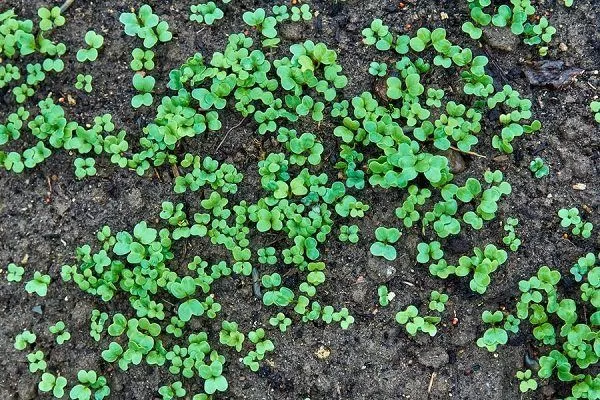
Appearance and characteristics of the culture
The annual oilseed radish is native to Asia. It is now widely distributed.
Description of appearance:
- Plant. The height of the plant in adulthood is 1.5-2 m.
- Root system. Taproot, deeply penetrating. It has a thickened upper part with powerful branches on the sides. There is no root vegetable.
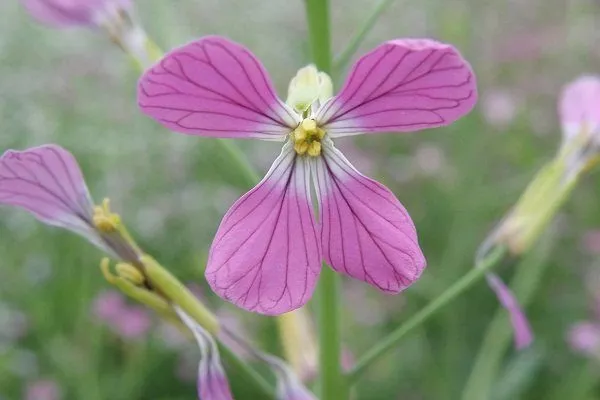
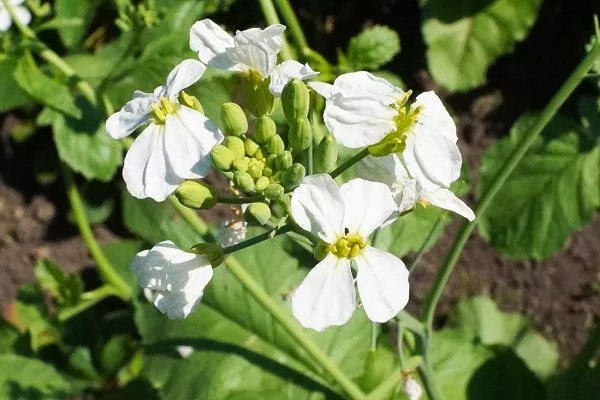
- Flowers. They appear in May. Loose inflorescences bear numerous lemon- or snow-white flowers.
- Fruit. When the flowers fade, the fruit forms. Each pod contains 3-5 seeds. The pods do not split, allowing for harvesting in wet weather.
- Seeds. Small, spherical, reddish or brownish in color. 1,000 pieces weigh about 12 g.
The seeds contain up to 50% fat. They are used to produce vegetable oil, which is a raw material for biofuel production.
Characteristics of oilseed radish:
- suitable for growing in regions with difficult agricultural conditions;
- The yield of green mass with several cuttings is 200-600 centners per 1 ha.
The best varieties
Breeders, developing new varieties of oilseed radish, are working to increase its honey production, enlarge the root system, and improve its green manure properties.
| Name | Growing period (days) | Disease resistance | Plant height (m) |
|---|---|---|---|
| Tambov resident | 90-120 | High | 1.5-2 |
| Nika | 90-120 | Average | 1.5-2 |
| Brutus | 90 | High | 1.2 |
| Sabina | 90-120 | High | 1.5-2 |
Tambov resident
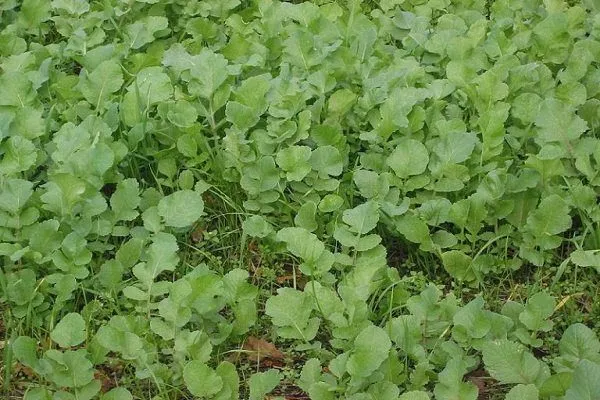
This is an old, proven variety, developed about 40 years ago. It is frost- and drought-resistant, and can withstand temperatures down to -5°C. The stem is densely foliated, making it ideal for forage.
Nika
Created by Belarusian breeders by crossing previously developed varieties. Yield: 2.5 tons per hectare. Growing season: 90-120 days.
Brutus
A German variety with a 90-day growing season. It is resistant to blackleg. This medium-sized variety reaches a height of 1.2 m.
Sabina
A high-yielding Belarusian variety. Produces a large number of seeds. Up to 3.5 tons can be harvested per hectare. It is used in combination with peas and silage corn. It is also added to silage.
Advantages and disadvantages
Oilseed radish is an important industrial crop with many advantages and only a few disadvantages.
Pros:
- Ability to grow on heavy, clayey soils.
- Increases fertility. If radishes aren't mown before winter, they can trap snow and prevent the soil from freezing.
- All parts of the plant contain essential oils, the characteristic smell of which prevents the proliferation of pests in the soil - nematodes, wireworms.
- Increases the number of earthworms and beneficial microorganisms.
- It tolerates cold, drought and high humidity.
- It is characterized by stable yield.
- Tight crop closure prevents weed growth.
- When mown, green manure nourishes the soil with humus.
- Continues vegetation at +5…+6°C.
- Frost-resistant to -4°C. Mature plants can tolerate temperatures as low as -7°C.
Cons:
- It grows poorly in acidic soils. Wood ash or slaked lime should be added to the soil before planting.
- It is difficult to make silage from the crop, since its leaves and stems contain a lot of essential oils, so preservatives are added to the silage.
When to sow radishes?
Oilseed radishes are sown in rows. They can be sown from April to September, but the highest yield is achieved with April sowings.
- ✓ The soil temperature for sowing should not be below +10°C, which is not mentioned in the article.
- ✓ To increase seed germination in unfavorable conditions, it is recommended to pre-soak seeds for 12 hours.
Autumn
When sowing winter crops, it's important to harvest the green manure in time. Leave a small gap between mowing the radishes and sowing the winter crops to allow the green mass to rot. Moreover, the grass should be mown before the seeds form.
In the fall, the seeding rate is doubled. The autumn rate is 4 to 8 g of seeds per square meter. This planting allows for increased seeding density.
Spring
Sowing begins in April or earlier. Soil temperature should be a guide. If it has warmed to 10°C, you can begin sowing. If the temperature is unstable—occasionally dropping below the minimum—it is recommended to increase the seeding rate.
Summer
With the arrival of summer, sowing can be done at any time. The plants are watered when the sprouts emerge. Seeding can be done immediately after harvesting vegetables.
When it’s time to sow greens – salads, arugula, etc. – the radishes will already have been mown and the soil will be enriched with useful elements.
Oilseed radish is planted in front of:
- cucumbers;
- tomatoes;
- pepper;
- potatoes;
- raspberries;
- strawberries;
- grapes.
Site selection and preparation
Radishes are easy to grow and don't require a lot of soil. However, to achieve their intended goal, the area intended for planting must be brought into compliance with agricultural standards.
How to improve soil quality:
- in soils with high acidity, a deoxidizer is added - slaked lime or dolomite flour;
- In soils with low fertility, it is recommended to add a mineral complex or organic matter.
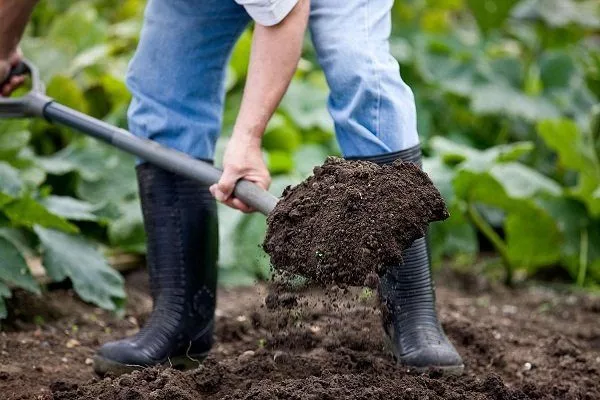
The soil for radish planting can be plowed or dug, depending on the size of the crop. A small area can also be loosened with a subsoiler.
Heavy clay soils require more tilling; for others, shallow loosening is sufficient. The seeding depth is 4 cm.
To increase crop yields, the soil can be fertilized with a microbial fertilizer, such as "Baikal EM-1" or "Siyanie-1." Organic matter can also be added to the soil to improve fertility.
How to sow oilseed radish?
The seed rate for sowing depends on:
- Time for sowing. In autumn and spring, the rate is increased by 1.5-2 times. Conditions at this time are less favorable, and germination may decrease.
- Sowing technologiesThere are two ways to plant radish seeds:
- Into the ranksThe sowing rate is 2-3 g per 1 sq. m.
- Scattered. 3-4 g per 1 sq. m.
Comparison of sowing methodsSowing method Seeding depth (cm) Recommended seeding density (g/m2) Into the ranks 2-3 2-3 Scattered 1-2 3-4
To sow 1 hectare, 20 to 40 kg of oilseed radish seeds are required.
Sowing features:
| Target | Row spacing, cm |
| Feed | 15 |
| Green manure | 15 |
| Honey | 25-20 |
| Seeds | 20 |
Care
Seeds sown in the ground begin to germinate in 4-5 days. After 30-40 days, the plant forms a rosette, which blooms 60 days after sowing.
During the growing season, the plant requires virtually no care. The only thing it may require is organic fertilization if the soil is poor.
During industrial cultivation of the crop, the following measures are taken:
- After sowing, roll the soil;
- if necessary, harrow until seedlings emerge;
- weed control.
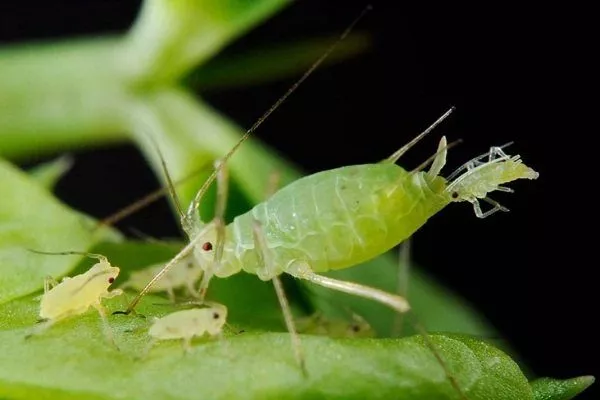
The biggest enemy of oilseed radish is the flea beetle. It is controlled with insecticides. Other pests include the diamondback moth and the cabbage fly. The most common diseases are powdery mildew and downy mildew.
Should I dig up oilseed radish in the fall?
Radishes are dug up before winter or left to overwinter. If sowing was done late, it is recommended not to dig up the radishes.
Radishes left over winter:
- retains snow on the field, allowing the soil to accumulate more moisture;
- The accumulation of moisture prevents the soil from freezing.
In spring, as soon as the snow melts, the above-ground parts of plants begin to rot, enriching the soil with useful elements.
If you dig up radishes, do so 45 days after sowing. It's important to dig up the crop before flowering begins. If you miss the time, don't leave the mown stems in the field; instead, compost them to prevent seeds from being released.
To make digging easier, the radishes should be mown down beforehand. If the work is done by hand, the plant stems are chopped up with a shovel and dug into the soil, incorporating them into the soil.
Digging of oilseed radish should be completed two weeks before the onset of frost.
Mowing
Radishes are mown one month after germination. If the crop is planted as a green manure, mow 30 days before planting vegetables.
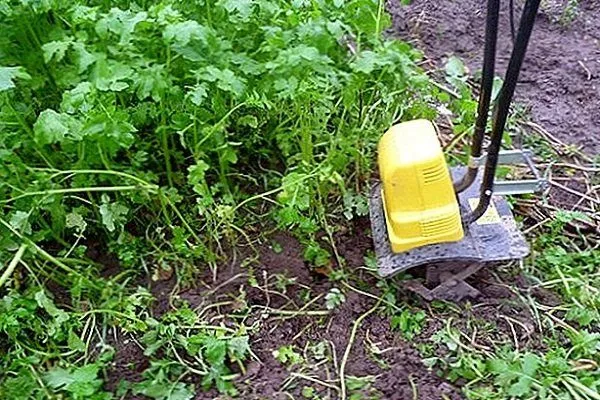
Harvesting of the crop for forage begins at the budding stage and ends before the pods form. The stems are mown down, leaving a 6-7 cm cut to promote faster regrowth.
Harvesting for seeds begins after the pods are fully ripe. The ripened seeds are light brown or reddish-brown in color, depending on the variety. Store the seeds in paper or cloth bags.
What else should you consider when cleaning:
- If you mow the crop when it reaches a height of 20-30 cm, you can get green mass three times per season.
- If the crop is planted before sowing winter crops, then mowing should be done 20-25 days before sowing the seeds.
- To obtain humus from plant matter, it must be moistened.
- If the crop is used as preparation for spring sowing, it is harvested after the first frost.
Main areas of application
Thanks to its properties and qualities, oilseed radish can be used for a variety of purposes. Requiring little care, hardy and undemanding, this crop is a generous honey plant, forage, and green manure.
Areas of application of oilseed radish:
- Green manure. Soil enrichment occurs in two ways. The powerful roots draw nutrients from the deep soil layers upward. The greenery turns into fertilizer, containing humus and organic matter. The crop protects the soil from erosion. It also improves soil looseness and its permeability to air and water.
- Phytosanitary. Essential oils protect not only the plant itself but also the soil in which it grows from insects and fungi. The crop helps eliminate potato scab, nematodes, and wireworms. By shading the soil, it suppresses weed growth.
Oilseed radish is actively used in weed control. - Forage crop.On average, 30-70 tons of green mass are harvested from one hectare. From sowing to harvest, the crop takes no more than 50 days. Radishes can be mown three times in a single season.
The green mass is fed to livestock fresh and as silage. Oilseed radish is also used to make haylage. It is an ingredient in various grass mixtures. - Honey plant. Oilseed radish produces nectar even on cold days. The plants are ready to harvest honey in early spring and summer.
The nectar of the plant contains sucrose, fructose, and glucose, amounting to 20%. Radish honey is very aromatic.
Where else is radish used?
Besides agronomy, oilseed radish is in demand in:
- Cooking. A seemingly inedible product can be used to enrich dishes with vitamins. Radish leaves soaked in water make an excellent base for salads. Soaking time: 1 hour.
Green sprouts can be added to cabbage soup. They contain ascorbic acid, which adds vitamin C to the dish. - Food industry. Radish contains unique essential oils, allowing it to be used to produce enriched vegetable oil. However, this process is labor-intensive and yields only a small amount of oil.
The protein is used in sports nutrition. Avoid overindulging in radish leaves, as they contain glucosides that can cause poisoning. - Pharmacology. Essential oils extracted from radishes serve as the basis for medicinal preparations. They are primarily used to make vitamins. Herbal infusions with a calming effect are prepared from the green mass. Drinks made from radish leaves relieve stress and headaches.
- Cosmetology. Essential oils derived from oilseed radish are added to massage oils. Products containing radish emulsions have a relaxing and mild warming effect.
- Production. Diesel fuel oil is produced, used in combines and other machinery. It is also used to make an anti-corrosion emulsion.
Reviews
Using oilseed radish as a green manure allows you to save on mineral fertilizers. This hardy, virtually maintenance-free crop not only significantly improves the quality of your plot but also provides vitamin-rich feed for livestock.