
This cold-hardy and easy-to-grow turnip variety tolerates cold and drought, developing and producing golden-yellow roots even in low-light conditions. They can be eaten fresh in both winter and summer. Read on to find out what you need to know about this crop and how to grow it properly in your garden.
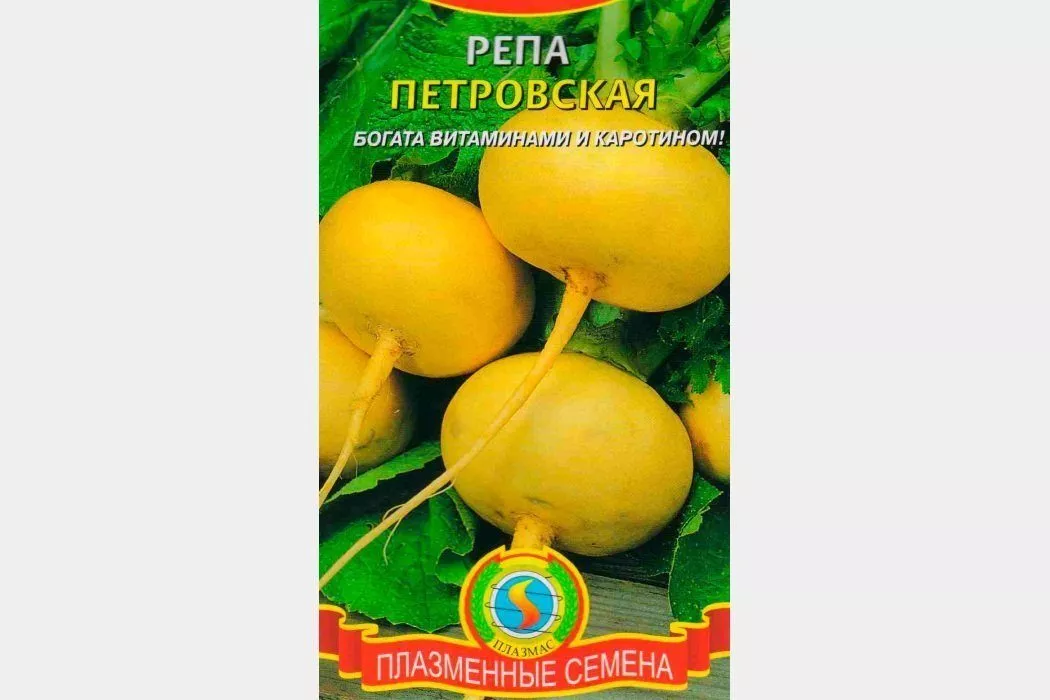
Petrovskaya turnip
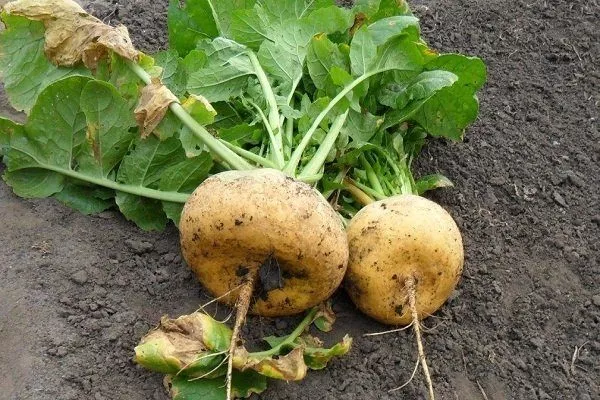
Petrovskaya turnip has dense, crispy flesh.
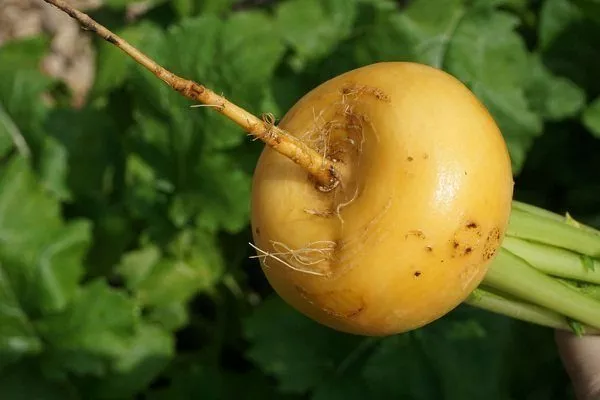
Petrovskaya sweet turnip without bitterness
Description of the variety
The Petrovskaya 1 turnip was developed in 1937 by breeders at the Gribovskaya Experimental Station, which was later renamed the Federal Scientific Center for Vegetable Growing. The variety has been listed in the State Register of Plants of the Russian Federation since 1950. Its characteristics are presented in the table:
| Parameter | Description |
| Ripening time | The variety is mid-early – from the emergence of seedlings to the technical maturity of root crops, it takes from 60 to 85 days. |
| Growing region | The crop is recommended for cultivation throughout the country, but germinates best in the European part, regardless of the sowing season. In Siberia, early sowing yields 1.5 times less than summer sowing. |
| Plant | The leaf rosette is appressed and consists of short, green leaves, dissected into several parts:
Two months after planting, the leaves reach a height of 55-65 cm. The plant's petioles are thin and green, but are sometimes tinted with anthocyanin, which gives them a blue or purple hue. |
| Roots | Petrovskaya F1 bears root crops with the following parameters:
|
| Application | Turnips are intended for fresh consumption in the summer and autumn-winter periods, but they can also be fermented, pickled, and used in soups and stews. |
| Productivity | The plant produces fruit abundantly and uniformly, so an average of 1.6 to 3.5 kg of root vegetables can be harvested from a single square meter of garden bed. Thanks to its short ripening period, the plot can be seeded twice per season. |
| Shelf life | Root vegetables keep well, but by January or February they lose their initial juiciness, aroma, and flavor. However, they retain their marketable qualities and look absolutely fresh, as if freshly picked from the garden. |
| Sustainability | The plant tolerates cold well but does not tolerate subzero temperatures. Frost-damaged specimens are unsuitable for long-term storage. The plant is heat-tolerant, but it is moisture-loving and produces wilted fruit if underwatered. |
You can see the Petrovskaya turnip in action in the following video:
Sowing dates
According to the manufacturer's recommendations, turnips can be sown in 2 seasons:
- in spring (for summer consumption) – from the end of April to May 10, when the threat of recurrent frosts has passed and the ground has dried out after the snow melts;
- in summer (for autumn consumption and storage) – in June – July, in order to have time to collect the fruits before the October cold weather.
Experienced gardeners sow seeds in a heated greenhouse as early as February.
Despite general recommendations, when sowing, it is better to focus on specific climatic conditions and proceed from the preferences of the turnip:
- the optimal temperature for crop growth is in the range of +15…+20°C, but at temperatures of +30°C it will become fibrous and bitter;
- Young seedlings can withstand frosts down to -4°C, and adult plants down to -6°C, but at lower temperatures, turnips form flower stalks and do not produce fruit.
Taking these temperature nuances into account, two conclusions can be drawn:
- in regions with late and cold springs, turnips for summer consumption should be sown from mid-May to early June, and for the second harvest - in July;
- In the southern regions, the first harvest can be sown in early spring, and the second – in August.
Regardless of the sowing time, seeds should be sown directly into open ground without seedlings.
Where to sow turnips?
The Petrovskaya 1 variety grows well in sunny, well-lit and ventilated areas with deep groundwater, but the seeds can also be sown along the edges of the beds to save garden space.
- ✓ Soil pH should be between 6.0-7.0 for optimal growth.
- ✓ The boron content in the soil should be at least 0.5 mg/kg to prevent the formation of voids in root crops.
The soil should be fertile and not acidic. Turnips respond well to sandy loam and light loamy soils. The following soils are unacceptable:
- sandy soil with low boron content (voids form in the root crops);
- heavy soils (the pulp becomes bitter).
When choosing a site, it is equally important to consider crop rotation rules, according to which turnips are best sown after the following crops:
- legumes;
- nightshades (potatoes, peppers);
- cucumbers;
- Luke;
- zucchini.
Turnips can be sown in the same plot for up to two years in a row. They should not be grown after related plants in the Cruciferae family. These include:
- cabbage;
- radish;
- radish;
- daikon.
After these crops, the soil becomes very depleted, and species pests can also survive in it.
The selected area must be properly prepared:
- In the fall, dig deeply, add humus (2-3 kg per 1 sq. m) and mineral fertilizers (10 g of potassium, nitrogen and phosphorus fertilizers per 1 sq. m).
- In spring, carefully dig up the area, remove all plant debris, level and roll.
Seed treatment
Before sowing, the seeds must be disinfected, which is done in the following order:
- Wrap the seeds in cloth or gauze folded in several layers.
- Soak the seeds in warm water (+50°C) for 10 minutes. To increase germination and prevent possible infections, dilute wood ash (1 tablespoon per 1 liter of water) or grated garlic (1 tablespoon per 0.5 cups of water) in the water.
- Dry the seed material and mix with sand.
The consumption of treated seeds is approximately 2 g per 1 sq. m of area.
Sowing seeds
It is advisable to sow turnips in 3 rows, following this pattern:
- the distance between furrows is 20-30 cm;
- row spacing – 8-10 cm;
- planting depth – 1-2 cm.
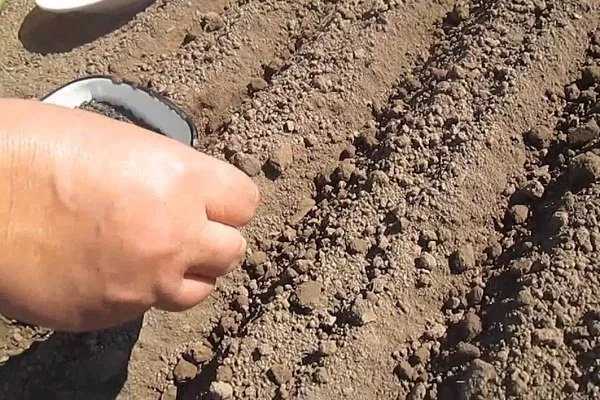
Before sowing, compact the bottom of the furrows with a shovel handle, a piece of pipe, or a block of wood to prevent the seeds from sinking. Table salt can be sprinkled into the furrows at a rate of 1 teaspoon per 3 m to increase the sugar content and flavor of the root vegetables. At the end of the furrow, moisten it with clean water or organic fertilizers containing humus, including:
- BioMaster;
- BioHumus;
- Potassium humate.
After sowing, the seed furrows can be covered with humus or compost and dusted with ash to repel pests. Seedlings will emerge in 2-4 days.
Seeds can germinate at a temperature of +2-3°C, but for further development the plant needs to be provided with warmth – at least +15….+18°C.
Caring for crops
During the growing season, radishes need to be properly cared for, from watering to protecting them from various pests.
Watering
The plant thrives in moist soil, so it needs to be watered regularly and thoroughly, preventing the soil from drying out. In dry weather, watering should be increased to twice a day. The recommended watering rate is 1-2 buckets per 3-5 square meters. As the root vegetables grow, water the bed 2-3 times a week at a rate of 10 liters of water per square meter.
The Petrovskaya turnip is demanding of moisture, as its deficiency leads to the formation of excessively hard root vegetables with a characteristic bitterness.
Soil cultivation
Moist soil should be regularly loosened and weeded. It's also a good idea to mulch the soil with humus, compost, or hay. This will prevent rapid moisture evaporation from the soil and prevent root vegetables from developing a bitter, unpleasant taste.
Thinning
To ensure root crops can gain the required mass, the seedlings need to be thinned out according to the following scheme:
- In the phase of 2-3 true leaves – at a distance of 4-5 cm.
- After 2 weeks from the first procedure, increase the intervals to 10-15 cm.
Top dressing
Turnips don't require intensive feeding due to their short growing season, but to obtain a high yield, you can take the following measures:
- in the phase of 2-3 true leaves, feed with an infusion of manure or nettle at the rate of 2-3 liters per 1 sq. m;
- prepare grooves along the rows, water them with ash infusion (120 g per bucket of water, leave for 24 hours) and immediately bury;
- spray the seedlings with Actellik or Fitoverm;
- add urea at a rate of 10-15 g per 1 sq. m in case of weak growth or yellowing of leaves;
- In poor soils, apply complex fertilizers with a high boron content 1-2 times per season; a lack of boron causes voids to form in the root crops, and the pulp acquires an unpleasant taste.
- After 2 weeks from germination, add an ash solution (120 g per bucket of water) to enhance growth.
- During the root formation phase, add boron fertilizers (2 g per 10 l of water) to improve the quality of the pulp.
Protection from pests and diseases
First of all, turnips need to be protected from the cruciferous flea beetle, which attacks the crop as early as three days after planting, when the first shoots emerge. The pest chews through the tender leaves and can devastate an entire garden bed within a week. To prevent attacks, take the following measures:
- pollinate the plant with ash through a double gauze bag;
- Before loosening, sprinkle the area with repellents - tobacco dust, mustard powder or ground pepper;
- remove all weeds from the area;
- cover young shoots with protective film.
Such measures need to be taken before 4-5 true leaves appear, since developed, strong bushes are no longer afraid of fleas.
In addition to the cruciferous flea beetle, the following pests pose a danger to turnips:
- cabbage butterfly larvae;
- turnip white butterfly;
- cabbage fly (spring, summer);
- stem nematode;
- wireworms;
- scoop (garden, cabbage).
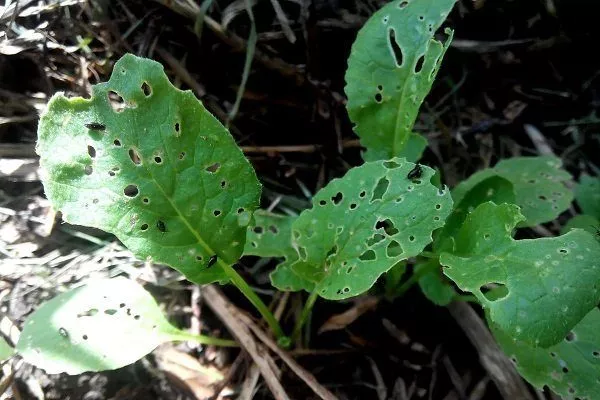
To repel them, you can spray turnips with a tobacco solution or onion infusion. If they attack the planting and burrow into the roots, insecticides (Eurodim, Akiba, Aktara, Actellic, Tabu, Prestige) will be required. Chemical treatments should be carried out no later than a month before harvest.
Among the diseases that pose the greatest danger to turnips are:
- KilaThe fungus attacks the plant's root system in highly acidic conditions or when the pathogen remains in the soil after previous plants. The tops wilt even with good watering, and the roots become deformed and covered with lumps.
Diseased turnips should be removed from the bed, and the remaining plantings treated with a solution of potassium permanganate, ash, or lime milk. The seedlings can also be watered with horseradish infusion (400 g of leaves and roots, pour 10 liters of water, and let steep for 4 hours). - Fungal infectionsThis could be rot (gray or white), powdery mildew, blackleg, or downy mildew. For minor infestations, Bordeaux mixture can be used, and for severe ones, fungicides (Skor, Previkur, Switch, Vectra) can be used.
- MosaicThis is a viral disease that cannot be cured, so diseased plants will need to be destroyed.
Prevention of any disease consists of following crop rotation rules and agricultural technology.
Harvesting and storing root crops
If the seeds were sown in May, the roots can be harvested as early as mid-July, and if in summer, until late fall. If the seeds were sown in August, they should be harvested before frost.
Turnips should be dug up as they reach maturity and kept in a ventilated area for several days. They can then be stored in the basement, first placed in thick boxes and sprinkled with sand, ash, or chalk. They can also be stored in bags with holes for ventilation. The optimal basement temperature is no higher than 2°C. In these conditions, turnips will last for 5-6 months. In the refrigerator, turnips can be stored for up to 30 days.
Turnips planted in spring should be eaten fresh in summer, and those planted in summer should be eaten fresh in autumn and early winter.
Pros and cons of the variety
Turnip Petrovskaya 1 is valued by gardeners for the following qualities:
- produces large, evenly sized, regularly shaped root vegetables with a pleasant sweet taste;
- bears fruit harmoniously and abundantly;
- exhibits resistance to flowering;
- tolerates shade well;
- exhibits excellent keeping quality;
- served fresh, steamed or salted;
- Thanks to its rapid ripening, it can be present on the table in summer and autumn.
This variety is not without its drawbacks, which are as follows:
- does not tolerate sub-zero temperatures;
- When stored for a long time, it loses its taste, although it retains its marketable appearance.
Reviews of Petrovskaya turnips
A review of growing the Petrovskaya 1 turnip is provided in the video below:
Petrovskaya 1 is a turnip variety with tasty and attractive roots, prized by gardeners for its undemanding nature, high yield, and excellent taste. Ripe roots should be eaten as soon as possible, as they will lose their flavor and nutritional value if stored for a long time.