
Lobo is a Chinese variant of daikon, and is currently a relatively unknown variety of radish, even to experienced Russian gardeners. However, it is a highly valuable product with excellent taste and numerous health benefits. In this article, we'll discuss how to grow this variety of radish.
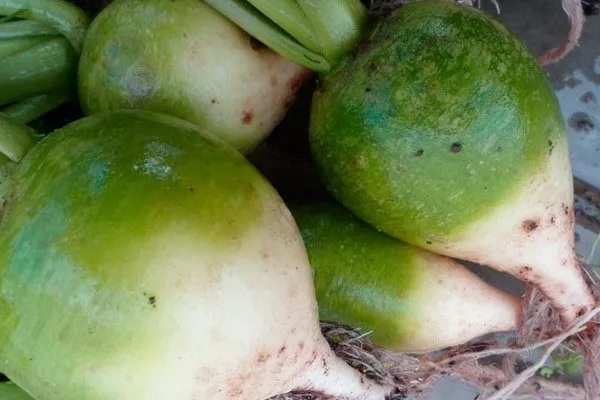
Margelan radish (Lobo)
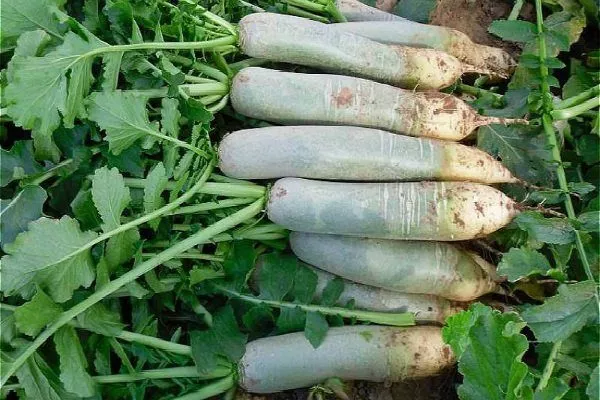
Lobo radish variety Harbin
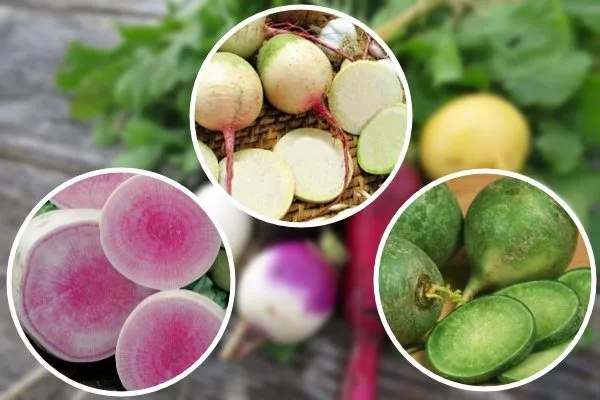
Lobo radish cross-section (different varieties)
Description and characteristics of the culture
Loba is similar to daikon in its characteristics. The main difference between the two varieties is the length of the growing season. Other characteristics of loba are as follows:
- the shape of the root crops is round or elongated, cylindrical;
- leaves are whole, dissected into lateral lobes;
- the number of leaves in one rosette can reach 10-15;
- height of branched stem – 1 m;
- fruit weight – 500 g and above (there were cases when the fruit weight reached several kilograms);
- color – light and dark green, red, purple, pink;
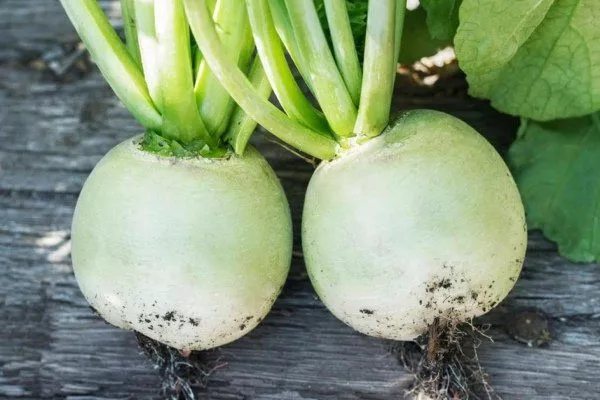
- the top of the root vegetable is green;
- taste - pleasant, with a slight spiciness;
- the pulp is dense and juicy.
- ✓ Optimum soil temperature for sowing seeds: +5-10°C.
- ✓ Seed planting depth: 2-3 cm in light soils, 1-2 cm in heavy soils.
The best varieties and their characteristics
| Name | Disease resistance | Soil requirements | Ripening period |
|---|---|---|---|
| Margilanskaya | High | Loose, moist loams | 60-80 days |
| Troyandova | Average | Neutral soils | 80-82 days |
| Winch | High | Light soils | 86-91 days |
| Elephant tusk | Average | Loose soils | 60-70 days |
| Ruby Surprise | High | Moist loams | 60-65 days |
Let's look at the most famous varieties of Lobo radish:
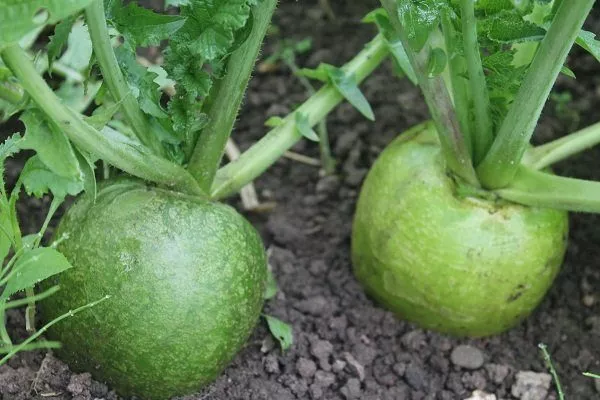
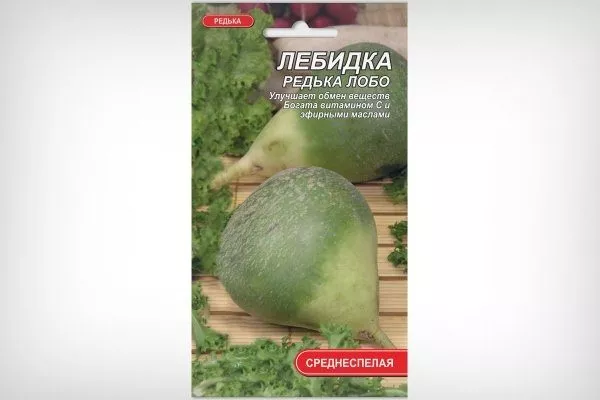
- Margilanskaya – an early (60-80 days), heat-resistant variety. The root is broadly cylindrical with a white tip, dark green in color. The fruit is 9-16 cm long, 7 cm in diameter, and weighs 220-400 g. The flesh is white or light green, with a slight bitterness.

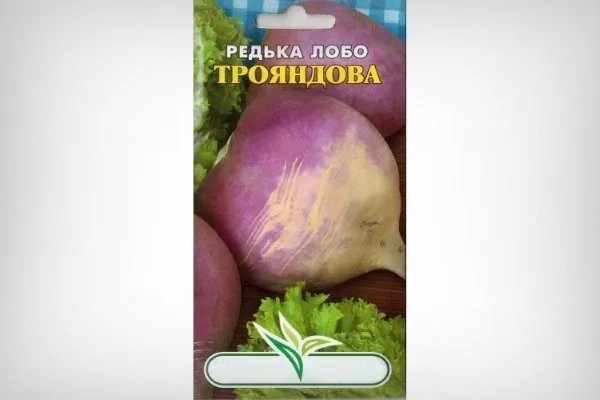
- Troyandova – a mid-season variety with a growing season of 80-82 days. The roots are round, weighing 350-690 g. The color is reddish-pink, with a convex head. The flesh is white-pink, juicy, and firm. The flavor is sweet. The variety is resistant to stem loss, drought, and low temperatures.
- Winch – a mid-season variety with a growing season of 86-91 days. The roots are round-oval, white, and a quarter of their length is buried in the soil. The flesh is juicy, tender, and white. The variety is drought-resistant and resistant to budding, suitable for long-term storage. The yield is 5.5 kg/sq. m.
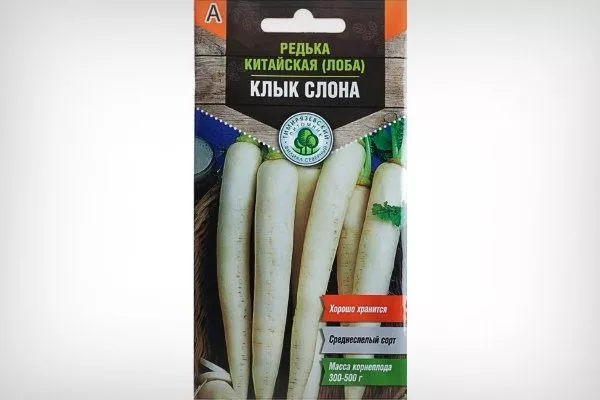
- Elephant tusk – a mid-season variety, harvested 60-70 days after emergence. Cylindrical shape, average length 60 cm, weight 0.5 kg. Color – white with light green highlights. The flesh is sweet, crisp, with a slight bitterness. Yield – 5-6 kg/sq. m.
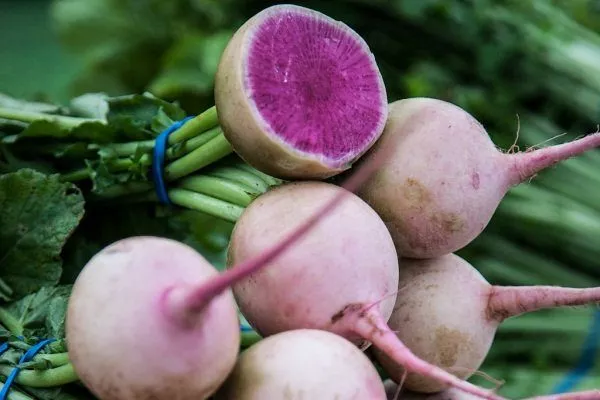
- Ruby Surprise – an early-ripening variety, it reaches technical maturity in 60-65 days. The fruit is round, short, white, with a green spot near the leaves. Average weight is 200-240 g, the flesh is juicy, red, and has a pleasant flavor. Yield is 4.3 kg per square meter.
Advantages and disadvantages
Lobo radish, like any other vegetable, has a number of advantages and disadvantages. The advantages include the following:
- excellent taste and pleasant aroma;
- no contraindications for use;
- can be stored for a long time, until spring;
- the product has a wide range of beneficial properties;
- low-calorie product.
Pre-sowing work
Overall, Lobo radish is a relatively easy-to-grow and undemanding crop, with no particular preferences for light, soil, or temperature. However, to obtain a high-quality harvest, it requires optimal growing conditions.
Choosing a landing site
Because radishes belong to the Brassicaceae family, they are susceptible to the same pests and diseases as all other plants in this family. Avoid planting radishes near cabbage, radishes, carrots, beets, and horseradish.
Best predecessors:
- legumes;
- dill;
- garlic;
- potato;
- cucumbers.
Sow radishes after harvesting early crops or plant them between rows of potatoes, onions, and cucumbers. Radishes can be planted in place of cruciferous crops only after 3-4 years.
Growing techniques are simple – radishes thrive in a sunny, full-height area, and tolerate even a little shade. Combined beds that receive full sun throughout the day are considered ideal.
Lobo is a cold-hardy plant. Seed germination begins at temperatures of 2-3 degrees Celsius. Seedlings can tolerate frosts down to -3-4 degrees Celsius, and mature plants can withstand temperatures down to -5-6 degrees Celsius. The plant can grow in temperatures ranging from 5 to 25 degrees Celsius, but the optimal temperature is 18 to 20 degrees Celsius.
Soil preparation
Lobo is best grown in loose, well-moistened loamy soils with a high organic matter content and a deep topsoil. This variety can grow in slightly acidic soils (pH 5.5-6.0), but is best suited to neutral soils with a pH of 6-7.
- Check the soil pH and apply lime if necessary 2-3 weeks before planting.
- Add organic fertilizers (compost or humus) at a rate of 20-30 kg per 10 sq. m.
- Carry out deep digging of the soil to improve its structure.
If acidity is high, add slaked andLime. The soil can be fertilized with organic and mineral fertilizers:
- potassium (250-300 g);
- superphosphate (300-400 g per 10 sq. m);
- ammonium sulfate.
Fresh manure is not applied to radishes because it can increase the incidence of root diseases and spoil the appearance of the crop, which leads to a decrease in their marketability and quality.
In poor soils, compost or humus can be added in the fall at a rate of 20-30 kg per 10 square meters. If the soil is heavy, sand can be used, spreading it over the surface of the bed at a rate of 1 bucket per 1 square meter and then digging it in. If groundwater is nearby, raise the beds by 10-15 cm.
Seed preparation
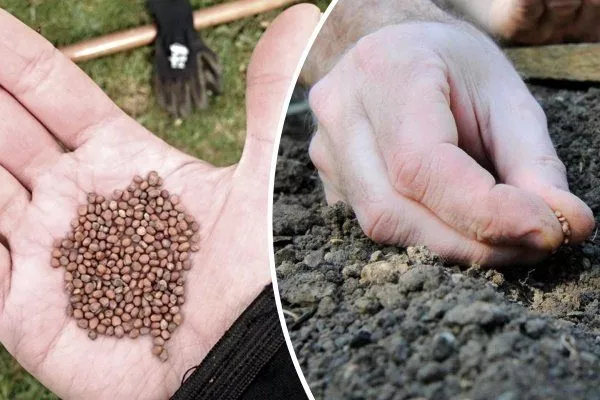
Calibrate seeds before planting, as selected, full-weight seeds can guarantee good germination and a higher yield. Before sowing, treat the seeds with growth stimulants such as Orakul, Vympel-K, and others.
Sowing dates
The timing is determined by the variety's characteristics and the local climate. Sowing can be done in either spring or summer, depending on the early maturity of the root crop.
In spring, radishes can be sown from mid-April to the end of the last ten days of May, and in summer, from mid-July to early September. The seeding rate for radishes in spring is 0.5-1 g/m2, and in summer, 0.4-0.5 g/m2.
If radishes were planted in the spring, a sudden warming of the weather and increased daylight hours can cause flower stalks to appear on plants that have not yet developed roots. To prevent this, most gardeners prefer to plant radishes in the summer.
Planting radishes in open ground
An important factor for lobo productivity is the method and layout of plant placement. Use a 30 x 60 cm layout—this means leaving 60 cm between rows and 30 cm between plants. If the root crops are smaller, use a 20 x 40 cm layout.
Stages of the planting process:
- Before planting, the soil must be harrowed and loosened.
- Make furrows 2-3 cm deep. Since the fruits grow quite large, leave a distance of 50-60 cm between rows and 15 cm between holes.
- Place 3-5 seeds in each hole, previously well watered, to increase the germination rate of the crop.
- Sprinkle the crops with soil substrate and moisten, then, for protection seeds from frost, cover the beds with film.
Under favorable conditions, seedlings will appear in just 5 days.
Care instructions
To ensure a high-quality harvest, it is important to properly care for the plants after sowing.
Watering mode
Watering is sometimes more important for radishes than fertilizing them—they sometimes have to grow in extreme summer conditions, with intense heat and no rain for months. The root needs to fill with juice and grow, so watering is essential.
Sprinkler irrigation is the best method, especially if the crops are mulched. If there's insufficient moisture, the fruits become tough and the plants begin to stem. The variety also doesn't like overwatering. During the growing season, water four times with 200-300 liters per 10 square meters.
Thinning
You can begin thinning after a month, leaving 4-6 cm between plants of summer varieties and 10-15 cm between plants of winter varieties.
Thinning is carried out three times:
- Carry out the procedure for the first time when several true leaves have formed on the seedlings.
- Perform the second thinning when the beginnings of future root crops appear. This time, remove all plants with foliage that lacks green color.
- Once the roots reach approximately 0.5 cm in diameter, thin the seedlings a third time. Remove the smallest and weakest plants.
Weeding and loosening
Loosening the soil is one of the most important tasks in caring for radishes and not only helps get rid of weeds and prevent their appearance, but also has a beneficial effect on the condition of the soil and the development of root crops.
When caring for the soil, it's important to prevent the formation of a soil crust, which can suffocate young seedlings. Regular loosening is essential to prevent soil deterioration. Loosening allows for the free flow of organic matter, moisture, and oxygen. Furthermore, and weeding is also carried out.
Hilling
Hilling is a method of cultivating radishes that promotes the formation of an additional root system and the retention of moisture in the soil.
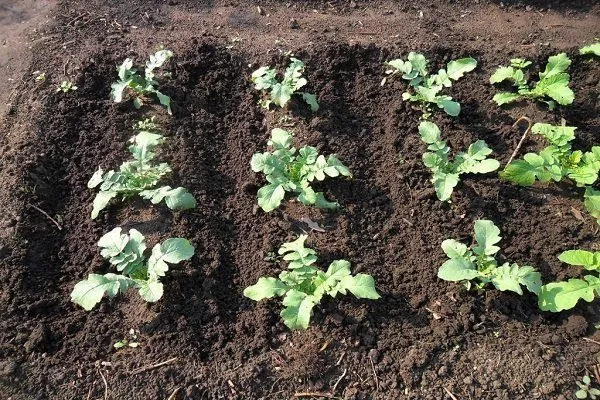
This technique is used to ensure greater resistance to lodging. An additional layer of soil around the base of the stems and the roots formed therein effectively support the plants from gusts of wind.
Each hilling should be done after rain or watering, when the soil has dried out—on the second or third day. Plants can be hilled manually or using cultivators (for larger areas).
Top dressing
Radish is fed with mineral fertilizers, either dry or in solution. The following types of fertilizer can be applied to the furrows along the row:
- 200 g of urea, 600 g of superphosphate, 150 g of potassium chloride mixed in 10 liters of water, this is enough for 10-15 sq. m;
- 50-100 g of urea, 100-150 g of superphosphate, 50-100 g of potassium sulfatebury into the soil per 10 sq. m.
The first feeding should be done when the first true leaf appears, and the second 3-4 weeks later, when the roots begin to form. A third feeding is also possible, but only if the plants are not developing well.
Major diseases and pests
With proper agricultural practices, this radish variety is fairly resistant to diseases and pests, but there is still a risk of infection. The most common are the following:
| Diseases, pests | Symptoms | Methods of control |
| Slugs | They can consume a significant portion of the harvest, thereby reducing its marketability—fruit damaged by slugs does not store well and rots. Slugs are carriers of various diseases. | Sprinkle metaldehyde between the rows and pick off the leaves that fall to the ground. |
| Cruciferous flea beetle | A pest that can destroy crops in a matter of days. Damage begins in April, feeding on leaves and creating holes in them. | Loosening the soil, weed control, spraying plants with wormwood and tobacco infusions, and dusting with ash. These procedures should be repeated at least three times, with intervals of 4-5 days. |
| Rapeseed bug | It can infest crops at the germination stage, causing their death. | Maintaining crop rotation with spatial isolation of crop plantings and weed control. |
| Cabbage white butterfly | They begin feeding on leaves as soon as they hatch from their eggs. Juveniles scrape the skin and pulp from the leaves, while adults consume entire leaves. | Destruction of cruciferous weeds. In small fields, caterpillars can be collected by hand and then destroyed. Spraying with pesticides such as Aliot, Borey, Alatar, etc. |
| Fusarium | A fungal disease that affects plants of any age. The fungus is found in the soil and enters the plant through the soil and wounds. plantsThe disease manifests itself in the form of rotting of the roots and root collar. | Seed treatment. When preparing the soil mixture, add Trichodermin. Diseased plants are immediately destroyed, and healthy ones are sprayed with Benomyl. |
| Blackleg | It spreads most easily in greenhouses. The disease can be identified by softening of the root collar and stem at the base. | To disinfect the soil, especially old soil, you can use a bleach solution. In the spring, sulfur powder, sprinkled into the holes a few days before sowing, helps. A 2-cm-thick layer of sand should also be added regularly to the sowing areas. |
| Vascular bacteriosis | A characteristic sign of the disease is the blackening of the veins; a black ring of vessels appears on cross sections. | Harvest crops on time and remove plant residues, followed by deep tillage. Maintain crop rotation and planting intervals. |
| Kila | Root system disease. It can be identified by round growths throughout the root system. Over time, the growth begins to darken and rot, and the plant stops growing. | Soil disinfection with wood ash and bleach. Hilling. |
Harvesting and storage of crops
Despite lobo's frost resistance, the harvest must be completed before frost sets in. Early-ripening varieties mature in 60 to 70 days, while mid-season and late-ripening varieties mature in 70 to 110 days.
Based on these dates, you can determine the time of harvest.Early-ripening varieties should be harvested in dry weather, according to their ripeness, while winter varieties are harvested indiscriminately, also on a clear, sunny day. In sandy soils, radishes can be simply pulled from the ground, while in black soil and dense soils, they must be dug up.
Immediately after completion cleaningThe radish needs to be cleaned of soil and any excess thin roots. If you are doing this with a knife, do it carefully, as even minor scratches will prevent the fruit from being stored for long.
The next step is culling—any radish that's even slightly damaged should be either consumed or processed. Before storing, remove the tops, leaving 1-2 cm of stalks.
If you follow all the rules, you can store radishes for a maximum of 4 months, but by the end of this period, they will become wilted and bland, and will also lose some of their beneficial properties.
The best storage conditions are a dark place at a temperature of 1 to 2 degrees Celsius and a humidity level of 80-95%. Active ventilation is not necessary for the lobe, otherwise it will become fibrous and rough.
You can store radishes in the following way:
- In the cellar – Store in damp sand, spread out in wooden crates. All fruits must be carefully selected, otherwise, if even one damaged root is present, the entire crop will begin to rot.
- At home – The harvest can be stored in the refrigerator for up to 30 days. Place it in plastic bags and store it in the vegetable drawer.
What are the benefits of lobo radish?
Radishes are rich in fiber, which is beneficial for intestinal function. They also contain essential oils with anti-inflammatory and antibacterial properties.
Lobo has a choleretic effect, which is useful for liver and gallbladder diseases, as well as low gastric acidity. Freshly squeezed juice from the root is beneficial for colds and inflammatory conditions.
Reviews of growing Lobo radish
Although the Chinese lobo radish is only just gaining popularity in our country, it is an excellent root vegetable that boasts nutritional value, taste, and health benefits, as well as relatively simple cultivation techniques.