
Bitterness is considered a characteristic feature of turnips. But not everyone likes it. Those who prefer sweeter turnips should not only choose special (sweet) varieties, but also know how to grow them correctly.
Why is turnip bitter?
It's not that the bitterness in turnips is a drawback. Many vegetable lovers prefer root vegetables with a slight bitterness, while others, on the contrary, prefer sweet turnips. To achieve the desired result, it's important to understand what influences the taste of root vegetables and why they become bitter.
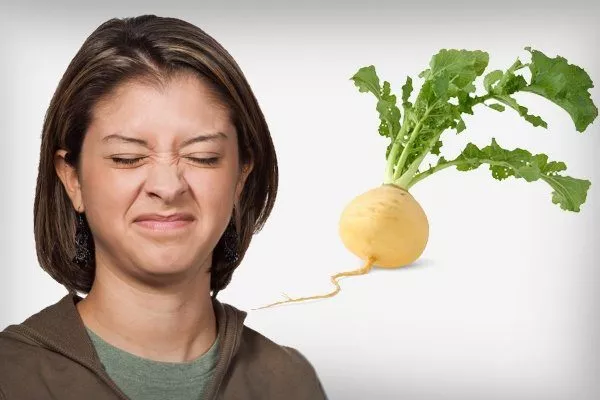
Causes of bitterness:
- characteristic of the variety (those turnip varieties that are slightly bitter contain more mustard oils than others);
- excess fertilizers;
- violation of watering standards – excess or lack of water;
- soil characteristics, excessive acidity;
- too hot summer (the optimal temperature for the formation of sweet root crops is considered to be around 18°C);
- violation of cleaning deadlines;
- watering during the day (turnips should be watered late in the evening).
How to Grow Turnips Without Bitterness
There are agricultural practices, the violation of which leads to a deterioration in the quality of root crops, including the appearance of bitterness in the taste.
For turnips to taste true to their variety, they must be grown in good soil, receive adequate watering, and receive proper nutrition. These three factors—soil, water, and nutrition—have the greatest impact on the taste of root vegetables.
Soil
The most delicious, juicy, and sweet turnips grow in fertile, neutral or slightly acidic soil. If planted in loamy soil, the roots will be hard and taste poor.
If the soil in the area is acidic, it must be deoxidized, that is, using an alkali to neutralize the acid:
- Lime. The dosage depends on the degree of acidity:
- acidic soils – 500 g per 1 sq. m;
- medium-acid – 300 g per 1 sq. m;
- slightly acidic – 200 g per 1 sq. m.
- Ground limestone. The dosage depends on the soil type and acidity:
- sandy loam and light loam - from 200 to 400 g per 1 sq. m;
- medium and heavy loams – from 350 to 400 g per 1 sq. m.
- Dolomite flour. It can be applied either before planting or during tillage. The required amount of flour depends on the soil acidity:
- acidic soils – 500 g per 1 sq. m;
- medium-acid – 400 g per 1 sq. m;
- slightly acidic – 300 g per 1 sq. m.
- Wood ash. It's not only an effective acidifier but also an excellent fertilizer. The application rate depends on the ash composition and calcium salt content, which ranges from 30-60%. To fully deoxidize the soil, apply 1-1.5 kg of ash per square meter.
Turnips grow especially well after cucumbers, potatoes, onions, tomatoes, zucchini and legumes.
To ensure that young turnip shoots are strong and that their roots gain weight and are tasty, it is necessary to properly prepare the soil for sowing.
For each square meter of area you need to contribute:
- urea – 20 g;
- superphosphate – 40 g;
- potassium chloride – 20 g.
If the soil is poorly fertile, add organic matter such as humus or compost. The recommended rate is 3-4 kg per square meter. It is recommended to apply organic fertilizers in the fall, during soil cultivation.
It is not recommended to add manure, otherwise the turnips may taste bitter!
Watering
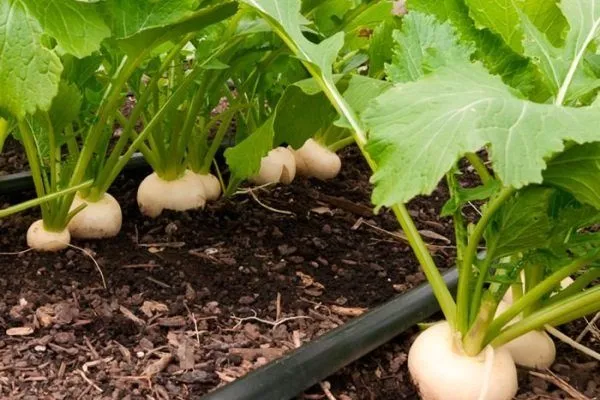
Turnips are recommended to be planted in level or slightly lowered areas, where optimal moisture levels are maintained. This vegetable thrives on good, abundant, and regular watering. If water is insufficient, the roots will grow bitter and overly dense. While still in the ground, they dry out and crack, losing their marketability.
Turnips are watered 2-3 times a week. The frequency of watering is adjusted based on the weather—if the days are dry, the vegetable beds are watered more frequently. The recommended watering rate is 30 liters per square meter.
- ✓ Watering should be done in the evening to minimize water evaporation and ensure its deep penetration into the soil.
- ✓ Use water at a temperature of at least 18°C to avoid stressing plants.
Watering is especially important during the root ripening stage—3-4 weeks before harvest, when the roots are forming. If the crop is deprived of water at this stage, the turnips will grow tasteless.
Fertilizers
Turnips grow quickly, so many gardeners don't fertilize them. If the soil is rich, wood ash added to the soil is sufficient. in the fall for diggingIf the plant is lagging in development and its roots are slow to gain weight, it's time to add fertilizer. For example, urea at 15 g per square meter.
Experienced gardeners recommend fertilizing turnips in low-fertility soils twice:
- After thinning the seedlings. 10 g of ammonium nitrate is added per 1 sq. m.
- One month after the first feeding. Turnips are fed with superphosphate and calcium chloride - 10 g per 1 sq. m.
It's beneficial to feed turnips with wood ash. Sprinkle it on the above-ground parts of the plants and also cover the soil. Ash is not only an excellent pest control agent but also a good fertilizer.
Turnips require micronutrients, so it's recommended to use mineral fertilizers containing these nutrients (preferably complex fertilizers for root vegetables). Boron is especially important for turnips. A deficiency can negatively affect the taste of the root vegetables.
Boron is added as part of the composition foliar feeding – Spray plants on the foliage as soon as the roots form. For a more effective effect, spraying can be repeated, but no more than 3-4 times during the growing season.
But keep in mind that too much fertilizer will make turnips bitter! Strictly follow the fertilizer manufacturer's recommendations. Root vegetables can accumulate all the substances found in the soil. Thus, fertilizers go from beneficial to harmful, not only for the plant itself but also for humans.
Cleaning
As soon as the root vegetables reach half maturity, they need to be pulled out of the ground as quickly as possible. If left in the garden for too long, turnips will become tasteless and hollow. Typically, it takes about 70 days from germination to harvest.
The most juicy and nutritious root vegetables are those that reach 6-8 cm in cross-section. Read on to learn how to properly store turnips to prevent them from spoiling. here.
How to cook turnips so they don't taste bitter?
In many dishes, such as turnip porridge, bitterness is completely unnecessary. To remove it, use one of the methods discussed below.
Pour boiling water over it
If the root vegetables have a slight bitterness, you can remove it in a simpler and faster way:
- Place the turnips (washed, peeled and cut into pieces) in a large bowl.
- Pour boiling water over the chopped root vegetables.
- After 5-7 minutes, remove the steamed pieces.
You can soak the turnips longer, which will definitely remove the bitterness. Some cooks finely chop the turnips and soak them in boiling water for 10 minutes.
Turnips should be de-bittered before cooking—soups, porridges, various side dishes, and main courses. If the bitterness isn't removed beforehand, it won't be removed from the finished dish.
Boil
You often hear this advice: to remove the bitterness from turnips, you need to boil them. The duration and other cooking conditions depend on how the boiled root vegetable will be used.
Here's what they recommend doing:
- Remove the stalk and wash the root vegetables.
- Peel.
- Boil water in a saucepan.
- Plunge the turnips into boiling water. Cut large root vegetables into pieces first.
- Cook the turnips for 25 minutes. If you cut them into pieces, the cooking time can be reduced to 15 minutes.
- To check if the root vegetables are cooked through, pierce them with a knife. If the knife goes in easily and without effort, the turnips are ready. Boiled turnips go well with fried mushrooms, onions, and carrots.
Despite the popularity of this folk method, many housewives say that if the root vegetable is slightly bitter when raw (i.e., tastes like a soft radish), then it is better not to cook the turnip at all, but to use it raw, grated into a vegetable salad.
Marinate
To preserve the vitamins in turnips, a method is used that removes the bitterness without using boiling water.
How to remove bitterness by pickling:
- Cut the washed and peeled turnips into pieces (plates or slices) and place in a bowl.
- Sprinkle the turnips with salt and sugar, add vinegar (either balsamic or table vinegar will do). Mix everything together and let the turnips marinate for 40-60 minutes.
- Drain all the liquid from the chopped turnips and cover them with unrefined vegetable oil.
Pickling allows you to preserve the maximum amount of vitamins in turnips, but compared to boiling and steeping them in boiling water, the bitterness-removing effect is less pronounced. Pickled turnips will still retain some bitterness.
In a multicooker
A slow cooker (steamer) can be used to remove bitterness from turnips:
- Fill the bowl 50% full with water and bring to a boil.
- Peel the turnip and cut it into 5-6 pieces.
- Place the turnips in boiling water.
- Turn on the “Boil”/“Steam” mode for 20 minutes.
For tips from a homemaker on how to remove bitterness from turnips, watch the following video:
Bitterness isn't a reason to give up delicious and healthy root vegetables. If you don't like bitter turnips, plant only sweet varieties and care for them properly. To completely eliminate bitterness, treat them with one of the methods described above.