
In Siberia, turnips can be sown from April to May as the soil warms. If you choose a good cold-hardy variety, you can harvest ripe roots by the end of July. Early- or mid-season varieties are preferable, as late-ripening crops may not have time to produce a harvest in the harsh climate. Read on to find out which varieties are suitable for growing in Siberia.
| Name | Ripening period (days) | Frost resistance (°C) | Yield (kg/m2) |
|---|---|---|---|
| Snow globe | 75-85 | -4…-3 | 2.5-3.2 |
| Petrovskaya 1 | 75-80 | -3…-2 | 3.2 |
| Merchant's Wife-1 | 55 | -2…-1 | 8.4-9.8 |
| May Yellow-headed Green 172 | 70-75 | -3…-2 | 1.5-2.5 |
| Moon | 65-80 | -4…-3 | 2.5 |
| Granddaughter | 45-55 | -2…-1 | 4 |
| Burnt sugar | 60-70 | -3…-2 | 3.5-4.5 |
| Early purple | 75-80 | -3…-2 | 4.2-4.5 |
| Geisha | 45-60 | -2…-1 | 1.5-8.7 |
| Golden Ball | 54 | -3…-2 | 2.5-3.5 |
Snow globe (Snowball)
The Snowball turnip, with its early maturity (75-85 days), is ideal for growing in Siberia. This variety produces a double harvest even in cold summers, as it can withstand frosts down to -4 to -3ºC. The optimal soil temperature for seed germination is between +16 and +20ºC. This variety is also valued for its resistance to bolting.
- ✓ Resistance to sudden temperature changes.
- ✓ Ability to ripen quickly in short summer conditions.
- ✓ Productivity under conditions of limited daylight hours.
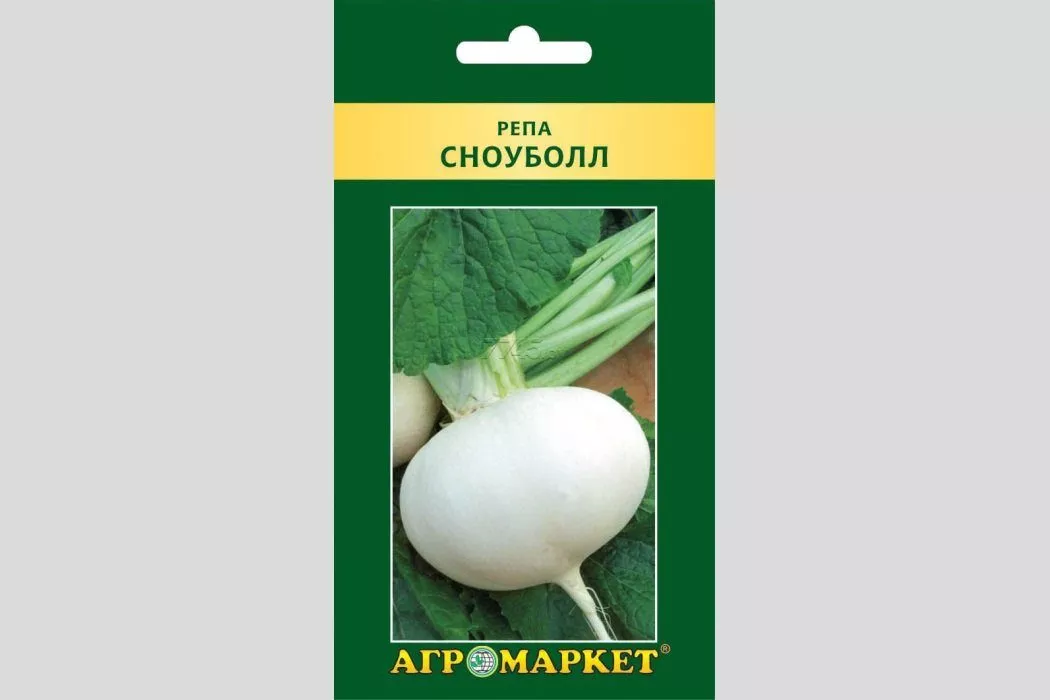
Mature large root vegetables have the following characteristics:
- form - rounded, aligned, smooth;
- weight – from 250 to 300 g;
- color – white (inside and outside);
- pulp – juicy, with a pleasant semi-sharp taste, without bitterness.
Both the roots and leaves of the plant are edible. They are excellent for medicinal and dietary purposes.
A brief overview of this turnip variety is given in the video below:
Petrovskaya 1
One of the most popular turnip varieties, approved for cultivation in the Russian Federation since 1950. The variety was developed at the All-Russian Research Institute of Vegetable Crops Breeding and Seed Production. It offers the following advantages:
- maintains its productivity in any climate (up to 3.2 kg of fruit can be harvested from 1 sq. m of garden bed);
- bears fruit early - from full germination to technical maturity it takes 75-80 days;
- has good shelf life and is suitable for long-term storage.
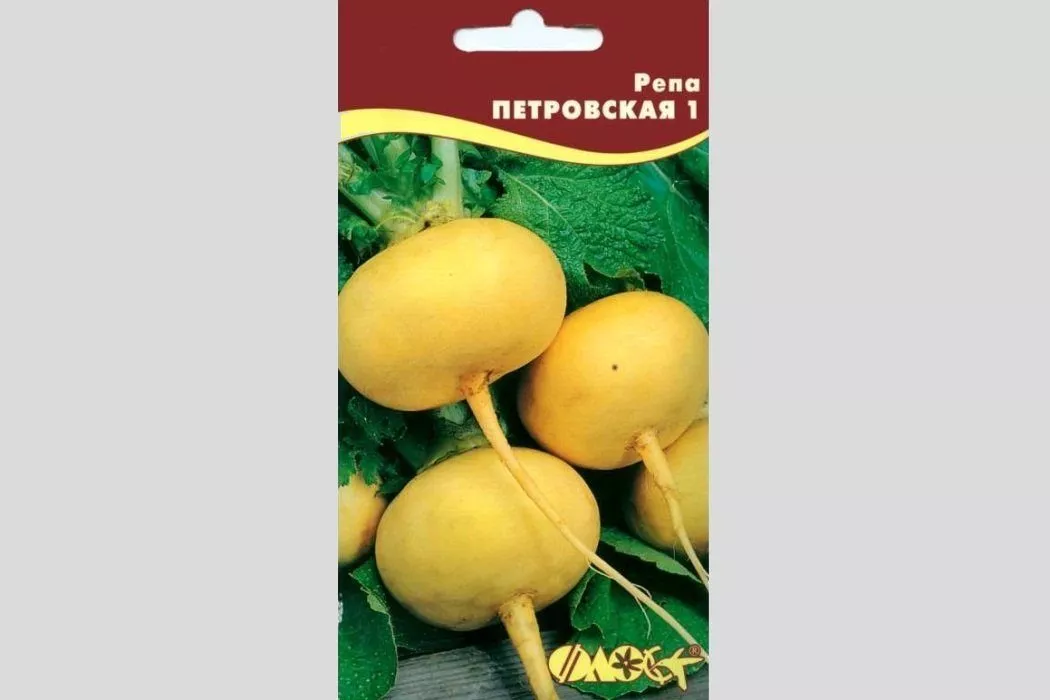
Petrovskaya-1 produces flat-round fruits weighing 100-200 g. They are covered with a smooth, shiny, and firm yellow skin. The flesh itself is creamy yellow and has a pleasant flavor—sweet, juicy, and crisp. This vegetable can be eaten fresh, boiled, stewed, or baked.
Merchant's Wife-1
This variety is relatively new, having been included in the State Register of Plants in 2017. It is popular with gardeners, as it yields approximately 8.4-9.8 kg of fruit per square meter of garden bed, with the following parameters:
- form - flattened, concave;
- weight – 220-235 g;
- color - two-colored (part of the skin above the surface of the ground is red-violet, and the part in the ground is white);
- taste - tender, sweet and spicy.
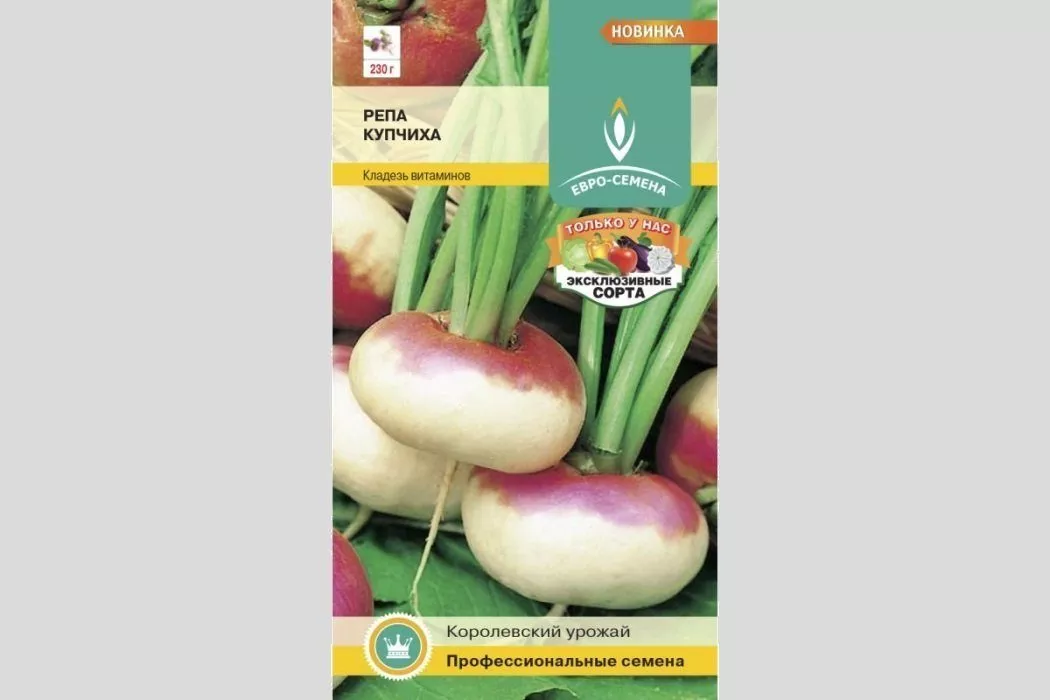
The rosette of leaves grows upright and medium-tall. The green leaves are long, slightly curved, and wavy at the edges. They are characterized by pubescence and a strong notch at the base.
Growing the Kupchikha-1 turnip doesn't take much time – it takes about 55 days from seedling germination to technical maturity.
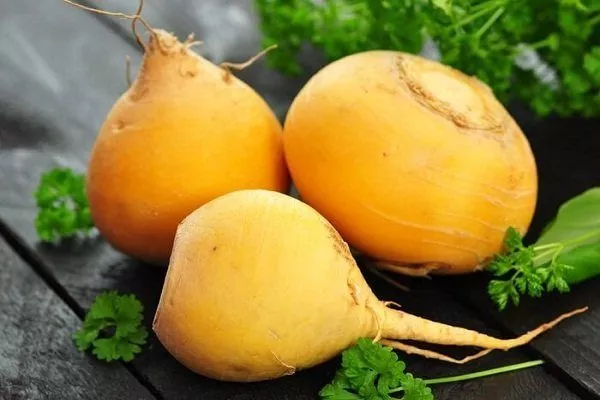
May Yellow-headed Green 172
An early-ripening variety with a growing season of 70-75 days. As they develop, the medium-sized leaves become dissected and lightly covered with hairs. The petioles are green or contain traces of anthocyanin. The bushes develop evenly and by July form roots with the following characteristics:
- form - flat-round;
- weight – on average 150-250 g;
- diameter – 12 cm;
- skin – smooth and white, with a greenish tint at the head;
- pulp – light yellow in color, juicy and pleasant to taste.
Yellow May turnips are ideal for young consumption, as the roots contain minimal mustard oils but a relatively high amount of sugars (5.3-7.0%). Dry matter accounts for approximately 9.6-16.9%. This vegetable is ideal for children's diets and diets.
This turnip can be grown for long-term storage as it is resistant to clubroot. Its disadvantages include moderate susceptibility to clubroot.
Moon
Produces a high yield in a short period of time—65 to 80 days. A 1-square-meter bed consistently yields approximately 2.5 kg of well-shaped root vegetables. This variety is characterized by cold tolerance and resistance to bolting.
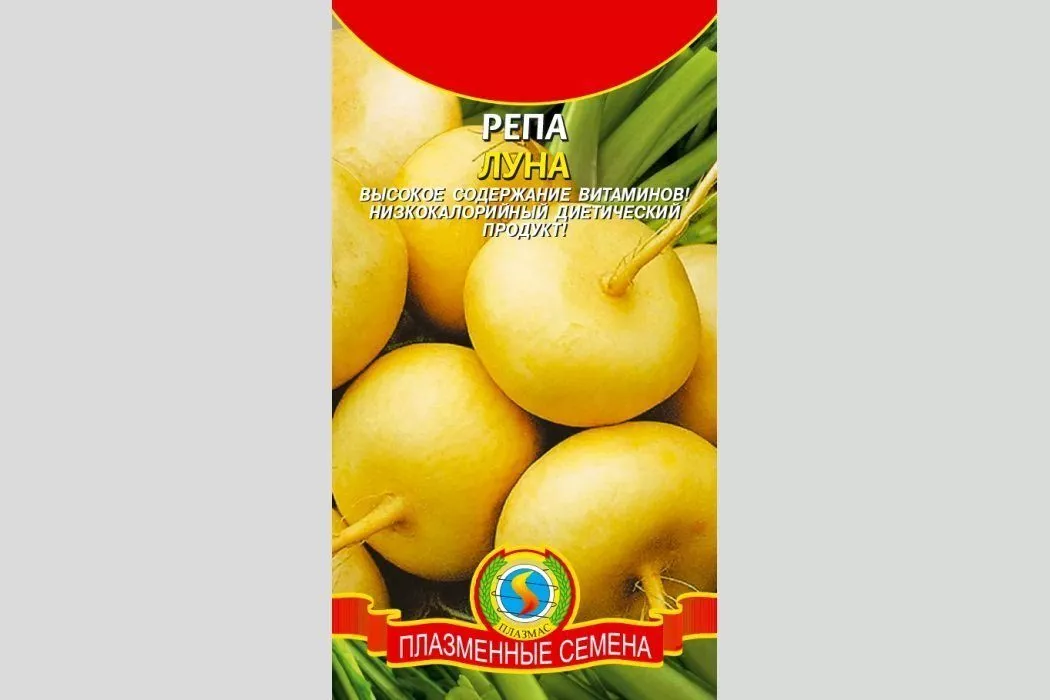
The Luna turnip is a moisture-loving plant, so soil and air humidity should be high. Non-acidic soils are best for planting.
The yellow, spherical roots weigh between 150 and 250 grams. Their skin is thin and smooth, and the flesh is firm, juicy, and flavorful. This turnip is ideal for dietary use, adding a touch of color to any winter or fall meal.
Granddaughter
The collection of early-ripening turnips is complemented by the Vnuchka variety, which can be recognized by its neat rosette of leaves, 30-35 cm tall. The leaves are dark green, have a curved tip, and slightly wavy edges.
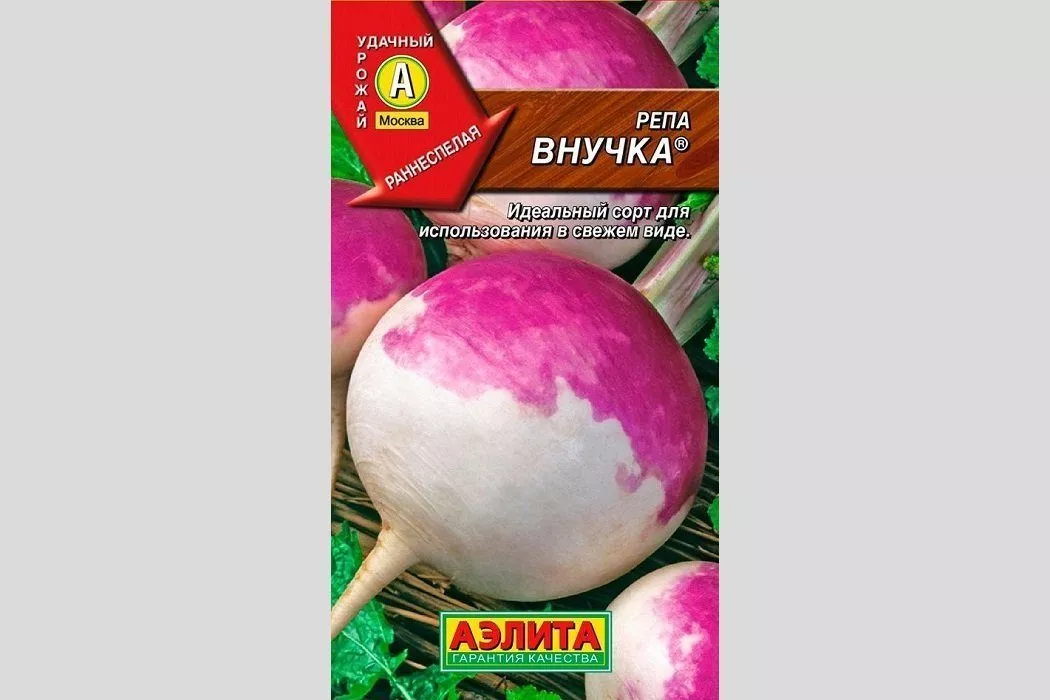
From germination to harvesting, the root crops take approximately 45-55 days. The crop is suitable for summer harvesting and autumn-winter consumption. It produces uniform, evenly-growing fruits. These fruits have the following characteristics:
- form – obovate;
- weight – on average 150 g, but there are heads weighing 300-335 g;
- diameter – in the phase of technical maturity it reaches 5-6 cm;
- skin – smooth, thin and delicate, light purple above the ground and creamy pink at the bottom;
- pulp – white, juicy and sweet, without any hint of bitterness, with a dense but delicate texture.
The Vnuchka turnip will delight you with its good yield – up to 4 kg of root vegetables can be harvested from 1 square meter of garden bed.
Burnt sugar
A hybrid, early-ripening turnip variety that's frost- and cold-resistant, but requires adequate sunlight and high soil moisture. Burnt Sugar's root vegetables will delight lovers of new varieties due to two distinctive features:
- have an elongated cylindrical shape, unusual for turnips, without lateral branches;
- As they develop, they gain 300 g in weight and become covered with a thin black skin.
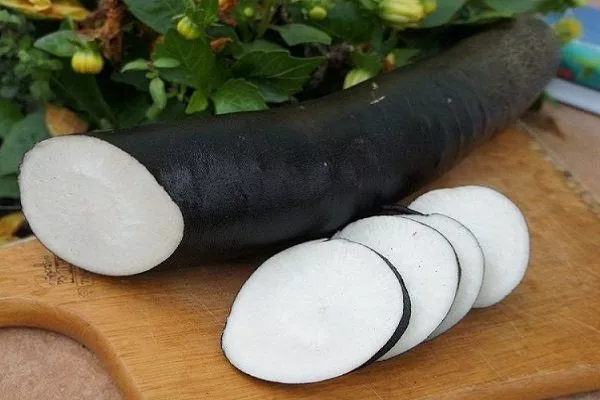
The flesh of the smooth fruits, unlike the skin, is not black, but has a characteristic white hue. It is juicy, crisp, and firm. It is excellent for salads.
Burnt sugar fruits can be stored in a cool place for a long time. They do not crack or lose their flavor or marketability.
Early purple
This variety will delight you with its uniform ripening. The leaf rosettes form semi-upright and reach 33-39 cm in height. The green leaves can be distinguished by their moderately curved tips and slightly wavy edges.
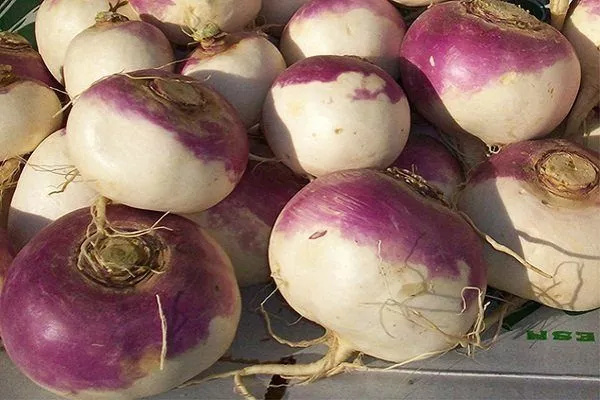
Root crops will be ready for harvesting 75-80 days after the first shoots emerge. They can be distinguished by the following characteristics:
- the tops are purple or pink-raspberry in color, and the “tails” are white;
- the shape is round or spherical;
- The average weight is from 80 to 100 g, but there are larger root vegetables - up to 200-220 g.
The fruit's flesh is white, juicy, and tender, though firm. It's rich in minerals—potassium, magnesium, iron, and phosphorus—making it an ideal addition to the diets of children, diabetics, and those trying to lose weight. Turnips can be used in salads, side dishes, and hot dishes.
The Early Purple turnip will delight you with its resistance to budding and a consistently high yield – up to 4.2-4.5 kg of fruit per square meter. This variety is suitable for growing in winter greenhouses.
Geisha
This early-ripening turnip variety takes approximately 45-60 days from germination to technical maturity. The crop forms uniformly. Despite its unusual name, this variety is a result of domestic selection and was developed at the All-Russian Research Institute of Vegetable Crops Breeding and Seed Production.
The plant has been recommended for cultivation since 1994. Its yield indicators depend on the germination site:
- in winter greenhouses for winter-spring crops – from 4.5 to 7 kg/sq. m;
- under spring film shelters – from 3.6 to 8.7 kg/sq.m;
- in open ground – from 1.5 to 2.5 kg/sq. m.
The rosette of leaves is erect and consists of edible salad leaves. They reach 30-40 cm in length and 9-14 cm in width. The bright green leaves are oblong-ovate or lyrate in shape. Their surface is smooth and pubescent. The medium-sized petioles are also smooth and light green.
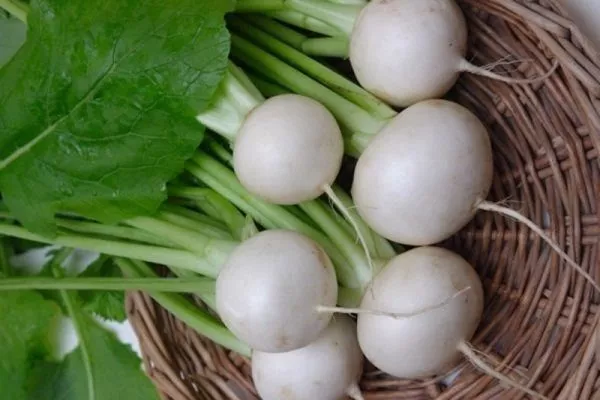
The roots are smooth, round or flat-rounded heads with a blunt tip, 3-4 cm long and 4-5 cm in diameter. The white skin is thin, smooth, and tender. The white flesh has a firm texture and is juicy and pleasant to the taste. The roots are light in weight, weighing 50-60 g.
Turnip Geisha Variety is not afraid of low temperatures and lack of light, and also shows resistance to flowering and bacterial rot.
In the following video, a gardener shares his experience growing Geisha turnips:
Golden Ball
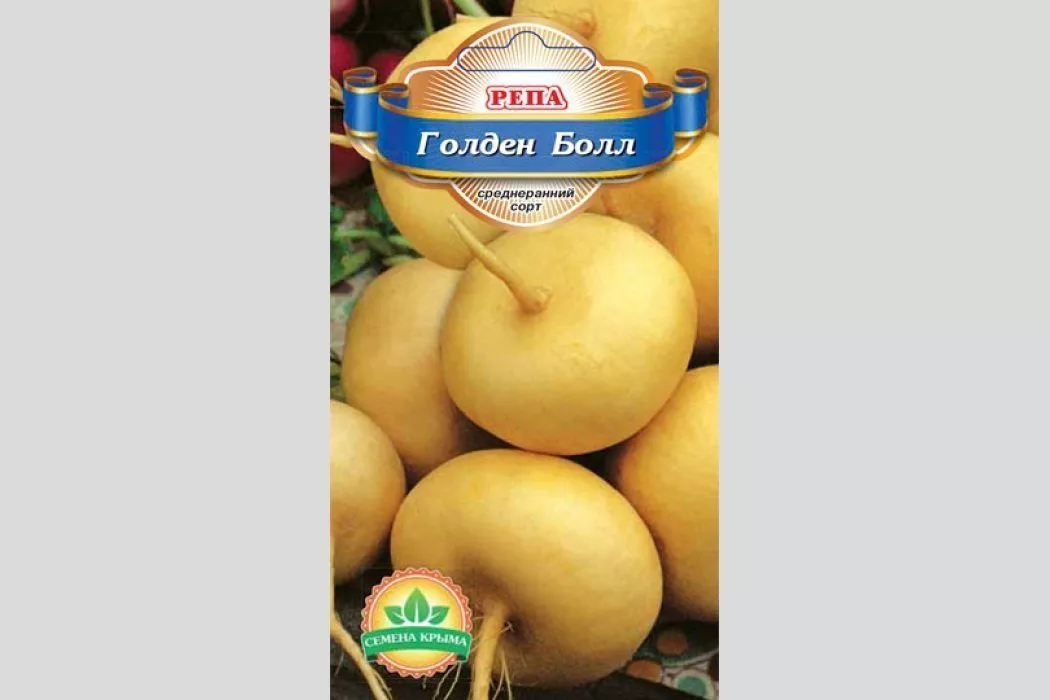
A mid-early variety that will delight you with a bountiful harvest 54 days after germination. These root vegetables, with excellent taste and marketability, have the following characteristics:
- weight from 160 to 250 g;
- rounded shape;
- thin, delicate and smooth yellow skin;
- dense and juicy pulp is also yellow.
Golden Ball turnips are recommended for fresh consumption during the fall and winter. They are also suitable for cooking, such as stewing, boiling, and frying.
- A month before planting, add compost or humus at a rate of 5 kg per 1 sq.m.
- Check the soil acidity, the optimal pH is 6.0-7.0.
- A week before sowing, loosen the soil to a depth of 20 cm.
Turnips can also be grown in Siberia, provided you select the appropriate variety for this region's harsh climate. It's recommended to sow seeds of several of the above-mentioned crops in your garden to select the most suitable one for the following season.