
Daikon is a vegetable crop with large white roots. While it's not yet as popular as the common radish, many gardeners value it for its nutritional properties, high yield, and ease of cultivation. Let's learn what makes this vegetable unique and how to plant and grow it.
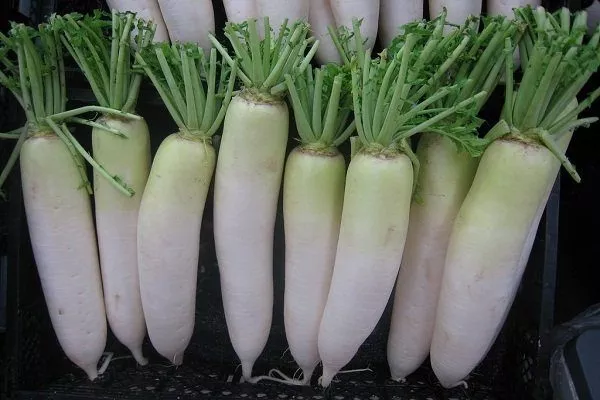
Daikon
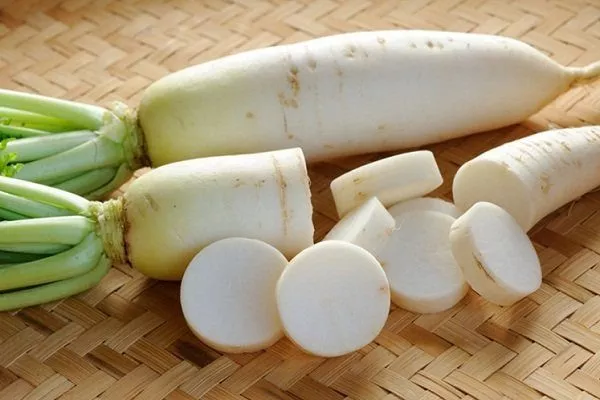
Daikon has sweet, juicy flesh.
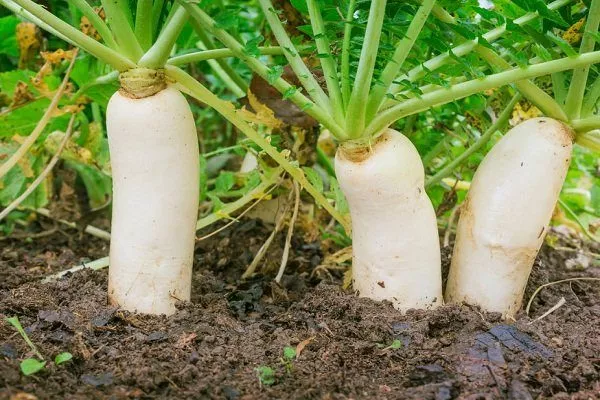
Daikon tolerates frost well.
Description of daikon radish
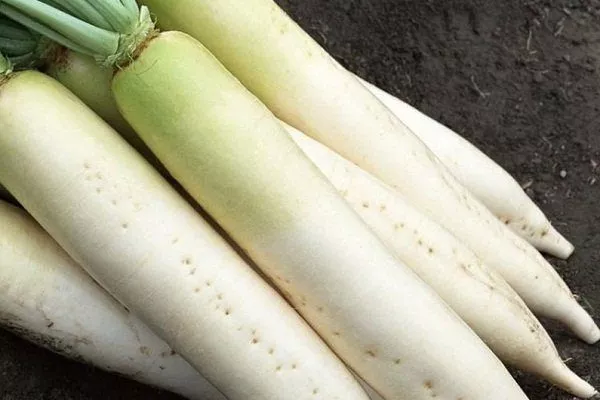
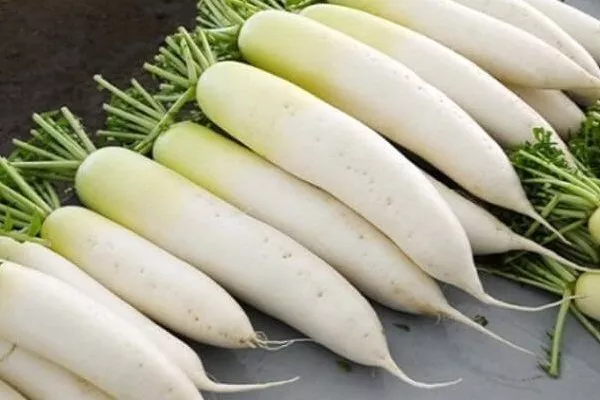
Daikon is a vegetable grown for its roots. This root vegetable is a subspecies of the common radish, a member of the Brassicaceae family.
The name "daikon" translates from Japanese as "big root." This vegetable is also known as Chinese radish and white radish. Native to Asia, it is very popular in Japan and China.
Description of daikon root vegetable:
- Form. Depending on the variety – cylindrical or round.
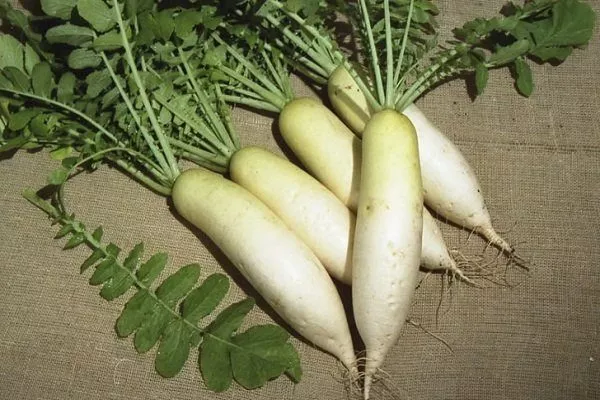
- Color. In purebred plants the roots are soft white, while in hybrid plants they are light green.
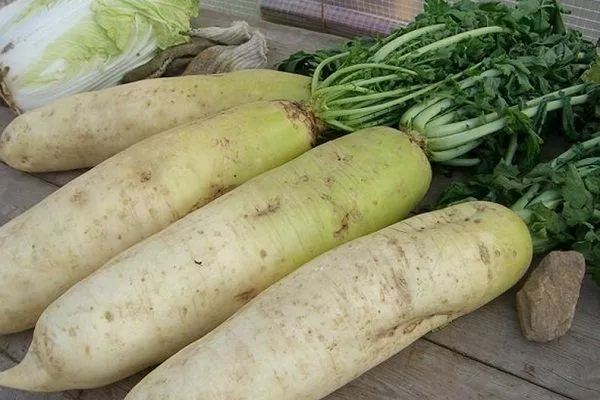
- Weight. Depends on the variety. It ranges from 0.5 to 2-3 kg. In Japan, roots weighing up to 15-16 kg are grown.
- Size. The root vegetables reach 60 cm in length and 10 cm in diameter.
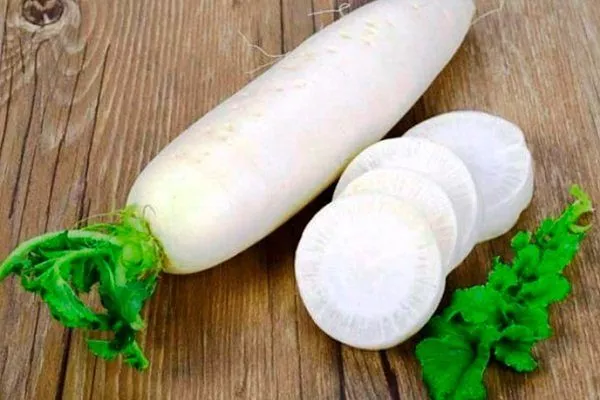
- Taste. Unlike radish, daikon lacks a bitter taste. It has a pleasant, subtle aroma, and the flesh is juicy and slightly sweet.
Features of the culture:
- Yield: 5-10 kg per 1 sq. m.
- Average ripening period is 60-70 days.
- The leaves, like the roots, can be used as food.
- It can grow on any type of soil, but prefers loose and fertile soil.
- It is frost-resistant, withstanding temperatures down to -4°C.
- It is a biennial plant. In the first year, the root crop matures, and in the second, the stem with flowers forms.
- After harvesting, root crops can be stored for 2-3 months.
Daikon is a short-day crop. It's best to plant it in late July or early August.
Daikon cultivars and varieties, their characteristics
Daikon is a Japanese crop, so its classification was developed by the Japanese. The vegetable is divided into a large number of cultivars, each with its own distinct growing season and other characteristics.
Daikon varietal groups by growing season:
- Aki (autumn). The largest group of varieties. They are sown in late summer and harvested in the fall. They are distinguished by large roots that can be boiled, pickled, and, to some extent, eaten fresh. This group includes the following varieties:
- Nerima. Very large roots, reaching 60-70 cm in length and 10 cm in diameter. They are spindle-shaped or cylindrical. Almost the entire root is buried in the soil, with only a third or a quarter above ground.
- Miyashige. The roots are firm and shorter than nerima. Length – up to 50 cm, diameter – 7-9 cm.
- Shiroagari. Can grow in heavy clay soils. The roots are 25-30 cm long and 6-7 cm in diameter. They are cylindrical in shape, with a slightly rounded tip. Two-thirds to three-quarters of the root is above the soil.
- Shogoin. Distinguished from other varieties by its round roots, 15-20 cm in diameter. Most of the roots are above ground, with only 1/4 or even 1/5 buried in the soil.
- Natsu (summer). Early-ripening varieties sown in May-June. The roots and leaves are eaten fresh. These varieties tolerate summer heat well. The Minowase cultivar belongs to this group. Varieties in this group have increased heat tolerance and disease resistance.
- Fuyu (winter). These are intended only for subtropical climates and produce fresh produce in winter. The Sakurajima variety belongs to this group. These varieties produce very large roots, weighing up to 16 kg.
- Haru (spring). These varieties have increased resistance to stemming. They are sown before winter or early in spring.
Over 400 varieties and hybrids of daikon have been developed to date. They are all very similar to each other, as they are descendants of the same species. In Japan, the most popular varieties are Sakurajima and Aokubi daikon. However, they don't do well in Russia. For our gardeners, breeders have developed varieties adapted to the Russian climate.
The most popular varieties of daikon for growing in Russia:
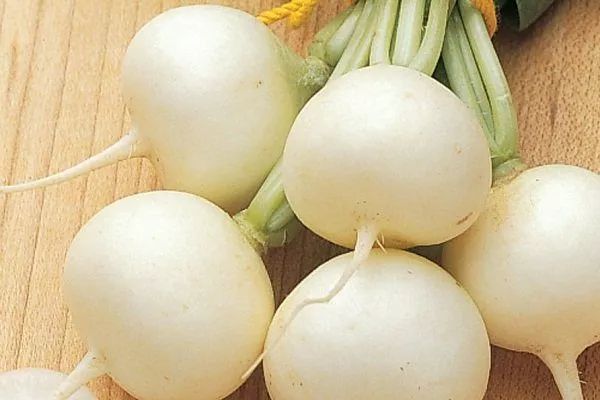
- Sasha. An early-ripening variety weighing 200-400 g. The shape is round or slightly oblong. Fifty percent of the root is above ground. The root end is blunt, making it easy to remove from the soil. The flesh is juicy, with a sweet-spicy flavor, and the skin is thin and tender.
The variety is resistant to stem rot and bacterial slime. The "Sasha" variety is frost-hardy, ripens evenly, and has excellent flavor. It can be grown in all regions of the Russian Federation. Yields are 4-5 kg per square meter.

- Minovasi. An early-ripening variety with large roots, weighing up to 1.5 kg. The shape is cylindrical, tapering toward the tip. The skin is white, slightly greenish near the rosette. It has a mild flavor. Bitterness is present only in the lower part of the root.
The tops are lush and tender, and are used in salads. However, the leaves quickly wilt after cutting, so they are not commercially available. The root crop protrudes from the ground by about 10 cm. The yield is up to 13 kg per square meter. Two harvests are possible per season.
- Russian size. An early-ripening hybrid variety, ripening in 40-45 days after sowing. The roots have thin white skin and juicy, crisp flesh. The roots are long – up to 50-60 cm, with a diameter of 10-12 cm. They weigh up to 2 kg. Yields 5-10 kg per square meter.
- Dubinushka. A mid-season variety with cylindrical roots 30-45 cm long and 5-8 cm in diameter. The skin is white, with a slightly greenish tip. The flesh is tender and juicy, snow-white, and firm. The variety requires 50-75% soil depth. It weighs 0.5-2.2 kg. The flavor is sweet and refreshing, without being pungent. Yield: 5-7.5 kg. This variety keeps well and is resistant to bacterial wilt.
- Dragon. A mid-season variety with long, cylindrical roots. Length: 30-60 cm, diameter: 6-8 cm. The skin is white, the flesh is tender, juicy, dense, and white. It requires 50-75% soil depth. Weight: 0.9-0.95 kg. Yield: 5 kg per square meter.
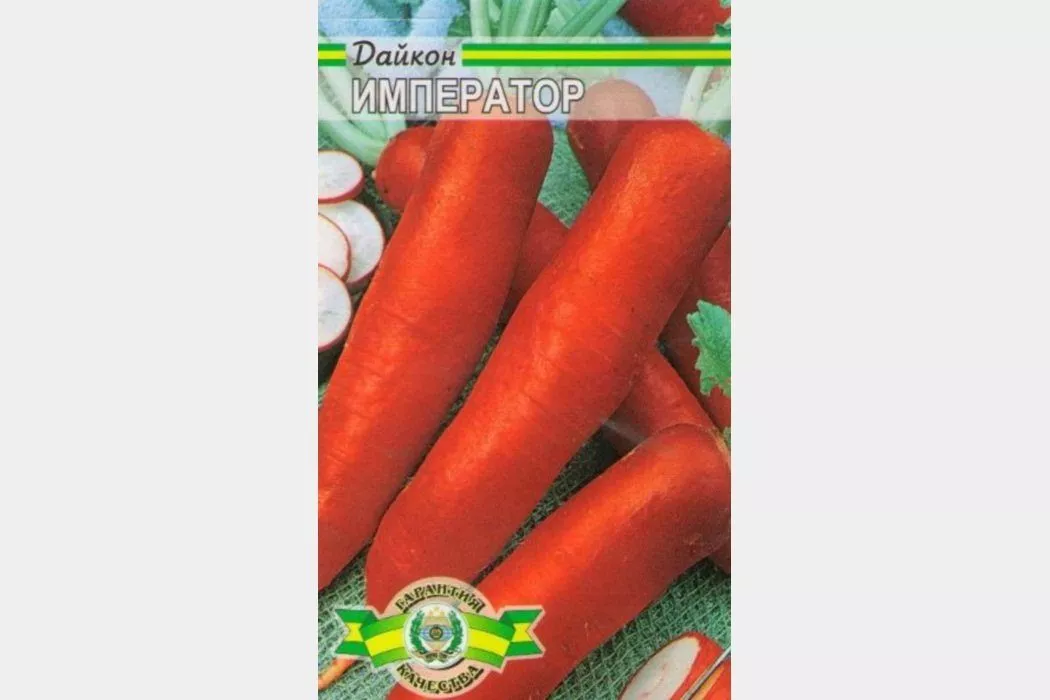
- Emperor. A variety with bright red, icicle-shaped roots. Ripens in 60-75 days. The flesh is firm, white, and juicy. The roots are 2/3 submerged in soil. Weight: 0.6 kg. Yield: 4 kg per square meter. Disease-resistant.
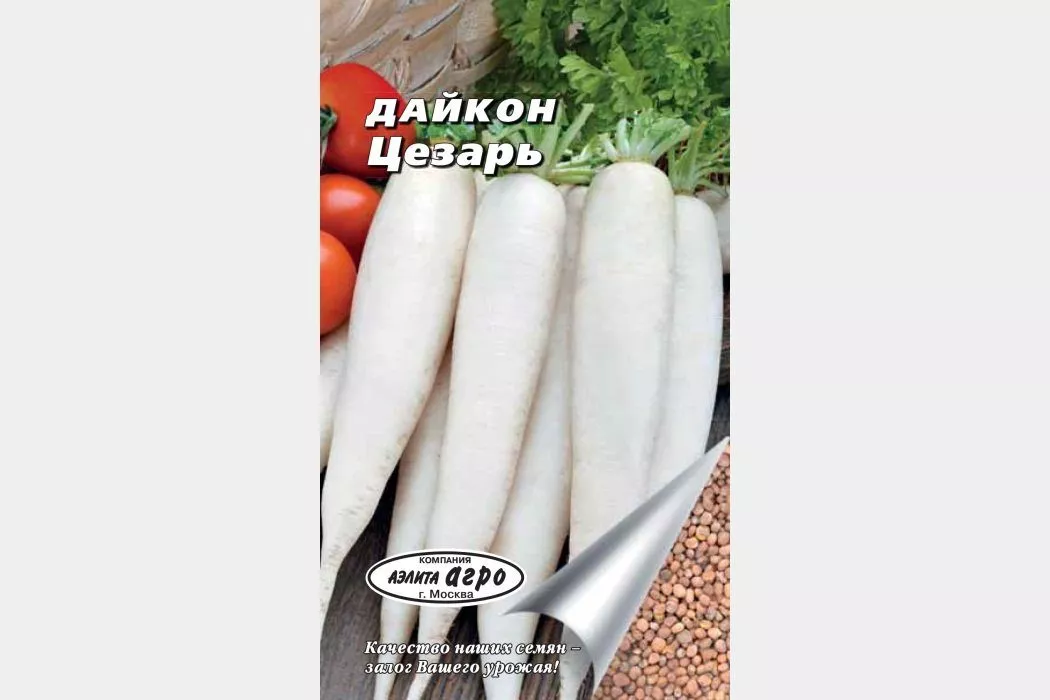
- Caesar. A mid-season variety with white cylindrical roots. It has a short shelf life of about three weeks. Its flavor is reminiscent of radish. Yields 3-5 kg per square meter.
- Elephant tusk. A mid-season hybrid. Ripens in 80 days. The roots are cylindrical, extending two-thirds above ground level, making harvesting easy. The roots are up to 25 cm long, 7-8 cm in diameter, and weigh 0.5-0.6 kg. This variety is drought-resistant and produces consistent yields.
- ✓ The variety has increased resistance to bolting even with long daylight hours.
- ✓ The Sasha variety's root vegetables have thin skin, making them particularly vulnerable to mechanical damage during harvesting.
Beneficial properties
Even growing in soils oversaturated with mineral fertilizers, the vegetable absorbs only beneficial substances. Chinese radish does not contain harmful compounds such as nitrates, pesticides, etc. But this only applies to true daikon, not hybrids of dubious origin.
Daikon is widely used in dietary nutrition. Its roots are low in calories and contain a lot of vitamin C. The vegetable contains a huge amount of beneficial substances, making it very beneficial for health.
Healing effects of Chinese radish:
- removes excess water from the body and relieves swelling;
- normalizes metabolism;
- cleanses the body of waste and toxins;
- removes radionuclides and reduces the risk of cancer;
- improves the functioning of the heart and lungs;
- normalizes the functioning of the nervous and digestive systems;
- increases work capacity;
- improves mood.
Daikon is one of three vegetables that can dissolve kidney stones. The only other vegetables that have this property are horseradish and radish.
Pre-sowing work
Daikon is an undemanding and productive vegetable, but to get the full benefit from every square meter of land, you need to properly prepare for planting.
The daikon variety chosen depends on the soil conditions. Experts advise our gardeners to grow hybrids, as they are hardier, more productive, and better adapted to Russian conditions.
Selecting a location on the site
Daikon is one of the most undemanding crops when it comes to soil quality. It can produce a harvest in any soil, but it does have preferences. Its yield is influenced not only by soil conditions but also by the preceding crop.
Features of choosing a site for daikon:
- Soil. The vegetable grows best in loose loams and sandy loams. Particularly hardy varieties can produce good yields even in clay soils, but the root vegetables produced there are less flavorful.
- Acidity. The optimal pH level is 6-8.
- Lighting. Sunny, well-lit areas are recommended.
- Groundwater. High groundwater levels are not allowed.
- Predecessors. Daikon grows well after carrots, cucumbers, potatoes, beets, and tomatoes. Avoid planting it after radishes, turnips, cabbage, and rutabaga.
- ✓ The soil pH level must be strictly within 6-8, otherwise the root crops will not be able to develop properly.
- ✓ The soil must be well drained to avoid water stagnation, which leads to root rot.
Soil preparation
Regardless of the variety chosen, it's essential to properly prepare the soil for planting. The plot for daikon planting is prepared in the fall. The soil is dug over, adding fertilizer as needed.
Add 1 kg of compost or humus per square meter of soil. If planting is planned for spring, granular mineral fertilizers are preferred.
In autumn, apply the following to 1 square meter of soil:
- urea – 20 g;
- superphosphate – 40 g;
- ammonium sulfate – 30 g.
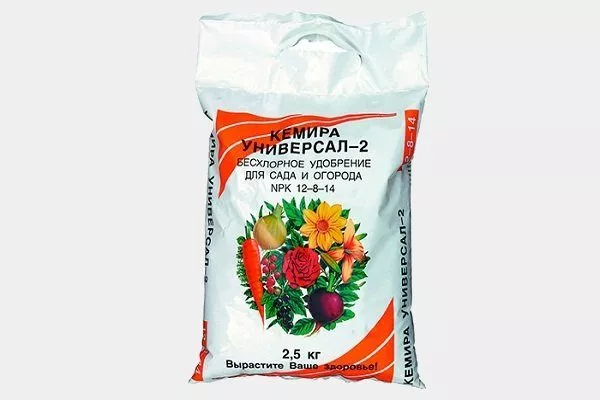
When spring arrives, re-fertilize the soil with 10-15 grams of nitroammophoska per square meter. Alternatively, use the complex fertilizer "Kemira Universal."
If the soil is highly acidic, apply 0.1-0.5 kg of lime per square meter. The interval between fertilizer and lime applications is two weeks.
Seed treatment
It is recommended to prepare daikon seeds before planting. This treatment increases germination and produces strong, healthy sprouts.
How to prepare seeds for planting:
- Submerge the seeds in room temperature water. Discard any that float to the surface.
- Disinfect the seeds in a saturated solution of potassium permanganate. Soak them in it for 15-20 minutes.
- Warm the seeds in hot water (50°C). To do this, place the selected and disinfected seeds in a thermos for 20 minutes.
- Remove the seeds from the thermos and immediately place them in cold water.
- After keeping the seeds in cold water for a few minutes, remove them and place them in the refrigerator, in the vegetable compartment, for a day.
Sowing times in different regions
To successfully grow daikon, it's important to sow the seeds on time. It's important to remember that this vegetable thrives on short days, and if the light lasts longer than 12 hours, the plant will produce flower stalks.
Daikon doesn't like heat. The optimal temperature for this vegetable's development is between 18 and 20°C.
When to sow daikon in open ground:
- In the spring. Early varieties can be sown as soon as the snow melts and the soil dries. In the temperate zone, sowing begins in April, and in Siberia and the Urals, in May. Daikon is cold-hardy and germinates at temperatures as low as 3°C.
- In summer. In southern regions, it's preferable to plant daikon in the summer, as it bolts when planted in the spring. In temperate climates, early-ripening varieties are planted in the summer—they have time to ripen before frost. In the south, daikon is sown from approximately July 20 to August 15; in temperate climates, such as the Urals and Siberia, from June 20 to July 15.
The timing of sowing seedlings depends on the climate and type of cultivation – whether the crop will grow in open ground or indoors.
Approximate dates for sowing seedlings:
- In central Russia – at the beginning of April.
- In the Urals and Siberia, sowing takes place half a month later – in the second half of April.
- In the southern regions, sowing can begin in early to mid-March.
If daikon is grown in a greenhouse, the sowing time depends on the type of greenhouse. In an unheated greenhouse, seedlings are planted when the temperature reaches at least +10…+15°C; in a heated greenhouse, they can be planted at any time.
To calculate the sowing time for seedlings, you need to count 35-40 days from the expected planting date.
Sowing daikon seeds in open ground
Daikon seeds can be sown in two ways: nest sowing or furrow sowing. In the former, holes are prepared in advance; in the latter, furrows are used.
The order of sowing seeds in furrows:
- Make furrows 4-5 cm deep. Maintain intervals of 60 cm between rows.
- Water the furrows with warm water.
- Once the water has been absorbed, place the seeds in the furrows. Space adjacent seeds 20-25 cm or 25-40 cm apart, depending on the variety.
- Cover the seedlings with soil, compact lightly, and mulch with peat or dry hay. Cover the beds with plastic film until the seedlings emerge.
- After 5-7 days, when the seedlings appear, remove the film.
If the seeds are sown in holes (usually 3-5 cm deep), place 2-3 seeds in each hole. Once sprouts appear, remove the excess, leaving the strongest specimens.
You can learn about the timing of planting daikon from the following video:
Growing seedlings
In some regions, daikon is preferred for seedling propagation. To obtain seedlings, seeds are sown in seedling pots approximately 40 days before planting in the ground or greenhouse.
Sowing for seedlings
For growing seedlings, use containers with a depth of 10-12 cm, since daikon has rather long roots.
Sowing order:
- Fill the containers with store-bought potting soil. Or prepare a potting mix by mixing garden soil with peat moss (1:1). You can also use peat pellets for growing seedlings.
- Plant 1-2 seeds in each pot to a depth of 1.5-2 cm.
- Water the seeds and cover them with a transparent material such as film or glass. Seedlings will appear in about a week.
The film/glass is removed daily for 20-30 minutes to prevent excess moisture under the cover.
Caring for seedlings
To grow strong and healthy seedlings, you will need to care for them for 35-40 days before planting them in the ground.
How to care for daikon seedlings:
- Water the crops moderately, avoiding the soil from drying out or becoming waterlogged.
- Once two true leaves appear, thin out the seedlings. Pinch out weak shoots, leaving only one, the strongest, plant in each pot.
- After thinning, feed the seedlings with special complex fertilizers for root crops.
- Two to three weeks after sowing, begin hardening off the seedlings. Take them outside every day. Start with 20 minutes, and gradually increase the time, reaching 2 to 3 hours by the time of planting. In the final days before planting, leave the seedlings outside overnight.
Planting seedlings in open ground
When the temperature stabilizes at +10°C, the seedlings can be planted in the ground.
The procedure for transplanting seedlings:
- Prepare planting holes. The distance between adjacent holes is 20-30 cm. Between rows, 40-60 cm. The depth of the holes in open ground is 8-10 cm, and in a greenhouse, 5 cm.
- Water the seedlings 2-3 hours before planting to make the transplanting process easier.
- Water the holes with warm water – 1 liter in each.
- Transfer the seedlings, along with the root ball, into the holes. Cover the roots with soil and compact it gently.
- Mulch the soil with peat, straw or humus.
Planting daikon in winter
Daikon can be sown before winter. Frost-hardy varieties are chosen for this purpose. The seeds are planted in late autumn, in November, just before frost, to prevent them from sprouting.
The winter planting method is practiced in the south. Planting holes are prepared in advance so that the seeds can be sown in frozen ground. The soil is stored in a shed to prevent it from freezing prematurely. Peat, humus, and leaves are then sprinkled on top of the seeds.
Caring for the crop
To obtain a high yield of daikon, corresponding to the standards stated by the originator, the crop requires regular care.
Watering
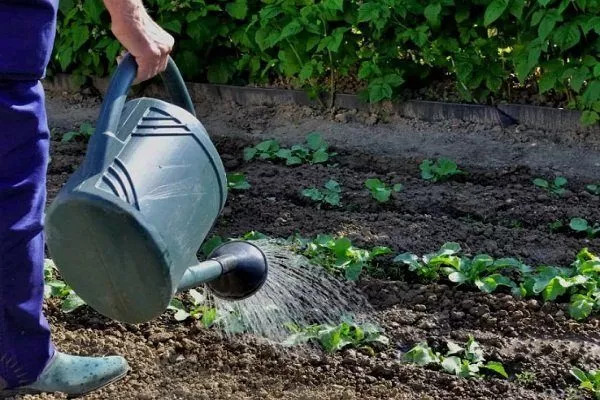
Daikon appreciates abundant and regular watering. It's important not to overwater to prevent waterlogging.
Features of watering daikon:
- If the seedling method of cultivation is used, then after planting the plants are watered at the rate of 1-2 buckets of water per 1 square meter.
- Watering frequency: every 2-3 days.
- The best time to water is in the evening. If it's hot, it's recommended to water early in the morning.
- When the crop is ripe, watering stops.
Weeding and loosening
After watering, the soil quickly becomes overgrown with weeds, so after watering the daikon, it's essential to loosen the beds. Don't turn the soil over, but gently loosen it to improve oxygen and water flow to the roots. Hoes, hoes, and regular garden rakes are used for loosening the beds.
If weeds do appear in the beds, they must be removed by hand or with a hoe. When pulling weeds, be careful not to damage the plants. It's best to remove weeds after watering.
Top dressing
Most fertilizers are applied to the soil before planting. In fertile soils, young plants may not require additional fertilizer. If the soil is poor, mineral fertilizers are added during tillage.
Features of daikon feeding:
- When grown in open ground, the crop is fed no more than twice per season.
- The plant responds well to organic matter. If necessary, water the plantings with slurry. Fermented grass infusion can be used instead of manure. Fertilizers are applied at the initial stage of vegetation.
- In the middle of the growing season, daikon can be fertilized with superphosphate or potassium sulfate. Wood ash infusion is an excellent substitute for mineral fertilizers.
Major pests and diseases
Daikon yields can be significantly reduced by diseases or pests.
The most important pests of Chinese radish:
- Cruciferous flea beetle. These tiny insects chew holes in leaves. Regular wood ash, sprinkled over crops, helps get rid of them. This pest can completely destroy a crop.
- Garden owl. The caterpillars of this butterfly, by eating the foliage, can completely destroy plants. A pale pink solution of potassium permanganate helps get rid of cutworms.
- Slugs. These voracious pests devour tops and roots, and they do so very quickly. If they wait too long, the slugs will destroy the harvest. Wood ash helps protect against this pest.
- Aphid. Swarms of these tiny insects suck the sap from plants, weakening them and leading to their death. Spraying with a nettle infusion helps get rid of aphids.
Chinese radish is not prone to disease. Problems usually arise under unfavorable conditions and improper care. Overwatering is especially dangerous, as it causes bacterial slime, which appears in the second stage of vegetation.
Daikon is also affected by:
- black leg;
- vascular bacteriosis;
- keel;
- mosaic;
- felt disease.
Daikon diseases are controlled through preventative measures. The following measures help prevent viral and fungal diseases:
- planting varieties resistant to fungal diseases and other diseases;
- pre-sowing disinfection of seeds;
- weed and pest control;
- cleaning and destruction of plant debris.
Harvesting and storage of crops
Daikon reaches technical maturity 40-70 days after planting. Ripening time varies by variety.
Cleaning and storage features:
- Stop watering a week before harvesting.
- Don't delay harvesting. As soon as the root vegetables ripen, they need to be harvested quickly—while in the ground, they lose their nutritional value and flavor.
- Cleaning is carried out only in sunny weather.
- If the soil is loose, the root crops are pulled out by the tops; in clay soils, they are dug up.
- Before storing the root vegetables, they are dried in the sun for one or two days.
- Dried daikon is stored in boxes or bags in a cool, dry place. To ensure better storage, the roots are sprinkled with sand or moss.
- The optimal storage temperature is 0…+5°C.
- Recommended humidity: 50-70%.
When stored properly, daikon roots retain their flavor and marketable appearance for 1-2 months.
After harvesting daikon, the plot is dug over, removing all plant debris. Although this vegetable has a short growing season, it manages to extract many nutrients from the soil. After Chinese radish, cruciferous crops should not be planted; tomatoes, potatoes, pumpkins, and beans are acceptable.
An experienced gardener will share the secrets of growing daikon:
Reviews of growing daikon
Thanks to adapted varieties and hybrids, it's possible to grow high yields of daikon in the Russian climate. With minimal effort, gardeners can grow large, vitamin-rich roots with unique health benefits.