
Growing black radish in your garden isn't difficult. The plant is easy to care for, has strong disease resistance, and is adapted to cold climates. With proper weeding, watering, and hilling, you can harvest large, juicy radishes.
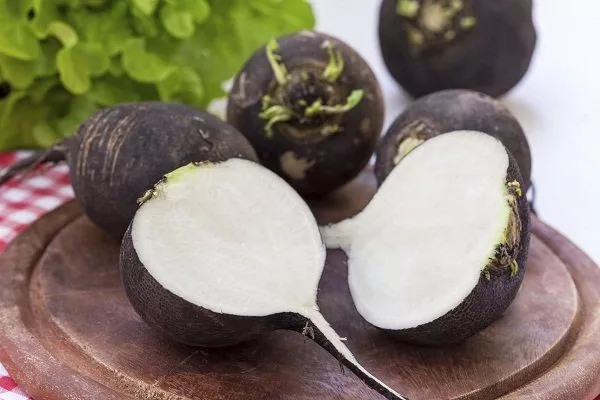
Black radish has medicinal properties
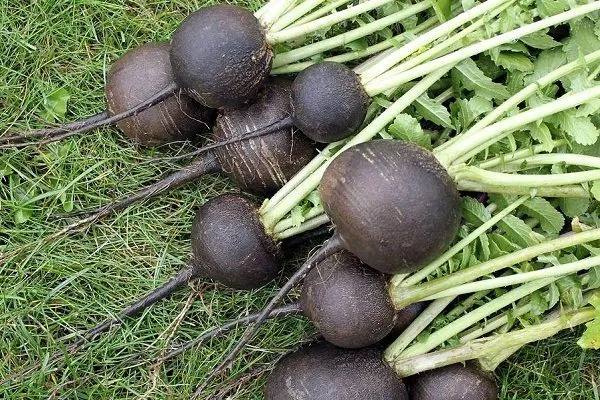
Black radish
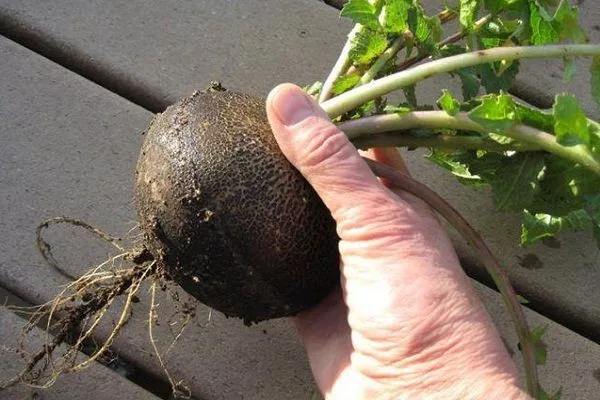
Black radish is easy to care for.
Description of the culture
Black radish, Raphanus sativus var. Niger, is a biennial vegetable crop. It belongs to the Brassicaceae family. Its skin is black, and the flesh is white and firm. The fruit is round or slightly elongated. It weighs from 200 g to 2 kg.
The vegetable has a bitter and pungent taste. This is due to its high content of essential mustard oil and abundant phytoncides.
This vegetable is an ancient crop. It was first cultivated in Europe and Asia, later spreading to the United States and the CIS. Black radish thrives in all climates and soils. It was selectively bred and does not go wild.
In the first year after planting, the plant forms a root and a rosette of basal leaves. In the second year, an erect stem 55-60 cm tall develops, which will produce an inflorescence and later a seed pod.
Structure of black radish:
- FetusDepending on the vegetable's weight, the diameter of a round root vegetable is 8-10 cm, while that of a slightly elongated root vegetable is 4-5 cm. As it grows, the root vegetable acquires a black color.
- Peel. Dense and thin.
- LeavesThe color is bright green with an olive tint. The rosette of leaves reaches 45-60 cm in height. The leaf blade is deeply dissected in several places. Its upper part is larger, gradually narrowing closer to the ground. The surface is rough and coarse.
- FlowerFormed on a stem. Collected in a racemose inflorescence. The flower is small in size, consisting of four petals. The color is pastel.
Only root vegetables are used for food.
Popular varieties and their characteristics
Black radish varieties vary in ripening time and shelf life. The most popular varieties include:
| Name | Variety | Ripening period | Main characteristics | Shelf life |
| Winter round black
Winter Long Black Radish is a variety that has more fibrous flesh. | Mid-late | 75-100 days | Fruit weight is 250-500 g. The pulp is dense.
Characterized by increased bitterness. The fruits have a high content of mineral salts. | 6 months |
| Murzilka | Late | 90-100 days | Fruit weight is 225-300 g. The shape is round, the diameter is 9-10 cm. The pulp is not very spicy. | Until spring |
| Chernavka | Late | 100-110 days | The fruit weighs 250-350 g. It is conical in shape, with a smooth, even surface. The flesh is tender and slightly sweet. | Long |
| Night | Average | 68-75 days | The fruit weighs 180-220 g. The shape is round and slightly flattened. The skin is richly colored. The flesh is juicy and crisp. The flavor is pungent. | Long-lasting. Tolerates transportation well. |
| Black Dragon | Average | 58-65 days. | The fruit weighs 320 g. It is elongated, tapering toward the bottom. Length is 12-17 cm, diameter 4-5 cm. The flesh is juicy and firm. | Long-lasting. Retains flavor well. Suitable for winter consumption. |
- ✓ Consider the variety's resistance to temperature fluctuations for regions with an unstable climate.
- ✓ For northern regions, choose varieties with a short ripening period.
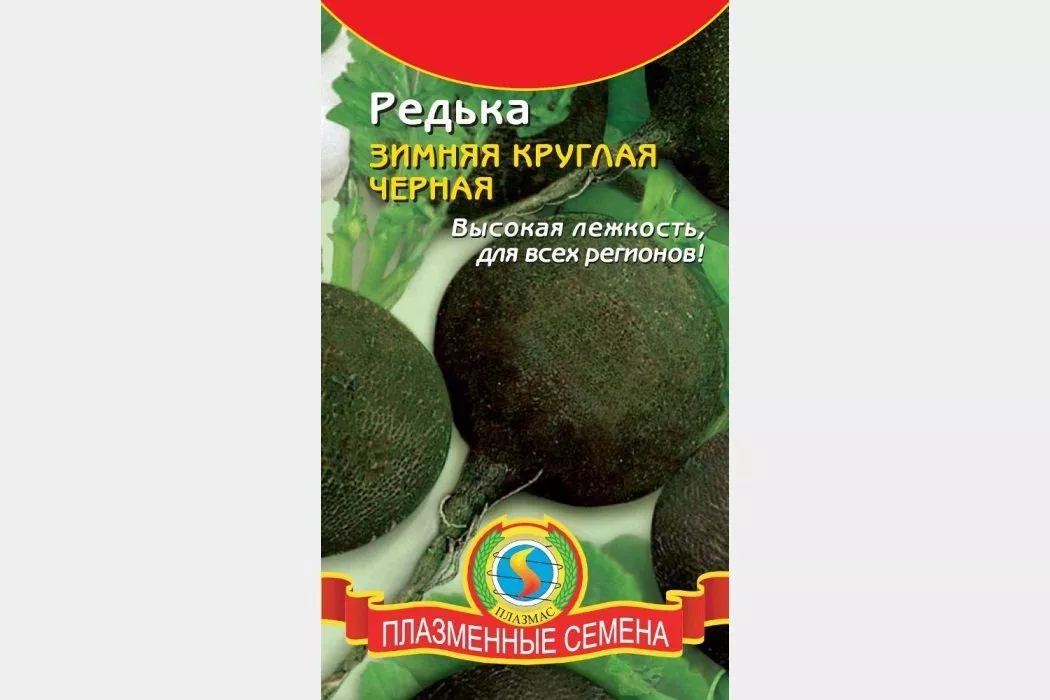
Winter round black
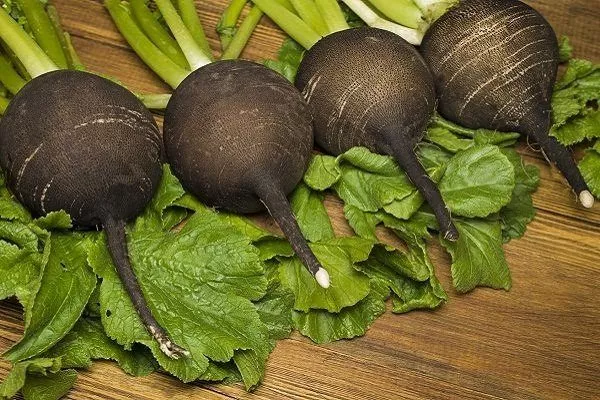
Radish Murzilka
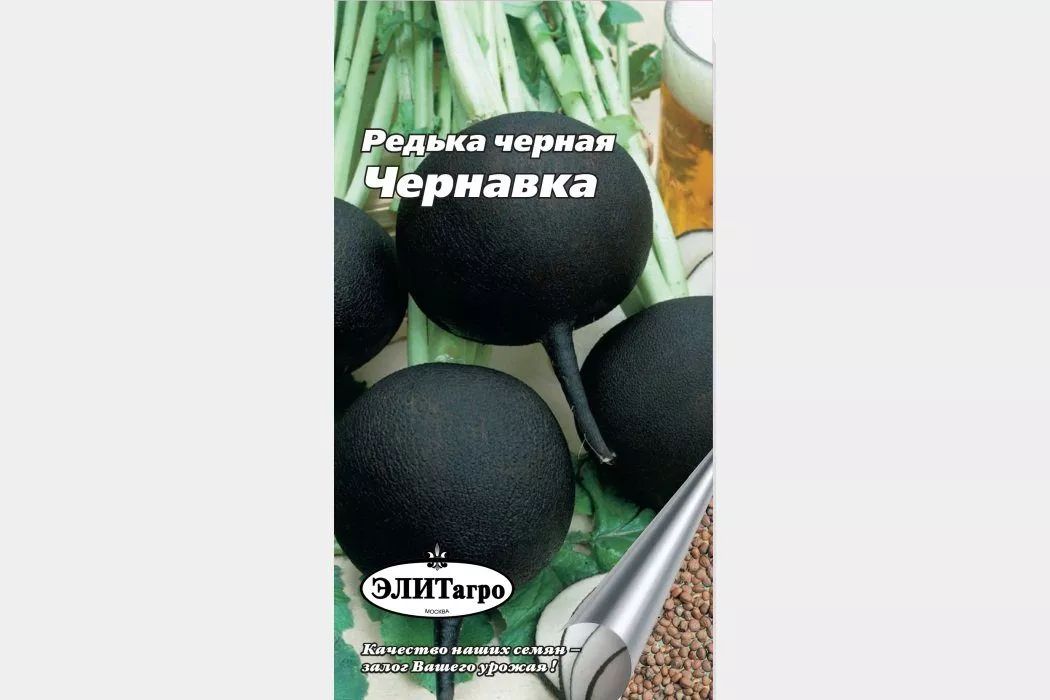
Radish Chernavka
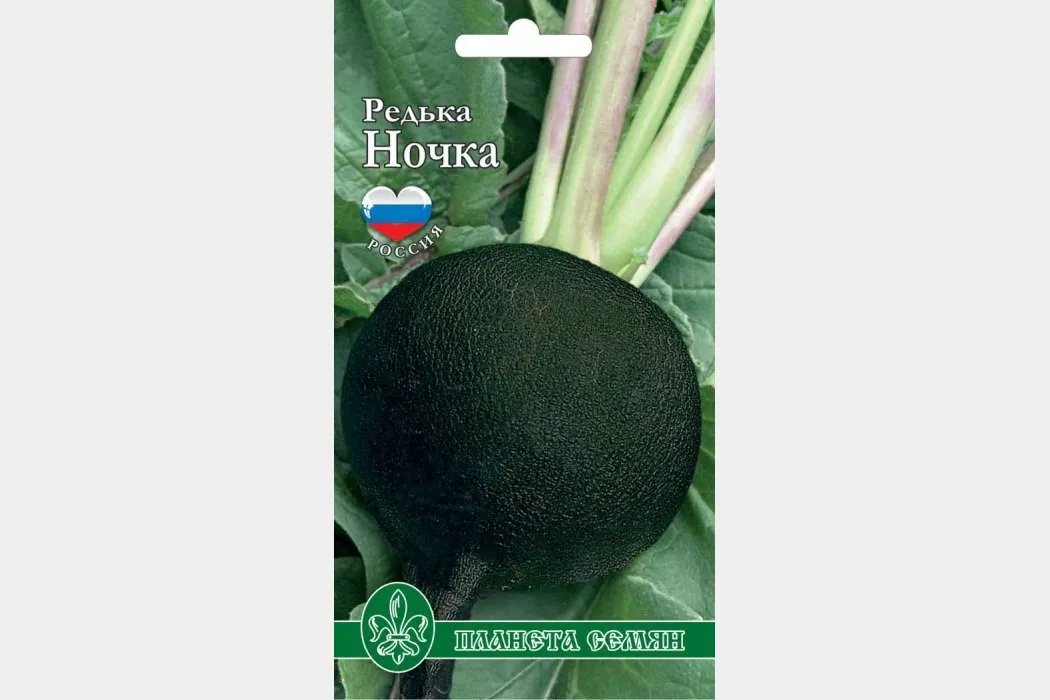
Radish Nochka
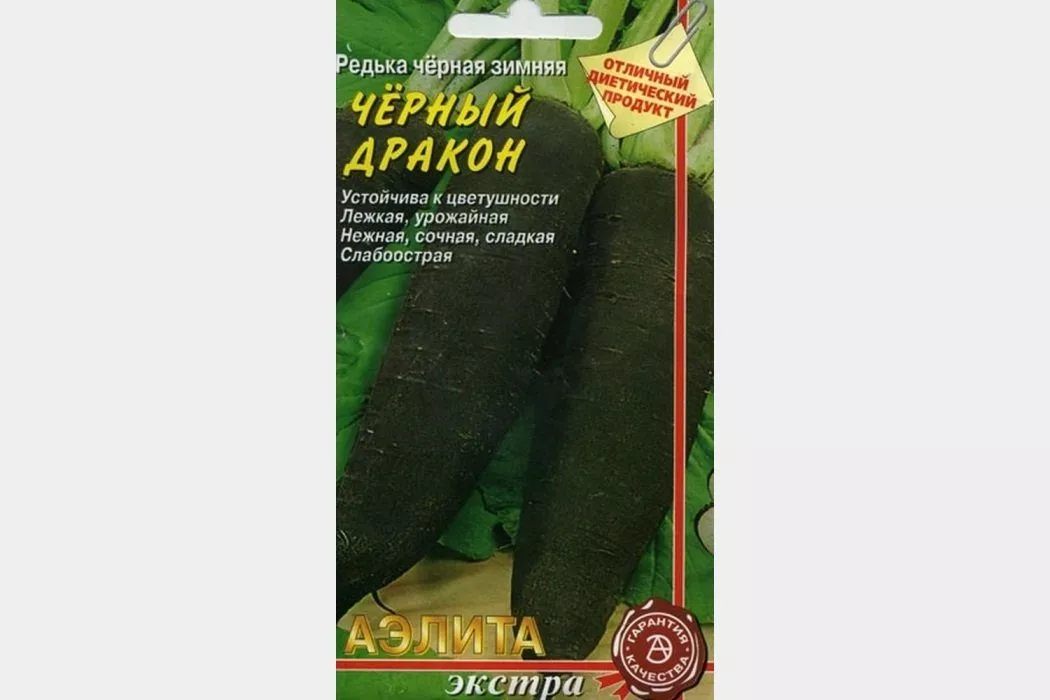
Black Dragon
Health benefits of black radish
Black radish has medicinal properties recognized by both folk and traditional medicine. It is used as a natural antibiotic and antimicrobial agent.
The root vegetable contains a large amount of essential oils, a vitamin complex, proteins, fats and carbohydrates.
This healthy vegetable strengthens the immune system, speeds up metabolism, and reduces swelling. It helps fight colds, cleanses blood vessels and the liver, promotes mucus removal, strengthens nails, and stimulates hair growth.
If you have digestive problems or gastrointestinal diseases, you should limit your consumption of this vegetable or avoid it completely.
Preparing for landing
The crop is easy to grow and requires little care. Providing favorable growing conditions will improve the quality of the harvest. The roots will be large, with a distinct aroma and excellent flavor.
Choosing a location
An open location with full daylight is considered favorable for growing this vegetable. If the area is partially shaded, the lack of light will cause the fruit to become smaller. The planting site can be exposed to winds. The plant tolerates drafts well.
Favorable precursors are:
- potato;
- tomato;
- cucumbers;
- legumes;
- carrot.
Unfavorable precursors:
- cabbage;
- radish;
- turnip;
- swede.
Failure to follow crop rotation rules leads to radish diseases. The planting site will need to be frequently treated with insecticides.
You can plant onions between rows of black radishes. They will repel slugs and other pests.
Soil preparation
The crop grows well in any soil except acidic or saline. Loam or sierozem soil is most suitable.
Soil requirements:
- loose, well-permeable to air and absorbs water;
- neutral alkaline environment, slightly alkaline and acidic environments are also suitable.
To reduce soil acidity, apply lime at a rate of 200 g per 1 sq. m or add crushed eggshells, chalk, or dolomite flour.
You should not choose a planting site if the groundwater level is 0.5 m from the ground surface.
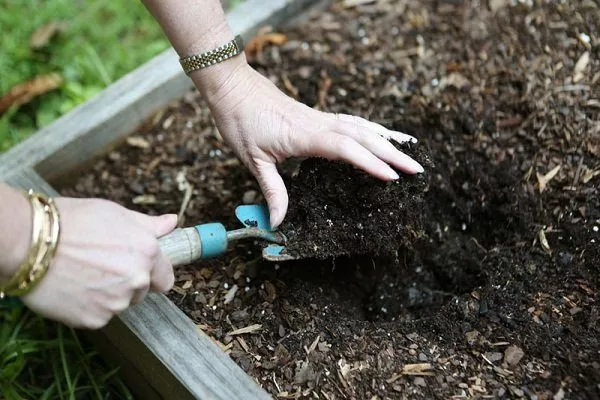
Soil preparation begins in the fall. The area is cleared of leaves, branches, and grass. The soil is dug to the depth of a spade.
Fertilizer is essential. Wood ash is considered a universal fertilizer suitable for all types of soil. Apply 0.5 liters per square meter. If the soil is poor, add organic matter. River sand can be added to clay soil to make it lighter.
In spring, use fertilizers:
- MineralsSuperphosphate – 10-12 g per 1 sq. m, potassium – 6-8 g per 1 sq. m and urea.
- OrganicCompost or humus – 2-3 kg per 1 sq. m.
Don't use manure. It creates a breeding ground for many pests, insects, and bacteria that cause plant diseases. Furthermore, the fruit loses its aroma and flavor.
If you need to add lime to the soil to reduce acidity, do this 2 weeks before using the main fertilizers.
Seed treatment
The crop is propagated by seed. Black radish does not transplant well, as there is a risk of damaging the root. This will prevent the fruit from developing properly.
Seed preparation includes the following stages:
- Calibration. Hand-select the largest seeds with smooth, undamaged shells. Discard any small, empty, or broken seeds.
- Place the selected seeds in a salt solution for 10-15 minutes. Prepare the solution at a rate of 1 tablespoon per cup of water. Remove any seeds that float to the surface. This method will help remove any empty shells that were missed during the previous inspection.
- Take a sieve and wash the seed material.
- Place the seeds in a weak solution of potassium permanganate for 24 hours. This has a disinfecting effect and prevents future diseases at all stages of the growing season.
- Wrap the seeds in damp cheesecloth, which can be soaked in a growth stimulant in addition to water. This will allow them to absorb moisture to improve germination.
- Check the seeds for germination by placing them in water for 10 minutes. Remove any that float to the surface.
- Disinfect the seeds in a solution of potassium permanganate for 24 hours.
- Soak seeds in a growth stimulator for 12 hours to improve germination.
Sowing black radish
Seeds can be sown in open ground or in a greenhouse. This depends on the ambient temperature and climate of the region. When planting in a greenhouse, ensure adequate lighting, and if it's insufficient, install artificial lighting.
Sowing times in different regions
Black radish is suitable for growing throughout the country. Seeds germinate at temperatures of 3-5°C. The plant can survive sudden frosts, when the thermometer drops a few degrees below zero. The optimal planting temperature is 13-15°C.
In most regions of Russia, sowing is in late March or early April. In the cold climate of Siberia, planting occurs in early summer.
Sowing of seeds is carried out depending on the ripening period of the crop:
- Early varieties – mid-March. Ripening period: 40-45 days.
- Early summer varieties ripen in late April or early May. Ripening period: 55-60 days.
- Mid-season and late-season varieties are harvested in mid-June to early July for colder regions. They ripen in 100-110 days.
Sowing radishes in open ground
Some varieties of this root vegetable are large. This should be taken into account, and allow for adequate space between the seeds to ensure proper growth.
To sow, first dig the soil to a depth of a spade and make furrows. These furrows run from east to west.
Sowing distances:
- between furrows – 25-30 cm;
- between plants – 15-20 cm;
- hole depth – 2-2.5 cm.
Too much crowding leads to the formation of arrows.
Planting instructions:
- Mulch the furrow with peat or humus.
- Moisten the soil.
- Place the sprouted seeds in a hole or furrow, keeping the required distance between them.
- Sprinkle with soil and compact lightly.
- Water it.
- Sprinkle with a thin layer of wood ash.
If the weather is cool, cover the furrows with plastic film. Seedlings should appear within a week.
Planting of seeds is carried out on a dry and cool day.
Care instructions
The plant needs to be watered regularly and weeded. Make sure the soil doesn't dry out or become overly wet.
Watering
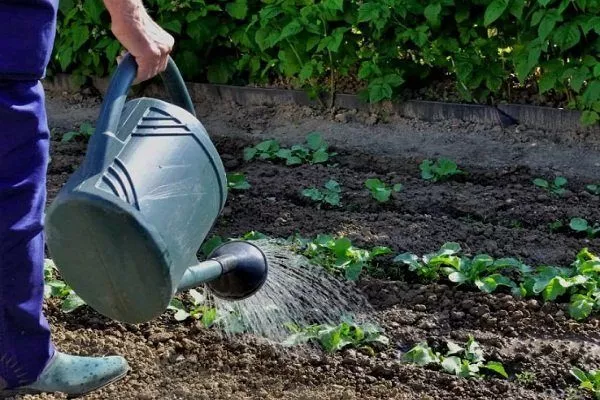
Use warm, settled water for watering. Water in the morning or evening, when there is no sunlight. A watering can with a large nozzle is best.
Irrigation scheme:
- When seedlings appear in the first week, irrigate every other day.
- When the sprout reaches 10 cm, water less frequently: 1-2 times a week for early varieties and 2-3 times a month for late varieties.
When watering, always follow the soil. If the soil dries out, water more frequently. Avoid allowing the soil to dry out and form a hard crust. This will cause the root vegetables to have a bitter taste. To prevent moisture evaporation, mulch with humus, compost, or grass clippings.
Loosening and thinning
To prevent insects from settling, you need to regularly weed the beds. Weeds also rob the soil of nutrients essential for radish growth.
After each watering, you need to loosen the soil to prevent a crust from forming and to allow air access.
Thinning is done to remove weak shoots and prevent overcrowding. Abundant foliage creates a favorable environment for insects.
The first thinning is done when the young plant has 2-3 leaves. The distance between seedlings should be no less than 7 cm. The next thinning is done a month later, leaving a distance of at least 15-16 cm.
Top dressing
Plants are fertilized 2-3 times during the growing season. Mineral fertilizers are used. Organic fertilizers promote active growth of adventitious roots and fruit deformation.
Feeding times:
- When the 4th leaf appears on a young plant.
- 3 weeks after the first feeding.
- Three weeks before the roots reach full maturity, apply a fertilizer containing potassium. It improves the flavor and juiciness of the pulp. Wood ash can also be used as a top dressing.
For early maturing varieties, fertilizer should contain nitrogen.
Major diseases and pests
The following diseases and pests are considered dangerous for the crop:
| Disease/pest | Manifestation | Treatment |
| Powdery mildew | A light coating forms on the leaves. It gradually darkens to brown. The leaves wither and die. | Topaz. It is diluted in water and sprayed. |
| Kila | It attacks the roots, causing growths to form on them. The foliage gradually dries out. | Wood ash and bleach. Disinfect the soil. |
| Root rot | Dark spots appear at the base of the fruit and on the leaf petioles, causing the plant parts to soften. Mold also forms. A distinctive odor is present. | Trichodermin. Kills fungus.
Wood ash mixed with chalk in a 1:1 ratio. The resulting powder is applied to the affected parts of the plant. |
| Slugs | Light-colored. They hide during the day and feed on the tops and protruding parts of the root crop at night. If they attack young plants, they can completely destroy them. | Thunderstorm, Slug Eater.
Mustard or red hot pepper infusion is diluted in water and sprayed on plants and soil. |
| Cabbage moth | The insect is light brown in color. It lays its larvae on leaves, feeding on the sap. | The larvae live on the underside of the leaf. They should be removed, and the leaf should be wiped with a soapy solution.
In case of severe damage to plants, insecticides are used. |
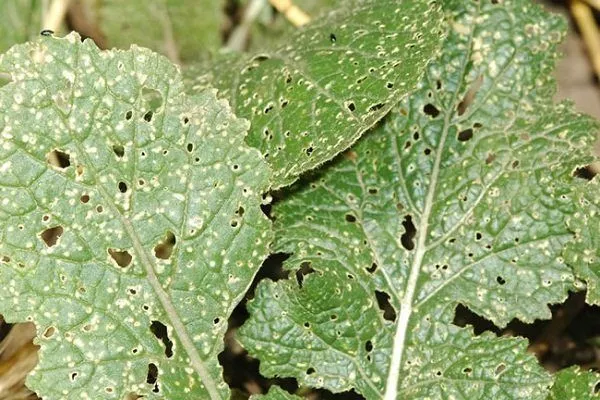
| White butterfly | It lays eggs in the soil. The hatched caterpillars eat the leaves. The leaf blade curls, and oblong holes appear in it. | Solution: mustard, red pepper, and salt. Let it sit for more than 24 hours and spray all parts of the plant.
Add wood ash with cinnamon or saffron to the soil. |
Remember that many diseases and pests can appear due to increased humidity around the plant and untimely removal of weeds.
Harvesting and storage of crops
Early and mid-season varieties are harvested in midsummer. Late varieties are harvested in October, during dry weather, before the first frost.
Depending on the region, harvesting takes place at different times:
- Middle zone – end of August;
- Ural – at the end of September;
- Siberia – beginning of October.
Don't delay harvesting. Frost and rain can ruin the entire crop.
Ripe root vegetables are pulled from the ground. The green tops are cut off, leaving petioles about 2 cm long, and the roots. They are aired to allow the soil to dry. Only undamaged fruits are suitable for storage.
Root vegetables are stored in the refrigerator, placed in a perforated plastic bag for ventilation. A cool, dark cellar is also suitable. The vegetables are placed in wooden boxes and sprinkled with ash or sawdust. The cellar temperature should be 2-3°C, and the humidity should not exceed 80-85%. Higher temperatures encourage root sprouting.
Tips from experienced gardeners
Some amateur gardeners encounter difficulties when growing black radishes. To avoid these difficulties, it's worth heeding the advice of experienced gardeners:
- Don't plant seeds without soaking them first. Germination will be significantly reduced, even with proper care.
- If the fruit doesn't grow to the desired size, it needs to be rocked. This will stop the roots from producing lateral shoots, and all the energy will be directed toward the root crop.
- When shoots appear, thinning should be carried out or the plants should be covered with film to protect them from the cold.
- If cracking occurs, increase watering.
You can also learn about the specifics of growing black radish from this video:
Reviews
Black radish is suitable for growing in any climate zone in our country. It grows in open ground and does not require picking or replanting. It is easy to care for; just follow a watering schedule and weed regularly. After 2-3 months, you'll reap a bountiful harvest of firm, juicy roots.