
The Zhara variety is one of the oldest cultivated in the country, popular with farmers and gardening enthusiasts. It stands out for its early maturity, pleasant flavor, and ease of cultivation. It adapts to weather and temperature fluctuations, making it suitable for planting in various regions of the country.
Development history
The Zhara variety was officially registered in 1956. The application was submitted by the Lithuanian Fruit and Vegetable Research Institute. It was developed at the Viten Station, which bears the name of Ivan Michurin.
It's not a hybrid, so our own seeds are successfully used for planting next season. Leading producers of Zhara seeds include Agrofirm Poisk and Agrofirm Aelita.
Introduction to the variety
It has high commercial appeal but is not intended for long-term storage. It tolerates short-term transportation well and is rich in vitamin C.
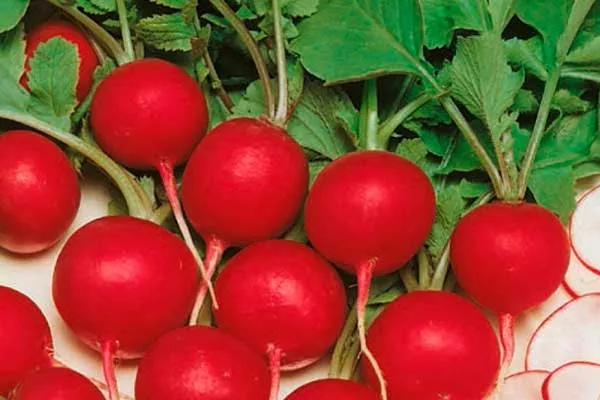
Zhara has good winter hardiness, is able to withstand significant temperature drops and is adapted to hot climates.
External parameters of the plant and root crops
| Name | Ripening period (days) | Disease resistance | Recommended soil type |
|---|---|---|---|
| Heat | 18-26 | High | Neutral or slightly acidic |
| Presto | 20-28 | Average | Neutral |
| Dabel | 10:30 PM | High | Subacidic |
| Ilka | 30-40 | Low | Neutral |
This is a high-yielding variety optimized for growing in garden beds. It forms a wide, but not overly foliated, rosette.
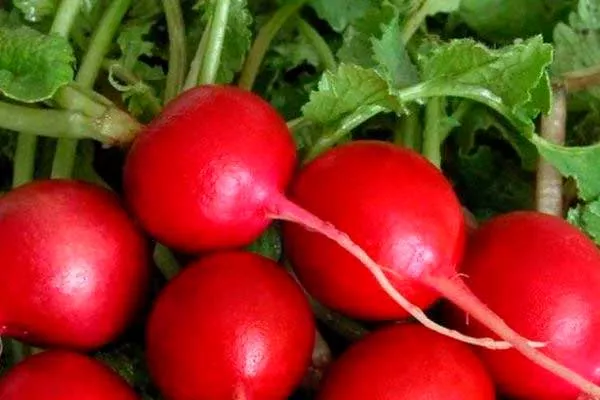
Other varietal characteristics:
- The leaf rosette includes 5 to 7 leaves.
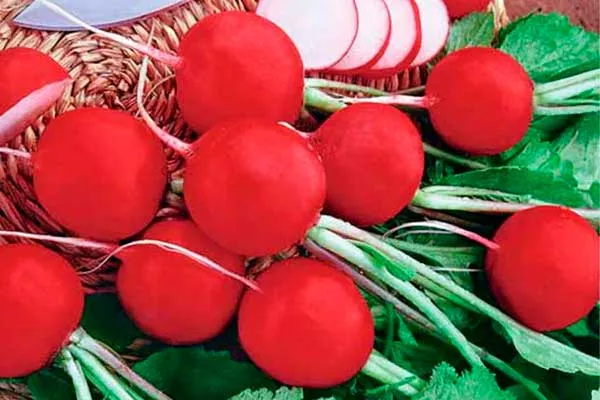
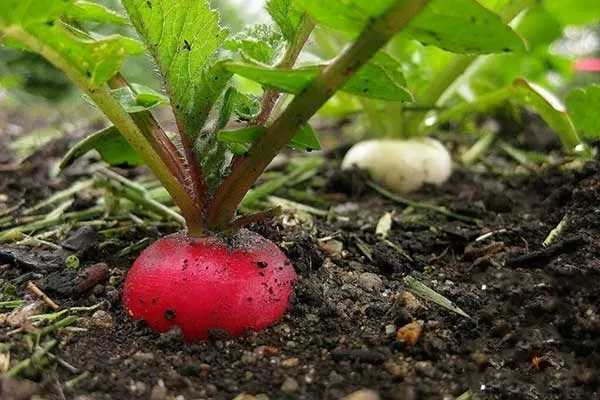
- The root vegetable has a shape resembling a circle or an elongated circle, with a bright red-crimson skin color about 0.5 mm thick.
- The flesh is firm, with a pale greyish tint in the centre and turning pinkish near the skin.
- This variety of radish has green leaves and small tops.
- The weight of the root crop ranges from 18 to 30 g, and the diameter and length are approximately equal, reaching from 3 to 4 cm.
- ✓ Ability to adapt to various climatic zones, including Siberia and the Urals.
- ✓ High resistance to diseases, except for fusarium wilt and powdery mildew.
- ✓ Short maturity period: 18-26 days, which allows multiple sowings during the season.
Quality of taste, purpose
It has an excellent flavor for fresh use, in salads, and sauces. This variety has a slightly spicy flavor.
Maturation
One of the key advantages of the Zhara variety is its short ripening period—just 18-26 days. This allows for sowing almost every three weeks and fresh fruit throughout the growing season.
It is only important to change the beds each time and ensure that related crops have not previously grown in this area.
Productivity level
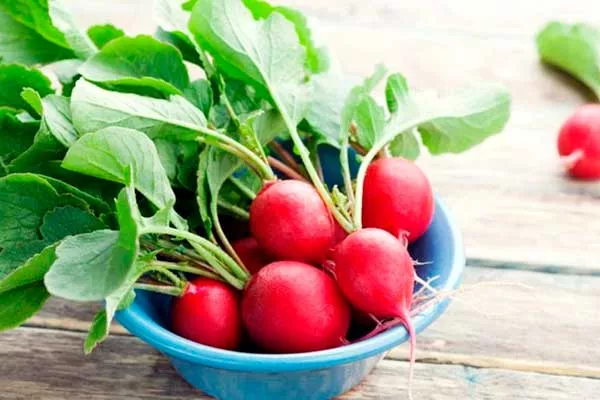
With proper care and treatment, you can pull out up to 25 tons from 1 hectare, which is about 3.5 kg per 1 square meter.
Where is it recommended to grow?
This variety is successfully cultivated in virtually all regions and climate zones of Russia. It is suitable for sowing in open gardens in the southern, central, and black soil regions, as well as in the Urals and Siberia.
The optimal conditions for the normal development of this radish are a greenhouse or temporary film shelter, where it is easy to care for and does not cause any special problems.
Zhara can also be sown indoors, but this requires significant effort on the part of the gardener to maintain the correct temperature and humidity. Otherwise, the roots may become deformed and limp. This, of course, will negatively impact their quality.
Rules:
- Windows should be located on the sunniest side.
- Temperature range: 10-17 degrees during the day and slightly lower at night.
- In cloudy weather, in winter, autumn or spring (when daylight hours are short), connect phytolamps for additional lighting.
- The container for the Heat should be at least 15-20 cm deep.
Preferred soil
Zhara thrives in substrates with low or neutral pH. It is recommended to enrich the soil with humus, ash, and cow manure beforehand, while avoiding the use of bird droppings and nitrogen-containing fertilizers.
How to plant radish Heat?
Choose well-lit areas of the garden for sowing, as radishes will not develop normally in the shade: the tops will grow excessively, and the plant may sprout prematurely.
Please also note other requirements:
- Any crops except cruciferous ones are good predecessors for radishes.
- To protect radishes from pests, you can plant them together with onions and carrots.
- Sowing can begin in early April and continue until August 15-18. The most abundant harvests are collected in early spring, as radishes do not tolerate the high temperatures and drought typical of midsummer.
- Two to three weeks before planting, the soil should be fertilized with mineral fertilizers or organic matter. If the soil is acidic, adjust its pH by adding lime in the appropriate amount.
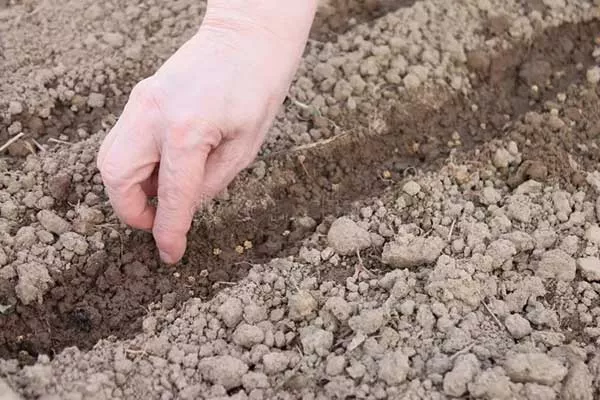
- Seeds are sown in rows with a spacing of 3 cm between seeds and a depth of 1.5-2 cm. The spacing between rows should be 10-12 cm.
- ✓ Optimum soil temperature for sowing: +8-10°C.
- ✓ Seed sowing depth: 1.5-2 cm, with a distance of 3 cm between seeds.
- ✓ Row spacing: 10-12 cm to provide sufficient space for growth.
Caring for radishes
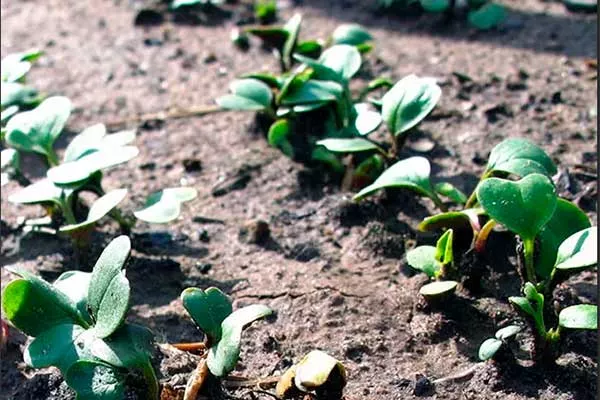
Once green shoots appear, the Zhara radish will require proper care, which consists of the following classic procedures:
- The soil between the rows and around the root crops must be periodically loosened with a hoe to prevent crust formation.
- Water the plants so that the soil remains consistently moist, but not waterlogged. Water carefully from a watering can to avoid washing away the seeds.
- If the sowing was done in the summer and there is extreme heat and drought outside, the plantings should be protected from the scorching sun using light agrofibre or film, constantly monitoring the humidity under the cover.
- It is better not to plant radishes in hot weather, as this degrades the quality of the root crops.
- If the soil has been pre-fertilized, no additional feeding is required.
- When thinning, remove weak plants, leaving bushes with a gap of 9-12 cm from each other.
- The bed needs to be weeded regularly, especially when the radish seedlings are still small. Weeds deplete the soil and draw out valuable moisture and nutrients.
Harvesting and storage
Radishes are harvested as they ripen, usually as early as 15 days after the primary shoots form in warmer regions. If the harvest is abundant, it should either be stored or sold at market. In either case, the harvested vegetables must first be dried and sorted.
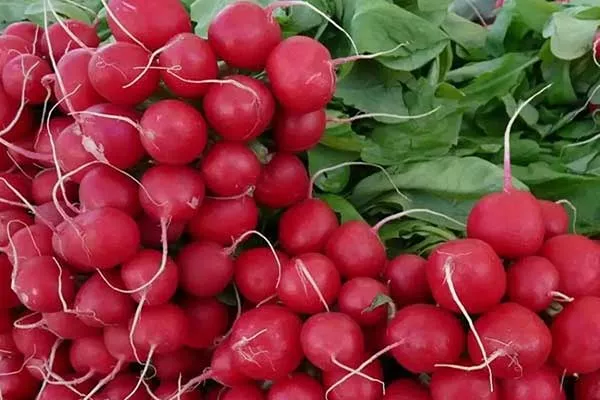
Radishes can be stored in a ventilated room for up to three days. They will keep for several weeks in a refrigerator or cellar at a temperature of 2-4°C (37-4°F). However, they should only be stored fresh; they are not suitable for freezing.
Risk of diseases and pests
Although this variety is known for its resistance to many diseases, it is still vulnerable to some. For example, it is susceptible to fusarium wilt, powdery mildew, and gray mold occasionally appear, and yellow stem and clubroot are very rare.
The most common pests are cabbage white caterpillars and flea beetles. To control them, you'll need to use appropriate chemicals.
Basics of preventing various problems
To prevent diseases and other problems with plants, learn how to care for them:
- do not ignore crop rotation rules;
- uproot weeds and infected parts;
- Water and loosen the soil more often to ensure air access to the roots;
- Spray radishes with insecticides and fungicides to prevent diseases and control pests.
Similar varieties
Varieties similar to Zhare are Presto and Dabel. They have similar ripening times, small root sizes, and are early maturing. The late-ripening Ilka has similar characteristics.
Positive and negative qualities
The advantages of this radish variety include the following:
Review of reviews
Although the Zhara radish was bred several decades ago, it remains popular. This variety adapts well to planting in any location and requires little care. This radish has a traditional and pleasant flavor. Zhara is ideal for getting healthy root vegetables ready for the table early.