
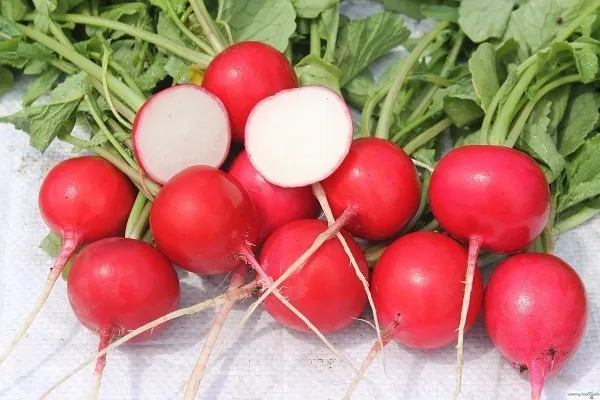
All-season is the name of an early-ripening variety of radish. It is considered one of the most popular among Russian gardeners due to its very fast harvest, marketable appearance, and excellent taste. It is grown from mid-April to late September in open beds or in protected soil in early spring and late fall.
History of selection
The Vsesezonny variety is an achievement of domestic breeding. It was developed by V. G. Kachainik and A. V. Kandoba, researchers at the Aelita agrofirm. This radish variety was added to the Russian Federation State Register in 2007.
It has been approved for cultivation in private household plots and farmlands located in the following regions of the country:
- Northern;
- North-West;
- Central;
- Volga-Vyatka;
- Central Black Earth Region;
- North Caucasian;
- Middle Volga;
- Lower Volga;
- Ural;
- West Siberian;
- East Siberian;
- Far Eastern.
Introduction to the variety
This radish variety is renowned for its excellent characteristics, making it increasingly popular among gardeners and farmers every year:
- early maturity (the crop ripens in 16-20 days after the seedlings emerge in the garden bed);
- high seed germination rate - 95%;
- friendly fruiting;
- excellent yield - from 1.1 to 2.5 kg per 1 sq. m of planting (up to 3 kg maximum, with enhanced agricultural technology);
- uniformity of fruits, their high consumer qualities and attractive appearance;
- genetically determined lack of tendency to flowering (stemming) and cracking of fruits.
Features of the appearance of the plant and root crops
All-Season radish plants delight gardeners with their compact size. They are distinguished by a small, upright rosette of obovate leaves that are yellowish-green in color.
The tubers of this variety are large, uniform in size and shape, and aesthetically pleasing. They possess the following characteristics:
- weight - up to 20 g;
- diameter - 4-6 cm;
- rounded shape;
- bright red skin, thin and slightly glossy;
- snow-white flesh, not coarse, filled with juice, crispy and aromatic.
Taste and purpose
Experts rate this vegetable's taste as excellent. Its flesh is mildly spicy, tender, and juicy. It lacks bitterness. This variety is best consumed fresh. Its pleasant, delicate flavor makes this radish a perfect addition to any summer salad or vegetable appetizer.
Plant biology
Knowing the biological characteristics of vegetable crops, you can create the most favorable conditions for them in your garden and get a rich harvest of delicious, healthy root vegetables.
Illumination
Radishes are a sun-loving crop. They grow better in well-lit areas than in the shade. However, it's not recommended to plant them in the sunniest spot in your garden.
Overheating the soil can cause plants to bolt. Place the vegetable plantings in a location that receives partial shade during the morning or afternoon.
Soil
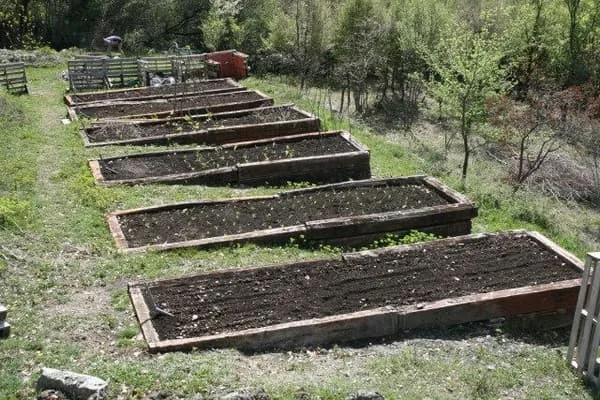
This vegetable is demanding of soil conditions. It can grow in poor, heavy, and even marshy soils, as it is quite hardy. However, a bountiful harvest is only possible when grown in soils with the following characteristics:
- loose;
- air- and water-permeable;
- fertile;
- neutral in acidity;
- drained;
- soft and light;
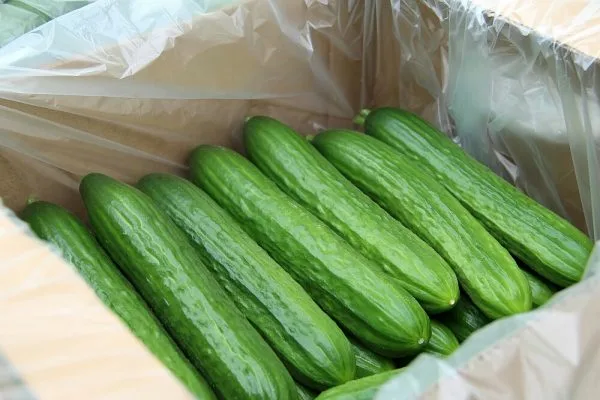
- on which beans, lettuce, onions, cucumbers, tomatoes or strawberries grew last season.
If your garden soil doesn't have a high humus content, boost its fertility by adding compost while tilling the area. Apply up to 15 kg per square meter. Don't use fresh cow manure. It's rich in nitrogen, and too much nitrogen in the soil causes the roots to become smaller and the plant to develop excessive tops.
Temperature conditions
Radishes are quite cold-hardy. They can withstand short-term frosts down to -5°C. At temperatures as low as -2°C, the vegetable crop thrives in an open garden bed.
Due to its resistance to cold, it is suitable for cultivation in the climatic conditions of almost all regions of the Russian Federation.
The optimal temperature regime for growing radishes all-season is:
- +2-4°С — for seed germination;
- +12-20°С — for growing seedlings;
- +15-18°С — for plant development and fruiting.
Growing seedlings
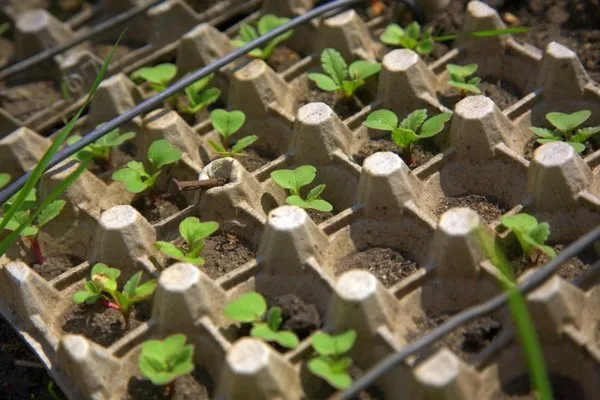
Due to its cold tolerance, this vegetable crop is grown primarily by sowing seeds in open ground. Gardeners rarely resort to seedlings. This is used when a super-early harvest (two weeks ahead of schedule) is desired. Sowing occurs in February-March.
After planting seeds in garden soil, sprouts often appear late due to cold. Seedlings, however, produce faster results. Indoors, sprouts appear in 3-5 days. After transplanting to the garden, they take root well and develop at the same rate as plants sown outdoors.
Grow radish seedlings all season, following the rules:
- use a light nutrient substrate with good water and air permeability;
- Sow seeds in fine-mesh trays so that each seedling grows separately from the others (using a common box for growing seedlings is acceptable, but not recommended);
- in a box, sow the seeds in furrows, after watering them with warm water;
- keep a distance of 3 cm between seeds;
- into cells filled with soil, plant 1 seed at a depth of 1-2 cm;
- sprinkle the planting with soil mixture and press it lightly;
- cover it with film and leave it on the window;
- Grow seedlings at temperatures up to +20°C;
- Water the seedlings regularly and carefully loosen the soil underneath them;
- There is no need to feed or provide additional lighting for radish seedlings;
- Transplant the seedlings into the garden bed together with the root ball, keeping a distance of 10 cm between them.
- Water the seedlings in the garden bed and leave them under a film cover for several days.
Requirements
If you prefer to sow seeds directly into open ground, follow the manufacturer's instructions:
- plant seeds in rows 7 cm apart, keeping the sowing distance at 3-5 cm;
- maintain the seeding depth of 1-2 cm;
- Do not exceed the seeding rate of 250 plants per 1 sq. m (this is especially true when growing vegetable crops in protected soil).
Sowing seeds
Begin sowing All-Season seeds in an open garden bed in the second half of April. Repeat this process every two weeks thereafter. Plant the last time in August (the first half of the month) to harvest radishes in September. Sow the crop in greenhouse soil 2-3 weeks earlier.
Before sowing, prepare the seeds. Pre-planting treatment will speed up germination and improve viability. Follow these steps:
- Inspect the seed material. Discard any dried, very small, or damaged specimens.
- Soak the seeds in a solution of Fitosporin, Magnicur, or Ridomil to protect them from infections, particularly fungus.
- Soak radish seeds in a solution of Epin, succinic acid, and Zircon to enhance germination. Potassium humate or Vertex fertilizer can also be used to treat the seeds. These products increase the plants' resilience to adverse growing conditions.
- Dry the seeds after soaking.
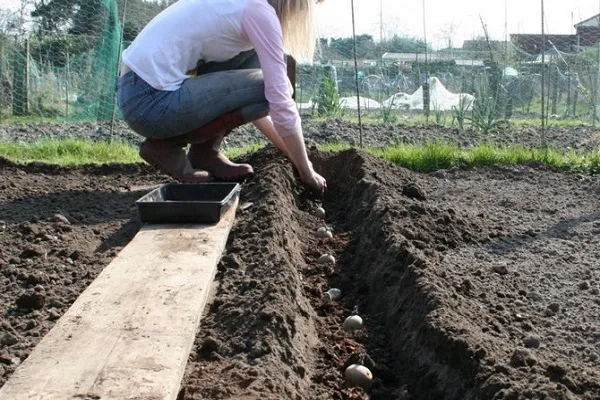
The day before sowing, loosen the soil in the area. Level the surface and form ridges. Sow the All-Season seeds, following these steps:
- Make grooves (depth - 2-3 cm).
- Water them.
- Place the seeds in the furrows, keeping a distance of 3-5 cm between them.
- Sprinkle the seeds with a mixture of garden soil and river sand.
- Water the crops.
- Cover them with plastic wrap to retain heat and moisture in the soil. Once the sprouts emerge, you'll need to remove the plastic wrap.
Agricultural technology
Radishes require standard year-round care. This includes watering, fertilizing, loosening the soil, removing weeds, and thinning the plantings. These procedures ensure a bountiful and high-quality harvest.
Plant care and formation
After the radish seedlings have sprouted, provide them with proper care to ensure a good harvest:
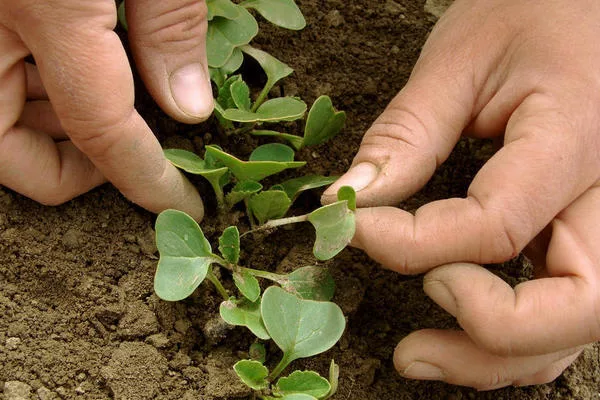
- Thin out the seedlings in the rowsLeave a distance of 7-10 cm between them. This technique will ensure proper and complete formation of the root crop, accelerating its growth and maturation.
- Water the garden bedUntil the first large leaves appear on the seedlings, water sparingly, using small amounts of water. Water the plants frequently—daily or every other day.
Once the tops begin to actively grow, reduce the frequency of watering and increase the volume. This water should be settled and warmed by the sun. - Loosen the soil, being careful not to touch the root vegetables. This will make the soil lighter and more permeable to moisture and air.
- Fight weeds in your garden bedsThey may harbor fungal spores and pests.
Fertilizers and dressings
When sowing All-Season radish seeds in fertilized garden soil, no additional fertilizer is required throughout the season. If you're growing the crop in poor soil, use the following nutrient-rich fertilizers:
- cow manure solution (200 g per 100 l of water);
- Superphosphate (30 g per 10 l of water).
Reviews
All-Season is a radish variety belonging to the early-ripening vegetable category. Domestic gardeners appreciate it for the aesthetic appearance of its large, beautiful roots and their pleasant, mildly spicy, non-bitter flavor. Its excellent yield and resistance to cracking and bolting further enhance its popularity.