
To ensure radishes grow large and juicy, they need proper care, including timely application of necessary fertilizers. It's important to know exactly what types of fertilizers to use, when, and in what doses.
The need for fertilizing radishes
Radishes grow and form roots quickly, in just 1-1.5 months. They don't require large doses of fertilizer, but to ensure quality root vegetables, rather than just green tops or sprouted plants, gardeners must understand the specifics of their cultivation.
- ✓ The optimal soil pH for radishes is 6.0-7.0. Outside this range, nutrient availability decreases.
- ✓ The soil must be well-drained. Stagnant water leads to root rot.
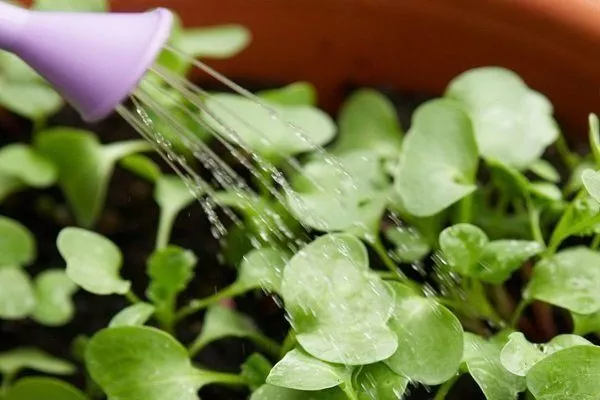
Radishes have modest nutrient requirements. Over the course of their entire growth cycle, they remove only 8 grams of micronutrients per square meter of soil. However, expecting root vegetables to grow without any fertilizer is unrealistic. Without the necessary nutrients, a good harvest will be impossible.
In well-maintained and fertilized soil, radishes grow smooth, juicy, large, and free of air pockets. If the soil lacks sufficient fertilizer for normal plant development, they will produce small vegetables with dry, coarse flesh.
When fertilizing radish beds, apply fertilizer according to the recommended rates for this crop. Increasing the dose in the hopes that more fertilizer will result in a larger root crop is a mistake. Overfertilizing will have the opposite effect of delivering essential nutrients to the plants:
- if there is a lot of nitrogen in the soil, radishes actively grow tops;
- If there is a lot of phosphorus, it produces an arrow without forming roots.
Frequent fertilizing is also unnecessary and won't provide any benefit. Unlike other garden vegetables, radishes only need 1-2 applications during the entire growing season.
When should you apply fertilizer?
Fertilizing radishes is possible at three stages:
- When preparing the bedsIf you properly fertilize your radish beds in the fall during preparation or in the spring shortly before sowing, you won't need to fertilize them again. At this stage, you can use organic and mineral fertilizers.
- At the beginning of radish growthFertilizing when the first shoots emerge is only possible if fertilizers have not been applied to the soil beforehand. At this stage, it is advisable to use complex fertilizers rather than simple mineral ones.
- During plant growthBy applying fertilizer directly during the growing season, you can correct plant development if any problems are discovered.
- 2 weeks before sowing: add compost or rotted manure (3-4 kg per 1 sq. m) and dig in.
- When the first leaves appear: water with a solution of complex fertilizer (according to the instructions).
- 2 weeks after the first feeding: add ash (0.25 kg per 10 l of water) to enhance the growth of root crops.
Types of fertilizers for radishes
To feed radishes, use the same fertilizers as for all other garden crops:
- organics;
- ash;
- mineral simple, mixed and complex fertilizers.
The required amount of fertilizer to apply is indicated in the instructions included with the product. The easiest way to measure it is with a tablespoon or teaspoon, a matchbox, or a 200 ml glass.
Table of contents of the most popular fertilizers (in grams):
| Fertilizer | 1 tbsp. | 1 tsp | Boxes | Cup |
| Saltpeter | 17 | 4 | 17 | 170 |
| Superphosphate | 17 | 5 | 22 | 220 |
| Potassium sulfate | 20 | 6 | 26 | 260 |
It's important to consider the ratio of nitrogen, phosphorus, and potassium in the fertilizer mixture. For radishes, it should be 38:12:50.
Nitrogen fertilizers
Of this class of fertilizers, gardeners most often like to use:
- saltpeter (35% nitrogen);
- urea (46%).
They can be applied both during the bed preparation stage and when the first shoots emerge. Urea is preferably used in the fall, while saltpeter is best used in the spring. This is because the nitrogen in saltpeter is in the nitrate and ammonium forms, making it more readily available to plants than that in urea, where some of the nitrogen is in the amide form, which is inaccessible to plants.
It takes time for the nitrogen in urea to be converted into usable forms. This is why urea has a longer-lasting nutritional effect than saltpeter.
Amide nitrogen is better retained in the soil and is less easily washed away by water, which is another argument in favor of applying urea in the fall, as well as in areas with waterlogged soil. Urea is also applied in the fall because it is only effective in warm soil. In the spring, when the ground is cold, it will have no effect. Nitrate can be spread directly on snow, which will accelerate its melting.
This video shows how to properly fertilize radishes with ammonium nitrate:
Application rates:
- 10 g of urea per 1 sq. m;
- 15 g of saltpeter per 1 sq. m.
When applying urea, remember not to simply scatter the granules over the surface of the beds—they react with oxygen, resulting in nitrogen loss. The granules must be mixed with the soil, meaning they must be dug in.
In spring, fertilize the soil with mineral nitrogen fertilizers at least a week before sowing. Applying granules along with the seeds can reduce their germination rate due to the increased nitrogen concentration.
In addition to saltpeter and urea, radishes can be fertilized with ammonium sulfate, potassium, sodium, and calcium nitrate. All of these fertilizers contain readily available nitrogen and dissolve well.
Gardeners who prefer radishes with a strong aroma and flavor may want to consider fertilizing them with sulfur-containing fertilizers. Sulfur is found in mustard oils, which impart a fragrant and pungent flavor to radishes. Ammonium sulfate (sulfur content: 26%) and potassium sulfate (18%) are well suited for this purpose. They are applied before sowing.
Potash fertilizers
It's best to apply potassium fertilizer to plants after they have 2-3 leaves. Any mixture can be used, even those containing chlorine. Radishes tolerate this element well.
Application rate of potassium mixtures:
- basic application – 40 g per 1 sq. m;
- when feeding at the growth stage of radish - 10-15 g per 1 sq. m.
Phosphorus fertilizers
Any phosphorus mixture can be used for radishes, but superphosphate remains the most popular. It can be applied both during bed preparation and during the plant growth stage. In the former case, 50 g of fertilizer is used per square meter, while in the latter case, 15 g is used.
In addition to superphosphate, you can add:
- ammophos;
- diammonium phosphate;
- potassium monophosphate.
Additional feeding
You can additionally fertilize radishes if you notice external signs of a deficiency of any element:
- If the plant's leaves are excessively pale, this indicates a nitrogen deficiency. It should be fertilized with saltpeter or urea as soon as possible. This can be done by watering the plant at the roots or by spraying it from above with a dilute nitrogen solution. Prepare the fertilizing solution at a rate of 1 teaspoon of fertilizer per bucket of water.
- If foliage is growing vigorously, this indicates an excess of nitrogen. In this case, add potassium and phosphorus to the radish. This will help the plant develop roots on time. Use 10 g of potassium sulfate and 20 g of superphosphate per bucket of water, or dissolve 1 cup of ash in the bucket.
Complex fertilizers
It is convenient to feed garden crops with complex fertilizers that contain all three nutritional elements at once.
Nitroammophoska is a popular fertilizer in home gardening. It is applied during bed preparation at a rate of 25-30 g per square meter and 15-20 g during the growing season.
In addition to nitroammophoska, you can use ready-made complex fertilizers that also contain a range of microelements (Kristallon). These provide radishes with all the necessary chemical elements for growth in a balanced ratio. The dosage of complex fertilizers is indicated in the instructions for use.
Watch a video about fertilizing radishes at the first shoot stage with Rost Concentrate and Baikal complex fertilizers:
Before watering the beds with the fertilizer solution, water them with plain water. This will prevent root burns from coming into contact with the liquid.
After watering, when the soil has dried out slightly, the beds must be loosened. Fertilizers are absorbed much better by plants in loose soil. In dense soil, however, small, irregularly shaped root crops develop.
Ash
You can replace potassium-phosphorus fertilizers with ordinary ash. For the main application, you'll need up to 0.5 kg of ash per square meter, and 0.25 kg of ash per 10 liters of water if you're watering with an ash solution during the growing season.
When using ash, it is necessary to remember the rules for its preparation and application:
- It is not advisable to mix ash with nitrogen-containing fertilizers;
- You can only use ash remaining after burning organic waste: branches, leaves, plant debris from the garden;
- You cannot add stove ash and ashes from burning household waste, painted boards, newspapers, or magazines.
Foliar feeding
In addition to root fertilization, foliar feeding with a 2% solution of urea and ammonium molybdate (1 mg per liter) is also possible. This fertilizer will increase the root weight. Radishes should be sprayed no later than two weeks before harvesting.
Organics
Manure is applied in the fall or spring. It can be taken from any domestic animals or birds, but it must be well-rotted. It's an affordable and effective fertilizer, preferred by those who prefer natural, chemical-free produce.
When digging the beds, add 3-4 kg (or approximately 0.5 buckets) of manure per square meter. This is enough to provide the radishes with nitrogen during the initial growth stage.
Growing radishes are watered with a slurry dissolved in water. It is prepared by diluting 1 kg of rabbit, pig, goat, cow, sheep, or horse manure in 1 bucket of water. The same volume of bird droppings is dissolved in 15 liters of water. After steeping for 3-4 days, the liquid is diluted again in a ratio of 1:10. The consumption of this organic fertilizer is 1 bucket per 1 square meter of garden bed area.
Applying fresh manure to radishes, as well as any other root crops, is strictly prohibited. There are several reasons for this:
- Fresh manure contains a lot of nitrogen, which stimulates the growth of green tops instead of the formation of root crops;
- too much fresh manure leads to the accumulation of nitrates in root crops;
- Fresh manure harbors pests that can quickly damage roots and developing root crops.
Herbal infusions
Radishes respond well to feeding with an infusion of green grass. In spring, young nettles are excellent for herbal feeding.
Preparing the fertilizer is very simple: simply chop the plant into small pieces, place the mixture halfway in a large barrel, add water, cover, and let it ferment. After about 1.5 to 2 weeks, when the fermentation process has stopped (this will be indicated by the absence of foam and the darkening of the liquid), the infusion can be used as a fertilizer. For radishes, the nettle infusion should be mixed with water in a ratio of 1:10 for watering or 1:20 for foliar spraying. One bucket of herbal infusion is used per square meter of garden bed area.
In addition to nettles, you can use weeds, tops, and mown grass. To enhance the effect, you can add ash (1 cup per bucket) or an onion peel infusion to the green fertilizer. The proportions for preparing the infusion and using it are the same.
Herbal infusions can't compare to slurry or, especially, chemical fertilizers in terms of the amount of nutrients they contain. However, they do contain vitamins, enzymes, and chlorophyll, which improve plant health and enhance their defenses against pathogens. For example, a nettle-onion infusion can help protect radishes from flea beetles.
Growing radishes in greenhouses Growing in garden beds can only be successful if the soil is properly prepared and fertilized. Fertilizing with nitrogen, phosphorus, and potassium mixtures will ensure a decent harvest of tasty root vegetables free from voids, diseases, and pest damage.
I opened so many websites when looking for information on how to feed radishes, and they all came up with a jumble of words... Thank you for explaining everything so clearly. As a beginner, this is incredibly important. The dosage is clearly stated, and every detail is taken into account. Thank you!