
Radish Tsarevna is the best choice for those seeking an early harvest of delicious and juicy vegetables. It boasts not only an attractive appearance but also a stable yield, making it the ideal solution for large-scale cultivation. By following simple planting and care guidelines, you can enjoy high-quality root vegetables throughout the season.
History of selection
Bred by V. I. Blokin-Mechtalin and officially approved for use in 2022, the hybrid is intended for fresh consumption and for producing bunched produce.
Introduction to the variety
The crop is successfully grown in a variety of climates, both outdoors and in greenhouses. The variety is resistant to adverse weather conditions and common radish diseases, making it suitable for commercial and home gardening.
The hybrid boasts excellent transportability and retains its marketable appearance for a long time. It is a mid-early variety, with the time from germination to harvest taking approximately 25-30 days. Productivity is good, with 3.9 to 4.5 kg of vegetables harvested per square meter.
Characteristics of the appearance of the plant and root crops
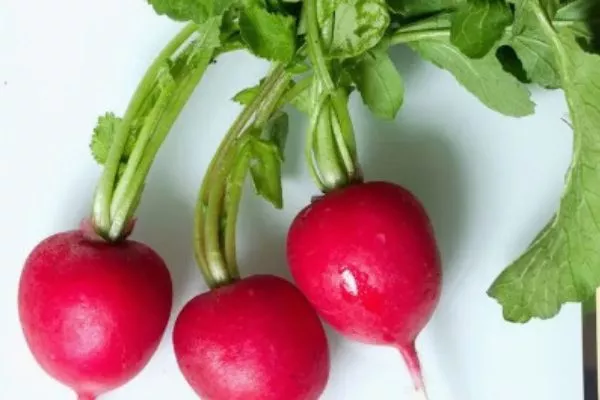
Radishes form a semi-erect rosette of leaves. They are medium-length, obovate, and have a rounded tip. The tops are grayish-green. The petioles lack anthocyanin coloration.
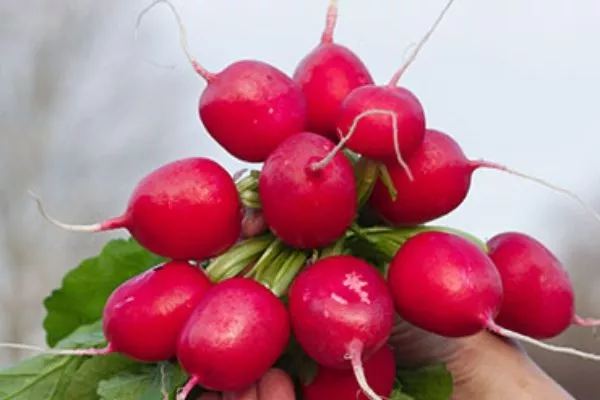
The fruits are large and round, weighing up to 30-35 g, with a convex head. The surface is smooth and even, bright red. The flesh is white, dense, tender, and juicy. The flavor is pleasant, with slightly spicy notes. The vegetables keep well for up to 2 months at 1-3°C in the refrigerator.
Growing and care
Sow seedlings in raised beds in early spring, as soon as the soil warms to 5-7°C. The optimal time for this is from mid-April to the end of May. For the fall harvest, the best time is from late July to early September. To ensure fresh vegetables throughout the season, sow every 10-15 days.
Helpful tips:
- The crop thrives in light, loose, fertile soils with a neutral or slightly acidic reaction.
- Choose sunny locations or areas with slight partial shade.
- Before planting, dig the bed to the depth of a spade, remove weeds, and add humus or compost. Avoid using fresh manure, as it can cause cavities in the root crops.
- ✓ The optimal soil temperature for sowing should be no lower than +5°C, but no higher than +7°C, to avoid premature bolting.
- ✓ To prevent the formation of voids in root crops, avoid using fresh manure; humus or compost is preferable.
Landing algorithm:
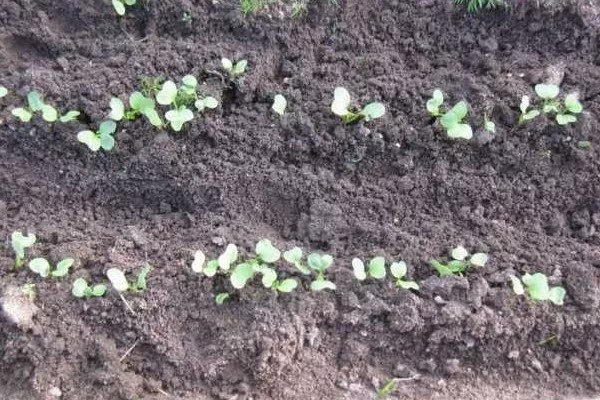
- Plant the seedlings to a depth of 1-1.5 cm, keeping a distance between rows of about 10-15 cm.
- Place the seeds in furrows every 3-4 cm.
- Cover with soil and compact lightly.
It's important to closely monitor your plants and provide them with proper care. Follow standard gardening practices:
- Watering. Provide plants with regular and generous watering, especially during the active growth stage. Water them 2-3 times a week, or daily in hot weather. Keep the soil slightly moist, but do not allow it to dry out. Apply water at the roots, avoiding dripping onto the leaves.
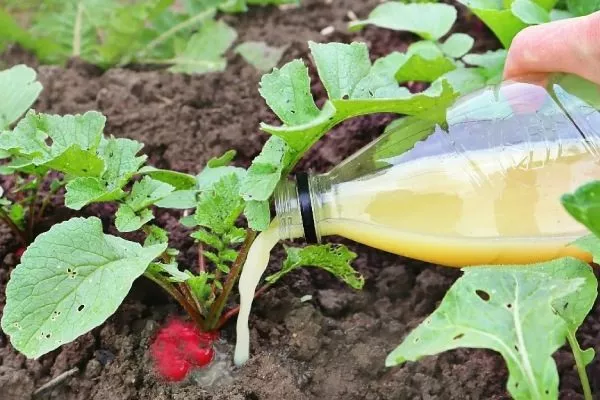
- Top dressing. Radishes don't require a lot of fertilizer. To promote vigorous growth after thinning, use organic fertilizers, such as herbal infusion or a weak solution of complex mineral supplements. Excess nitrogen can lead to excessive top growth at the expense of root vegetables.
Reviews
The Tsarevna radish is one of the most popular varieties in gardens, prized for its ease of care and early maturity. This hybrid attracts gardeners with its appearance and excellent taste. It's important to carefully study its characteristics and agronomic features, and follow the growing and care recommendations.