
Radish Sora is an innovative F1 hybrid, which demonstrates that obtaining seed material at home is difficult. The variety is considered easy to grow and care for, and boasts a good yield, but requires following simple agricultural guidelines.
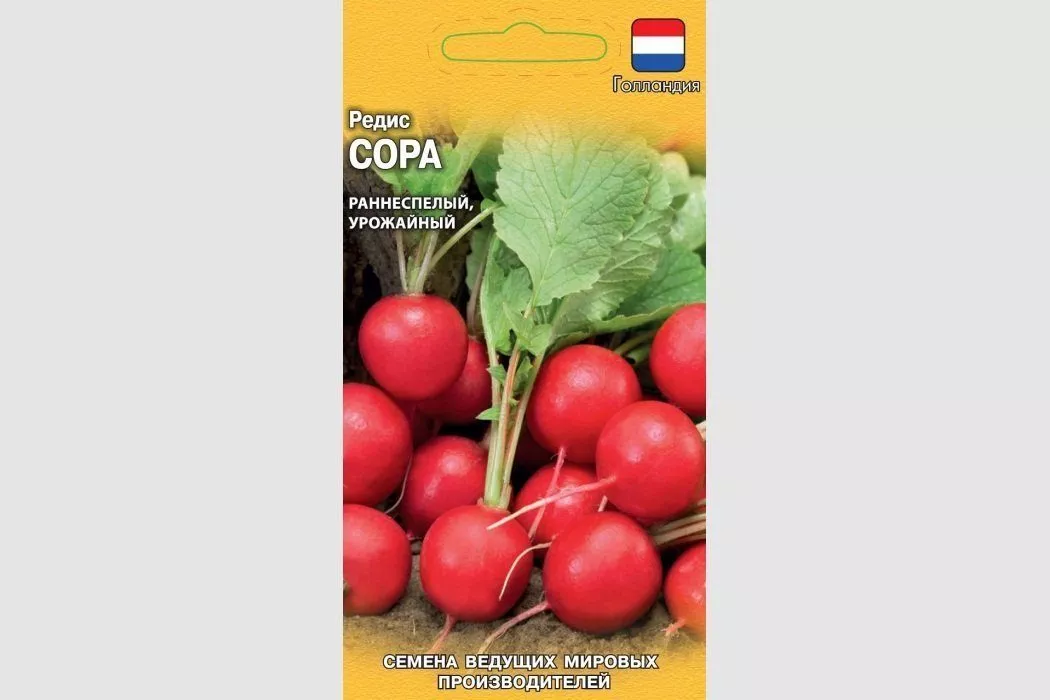
Radish Sora
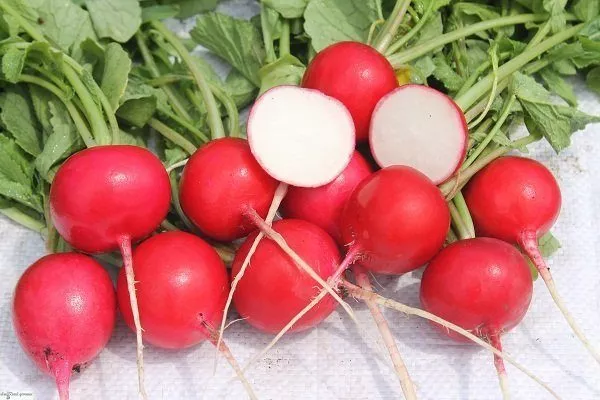
Radish Sora can be stored for a long time
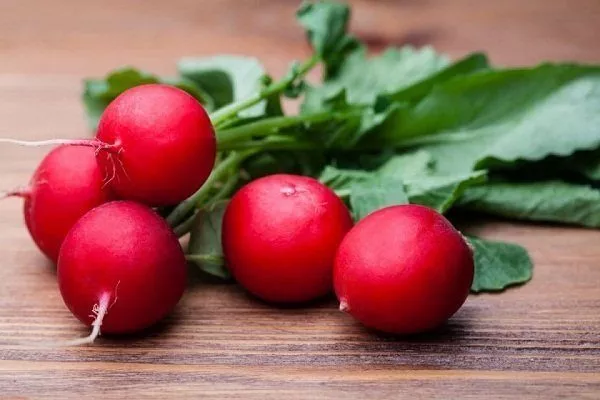
Radish Sora can be grown all year round
Description
The Sora radish was developed by Dutch breeders at the end of the last century. The variety appeared in Russia in 2001, after which it was added to the country's State Register.
This is an early-ripening vegetable, ripening within 20-25 days of sprouting. Extending the time to a month yields larger root vegetables.
A distinctive feature of radishes is that they are free of voids, and overripe fruits retain their delicate texture and juiciness. They grow in any conditions—on a windowsill, in a garden, or in a greenhouse—and tolerate cold well, making them ideal for sowing in early spring.
Soil requirements:
- acidity – neutral or weak;
- structure – light, fertile;
- soil type – peat, sandy loam;
- The minimum temperature for planting is 0 degrees.
- ✓ Soil pH level should be strictly between 6.0-7.0 for optimal growth.
- ✓ The soil must be well drained to avoid water stagnation and root rot.
Planting times depending on the region (spring, winter):
- southern latitudes: mid-March – early April, November;
- middle zone: mid-late April, October;
- Northern regions: late May – early June, September.
Appearance
What does Sora radish look like:
- fruit diameter – 3-5 cm;
- weight – 20-40 g;
- the pulp is tender and juicy;
- type of tops – sparse, low, spreading;
- the shape of the fruit is perfectly round and smooth;
- radish color - deep pink;
- the peel is thin.
Pros and cons
The Sora hybrid is distinguished by a significant number of advantages:
- high germination rate – up to 85-90%;
- resistance to adverse climatic conditions, cold;
- shelf life and marketability – 97-98%;
- transportability (the variety can be transported over long distances);
- excellent yield;
- absence of arrows when overripe;
- storage duration;
- speed of ripening;
- increased immunity to pests and diseases;
- Possibility of year-round cultivation;
- grows in shade and under sunlight.
Flaws:
- the need for thinning (otherwise the root crops will be small);
- intolerance to excessive watering, which causes the vegetable to rot and spoil its taste and texture.
Productivity and areas of application
If you strictly adhere to the care rules, you can get 70-75 centners of fruit from 1 hectare, and 2-3 kg of fruit from 1 square meter.
Radish Sora is used for internal consumption – in salads, appetizers, cold dishes and soups.
Preparing for landing
To improve germination, prepare the seeds. If you purchased them in professional packaging, no additional treatment is required.
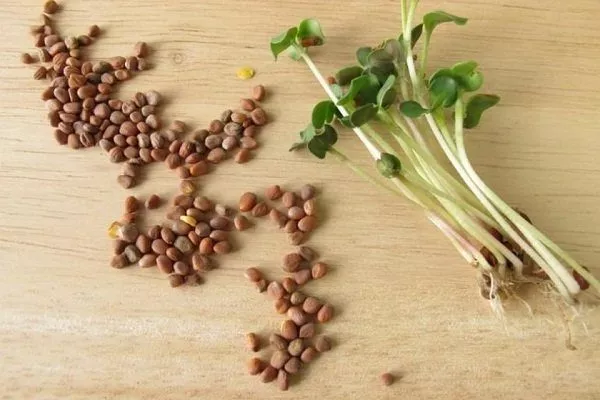
Rules for seed preparation:
- Sort the radish seeds by hand, discarding any damaged ones. For planting, it's best to use seeds with a diameter of 3 mm—these are considered strong.
- Soak the seedlings in warm water to speed up germination. This process should take 10-12 hours.
- To enhance growth, use special stimulants that further increase resistance to diseases and pests. These can be based on silver ions, inorganic salts, molybdenum, and boron.
Natural substances such as wood ash, aloe vera juice, herbs, and honey can be used for the same purpose. Soaking is done for 8 hours. - To disinfect, place the seeds in water at a temperature of +50 degrees or in a weak solution of potassium permanganate.
- Be sure to warm the seeds in the sun before planting.
- Conduct bubbling. This procedure removes the oil coating, which increases seed germination.
What you need to do: fill the container halfway with warm water and add the planting material. Next, lower the air pump tube (for an aquarium) to the very bottom and plug it in. Let it run for at least 10 hours.
Exposing the seeds to air triggers reactions in the water, releasing the oil coating. After this process, dry the grains.
To speed up germination, use this method:
- Place sawdust in a tray or box (layer thickness – 4-5 cm);
- water generously with room temperature water;
- Place the seeds on a damp surface;
- cover with plastic wrap;
- Let it sit for 3 days, then sow it into the ground.
Soil preparation requirements:
- Choose a well-lit area. It's best to plant radishes after turnips, horseradish, lettuce, spinach, and arugula.
- In the fall, dig over the beds, adding mineral and organic fertilizers. These include humus, compost, phosphorus, potassium, and nitrogen. You can use superphosphate (40 g) and potassium chloride (15 g).
- Neutralize the soil by liming it. Apply 0.5 kg of lime per square meter.
- If the soil is too dense, add peat or river sand.
- In spring, level the surface of the soil using tools.
- Form grooves or wells.
Planting technology
Radish Sora is planted in spring or fall, but can also be planted in frozen soil (December-February). Features:
- In the spring The vegetable is planted in prepared beds and watered to a depth of 1.5 cm.
- In the fall Simply cover the planted seeds with compost. Keep in mind that the seeds must be dry. The depth is 2-3 cm.
- In winter Clear the snow, lay the seeds, and cover with compost. Place the seeds to a depth of 5 cm.
Types of technology for planting radish Sora:
- Tape method This method involves planting vegetables in two rows. This means creating two rows, no more than 5 cm apart. Create another strip 15 cm apart, creating two more rows.
- Solid method – planting pattern between rows and seeds 5x5 cm.
It's enough to place one seed per hole, as this variety has a high germination rate. The typical germination time is 5-6 days.
The landing process after preparatory activities:
- Dig holes to the required depth;
- moisten the soil slightly;
- place the seeds;
- cover with a layer of soil;
- compact the soil slightly;
- water it.
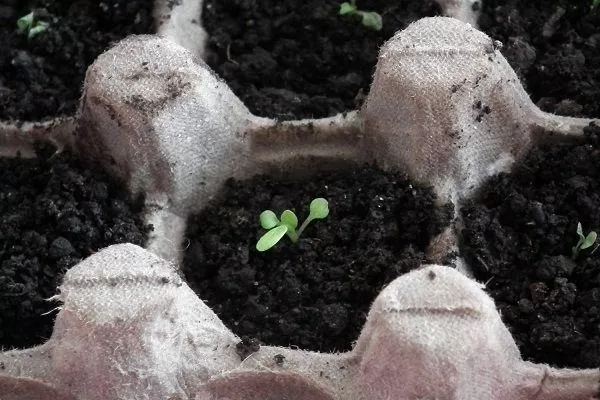
Modern gardeners use egg trays for planting—they're made from natural materials and have pre-cut cells, ensuring even fruit growth without the need for thinning.
In the greenhouse
The Sora hybrid tolerates shade well, making it a great greenhouse crop. Planting and care tips:
- The crop can be planted in early spring, autumn, winter, and harvested until April and January.
- If you want to harvest year-round, experts recommend a break of at least one month. Only then can you use the greenhouse again, thoroughly fertilizing the soil.
- For a greenhouse, the continuous method is considered the optimal planting technology.
- During the seedling growth period (approximately 20 days), the temperature should be between +5 and +10 degrees Celsius. Then, the temperature is increased to +20 degrees Celsius.
- Humidity level: maximum 85%, optimal 70%.
- Be sure to ventilate the vegetables daily, otherwise they will rot.
- Radishes need to be watered moderately - there should be no waterlogged lumps or over-dried rind.
- You can’t plant in the soil where vegetables grew last year – it’s better to change the soil or water it generously. feed me.
- The depth of planting in the greenhouse is 1-1.5 cm.
- This variety thrives on lots of light, so provide additional lighting. However, don't keep it on for more than 16-18 hours, as this will cause bolting.
Into open ground
When planting seeds outdoors, it's important to ensure there are no frosts during the germination period. If temperatures drop, cover the radishes overnight with plastic film, lutrasil, or spunbond.
Peculiarities:
- Avoid overly sunny areas, as direct sunlight has a negative effect on root crops;
- In the first days, cover the crop with non-woven material, which will speed up the germination process;
- It is advisable to mulch, which will help maintain the required level of moisture (use peat, leaves, sawdust);
- Pest larvae remain in garden beds, so disinfect the soil with boiling water.
If you're growing large quantities of radishes, use a special marker for sowing in open ground. It's made of boards with tines driven into them (the height corresponds to the depth at which the seeds will be planted). After leveling the surface of the beds, apply the marker and press down, creating ready-made holes.
Care instructions
The Sora radish variety is completely unpretentious in care, so it is enough to do the following:
- After the first three leaves have formed, thin the radishes. This will need to be done a couple more times, provided the radishes were planted densely (2-3 seeds per hole). The ideal distance for the radishes is 5 cm. This is sufficient for normal root growth and nutrient absorption.
Follow these guidelines: thin out the roots after watering in the evening. To carefully remove the root vegetable from the bed, hold the seedling with one hand and the soil around it with the other. Be sure to firm the soil and moisten the vegetable.
- Weed the plants – pull out weeds by the roots, but do it carefully so as not to damage the radish root system.
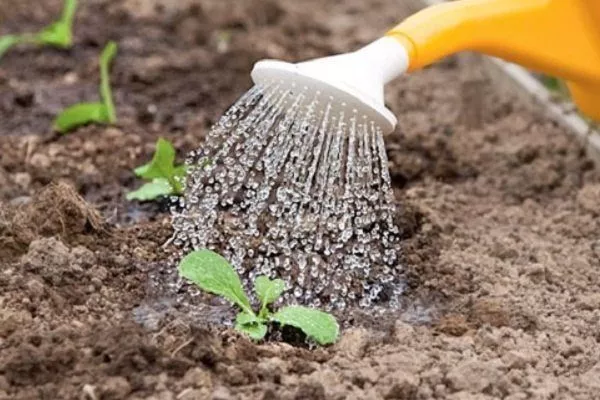
- Heavy watering is required during drought and in summer. Apply small amounts of water frequently.
Fertilizing deserves special attention. It is carried out in several stages:
- During the seedling formation stage, add a mixture of 5 kg of compost, 1 cup of wood ash, 10 g of urea, and 40 g of double superphosphate to the soil. This amount is calculated for 1 square meter.
- During root growth, minerals—nitrogen, phosphate, and potassium—are used. They are scattered over the soil surface, after which the soil is lightly loosened. Fertilizing is done after watering.
- Additional fertilizer is applied as needed when the foliage changes color, wilts, and the fruit does not increase in size. Fertilizer application depends on the underlying cause.
- The first feeding should be carried out 7 days after germination, using a urea solution (10 g per 10 l of water).
- The second feeding should be carried out at the beginning of the formation of root crops, using potassium-phosphorus fertilizers (20 g of superphosphate and 10 g of potassium salt per 10 liters of water).
Diseases and pests
Radish Sora is not considered vulnerable to diseases and pests, as it has a strong immune system, but can sometimes be affected by the following insects and diseases:
- White butterfly and cruciferous flea beetle. For control and prevention, use a solution with wood ash (2 cups per bucket of water, add a bar of brown laundry soap) or a tobacco mixture (prepared like an ash mixture). You can also make a tomato infusion: pour the tomato tops into a container and add water and vinegar (30 ml per 10 liters). Store-bought products include Sherpa, Decis, and Molniya. Mothballs, sprinkled around the perimeter, are also effective at controlling pests.
- Kila – a dangerous cabbage disease. To prevent its development, seeds are disinfected and the soil is treated with limestone (400 g of lime per bucket of water). Wood ash is added to the holes before planting.
- Blackleg. If affected, remove the affected vegetables and treat the soil with an antiseptic (manganese solution). The disease is characterized by rot, so avoid overwatering the soil. Before planting, water the beds with a solution of water (10 l) and colloidal sulfur (40 g).
- Vascular bacteriosis It is prevented by disinfecting the planting material and treated with Fitolavin, Binoram, Trichodermin, and Planriz.
Possible problems
Beginner gardeners always face various challenges, and experienced farmers recommend paying attention to the most common factors:
- Poor yield is due to overcrowding of seedlings and insufficient light.
- Small root crops. Causes include irregular watering, planting seeds too deep, and mineral deficiencies.
- Cracking of radishes is a result of drying out due to insufficient watering.
- Bolting occurs due to excess nitrogen, overcrowding, improper watering, and excessive heat.
Harvesting and storage
Radish Sora is quite transportable and has a long shelf life, but to achieve this, you must follow the harvesting and storage rules:
- over-ripening should not be allowed, so harvesting begins 20 days after the sprouts appear;
- pull out the radishes carefully, digging slightly with a shovel;
- for storage at home, the tops are cut off, after which the vegetable is sent to the refrigerator;
- For long-term transportation, the crop is placed in wooden boxes (ventilated) and placed in a cool room (basement).
A video about Sora radish
In this video, an experienced gardener shares useful information about growing and cultivating the Sora radish variety:
Reviews from gardeners
The Sora radish is a favorite among many gardeners – it has a beautiful appearance, requires no specific growing conditions or care, and boasts excellent flavor and texture. If you follow these simple guidelines, you'll get a bountiful harvest in a short time.