
To get an early radish harvest, sow the crop in the fall. Winter radishes ripen significantly faster than their spring-planted counterparts. However, to ensure a good harvest, you need to choose the right variety, sow at the right time, and maintain the crop regularly.
Benefits of autumn radishes
Planting radishes in the fall carries no risks—September offers ideal weather for the growth and development of this cold-resistant crop.
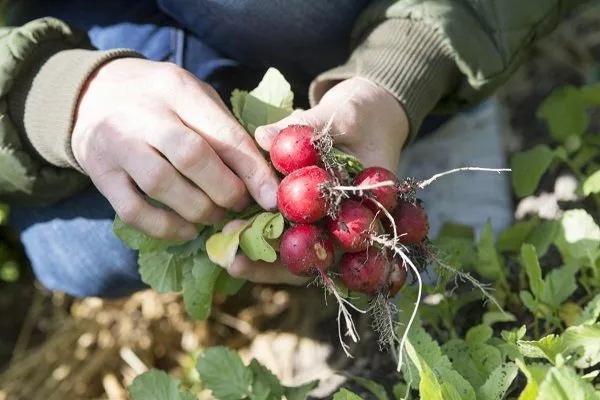
Advantages of winter radish:
- There's no need to rush September radishes—they keep well in the garden. You don't have to rush harvesting until the first frost.
- Even if the gardener is late with harvesting, radishes will easily survive the cold, as they are a cold-resistant crop and can withstand frosts down to -2 °C.
- Autumn radishes are less susceptible to flea beetles and carrot fly, as their activity declines during the growing season. These pests don't tolerate autumn coolness well, so the radish yield will be higher than in spring.
Autumn varieties
| Name | Ripening period (days) | Root length (cm) | Yield (kg/m2) | Shelf life (months) |
|---|---|---|---|---|
| Red Giant | 50-55 | 12-14 | 3-3.5 | 4 |
| Autumn Giant | 28-30 | 14-16 | 3.5-4 | 3 |
| Saxa | 35 | 4 | 1.5 | 2 |
| Zenith | 40 | 15 | 3 | 3 |
| Dungan | 50-55 | 10-12 | 3.5 | 3 |
Varieties with specific agronomic characteristics are used for autumn harvesting. Ripening time is important—it should not exceed two months; size—large-fruited varieties are primarily sown; and shelf life—autumn radish roots store well in a cellar.
The best varieties of autumn radishes:
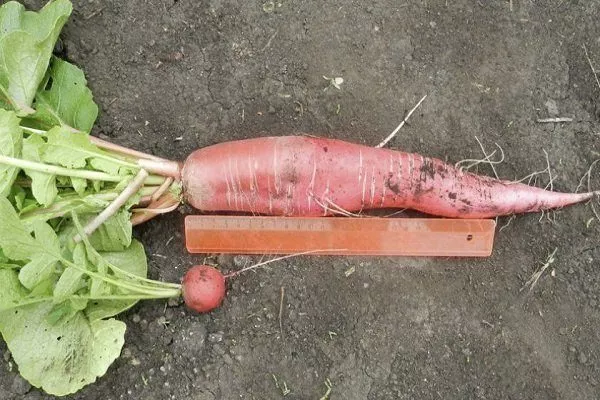
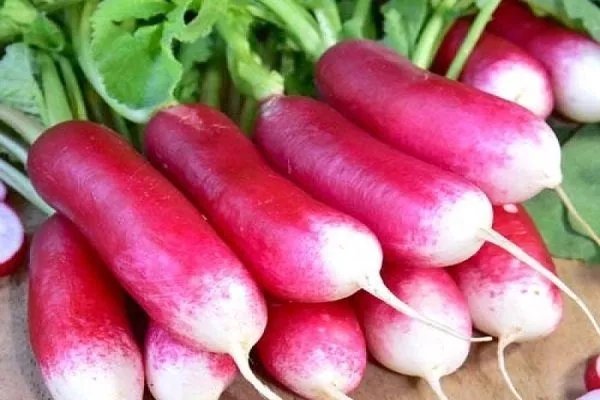
- Red giant. Ripens in 50-55 days. Long roots grow up to 12-14 cm. 3-3.5 kg of roots are harvested per square meter. Excellent flavor and can be stored for up to 4 months.

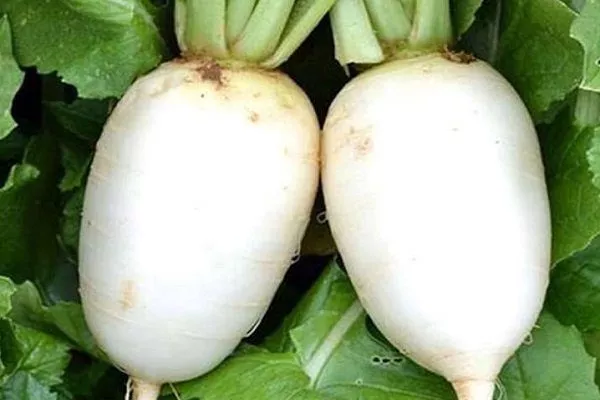
- Autumn giant. An ultra-early variety, it ripens in 28-30 days. Roots weigh 140-150 g. They are white in color and elliptical in shape. They have a shelf life of 3 months.
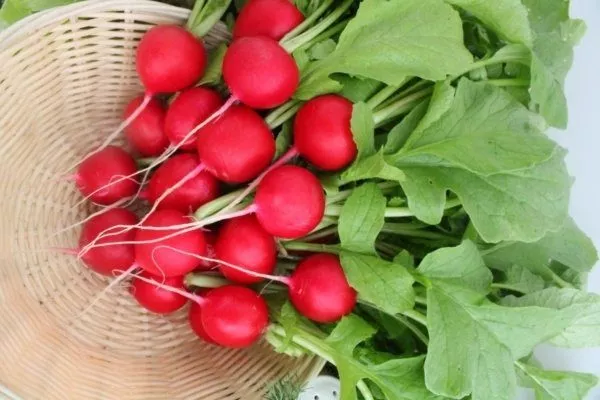
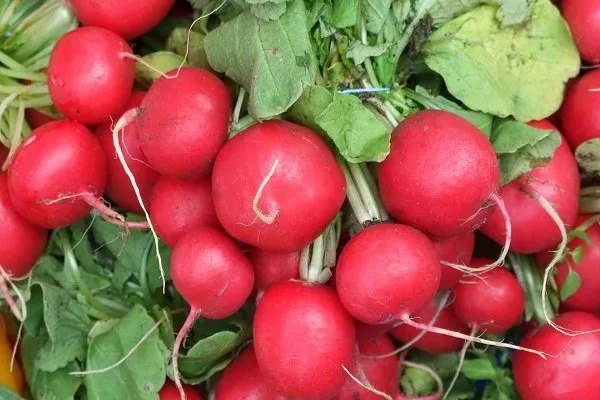
- Sachs. The growing period to harvest is 35 days. The roots are oval, bright red, up to 4 cm in diameter, weighing up to 30 g. Yield is 1.5 kg per 1 sq. m.
- Zenith. Ripens in 40 days. Color: pink-crimson, cylindrical shape: 15 cm long, 3 cm in diameter. Weight: 70-80 g. Up to 3 kg can be harvested per square meter. The roots are slightly raised above the soil.
- Dungan. The harvest period is 50-55 days. Weight is 35-45 g. 3.5 kg of root vegetables are harvested per square meter.
- ✓ Resistance to low temperatures at night.
- ✓ Ability to be stored for a long time without loss of taste.
Optimal planting times
Autumn radishes with large fruits, belonging to the mid-season and late-season groups, are recommended to be sown in late July or early August. The roots will then be ready by September; the exact ripening time depends on the variety, weather, and growing conditions.
If you sow radishes during the specified period, they will grow not only tasty and well-shaped, but also have a good shelf life. However, if you don't plan to store the roots and will be eating them gradually—straight from the garden—you can delay sowing until later—planting them in late August.
Growing conditions
Radishes aren't particularly demanding or demanding crops, but if you're hoping for a large, high-quality harvest, you'll need to create favorable conditions. Soil quality, previous crops, and planting technique are all important.
Predecessors
Over the spring and summer, a variety of vegetables have already grown in the garden, leaving virtually no unused beds. Therefore, radishes in the fall must be sown after the recently harvested predecessors.
Radishes grow well after:
- garlic;
- cucumbers;
- early potatoes;
- peas and beans;
- tomatoes.
In principle, radishes can be sown after a wide variety of crops, but there are vegetables that negatively impact their growth and development. These include cruciferous crops, which are susceptible to the same diseases as radishes, which they easily contract through the soil.
Radishes should not be sown after:
- radishes;
- daikon;
- cabbage;
- horseradish;
- watercress and other cruciferous vegetables.
Soil preparation
In summer, there's little time to think—the soil needs to be prepared as early as possible to plant radishes on time. After all, at least a few weeks need to pass between harvesting the previous crops and applying fertilizer.
How to cultivate a plot for autumn radishes:
- Thoroughly clear the beds of the previous crop and all plant debris.
- Dig over the soil, removing weed roots as you go.
- Add fertilizer before digging: 25-40 g each of superphosphate and ammonium nitrate, and the same amount of potassium sulfate. This is the recommended dosage for 1 square meter of beds. Experienced gardeners recommend dissolving the granules in water beforehand and applying the fertilizer as a solution, following the recommended dosage.
- If your soil is poor, fertilize it with organic matter—humus or compost. Apply 10 liters of fertilizer per square meter.
- After applying all the fertilizer, thoroughly loosen the soil with a rake. The recommended loosening depth is 20 cm. The longer the root vegetables, the thicker the loosening layer should be.
- Water the prepared soil using a rain nozzle.
Planting radishes in September
Summer sowing differs from spring sowing in the frequency of seed distribution—they are sown less frequently. Each time, the size of the root crops is taken into account, as they can vary significantly.
Approximate seeding rates:
- For large-fruited varieties, we recommend sowing 8-10 rows per strip. The distance between strips is 40-45 cm, and between rows, 12-14 cm. Seeds are sown at intervals of 6-7 cm.
- Approximately 1 g of seeds is sown per square meter. Or a little more—by 10-15%. There are approximately 120 radish seeds in 1 g.
How to sow radishes for autumn:
- Soak the seeds overnight.
- Make grooves according to the above diagram.
- Firm the bottom of the grooves with your fingers and water them. It's best to spray them with a spray bottle.
- Place the seeds, leaving a distance of 5-7 cm between them (this depends on the variety).
- Sprinkle the seeds with loose soil.
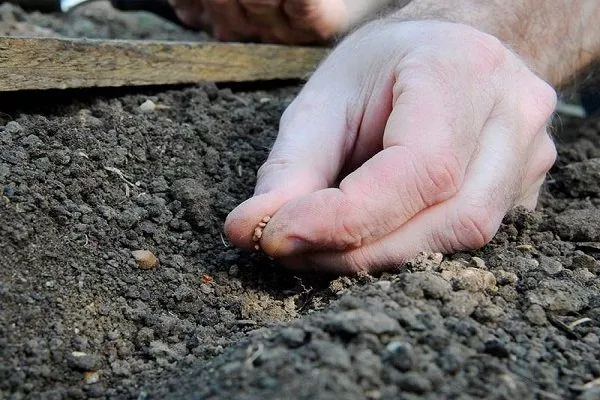
The depth of seed placement depends on the soil structure:
- on dense soils - 1.5 cm;
- on loose and sandy soils - 2.5-3 cm.
If you plant the seeds too deep, the seedlings will take a long time to emerge. If you plant them too shallow, the roots will tend to grow deeper, which will ultimately lead to their deformation.
For large-scale sowings, it is recommended to calibrate the seeds. To speed up and facilitate calibration, use special sieves that separate seeds of different sizes—2.5 mm, 3 mm, and less than 2 mm.
Caring for radishes
Caring for autumn radishes involves a standard set of agricultural practices: the beds are periodically loosened (between rows), watered, fertilized, and, if necessary, thinned and protected from pests.
How to thin radishes
When growing September radishes, it is essential to thin out the seedlings—unless the sowing was done using special seeders that distribute the seeds evenly.
Benefits of thinning:
- the area is better illuminated - the crop grows more intensively, the root crops grow juicier and larger;
- The feeding area per plant increases, which has a positive effect on the size of root crops and increases yield.
Rules for thinning autumn radishes:
- The first thinning of the seedlings occurs 7 days after germination, or a couple of days earlier. Don't rush thinning—the goal is to ensure uniform, high-quality seedlings emerge.
- Before removing excess plants, water the soil, preferably using a spray bottle, moistening the soil to a depth of 2-3 cm.
- Excess seedlings are carefully pulled out of the soil so as not to damage the specimens that will grow in the beds.
- The intervals between adjacent plants depend on the variety (size of the root crops), usually the distance is 4-5 cm.
- Two to three days after thinning, gardeners pull up the radishes with the largest roots—they're ready for edible use. After the second thinning, space the plants 8-10 cm apart.
Fertilizing and watering
Radishes especially need water during the root formation stage. Proper watering determines the development of radishes and the quantity and quality of the harvest.
How to water radishes:
- watering method: watering can or hose with rain nozzle, it is important not to break the leaves or press them to the ground;
- in the first days of planting, water daily using a spray bottle;
- watering frequency: once every 3 days, in hot weather - once every 2 days;
- on sandy and light soils, radishes can be watered daily;
- the best time for watering is evening;
- water norm: 7-14 liters per 1 sq. m.
To ensure radishes grow vigorously, are healthy, strong, and produce large roots, they need to be fertilized during the growing season, depending on the variety. If the soil is fertile, fertilizers may not be necessary; otherwise, organic matter is recommended.
How to fertilize radish beds:
- Dilute the slurry with water 1:10. Add 20 g of superphosphate and 15 g of potassium sulfate to a bucket of the solution (potassium chloride and potassium salt are not suitable). 10 liters of the mixture is enough to feed 2-3 square meters.
- If the radishes aren't growing well, give them another fertilizing with ammonium nitrate. Dilute 1 g of fertilizer in 10 liters of water and water the beds. The recommended rate is 10 liters of solution per 1 square meter.
Caution should be exercised when applying nitrogen fertilizers. They not only stimulate foliar growth but also encourage the formation of hollow roots. These roots are unpalatable, spoil quickly, and rot. Furthermore, nitrates accumulate in the fruits and are harmful to human health.
Pest and disease control
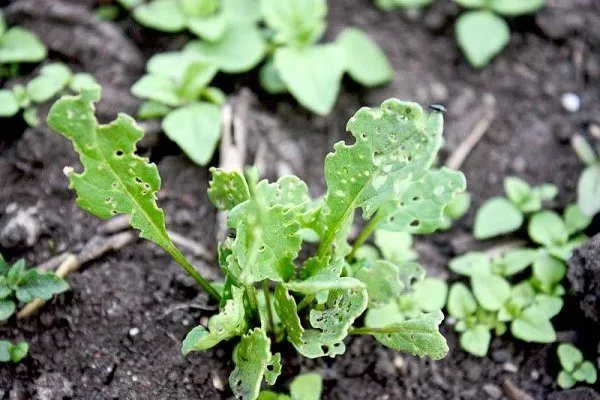
One of the most common radish pests — the cruciferous flea beetle. Although its activity decreases at the end of summer, it can still cause considerable damage. Under favorable conditions, other pests may also become active.
What and who harms radishes:
- Cruciferous flea beetle. These are small beetles, 2-3 mm long. They can destroy radish seedlings in a matter of days. An insecticide like Aktara can be used, but gardeners usually manage without chemicals. Spraying mustard powder or ground hot pepper—1 teaspoon per square meter—helps repel fleas.
After scattering a repellent substance over the beds, they are covered with film or other covering material to create a greenhouse effect with toxic substances that have a detrimental effect on fleas. - Cabbage fly. The damage is caused by larvae—tiny white worms that eat away the inside of the root. Spraying tobacco dust at a rate of 5 g per square meter helps combat the pest. This insect is believed to be wary of celery, so it is recommended to plant it near radish beds.
In exceptional cases, insecticides are used - Actellic, Aktara, Mukhoed, Medvetoks or their analogues (according to the instructions). - Kila. This is a fungal disease that causes growths and swellings on root crops. It is triggered by increased soil acidity. It can be deacidified with chalk, lime, or dolomite flour, applying 200, 300, and 350 g of each per square meter, respectively.
Wood ash is also useful for reducing soil acidity; sprinkle it onto the soil to a depth of 1 mm. In severe cases, fungicides such as Fitosporin-M, Fundazol, Topaz, Trichodermin, or their equivalents can be used.
Common mistakes
If you're sowing radishes for the first time in the summer to harvest them in September, there's a risk of growing errors. Improper planting or care, or choosing the wrong variety—all of these can lead to a drop in yield and root crop quality.
Mistakes when growing September radishes:
- The scorching sun. Autumn radishes must be sown in the summer, when hot and sunny days prevail. The crop, especially in the early stages of growth, does not tolerate UV rays well, and the plants may scorch or wilt. To prevent this, shade the plants during periods of increased sun exposure.
- Solid ground. If the soil hardens after watering, seedling germination is hindered. As they struggle through the hardened soil, they become deformed and damaged, and germinate much later than in looser soil. Mulching with fine sawdust or river sand can prevent crust formation.
- Bitter or dry radish. During the summer, when the fall radish harvest is growing, the heat is often intense. The soil dries out and the roots become bitter. To prevent this, it's important to water the beds daily.
Sowing radishes in summer allows you to harvest this traditional spring crop in September. The roots harvested in early autumn can not only be used in your favorite salads but also stored for a long time—if you choose the right varieties.