
The Celeste radish was developed by the Dutch corporation EnzaZaden, which has been in business since 1938 and specializes in cross-breeding various vegetable varieties and seed production. This variety is cultivated in many countries due to its ease of cultivation and its high vitamin and mineral content.
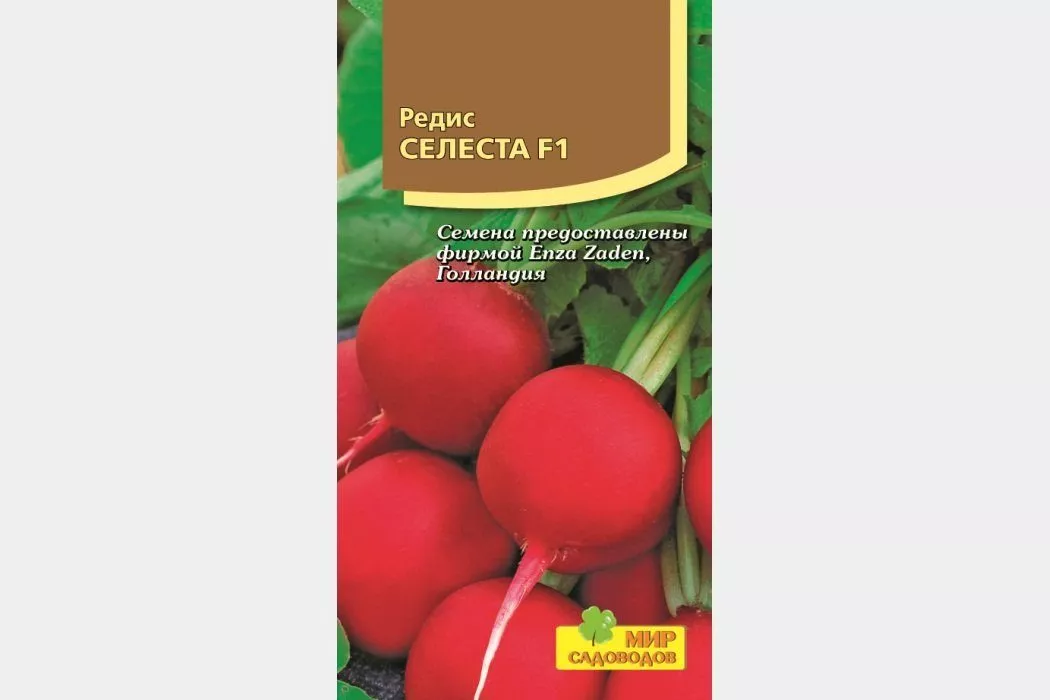
Radishes Celeste
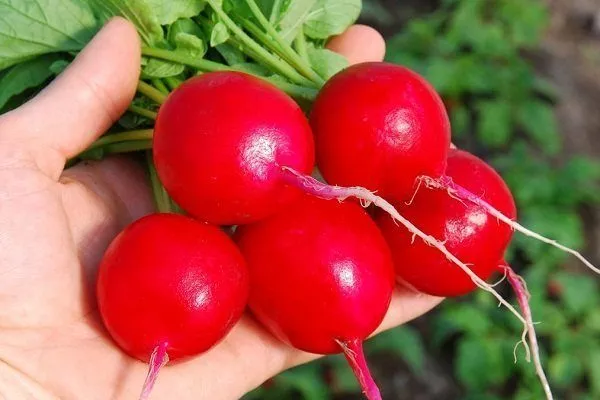
Celeste radish has a mildly spicy taste.
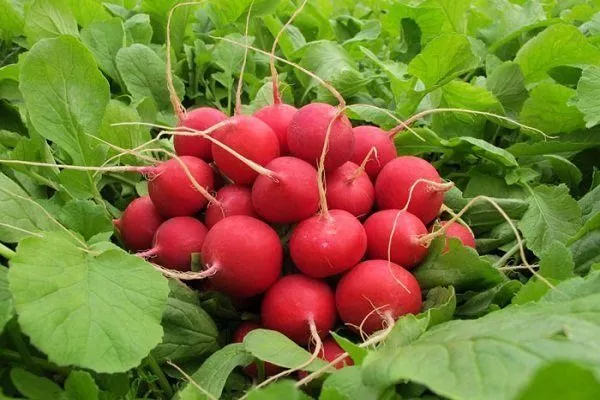
Celeste radish tops are tasty and healthy
Description
Celeste is an early-ripening, highly flexible hybrid. It's a favorite among both gardeners and farmers.
Appearance and taste
Celeste has the following external characteristics:
- shape - correct round;
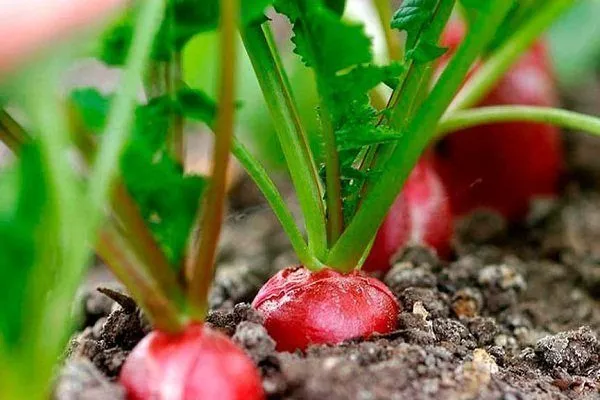
- the color of the fruit is rich pink-scarlet, the surface is smooth;
- tops - low-growing;
- leaves are bright green, not tall;
- the size of the root crops when fully ripe is 4-5 cm in diameter;
- the weight of an average fruit is 25-35 g;
- the pulp is dense, white, tender;
- taste – pleasant, with a hint of bitterness, slightly spicy.
Pros and cons
The variety has a number of advantages, which makes it quite popular:
- grows both in open ground and in greenhouses;
- fruit ripening occurs simultaneously;
- high level of fruit germination;
- able to quickly adapt to changing conditions;
- does not form arrows or flower stalks;
- good taste;
- decent appearance;
- does not require long daylight hours;
- has a short growing season – the harvest can be collected after 3 weeks;
- can be stored for a long time and remain in good condition;
- tolerates transportation well;
- not susceptible to downy mildew.
Cons the variety has much less:
- radish does not develop well if the soil is heavy, saline and acidic;
- needs frequent watering, but does not like over-watering;
- demanding of soil fertility;
- development depends heavily on what the land was previously planted with.
Areas of application
This variety is recommended for fresh consumption – it is added to salads, appetizers and cold soups, and the tender tops are used as greens, as their taste is not bitter.
Celeste is often chosen for the preparation of medicinal compositions in folk medicine and homemade cosmetics.
Planting the Celeste variety
Despite its unpretentiousness, there are a number of requirements and features for growing Celeste.
Selecting and preparing a site
Radishes thrive in natural light, so choose a well-lit location. Remember crop rotation rules (more details below), and avoid planting radishes in the same spot for several years in a row, as the soil needs time to recover and rest.
- ✓ Soil pH level should be strictly between 6.0-6.5 for optimal growth.
- ✓ The soil should be sandy loam, with good drainage to avoid water stagnation.
The soil for planting should be loose, non-acidic, with a pH of 6, preferably sandy loam. Carefully check the soil composition – if it's poor or heavy, add river sand to loosen it. If the acidity is too high, apply lime.
After you have completed these preparatory steps, dig up the entire area, add mineral fertilizers if necessary, and finally, level the planting site and leave it for a while to allow the soil to warm up.
Crop rotation rules
To ensure a bountiful harvest and avoid nutrient deficiencies, follow crop rotation guidelines. Avoid planting radishes in areas previously occupied by the following cruciferous crops:
- mustard;
- cabbage;
- swede;
- rape.
Celeste won't thrive after such predecessors. Soil previously used for tomatoes, cucumbers, and sweet peppers is suitable for planting.
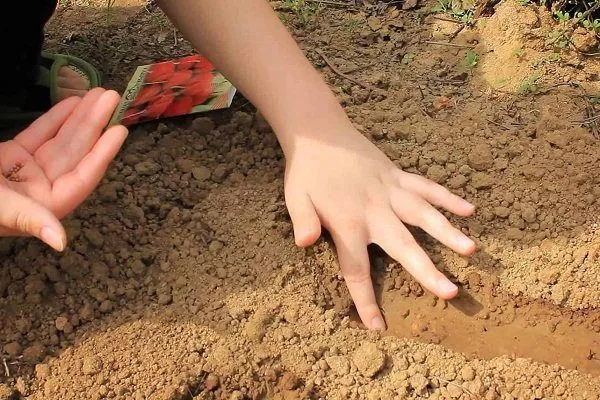
Preparation of seed material
If you buy ready-to-seed seeds in their original packaging, you can simply sow them in the soil. If the seeds are untreated, they are prepared and disinfected. The most popular method is soaking them in hot water or potassium permanganate. The procedure is as follows:
- Place the seeds in a gauze bag and place them in a container with hot water for 15-20 minutes or soak the seeds in a pink solution of potassium permanganate also for 15-20 minutes;
- Dry the seeds and sow.
To speed up seed growth, soak them in a damp cloth in a warm place for a day or two. Soaking in stimulant solutions is also recommended for successful germination (follow the instructions on the product).
Deadlines
If you use a greenhouse or hothouse for growing, planting can be done year-round, but the most suitable period for this is March-April.
Celeste seeds germinate at soil temperatures around 5°C (41°F). The tops can withstand short-term frosts down to -3°C (-3°F) to -5°C (-3°F), but it's best to allow the radish to develop at favorable temperatures—at least 15°C (59°F).
Root crops ripen in 25-35 days, but this timeframe may vary depending on planting time and growing conditions. Seeds sown in early February ripen in about a month and a half, in March – in a month, and if planted in April, the ripening period is 21-25 days.
If radishes are grown for winter or fall consumption, keep in mind that from September to January, the roots grow less quickly than in the spring—the ripening period can take up to two months. Planting should be done every 14 days.
Schemes
Radishes are sown according to the following scheme:
- in the prepared area, form furrows up to 2 cm deep, the distance between them should be at least 15 cm;
- moisten the holes with warm water;
- take the seed material, place it in furrows at a distance of 4 cm from each other;
- Cover the holes with soil without compacting it.
If the soil is heavy, plant the seeds at a minimum depth—no more than 1 cm. After planting, it's advisable to cover the area with plastic film or agrofibre. Remove the cover only when watering the area, and remove it completely a few days after the seedlings have formed.
Caring for the variety
To get the maximum harvest, special garden bed care is required. Let's look at the necessary steps.
Watering
When watering radishes, make sure the water doesn't stagnate, otherwise the roots will rot. Shallow irrigation can be harmful to the crop, as it causes a soil crust to form and encourages weed growth.
Irrigating in 2-3 passes allows water to penetrate deep into the soil. A watering can with a fine mesh screen can be used for this. The optimal method of watering is foliar sprinkling. Use warm, settled water.
Top dressing
To feed radishes, fertilize the soil thoroughly with mineral and organic fertilizers. This should be done both before planting and as the radishes grow:
- At the planting stage Apply 10 g of urea, 40 g of double superphosphate, 1 cup of wood ash, and 5 kg of compost or humus per 1 square meter. Dig the bed to a depth of about 20 cm, mix in the fertilizer, and rake the soil.
- At the growth stage Add phosphorus-potassium fertilizers and sulfur (dissolve 20 g of potassium sulfide, superphosphate, and 1 cup of ash in 10 liters of warm water). Radish may also need nitrogen fertilizer (if the leaves are too pale) – add 1 teaspoon of urea to 10 liters of water.
- Before planting, add compost or humus at a rate of 5 kg per 1 sq.m.
- Two weeks after germination, feed the plants with phosphorus-potassium fertilizers.
- At the first signs of pale leaves, add nitrogen fertilizer.
Soil care
In the first few weeks after planting, loosen the soil around the seedlings. Do this carefully, working to a depth of 2-3 cm, gradually working up to a depth of 5-6 cm to ensure better air and nutrient penetration to the roots.
Try to carry out a similar procedure after every watering or rain.
Features of cultivation
Let's consider the features of growing the Celeste variety in open ground and in a greenhouse.
In open ground
Radishes are an easy-to-grow and cold-hardy crop, but despite this, there are some specifics to consider when growing them outdoors. Two factors influence yield: humidity and temperature. If these factors are met, you'll be able to reap a bountiful harvest.
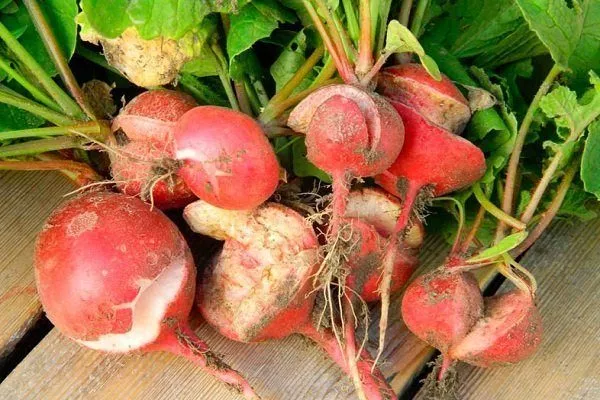
If the soil dries out, it will negatively impact the quality of the root vegetables, slowing their growth. If the soil is too wet, the radishes may crack. As for temperature, 15-18 degrees Celsius is optimal – the roots will grow to a normal size and with the appropriate flavor.
In the greenhouse
Planting radishes in a greenhouse It is necessary in the same way as in open ground - the preparation of soil and seeds occurs according to the same scheme, however, there are several nuances:
- There is not enough natural light in greenhouses, so lamps are installed and radishes are provided with a 12-hour daylight period;
- In greenhouses, the temperature can be regulated, so radishes can be planted at any time of the year;
- Make sure that the temperature is between +18-20 degrees, as the variety does not like hot weather;
- The greenhouse must be ventilated at least twice a day, since fresh air is of great importance for the crop;
- Radishes are planted in a greenhouse in regular greenhouse soil – high-quality, fertilized, with low acidity.
Pests and diseases
Celeste can resist many diseases and pests on its own, but sometimes it's overwhelmed by such problems. This radish variety is most often attacked by two types of pests:
| Pest | Symptoms | Struggle |
| Cruciferous flea beetle. | These are small black beetles that can turn radish leaves into a sieve in a very short time. Female flea beetles lay eggs on the leaves, and the hatched larvae feed on the plant's roots. | Mix wood ash and tobacco dust in a 1:1 ratio and spray the plant weekly from the time the leaves appear. You can also use an ash infusion (250 g per 8 liters of water). |
| Aphid. | A small insect with greenish-yellow and blackish-brown colors. It feeds on plant sap, attacking it in colonies. Affected areas become discolored and appear as small beige dots. Leaves become deformed, turn yellow, and dry out. | Radishes are sprayed with a foaming solution of laundry soap, green potassium soap, or tar soap, and then rinsed with clean water after half an hour. In case of widespread infestation, general-purpose insecticides such as Tanrek, Admiral, and others can be used (see instructions on the packaging). |
And the diseases are the following:
| Disease | Symptoms | Struggle |
| Kila. | Radishes can contract this disease if they grow in low-lying areas where water accumulates, or if they were planted in acidic soil. The roots become covered with round or elongated growths, and growth stops. The roots turn brown and rot. | Treat the bed with lime milk (2 tablespoons of lime diluted in 10 liters of water). To prevent disease, sprinkle ash into the soil at a rate of 100 g per square meter three days before sowing and loosen it. |
| Mosaic. | A viral disease that causes stunted growth, mosaicism, leaf deformation and mild vein necrosis in radishes. | Modern treatments are ineffective against mosaic. The only way to get rid of it is to collect all the affected plants and burn them. |
| Downy mildew. | Dark spots with fuzzy, indistinct edges appear at the base of the leaf rosette and on the parts of the leaf that are buried in the ground. Over time, the spots merge and cover the entire root, causing it to crack and harden. | To prevent the disease during the growing season, spray the radish twice with boric acid diluted in water (10-15 g per 10 l) or Rizoplan. |
| Gray rot. | It develops due to high humidity. Brown spots appear on the roots, which are covered with a fluffy coating containing small black specks. The tissues soften and rot, and the leaves lose their tone. | Radishes can be sprayed with a solution of mustard powder or iodine (50 g or 10 drops per 10 liters of water). |
Preventive measures against diseases and pests are as follows:
- Agrotechnical:
- thinning and weed removal, preventing overgrowing of beds;
- observe the watering regime;
- Before sowing the crop, lime the bed;
- do not leave straw, weeds and manure near the beds;
- Conduct regular inspections of radishes.
- Folk:
- periodically sprinkle the bed with wood ash or tobacco dust;
- Dissolve a bar of laundry soap in a bucket of water and spray the plant once a week.
Possible problems
When growing Celeste, the following problems are encountered:
- The root vegetables are small, coarse, and fibrous. This is due to late sowing, when temperatures have risen above 22 degrees Celsius. This impedes the radishes' growth. Insufficient moisture during the first two weeks of root growth may also be a contributing factor.
- The radish turned out bitter because agricultural technology rules were not followed (there was no watering, the soil was not fertilized).
- Celeste has started bolting. This means the temperature was off when growth began—either below 10 degrees Celsius or above 25 degrees Celsius. Another possible cause is that the seeds were sown too densely.
- The root vegetables are hard and dense – a crust has formed on the bed after rain or irregular watering.
How to harvest and store crops?
The Celeste radish yield ranges from 1.5 to 2 kg per square meter. If all conditions are met, harvesting begins 24 days after sowing. For a higher-quality and more attractive harvest, the harvesting period can be extended to 30 days. After this period, each Celeste radish will weigh up to 30 g.
This variety tolerates long-distance transportation well, and its appearance remains unchanged after 3-4 days. It's best to transport the radishes with their tops on to preserve their freshness for longer.
Radish Celeste (video story)
Below is a video in which experienced gardeners describe the Celeste variety and share their growing secrets:
Reviews from gardeners
By providing the Celeste variety with proper care, you can reap a bountiful harvest of delicious, vibrant root vegetables—succulent radishes make a wonderful addition to summer soups and vitamin-rich salads, which are so beneficial for the body.