
Radishes are very popular among gardeners due to their exceptionally early maturity and early ripening, as fresh vegetables are especially valuable after a long winter. To grow a good radish harvest, certain planting and care guidelines should be followed.
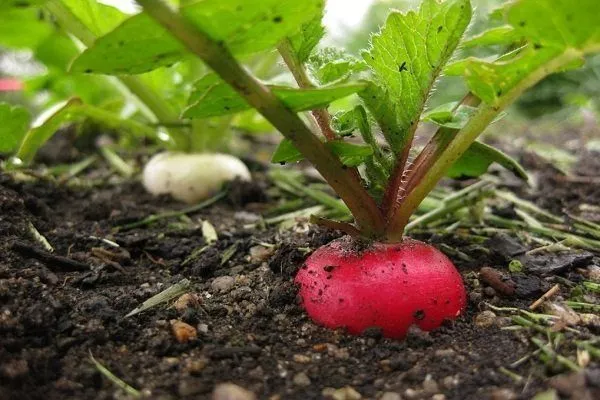
Timing of planting radishes
Depending on radish varieties It can be early-ripening, mid-season, late-ripening, pre-winter, or winter. The best time to plant the crop depends on the ripening period:
- Early ripening varieties Planting is done as soon as the soil warms up to 4-5 cm below zero, reaching +2°C. This usually occurs in April, or in southern regions, in late March. Air temperatures can range from +15°C to +18°C.
Early-ripening varieties mature quickly, usually within 20 days. To ensure a constant supply of fresh radishes, each subsequent batch should be planted immediately after the first leaves emerge from the previous one. - Mid-season varieties They are planted in early June and require a special approach, because with long daylight hours the crop quickly switches to reproduction mode.
- Late varieties They are planted in August or September, depending on the local climate. The shorter daylight hours favor the radish harvest.
- Radish for winter They are planted so that the crop begins to germinate with the first warm weather. To achieve this, the seeds are sown in November before frost, when there's no guarantee there will be a warm spell and the radishes won't sprout at an inopportune time. This harvest appears earlier than all spring varieties and produces large, juicy fruits.
- Winter sowing Planting in frozen soil allows for a harvest two weeks earlier than in spring. Seeds are planted in December or February.
Soil requirements and preparation before planting
The plot for growing radishes should have loose, light soil. Loamy soil is ideal. Radishes also grow in sandy soil, but require frequent watering.
- ✓ The optimal soil loosening depth before planting should be at least 20 cm to ensure good drainage and aeration.
- ✓ The soil moisture level should be maintained at 80%, but without stagnant water to avoid rotting of the root system.
Radishes grow best in soil with a pH of up to 7.0. To determine the acidity, take a handful of soil and pour a spoonful of baking soda onto it: if bubbles and a soft hissing sound appear, the soil is sufficiently alkaline. If not, but deep-rooted weeds grow well, the acidity is high. If this is the case, the area needs to be cultivated, but lime and manure should not be applied simultaneously.
Ground limestone is better for clay soil, and dolomite flour is better for sandy soil.
Root vegetables grow best in raised beds, so it's best to prepare a spot more than 20 cm high in the fall. Before planting, dig the bed, break up any clods of soil, and add well-rotted fertilizer—never fresh. Experienced gardeners prepare the bed in the fall, then before planting, simply loosen the soil to a depth of 5 cm and water it thoroughly.
Depending on the sowing time, the light requirements for the plot change. In spring and fall, it's important to ensure the sun illuminates the bed at least during the first half of the day. In June, on the contrary, you need to ensure the radishes are shaded for half the day. It's important to locate the bed in a location protected from the wind.
It's convenient to use a bed for radishes where tomatoes will later be planted: you can get a good harvest of root vegetables and prepare the area for the next crop.
In the fall, radishes are planted after harvested crops. The root vegetables grow well in beds previously occupied by cucumbers, tomatoes, beans, or potatoes. However, it's best not to plant radishes after cabbage, horseradish, radishes, turnips, and watercress.
Since the crops that grew before the radishes have absorbed most of the soil's nutrients, it needs to be enriched before planting the root crop. For every square meter of bed, you'll need 3 kg of rotted compost, 20-30 g each of potassium sulfide and superphosphate, a teaspoon of urea, and half a cup of ash. Mix everything together, dig the bed, and level it again.
The bed for winter sowing should be sandy or sandy loam. It should be located with a south- or southeast-facing slope. It's important to prevent the area from being flooded by meltwater.
Preparing seeds for sowing
When purchasing radish seeds, carefully read the variety description: what type of sowing it's intended for and how quickly it ripens. To ensure uniform, even germination, sift the seeds through a 2mm sieve before planting, reserving the largest ones. Then, sort the seeds, removing any old or damaged ones. This work is best done well in advance, for example, in winter.
The next step is to check the viability of the seeds. Place them in a jar and cover with water. Some will float, indicating they are unsuitable and should be discarded.
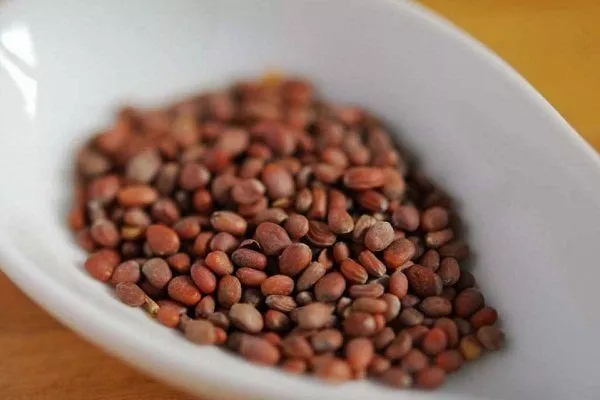
Before sowing, soak the seeds in water or a damp cloth for 24 hours; this may cause them to swell slightly. Then, disinfect them with a bright solution of potassium permanganate—this will prevent many diseases. At this stage, you can further enrich the seeds with beneficial micronutrients using growth stimulants. After these treatments, dry the seeds.
If the seeds are the same color as the soil, you can sprinkle them with chalk - this will help distribute them evenly in the furrow when sowing.
You can prepare seedlings to ensure an earlier harvest and a more healthy crop. To germinate radish seeds, follow these steps:
- Place damp gauze in a container.
- Spread the seeds evenly on the cloth.
- Cover the top with gauze and pour water over it.
- Wrap the container with seeds in a plastic bag - it will keep the moisture from evaporating.
- Place the bag with the container in a warm place.
- Periodically open the bag to let in air.
- Rinse and stir the seeds once a day.
Once white shoots have appeared on the seeds, the seedlings can be sown.
All these recommendations are suitable for spring sowing of radish seeds. For winter sowing, avoid soaking and germinating the seeds, otherwise they will germinate too quickly and be killed by frost.
Radish planting technology
Once the soil and seeds are prepared, you can begin sowing. Make furrows 1-2 cm deep in the bed and water them generously with warm water. The remaining details of the process may vary slightly depending on the sowing season.
Spring planting
In spring, make the furrows at least 10 cm apart, preferably 15 cm. The distance between seeds should be at least 5 cm. Another option is to sow densely and then thin out the seeds, but this isn't ideal: the plant's root system doesn't like interference. Thinning can damage the root system, preventing the root from forming, and causing the plant to go into reproductive mode.
You can simplify sowing by attaching the seeds with paste to a paper tape at the desired distance from each other and placing this tape in the furrow.
Cover the seeds with loose soil and lightly compact them—this improves soil contact and promotes rapid germination. There's no need to water the soil, but you'll need to sprinkle it with peat moss or humus.
To protect the crop from the cold, cover the bed with plastic from 5:00 PM until morning. Under favorable weather conditions, the first leaves will appear in 3-4 days.
There's a method for planting radish seeds using egg cartons. Cut off the bottoms of the egg cartons and press the cartons firmly into the soil. Place one seed in each hole, cover with soil, compact, and then water. This ensures each plant develops beautiful roots, eliminates the need for thinning, and reduces weeds.
Summer planting
Radishes are rarely planted in summer. To save space and provide the necessary shade, radishes are planted among other crops, such as tomatoes or young strawberries. The distance between seeds should be increased to 10 cm.
If you have a separate bed for radishes, cover it with opaque material from 6:00 PM until morning, artificially shortening the daylight hours. Failure to do so will prevent the roots from forming and will cause bolting.
For summer sowing, it is better to choose hybrid varieties with weak bolting: White Nights, Champion or Zlata.
Autumn planting
Late-ripening varieties are planted after other crops. Because these varieties produce large fruits, the distance between them should be increased: at least 15 cm between seedlings and 20 cm between rows.
Planting before winter
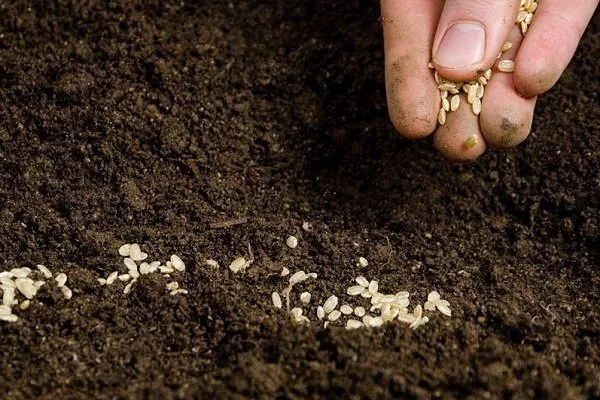
When sowing "before winter," rows are made at the same distance as for spring sowing. The seeds and soil must be dry. Place the seeds in the furrows, cover with soil, and compact them. Then add 2 cm of peat, and if there's snow, cover the bed with it.
Caring for radishes in open ground
The root vegetable is easy to grow, and even a beginner can handle it. However, it does require some care, which affects the quality and yield of the harvest.
Watering
Radishes love water; the optimal soil moisture level is 80%. After sowing, water the crop daily, preferably at the same time each morning or evening. Dry topsoil will kill the young plant, and forgetting to water the growing radishes will result in very bitter taste.
Uneven watering and stagnant water can cause fruit to crack. Stagnant water can also cause root and leaf rot. Therefore, watering should be uniform, and the bed should be loosened slightly after each watering, without disturbing the seedlings.
Top dressing
If the soil has been prepared properly, additional fertilizing is usually not necessary. However, if the soil has not been cultivated before planting or after other crops, additional fertilizing may be necessary.
There are two periods when fertilizing radishes especially needed:
- First period — the appearance of the first two true leaves, marking the beginning of active growth. At this point, the plant requires nitrogen. To meet this requirement, water the seedlings with a nitrogen fertilizer solution, such as nitrate or urea. Complex universal fertilizers, which contain not only nitrogen but also other minerals, are well suited.
- Second period — the beginning of root formation: there may still be no more than two leaves, but they are already quite large. A noticeably rounded root can be seen above the ground. During this period, potassium and phosphorus should be the dominant nutrients in the fertilizer. You can use monopotassium phosphate or a complex fertilizer with a high percentage of these minerals and other beneficial elements.
- The first feeding should be carried out when the first two true leaves appear, using nitrogen fertilizer.
- The second feeding should be carried out at the beginning of root formation, using fertilizer with a high content of potassium and phosphorus.
- Avoid chemical fertilizers in favor of biological ones, such as nettle decoction or ash.
If the first feeding is missed, avoid over-watering with nitrogen-rich fertilizers. It's better to focus on the correct second feeding, for example, using a complex fertilizer with a high potassium and phosphorus content and a low nitrogen content.
It's important to use biological, humus-based fertilizers rather than chemical ones. Chemicals quickly accumulate in the root crop, and the plant doesn't have time to eliminate them during its short development period. To be sure the fertilizer is natural, you can make it yourself:
- As a nitrogen-containing fertilizer You can use a nettle infusion. Another option: take a large handful of compost from under the garden bed and mix it with water in a bucket until it forms a thick paste. Water the sprouts with this paste.
- Phosphorus and potassium Plants can benefit from ash—it contains all the beneficial micronutrients except nitrogen, which is not needed at this stage. You can simply dust damp leaves with sifted ash, or you can mix a cup of ash in a bucket of water and water the beds.
Thinning
Radishes don't like their root system to be disturbed—if they're handled carelessly, the roots become coarse, twisted, and can even die early. Therefore, it's recommended to sow the seeds at a distance from each other.
If the seedlings are densely packed or a particular variety requires more space (for example, Red Giant requires 8-10 cm), the seedlings need to be thinned. This is best done after watering, carefully, without any sudden movements. The optimal time for thinning is when the first bud leaves emerge.
Diseases and pests: control and prevention
Radishes rarely get sick, partly because of the crop's resilience, and partly because pests are either absent or nonexistent during the sowing season (spring and fall). The main dangers are the mole cricket and the cruciferous flea beetle:
- Mole cricket It usually damages the first seedlings grown in greenhouses, where they enter in search of warmth. Getting rid of this pest is not easy. If there are many of them in a closed area, only a complete soil change can help. If the pests have just appeared, you can use special chemicals or a trap: bury a half-liter jar of water or jam. The mole crickets will definitely crawl in there and won't be able to get out.
- From cruciferous flea beetle A barrier placed on a semicircular base over the bed is very effective. Another option is to treat young seedlings with a solution of water and ash or simply sprinkle them with ash after watering. For mature plants, flea beetles pose little threat, so the barrier can be removed after a couple of weeks.
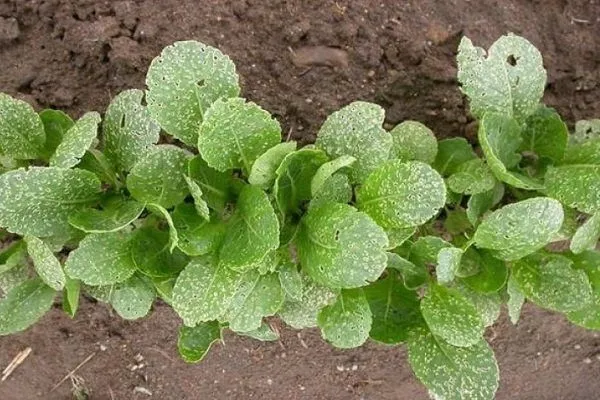
There are several diseases that can threaten radishes, but most of them can be controlled:
- BacteriosisThe leaves are starting to turn yellow, and the roots are rotting and becoming slimy. Dead plants should be removed, and the remaining ones should be watered with Bordeaux mixture.
- KilaGrowths appear on the roots and leaves, causing the plant to die. Affected plants should be removed along with the surrounding soil. Fill the hole with slaked lime, and water the remaining plants with a slaked lime solution (500 ml per bucket of water), one liter per seedling.
- BlacklegThe leaves are turning yellow and curling, and the stems are darkening. To treat this, spray the plant with an infusion of onion peels: add 20 grams of peels to a liter of water and let steep for 24 hours. Spray twice, one week apart.
To prevent diseases, you need to choose resistant radish varieties, not neglect covering material and fertilizers, and also adhere to a watering regime.
Potential problems when growing radishes and their solutions
Growing radishes is generally not very difficult. Problems that may arise during cultivation are usually related to failure to follow simple rules for seed selection, sowing, or care.
The plant does not sprout
The absence of sprouts can be explained by two reasons:
- The seeds have lost viabilityTo avoid this problem, you need to monitor the expiration date of seeds and check their germination before sowing.
- Sowing too early in cold soilIt is important to monitor the timing and temperature.
If the sprouts have appeared, but are pale and wilted, it is probably due to a lack of nitrogen.
The plant goes into tops, the root crop does not form
There may be several reasons:
- Lack of lightIt is necessary to provide additional lighting or transplant the radishes to another location.
- Sowing too deepThe seed should lie no deeper than 1.5-2.5 cm.
- Too much nitrogenThis happens if unrotted manure is added before sowing.
- Potassium deficiencyAn ash solution may help.
Radishes grow tough and fibrous, but hollow inside.
Usually the reasons are as follows:
- Irrational wateringWatering should be uniform and adjusted depending on temperature and soil.
- Sowing too deep, which was mentioned above.
- OverripeningThe harvest must be collected on time.
Root vegetables become bitter
This problem occurs if the plant does not have enough water.
Following the rules for caring for radishes in open ground helps prevent fruit from becoming hollow, cracking, and becoming bitter.
Harvesting and storage
Radishes should be harvested promptly, when they have reached the normal size for the variety. Ripening isn't always uniform, so harvesting will be selective.
Radishes are best harvested in the morning, and the beds should be thoroughly watered in the evening. Harvesting is easy: just pull the roots out of the soil, shake off any clumps of soil, and trim the tops 3-4 cm from the radish. It's best to trim the roots just before serving.
Radishes don't keep for long, so there's no point in storing them for future use. To prolong their shelf life, wipe them dry, wrap them in paper, and store them in a bag in the refrigerator or cellar. If the radishes become wrinkled and tough after storage, it's best not to eat them.
This video explains how to properly grow radishes outdoors:
Radishes are easy to grow if you follow the simple guidelines for seed selection and processing, soil preparation, sowing, fertilizing, and watering described in this article. These recommendations should be applied with consideration for your local climate.
Ekaterina, thank you for the comprehensive information on growing radishes. I love this vegetable, but I've always had trouble growing them. After carefully reading your article, I realized I wasn't following the planting plan, wasn't preparing the seeds, and was missing a lot of other things. I've only been gardening for three years and don't have much experience yet. Although, I've planted radishes about eight times in these three seasons. It's so good to have such experts in their field!