
A late-ripening variety known for its increased productivity and marketability, the Autumn Giant is known. Its juicy texture is tender, yet slightly spicy, making it ideal for fresh consumption. Considered undemanding and easy to grow, it can be grown both in the garden and in protected ground.
Introduction to the variety
Autumn Giant is a radish cultivar (not a hybrid) developed by A.V. Kuznetsov and V.K. Dulin, both of Poisk LLC. It was approved for cultivation in the first half of 2010.
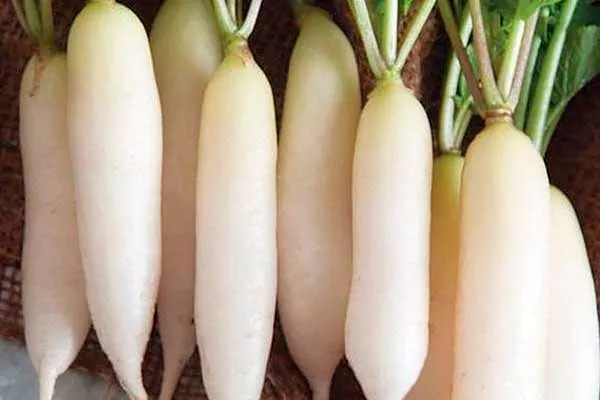
Varietal characteristics:
- Average productivity rates range from 4.5 to 9-10 kg/m2, and commercial qualities are at a high level.
- Root crops are planted to a depth of 1/4 of their length, which is normal.
- Radishes ripen simultaneously and take from 20 to 30 days maximum.
- This variety has competitive cold resistance and excellent adaptability to various climate conditions, which allows it to be successfully cultivated in all regions of the country.
- Root crops of this variety can be stored for up to 5 months.
- ✓ Store radishes in a cool, well-ventilated area with a temperature of 0-2°C.
- ✓ Avoid storing near fruits that produce ethylene to prevent premature sprouting.
Features of taste, plant and root vegetables
Radishes are characterized by a semi-erect rosette. The leaf blades are obovate and green, and the petiole lacks anthocyanin coloration.
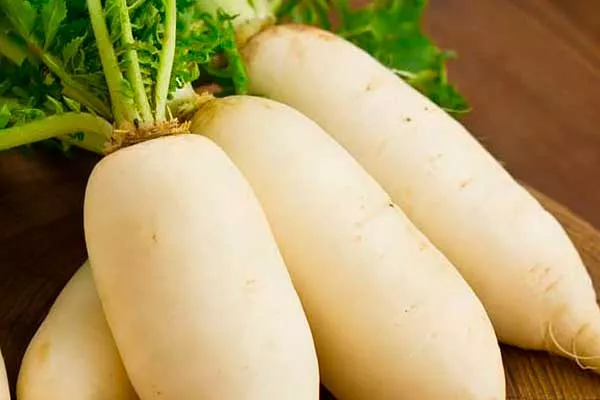
Description of radishes:
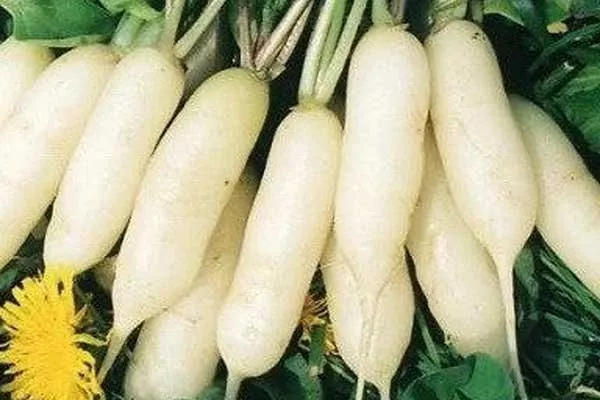
- The roots of this variety are large, elliptical, reaching 6-8 cm in length and 5-6 cm in diameter.
- The head is convex, the surface is smooth, painted white.
- Fruit weight varies from 50 to 100 g.
- The pulp is tender and juicy, also white, with a pleasant taste and slight spiciness.
Landing
Root crops thrive in raised beds over 20-25 cm high. It's important that the bed be located in a well-lit and wind-protected area. Light, loose loamy soil is ideal for sowing radish seeds. Radishes also grow in sandy soil, but require frequent watering.
- ✓ For optimal radish growth, choose areas with a deep arable layer (at least 30 cm).
- ✓ Avoid areas with close groundwater levels to prevent root rot.
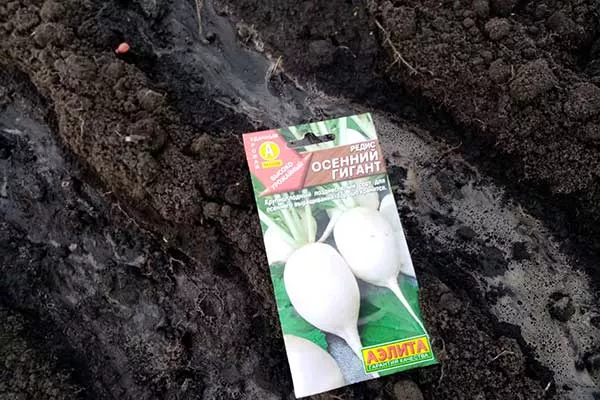
Sowing seeds into the ground is carried out during the following periods:
- 2nd decade of April-2nd decade of May – under cover;
- First ten days of June – in open ground.
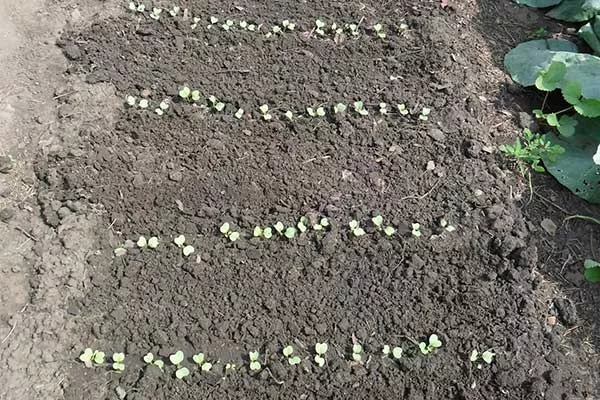
Sowing time depends on the region and weather conditions. In the fall, the bed is dug over, clods of soil are broken up, and 45-55 g of superphosphate, 15-20 g of potassium salt, and 5-7 kg of humus are added per square meter. Seeds are planted in furrows no more than 1-2 cm deep. The distance between adjacent furrows should be at least 10 cm, and the distance within a row should be 5 cm.
Seed preparation:
- Before planting, the seeds are soaked for 24 hours in water or a damp cloth, which allows them to swell slightly.
- They are then disinfected by immersing them in a saturated solution of potassium permanganate, after which they are thoroughly dried.
Sowing seeds:
- Make furrows in the garden bed and water them generously with warm water.
- Cover the seeds with loose soil and compact them lightly. No need to water; a light sprinkling of peat or humus is sufficient.
Caring for radishes
The care regimen is standard. Regarding moisturizing, follow these guidelines:
- Radishes love moisture. After sowing, they need to be watered daily, morning or evening. If you forget to water the growing radishes, they will become very bitter.
- Irregular watering and stagnant water can lead to cracking of fruits and rotting of the root system.
- After each watering, the bed is carefully loosened, trying not to damage the sprouts.
- Only warm water should be used and it must be settled.
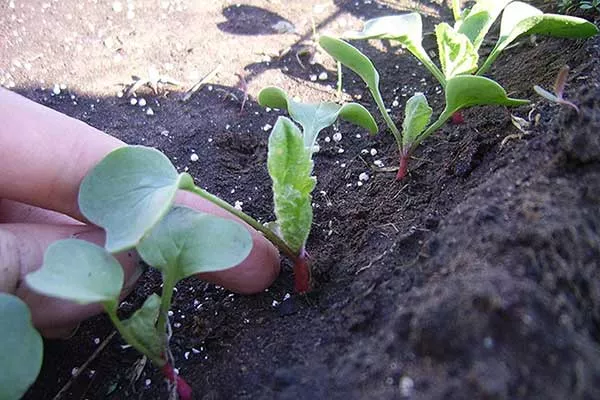
Fertilize at the beginning of root formation, using mineral supplements high in potassium and phosphorus. You can use monopotassium phosphate or dissolve 1 tablespoon of nitrophoska in 10 liters of water. Nettle or manure infusions can also be used.
Diseases and pests
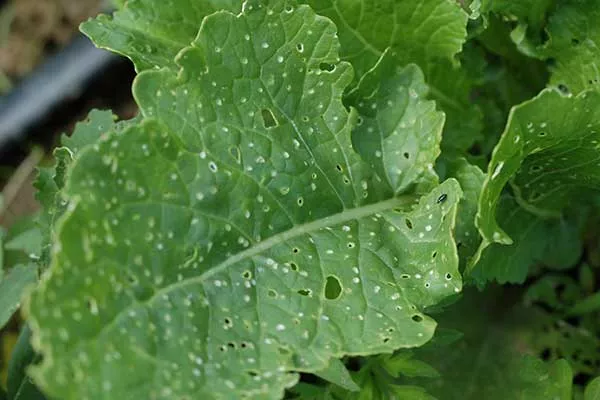
Radishes are resistant to bolting and disease, and are not susceptible to pest attacks. However, if there are infected plants nearby or there is excessive rainfall, be sure to carry out preventative treatment with insecticides and fungicides in the spring.
Reviews
Autumn Giant is characterized by its resistance to bolting and flowering, as well as abundant foliage. It resists various diseases and is frost-hardy. Ideal for eating both raw and in salads. When stored, it retains its flavor and freshness for 4-5 months.