
The highly resilient Melito variety requires minimal care and is well adapted to temperature fluctuations. It is highly resistant to diseases and is not prone to cracking or drying out during storage. The radish roots have a strong structure and thick skin, ensuring their preservation during transportation without the need for tops.
Features of selection
Melito is a first-generation hybrid created by a team of Dutch breeders from Nickerson Zwaan BV in 2014. The developers' goal was to create a radish variety capable of growing in a variety of climatic conditions.
Having passed all the necessary tests and trials, the hybrid was deemed suitable for agricultural use and included in the State Register in 2015.
Introduction to the variety
Plant care always requires attention to small details that can significantly impact the fertility and yield of the harvest. Radishes, despite their simplicity, have a number of specific requirements and characteristics:
- at temperatures above +23-24°C, radish seeds do not germinate, even if the optimal length of daylight is provided;
- The spring season is ideal for sowing radishes, when daylight hours are limited to 12 hours;
- seeds can remain viable for up to 5-6 years if kept in a thoroughly dried and cool place;
- To always have fresh radishes on the table, use sowing intervals of 10 to 15 days;
- When planting in compacted clay soil, to prevent damage to the roots, it is better to use a rake to thin the soil across the rows;
- Radish needs to be fed regularly and moderately, and over-watering after a drought can lead to cracks in the roots;
- If radish leaves change color, this is a signal to apply fertilizer.
Characteristics of the appearance of the plant and root crops
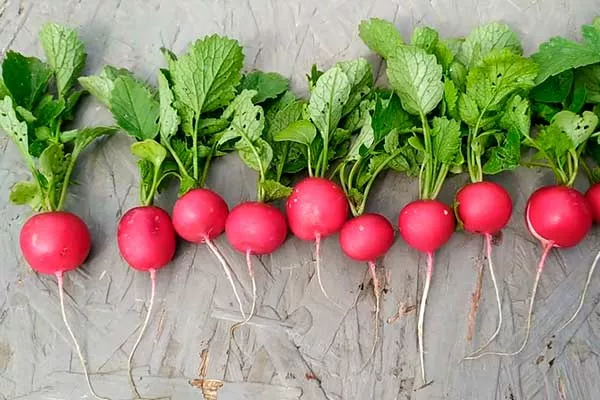
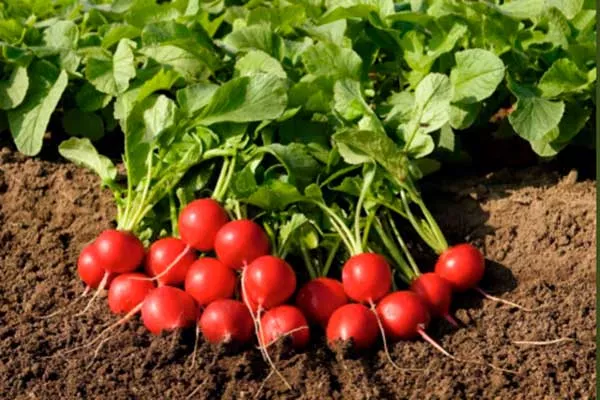
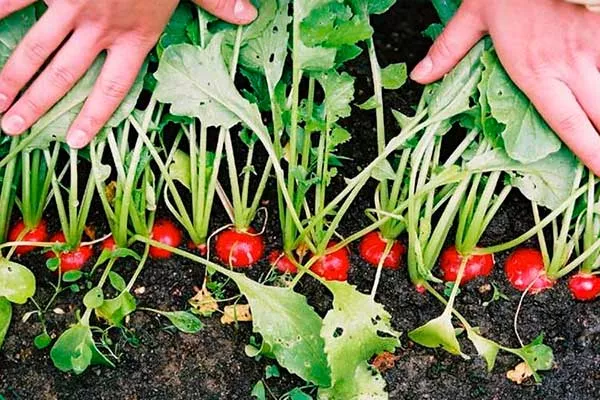
Dutch radish is a compact rosette of leaves with a distinctive semi-erect growth habit. The plant's leaves are particularly robust, have a vibrant green hue, and a short petiole with a light anthocyanin pigmentation.
Other varietal characteristics:
- The shape of the leaves resembles an inverse ovoid outline with rounded tips and a slight fluffiness.
- A distinctive feature of the hybrid is the secure attachment of the tops to the root crop, which simplifies harvesting.
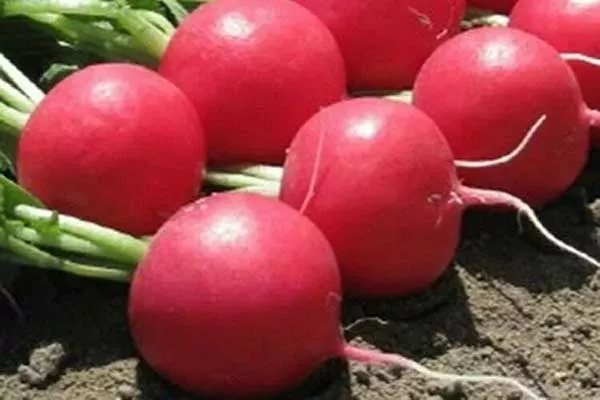
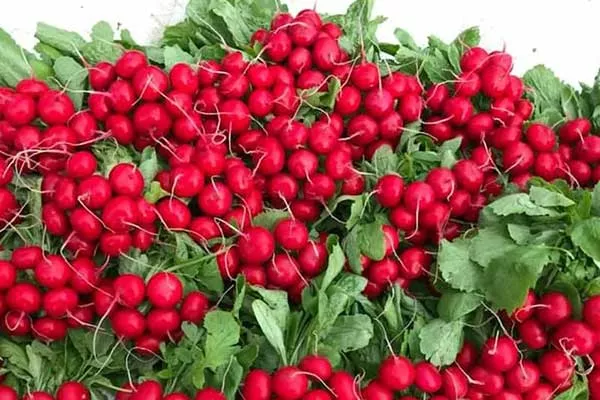
- The Melito variety is a medium-sized radish, producing radishes with a high-quality appearance and firmness. They typically weigh between 20 and 35 grams, although larger specimens with a diameter of around 4-5 cm are occasionally found.
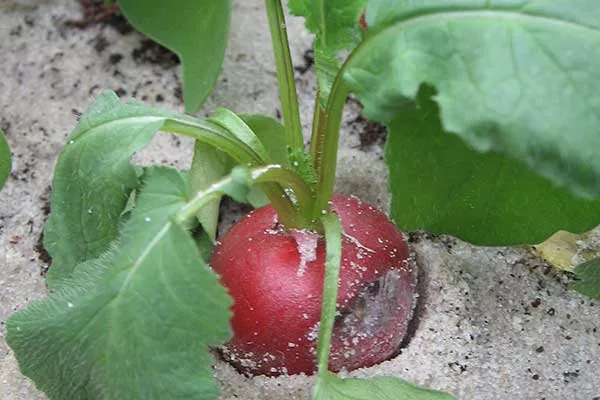
- When the fruits reach full ripeness, they acquire a rich red color, which does not fade when washed.
- The skin of these vegetables is quite strong, but not too tough, with a smooth surface and a noticeable shine.
- The shape of the root vegetables resembles a round hemisphere.
- The structure of the root vegetables is particularly soft and rich in juice.
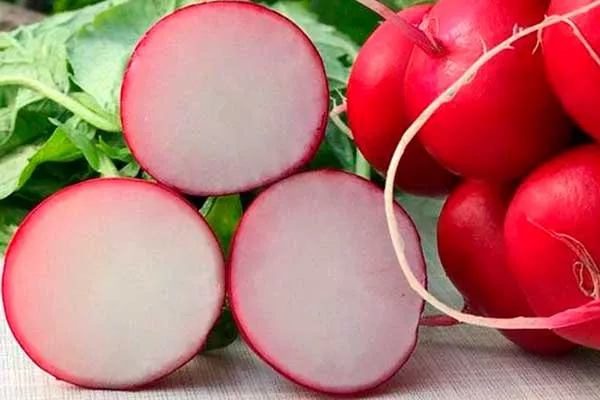
- The flesh of the radish is white, uniform and dense, with a meaty, tender and juicy texture, free from wateriness and voids.
- There are no damages or imperfections on the surface of the vegetables.
- ✓ Resistance to bolting even with long daylight hours.
- ✓ Ability to preserve taste and appearance during transportation.
Taste qualities, purpose
Melito F1 radish is moderate in calories, yet rich in nutrients: it contains mustard oil, fiber, acids, potassium, as well as vitamins C, PP, and B, making it essential for a healthy diet.
The harvest is suitable for making fresh vegetable salads, complementing various dishes, and for direct consumption. Furthermore, radishes are ideal for making bouquet preserves and selling whole.
Maturation
It has a medium ripening period. Typically, it takes 20 to 25 days from the moment the first green shoots emerge until the roots are pulled. In warm climates, this period can be reduced to 10-14 days, but for best results, it is recommended to regularly pull the roots every 4-5 days.
Productivity
It has the potential for increased productivity. With proper care, up to 4 kg of tasty and juicy radishes can be harvested from 1 square meter of soil. With up to three plantings per season, you can get an impressive and high-quality harvest.
Soil and climate requirements
Melito prefers light, nutritious, low-acid soils with good moisture and air permeability. It grows particularly well in sandy loams. However, radishes do not thrive and produce fruit well in heavy and waterlogged soils.
- ✓ Soil pH should be between 6.0-7.0 for optimal growth.
- ✓ The soil should be well drained to avoid water stagnation.
It has sufficient stress tolerance, allowing it to withstand temperature fluctuations, mild drought, and hot weather. However, radishes require a lot of light, so it is recommended to plant them in level or slightly elevated areas with sufficient sun and warmth.
Preparatory activities
Melito requires a location with southern sun and no cold, strong winds. If planting in summer, the site should receive several hours of shade, as radishes require 12 hours of daylight to develop good rootstocks. Extended exposure to sunlight can cause the stems to elongate.
The site preparation proceeds according to the following scenario:
- in the autumn, the soil is loosened, and plant remains and rhizomes, which can become a haven for pests, are removed;
- if the soil has an acidic reaction (pH above 7.3), then lime is added during digging (about 400-500 g per 1 sq. m);
- In poor and heavy soils, compost mass (5-7 kg per 1 sq. m), superphosphate (450 g) and potassium salt (about 180-200 g) must be added;
- Nitrogen fertilizers are added during spring tillage, based on the following schedule: 15-20 g per 1 sq. m.
Radishes produce abundant harvests in soil previously occupied by cucumbers, tomatoes, eggplants, and legumes. Don't expect great results if the plot was previously occupied by potatoes, cabbage, or radishes. Using fresh manure, which only promotes vigorous growth of the tops, is not recommended.
Planting and caring for Melito radish
Purchase high-quality seeds from reputable, official stores with a quality guarantee. Most seed-growing companies process them, but if they don't, they soak the seeds in potassium permanganate and dry them.
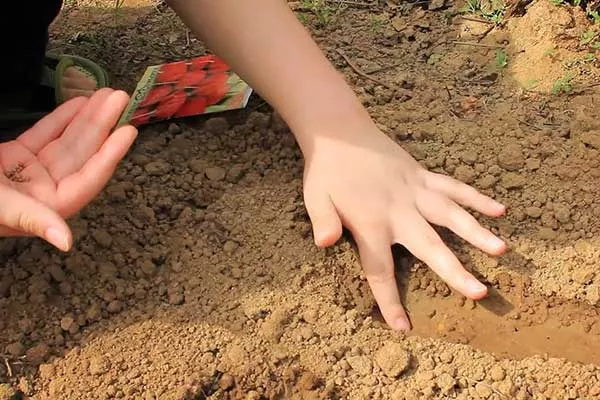
When the soil temperature rises to +2 +7°C, you can begin sowing and further cultivating radishes, according to these recommendations:
- The area prepared for sowing is leveled, and lines for furrows are marked. There should be a 10-12 cm gap between furrows, 3-5 cm between seeds, and a maximum seeding depth of 3 cm.
- To evenly distribute the planting material into the recesses, use a technique that involves attaching them to a piece of toilet paper using a paste made from flour or starch.
- Cover the seeds with a layer of humus and peat. If the soil is light and fertile, level it with a rake.
- Work should be carried out in cloudy weather, as radishes are particularly demanding of moisture and do not tolerate high temperatures.
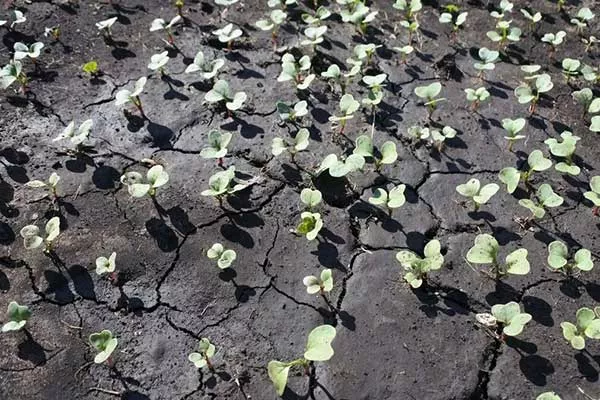
- Once the first shoots appear, thin out the plantings, leaving 7-8 cm between plants. Delaying this procedure may result in the appearance of flower heads.
- To maintain optimal humidity levels, regularly monitor the watering. During warmer months, it is recommended to water the plants twice a day. During periods of high temperatures, it is especially important to provide sufficient water, as over-drying the soil can cause root defects.
- To prevent pest accumulation and provide the roots with the necessary amount of oxygen, weed and loosen the area between rows.
- If soil conditions are unfavorable and fertility levels are low, feed the plants twice with nitrogen fertilizers: at the beginning and in the middle of the growing season.
- In summer, when the length of daylight exceeds 12 hours, to protect against excessive light, crops must be covered with opaque material in the evening and morning hours.
Features of growing radishes in a greenhouse
This radish is suitable for growing in a greenhouse in early spring. Here's how to do it right:
- Before planting, the structure and soil are cleared of pests and diseases by disinfecting with insecticides and fungicides, and if necessary, the soil is renewed to a depth of 20 cm;
- To increase fertility, use a mixture of 2 parts peat and 1 part turf; you can add superphosphate and potassium chloride (if desired and necessary);
- the optimal temperature under the film is +15°C;
- after the emergence of seedlings, it is reduced to +6 +8°C for several days to prevent insufficient development of the sprouts;
- To achieve maximum growth of radishes, it is recommended to maintain night temperatures within the range of +8 +12°C and day temperatures within the range of +16 +18°C;
- Humidity in the greenhouse plays a key role: excess can cause disease, and insufficient humidity can cause deformation and improper development of root crops, so ventilation is essential after each watering.
Pests and diseases of Melito radish
Melito boasts significant resistance to various diseases, including downy mildew. Furthermore, the plant demonstrates resistance to root rot and rhizoctonia. Experienced vegetable growers and agronomists confirm that radishes are resistant to bolting.
If soil conditions are too acidic, crops may be susceptible to clubroot, which causes swelling and blistering of the roots. In such situations, when the first symptoms appear, affected plants are removed and the soil is treated with a lime solution.
Positive and negative qualities
Melito radish has quickly gained the love and respect of vegetable growers. Its popularity is no surprise, as this crop offers numerous advantages:
Except in cases of improper care, hybrid radishes do not have any serious drawbacks.
Review of reviews
Don't neglect the fundamental principles of crop rotation when cultivating the Melito hybrid. Protect your crops through mixed plantings, water them promptly, and fertilize when necessary. This variety will reward you with an abundant harvest of excellent flavor and commercial qualities.