
The Korund radish is rightfully considered one of the best early varieties. It has juicy and tasty flesh, perfect for salads and pairs beautifully with a wide variety of dishes.
Description of the Corundum variety
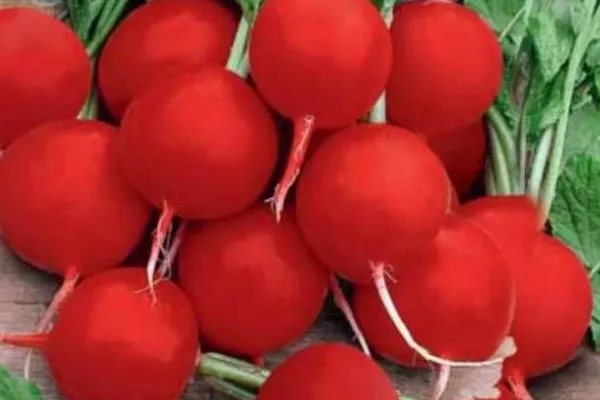
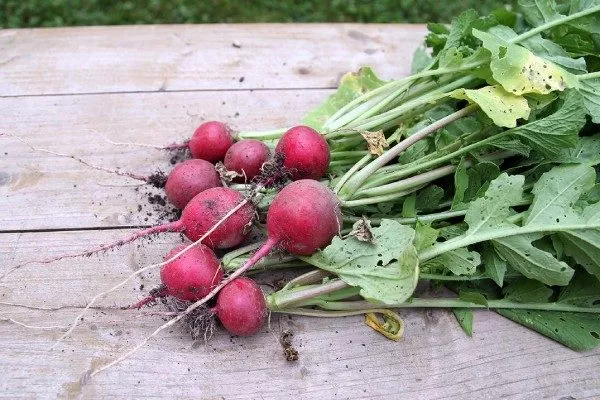
The plant grows an erect rosette 15-20 cm tall. The leaves are rounded, yellowish-green, moderately pubescent, and have petioles with anthocyanin tint. The roots are bright red, raspberry-pink, and rounded. They weigh approximately 15 g. The flesh is white, juicy, and tender.
Who and when bred the Corundum radish?
The Korund variety was developed by breeders at a leading German company founded in 1996 and specializing in seed breeding, production, and sales. Korund radishes have been approved for cultivation since 2002.
This variety is ideal for growing bunch crops. It can be grown in any type of soil, both open and closed. It is suitable for cultivation in all regions of the country, including the Northern, Western and Eastern Siberian, Far Eastern, and Volga-Vyatka regions.
Taste and purpose
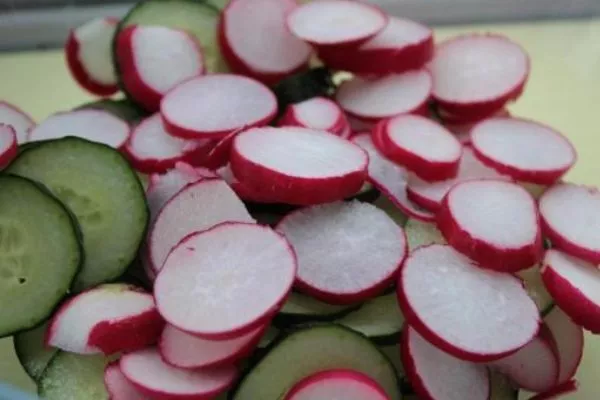
Korund radishes have a wonderful, semi-sharp flavor. They are ideal for eating fresh. These radishes are used in summer and winter salads, and they can also be sold in bunches.
Productivity and other characteristics
The Korund radish is an early-ripening variety, with the root vegetables maturing in about three weeks from emergence. This variety is characterized by good yields, yielding up to 3.5 kg per square meter.
Pros and cons
It is no wonder that corundum is loved by gardeners and agricultural producers; it has many advantages and virtually no disadvantages.
Pros:
Landing features
To grow good radishes, you need to choose the right site and sow them at the right time. The Korund radish grows well both outdoors and in greenhouses.
- ✓ The area should be protected from strong winds, which can damage the delicate leaves of the radish.
- ✓ The soil must have good drainage to avoid water stagnation and root rot.
Landing features:
- Sowing begins early, as soon as the snow melts and the soil warms, around April or May. For a second harvest, radishes can be sown in July. The exact sowing time depends on climate conditions. In the south, radishes are sown as early as late March, and in northern regions, as early as May.
- Choose a level, well-lit area for planting. Shade has a very negative impact on radish growth; the leaves become elongated, and the roots don't gain weight.
- Before planting, the seeds are sorted and immersed in salt water to check for germination. They are then disinfected by soaking them for half an hour in a potassium permanganate solution or fungicides. You can also soak the seeds in a growth biostimulant. The day before sowing, radish seeds are refrigerated for several hours.
- The optimal soil for radishes is fertile, loose, rich in humus, with a slightly acidic reaction.
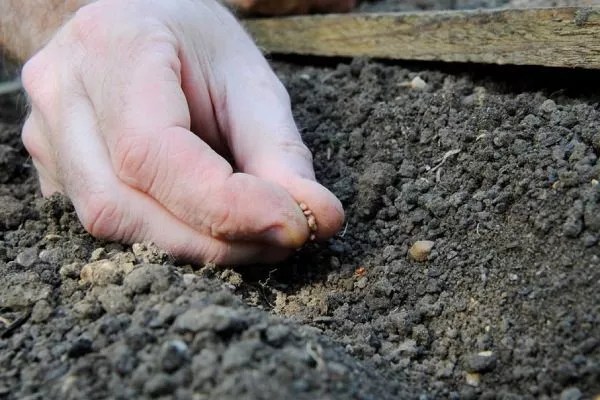
- The recommended planting pattern is 5 x 10 cm. The average sowing depth is 1-2 cm, no more. If planted too deeply, the roots will not develop properly. Sowing can be done in furrows or cells.
Radishes are typically sown in polycarbonate greenhouses in March, when daytime temperatures are between 15°C and 18°C, and nighttime temperatures are between 8°C and 10°C. At the end of March, radishes are sown in plastic greenhouses.
Care nuances
The Korund radish doesn't require complex care, but it does require regular maintenance. Watering is especially important; the plant thrives on moisture, and the Korund variety is no exception.
How to care for radishes:
- Radishes are watered daily, or even twice a day—morning and evening. The recommended watering rate is 10 liters per square meter. Watering is especially important during the root formation stage.
- The beds are loosened several times a week. However, this must be done very carefully to avoid damaging the root crops. If the soil is compacted, the roots will develop poorly, stretching out and becoming misshapen. To avoid loosening and weeding the beds, mulching is used.
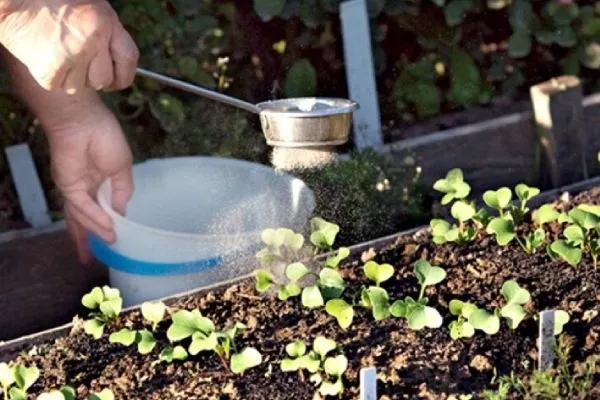
- There is no need to fertilize early radishes that grow in 20 days; the fertilizers added when preparing the soil for planting are sufficient (compost, humus, or other organic matter are added during digging).
Diseases and pests
The variety has excellent immunity and is resistant to most radish diseases. Problems can only arise if agricultural practices are severely violated. Inclement weather also negatively impacts radish growth and development, including both excessive moisture and extreme heat.
Among the most dangerous diseases for radishes are clubroot, powdery mildew, and various rots. Copper-containing preparations, as well as fungicides such as Fundazol and its analogues, help combat these.
| Method | Efficiency | Period of application |
|---|---|---|
| Insecticidal preparations | High | At the first signs of damage |
| Folk remedies | Average | Preventatively |
The Korund variety is not susceptible to pests, but attacks are possible during a widespread pest infestation. Radish beds can be infested by aphids, flea beetles, wireworms, and cabbage whites. These can be controlled with standard insecticides, such as Aktara, Intavir, Fitoverm, and others. Various folk remedies, including garlic infusion, birch tar, and the like, are also used.
Harvesting and storing radishes
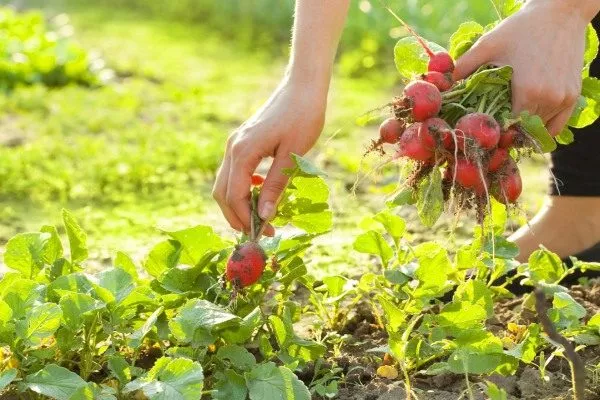
It's important to pull radishes from the ground promptly. Although this variety is characterized by uniform ripening, it still ripens unevenly, especially at the initial stage, so radishes have to be picked selectively.
Radishes are cleaned, washed, dried, placed in paper bags, and stored in a cellar or refrigerator. Early radishes generally don't last long, a maximum of 1.5-2 weeks, and are best consumed as soon as possible.
Reviews
The Korund radish is an excellent choice for gardeners and farmers of all sizes; this variety can be grown for both food and commercial purposes. Its excellent flavor, early maturity, high yield, and superior presentation make it an excellent choice for commercial cultivation.