
Many gardeners prefer to plant Cherryette radishes in their plots because it's an early-ripening variety suitable for year-round cultivation. This root vegetable is also in high demand due to its excellent taste and abundant yield.
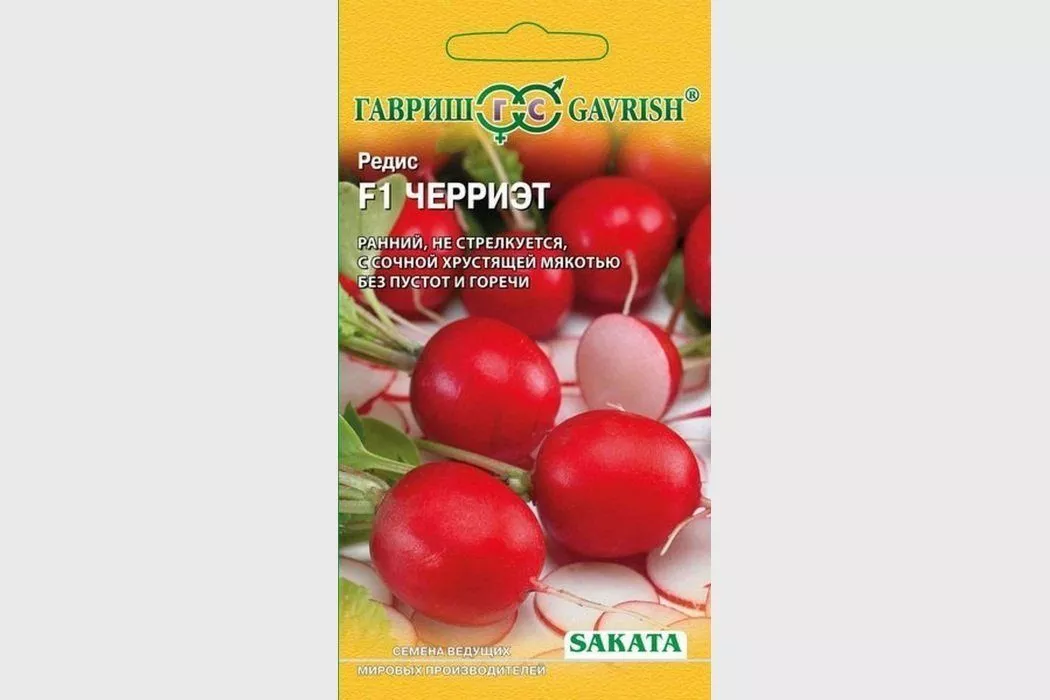
Cherryette Radish
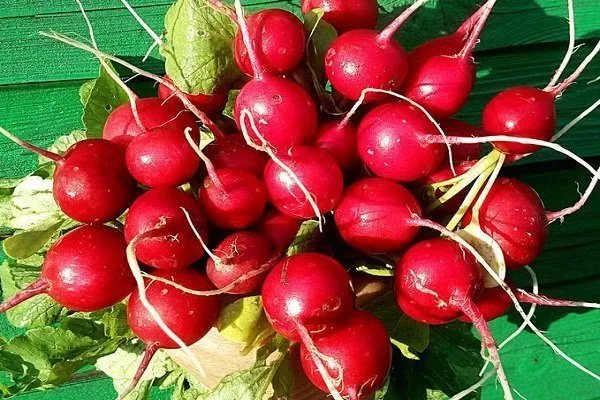
Cherryette radish is an early variety.
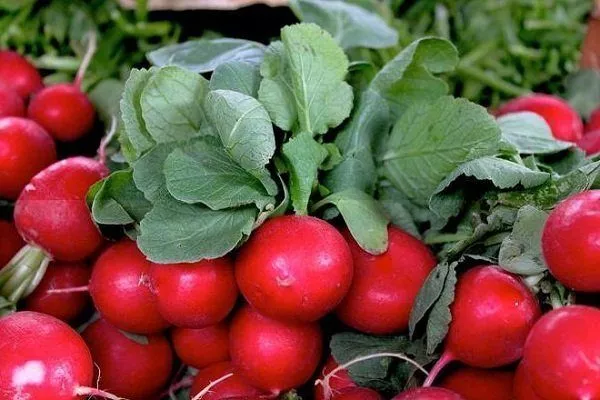
Cherryette radish is not susceptible to pest attacks.
Description of the variety
Cherryette radish is a hybrid obtained by crossing first-generation varieties. Japanese specialists bred this root vegetable in 2000. The result of these breeders' efforts is the vegetable's outstanding performance.
Appearance of the plant
Cherryette radish is easy to distinguish from other varieties of this vegetable, as it has a characteristic appearance:
- The root vegetable is red in color, has a round shape with a slightly protruding head.
- The root system is taproot, quite long, and white in color.
- Radish leaves are shaped like an egg. The tops are light green. The tops are short and don't spread out, so you can plant a large amount of radishes even in a small garden plot.
- The leaf petiole has a purple tint.
Characteristics of fruits
The Cherryette radish variety has the following characteristics:
- The root vegetable is small in size – only 3-4 cm.
- The average vegetable weight ranges from 25-30 g. Sometimes larger fruits are found – around 45 g.
- Radish flesh is whitish. Its texture is tender, and its flavor is slightly pungent. Thanks to this flavor, the root vegetable is widely used in cooking, especially for cold appetizers.
Productivity
Cherryette is a very early variety. Within 20-25 days after the first sprouts appear, you can get up to 3 kg of vegetables per square meter.
Pros and cons
The main advantage of the vegetable is its beneficial composition, which includes:
- Silicon. This element is found in large quantities in the root vegetable. It is essential for maintaining normal muscle tone.
- Anthocyanin. This is a plant-based pigment. It is beneficial for people with heart disease. Anthocyanin is also an antiseptic, can stop bleeding, and even prevent colon cancer.
- Fiber. It helps remove any toxins from the body and burn accumulated excess fat, which is why Cherryette radish is used when dieting.
- Protein. It is useful for people with diabetes.
Cherryette radish is popular not only for its nutritional value but also for its other positive aspects:
- early yield;
- all root vegetables grow to the same size and weight;
- the radish has no voids inside, even if the sowing and watering technology was violated;
- grows in any climate;
- resistant to light spring and night frosts;
- not susceptible to pest attacks;
- transports well over long distances.
Features and rules of cultivation
Cherry radishes are grown in greenhouses and open ground. Each method has its own characteristics and guidelines for ensuring a high-quality harvest.
In the greenhouse
Cherryette radish variety can produce good results in greenhouse conditionsBut remember that with this method, the vegetable receives less sunlight than it requires, and the ripening process is delayed.
| Condition | Greenhouse | Open ground |
|---|---|---|
| Temperature after emergence | +5-10°C | +12-16°C |
| Temperature during fruit formation | +16-18°C | +12-14°C |
You can increase your greenhouse's yield by adding an additional heat source. Several fluorescent lamps are suitable for this purpose.
When growing radishes in a greenhouse, try not to plant too densely. As soon as the seedlings emerge, set the temperature to between 5 and 10°C. Then, wait for the fruit to form and increase the temperature to 16-18°C if the weather is cloudy and rainy. If the weather is warm, increase the temperature to between 12 and 14°C. Remember to ventilate the greenhouse regularly. Vegetables require not only light but also fresh air.
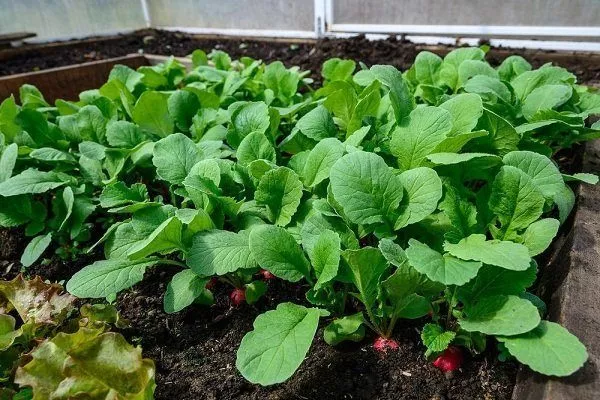
In open ground
Since radishes tolerate frost well, they can be sown outdoors even when temperatures drop to -3°C. The root crops easily tolerate temperatures as low as -6°C. It's best to begin sowing in warm weather, when the temperature remains steady (at 12-16°C).
To increase the yield outdoors, cover newly planted seeds with plastic wrap. Harvest the plastic only after the first shoots appear.
Sowing seeds
Getting a healthy and abundant harvest of the Cherryette variety is easy. Follow the seed sowing instructions.
Deadlines
Radishes grown in a greenhouse can be sown at any time, approximately every 2-3 weeks.
If radishes are grown outdoors, sowing begins in late March or early April, as soon as warm weather sets in. Cherryettes are planted outdoors until September.
Selecting and preparing a site
Choose a location for the beds on the southern or southwestern side of the plot so that the sun's rays reach the beds throughout the day.
Prepare the soil for planting Cherryetta outdoors in the fall. In September, dig over the soil and check its acidity – it should be neutral, otherwise the crop will be susceptible to clubroot. If the soil is not ideal, apply lime. This requires peat mixed with sand. This mixture softens the soil and makes it more loose.
Radishes are very demanding when it comes to soil nutrition. Before digging, add stale manure or compost. You can also sprinkle fertilizers containing phosphorus and potassium.
You can prepare the soil in the greenhouse at any time.
Crop rotation rules
Proper crop rotation leads to a successful harvest. Remember: radishes thrive in areas where nightshades and legumes were grown. However, it's best not to sow Cherryette seeds in beds where cabbage, rice, mustard, or rutabaga were previously grown.
Planting diagram
For greenhouse and ground cultivation, adhere to the following technology for planting radishes:
- Step 1 – Plow the soil. Leave about 15 cm between rows.
- Step 2 – form holes 1.5 to 2 cm deep.
- Step 3 – water each hole generously.
- Step 4 – Place seeds in each hole. Leave approximately 4 cm between each seed.
- Step 5 – Fill the resulting hole with soil. Try not to compact the soil.
- ✓ Optimum soil temperature for sowing: +12-16°C.
- ✓ Seed sowing depth depending on soil type: 1.5-2 cm for loose soil, up to 1 cm for coarse soil.
If the soil is coarse, plant the seeds in holes no more than 1 cm deep.
Cherryette radish care
Caring for radishes is easy. However, care must be meticulous, according to the plant's needs.
Watering
Water the crop as needed, whenever you notice the soil has dried out slightly. Avoid allowing the soil to become waterlogged, or the tubers will become waterlogged. Avoid allowing the soil to dry out too much, though, as this will make the radishes bitter.
If the weather is cloudy or rainy, water the beds once a week. On hot days, water daily. In a greenhouse, water the radishes as needed, but with lukewarm water.
Fertilization
Cherryette radishes require fertilization for the upcoming harvest. This process is simple, as it only occurs once during the growing season – 7-10 days after germination.
To do this, use a fertilizer containing phosphorus and potassium. Chicken manure will also work. Soak the fertilizer, dilute it with water at a ratio of 1:10, and water it carefully between the rows using a watering can.
Soil care
A healthy harvest also depends on proper soil care. Root vegetables require fresh air, so loosen the soil in each hole after watering. Remove all weeds, as they rob the soil of nutrients.
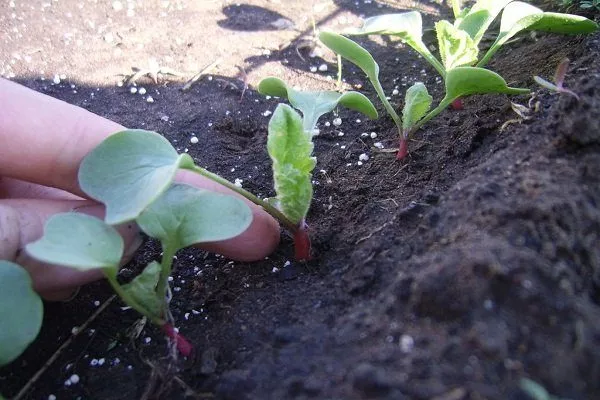
Mulching the soil is also necessary to maintain a constant warm temperature and moisture level, especially if the seeds are planted during a frost-prone season. For mulch, use a mixture of humus and compost.
Pest control
Although radishes are not susceptible to pests, the root crop can be attacked by the cruciferous flea beetle. Since this variety is early, chemicals are not used to control the pest. Instead, prepare homemade mixtures:
- Take 1 tablespoon of vinegar and add it to 5 liters of water. Stir and spray the tops on all sides.
- Add 100 g of chopped tomato and garlic greens to 5 liters of water. Let the mixture steep for three hours. Then strain thoroughly and add 50 g of laundry soap. Spray once every five days.
- Take equal parts ash, pepper powder, and tobacco. Mix the ingredients and scatter them over the beds.
The leaves of root vegetables grown in a greenhouse can be affected by a white coating called downy mildew. If you notice this whitish growth on the upcoming harvest, treat the foliage with Fitosporin. To prevent the disease, monitor the humidity level—the greenhouse shouldn't be too damp.
Harvesting and storage
As mentioned, radishes can be harvested in 20-25 days. But don't rush to pull the roots out of the ground. Wait a little longer, and the roots will gain more weight (over 30 g), and the harvest will be of higher quality. After removing the vegetable from the ground, trim the tops and remove the root system.
The harvested crop can be stored in a basement or on the lower shelves of the refrigerator for about a month. Cherryette radishes retain their appearance and flavor during this period. Before storing, wash the tubers to remove any dirt and dry them.
A video review of the Cherryette radish variety can be seen in the following video:
Reviews from vegetable growers
Cherryette radish is an early variety that is resistant to light frosts and is suitable for both open ground and greenhouse cultivation. It is easy to care for, requiring only timely watering, weeding, fertilization, and pest control.