
Gardeners eager for a quick harvest tend to use Champion radish. This variety promises not just one, but several harvests in a single season with proper care. Renowned for its pleasant flavor, it's ideal for creating nutritious salads.
Origin of the variety
Champion is a cultivar hit, consistently popular among gardeners. It was created by breeders Horal Jiri, Klapste Petr, and Mohelska Jana, in collaboration with Yuri Borisovich Alekseev (Semko Ltd., Moravoseed Spolecnost S Rucenim Omezenym). The variety has been approved for cultivation since 1999.
Introduction to the variety
The cultivar (not a hybrid) is ideal for growing both in a sunny garden and in greenhouse structures and shelters.
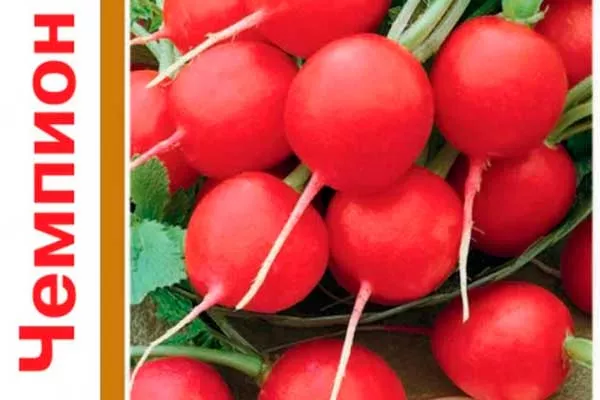
Champion's roots are completely buried and are most often eaten raw. It is characterized by its ease of cultivation and resistance to various diseases.
Features of tops
The rosette of leaves grows in a semi-erect habit. The leaves are distinguished by a rich greenish hue, medium in size, and deeply dissected. The shape of the leaves resembles an obovate with a rounded apex, while the surface is covered with a slight fuzz.
Shape, color and size of the root crop
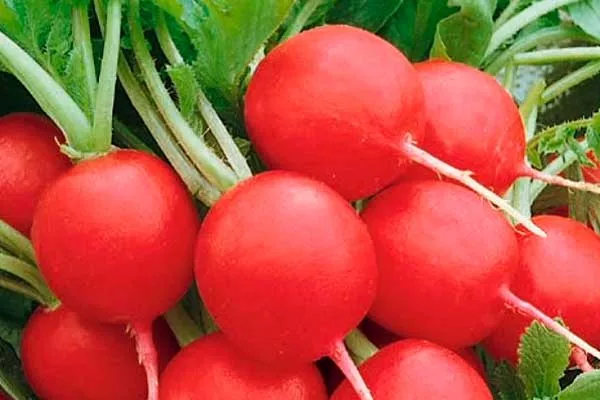
The fruits are a rich raspberry-red color with no white on the underside. Radishes are round or slightly oblong, weighing up to 25 grams, but averaging 18-21 grams with a diameter of 2-2.5 cm. The skin of the roots is delicately tender and smooth, and the flesh is white, firm, and juicy.
What is it used for and where?
Champion is recommended for farming on individual plots and in small farms, but due to its low productivity and small size of root crops, it is not used for commercial cultivation.
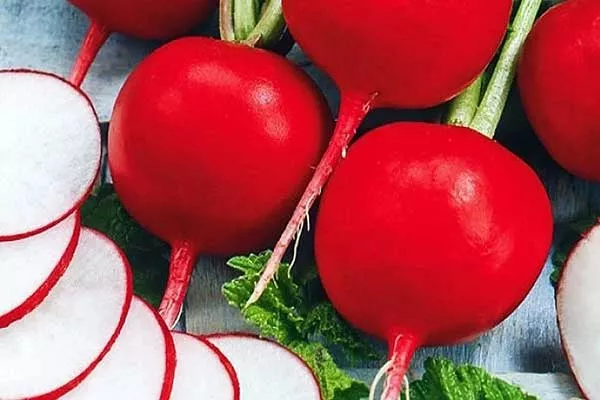
Gardeners often plant this radish for personal use in vegetable beds, hotbeds, greenhouses, and even indoors (on a windowsill, glazed loggia, or balcony). It's ideal for salads, cold soups, and appetizers, and can also be eaten on its own.
Maturation
This variety is distinguished by its early ripening, producing a harvest within 24-27 days of the first green shoots appearing. This is a relatively fast growing cycle for root vegetables, making Champion particularly attractive to fresh vegetable lovers.
Productivity
Radishes are rated as average in productivity, but agronomists estimate that up to 1.5 kg of root vegetables can be harvested per square meter, exceeding the standard yield. However, the minimum yield from seedbeds is 1.1 kg, and the maximum is 2.5 kg.
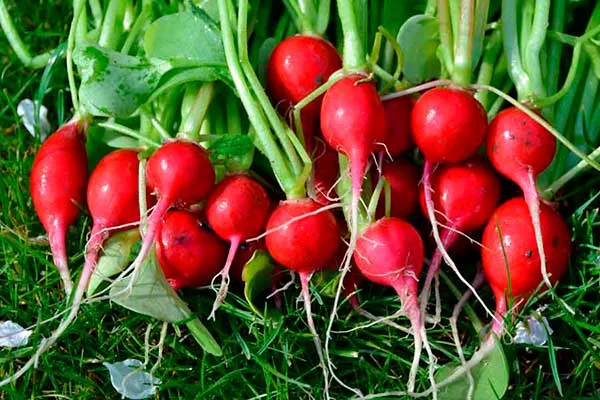
In conditions of large-scale cultivation, yields of up to 12-15 tons per hectare or 120-150 centners are observed, which may seem like a modest result.
Where is it recommended to grow?
This radish variety is ideal for cultivation in a variety of conditions: from greenhouses and open ground to indoor growing. Adherence to all agricultural practices is key.
To create a mini-greenhouse, you can use the simplest method: simply cover the areas where the seeds are sown with film or glass material, which will significantly speed up germination.
Planting activities
The Champion variety doesn't require any special cultivation techniques and thrives in a variety of soil types. However, it prefers bright sunlight, so planning its growing beds requires special attention. Two to three sowings are allowed per season.
Peculiarities
It's considered ideal for open ground and doesn't require complex soil preparation. Other aspects to consider include:
- If the daylight hours exceed the norm of 12-14 hours, it is recommended to provide shade to the plants to prevent bolting.
- The variety produces the best yields in greenhouses and hothouses, as it doesn't require much light, and excessive sun can be harmful. Here, optimal humidity and temperature conditions are created.
- Some people successfully grow Champion in urban settings, for example, in containers on balconies. In this case, it's important to find the optimal location out of direct sunlight.
High-quality seeds are uniform and large, reaching 2.5 mm in diameter. Smaller seeds, those with damage or signs of spoilage, are not suitable. Soaking them is not necessary, as the planting material germinates quickly.
Recommended timeframes
This variety can withstand short-term cold spells and is not affected by spring frosts. However, seedlings can be planted in the garden once the soil has warmed and the daytime temperature reaches 18°C.
Planting dates vary by region:
- for southern regions and greenhouses the optimal time is the last ten days of March;
- for the Middle Belt – from April 1 to April 15;
- for the northern regions – from April 20 to May 10.
Selecting a location and preparing beds
Radishes should be planted in a sunny location, as shade or partial shade will reduce yield. However, be sure to avoid direct sunlight at midday.
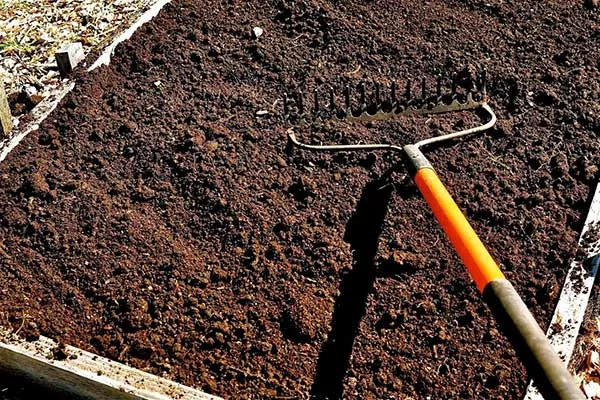
Suitable soils are light, neutral or slightly acidic. Preparation recommendations:
- It is recommended to prepare the substrate for planting in the fall, adding a mixture of compost, humus and charcoal to the soil as fertilizer.
- If the soil is not loose enough, add river sand and dig thoroughly until it becomes homogeneous.
- The fertilized bed is left until the following year.
- Before sowing, loosen the soil and, if necessary, mulch the beds. This helps prevent weeds and improves moisture control.
- ✓ Soil pH should be between 6.0-7.0 for optimal growth.
- ✓ The soil should be well drained to avoid water stagnation.
Landing algorithm
The process of planting radishes is carried out as follows:
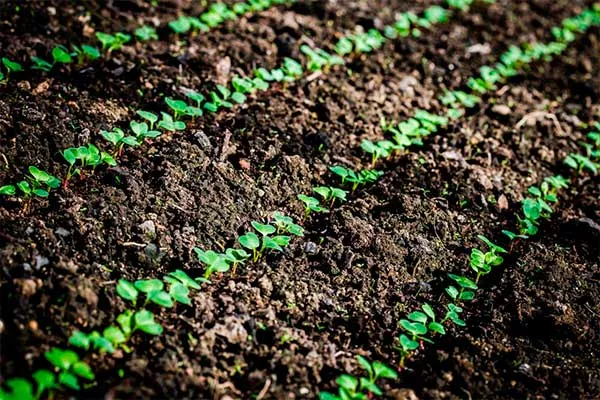
- In the prepared bed, use a garden tool to make holes or form furrows, the depth of which should not exceed 3 cm, while leaving a space of at least 10 cm between rows.
- Place compost or humus in the center of each hole.
- Cover with a thin layer of turf.
- Sow 2 seeds in each hole.
- Cover with soil again.
- Afterwards, carry out moderate watering, avoiding possible washing away of the planting material.
Features of cultivation
Experienced gardeners recommend fertilizing the soil before planting radishes, preferably in the fall. This way, no additional feeding is required during the growing season.
Watering
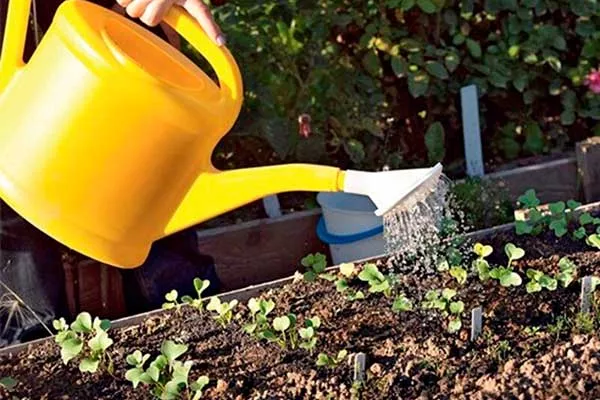
Radishes should be watered according to the specific soil type and only when the soil begins to dry out. Particular attention should be paid to preventing overwatering.
Briefly about the rules:
- Water thoroughly enough to penetrate to a depth of at least 8-12 cm.
- For the first two weeks, moisturize only in the evening, using warm water, and then switch to normal water temperature.
Thinning
Once all seedlings have emerged, the first pruning of weak plants should be performed. Leave only healthy shoots, with a minimum distance of 4-5 cm between them. The first harvest should also be carried out during this period.
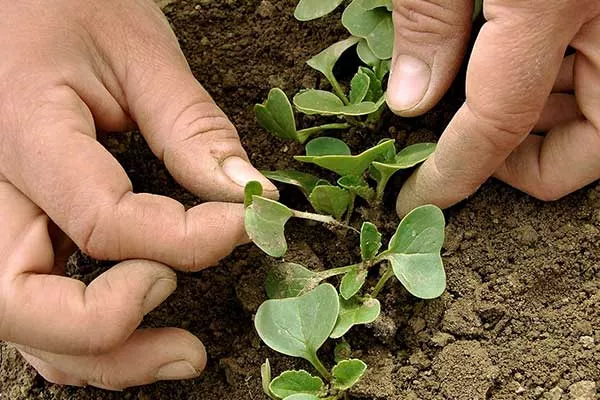
When thinning, it is important to follow some recommendations:
- the procedure is performed from morning until evening;
- With one hand you need to hold the soil around the seedling, and with the other hand you need to carefully remove the plant from the soil.
- After completing the work, the soil must be carefully compacted, and the seedlings must be watered with warm water.
Top dressing
For poor soil, two applications of fertilizer are recommended. For fertile soil, one application is sufficient. Radishes quickly absorb nitrates from the soil, so nitrogen fertilizers should not be used. Alternatively, you can use a mixture of compost and humus, superphosphate, ammonium nitrate, potassium salt, and charcoal.
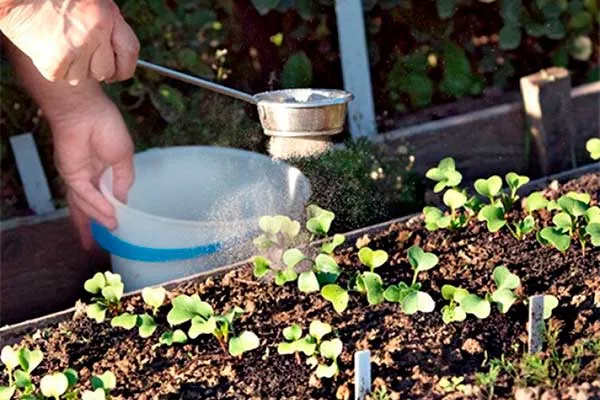
According to reviews, this type of fertilizer promotes the formation of tasty and juicy fruits. If the soil is sufficiently nutritious, it is recommended to use only mineral fertilizers.
Pests and diseases
Champion is not a hybrid variety, but it has good resistance to a number of diseases, provided all care requirements are met.
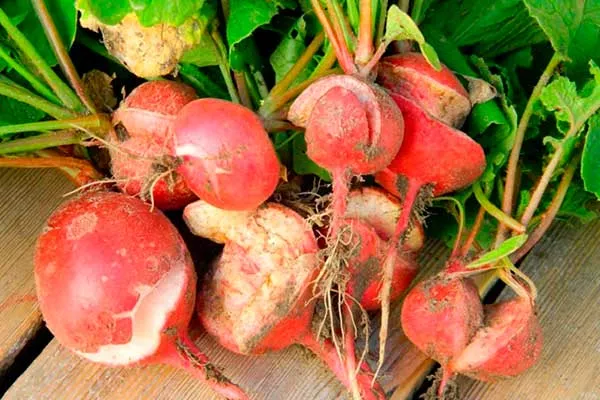
Gardeners sometimes encounter powdery mildew, which occurs due to overwatering and stagnant soil. This fungus can be controlled by treatment with copper sulfate or Fundazol.
Among the pests that can damage radishes are:
- cruciferous flea beetle, whose adults damage tubers, and whose larvae eat roots and fruits;
- leaf beetle, which feeds on the above-ground parts of the plant, causing serious damage and leading to the death of crops in the event of mass reproduction.
To combat pests, it is recommended to use insecticides that are readily available on the market - malathion, phosbucid and Sherpa
There are reliable methods of protection against pests using natural remedies:
- manual removal of adult individuals from leaves and their subsequent destruction;
- tomato leaf infusion;
- potato leaves soaked in water;
- dandelion infusion;
- using vinegar solution;
- recipes using chamomile, ash, pepper, tobacco, etc.
Another common problem is bolting (flowering). This can be prevented by carefully selecting the planting site and, if necessary, providing shade.
Harvesting and storage
Harvesting should begin 23-25 days after the first green shoots appear.
For long-term storage, it's recommended to use wooden crates with ventilation holes. The ideal location is a basement pre-treated with lime to prevent mold, moisture, and pests.
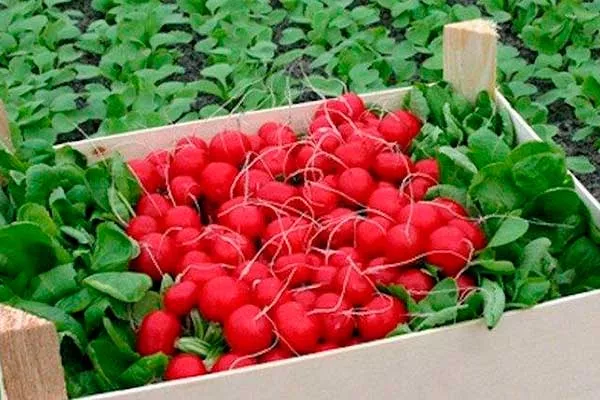
Place radishes in layers, placing paper between them to prevent direct contact between the roots. This method will keep the vegetables in perfect condition for up to a month.
Prevention of various problems
Beginners may encounter certain difficulties when growing the Champion radish variety:
- The plant develops large tops, but the tubers remain small—likely due to excessively long daylight hours. To save the remaining harvest, simply cover the radishes with a dark blanket every evening.
- If the plant begins to bloom, it is important to change the irrigation regime: avoid excessive waterlogging and dry soil.
- If the bush is stunted and wilting, the cause is hot conditions. It's recommended to use lukewarm water for watering to reduce the soil temperature.
To prevent potential problems when growing Champion radish, follow these basic recommendations:
- provide proper lighting;
- monitor the regularity of irrigation
- fertilize the soil before planting;
- carry out timely weeding;
- protect the plant from pests.
Vegetables similar to this variety
| Name | Ripening period (days) | Disease resistance | Recommended growing region |
|---|---|---|---|
| Dabel | 20-25 | High | Central, Southern |
| Carmen | 22-27 | Average | Southern, Volga |
| Celeste | 25-30 | High | Ural, Siberian |
| Sora | 23-28 | High | Central, Northwest |
| Charito | 21-26 | Average | Southern, North Caucasian |
Among the wide range of vegetable crops available to modern gardeners, you can find varieties resembling Champion. These vegetables will be similar in planting and ripening times, as well as in appearance and color. Well-known varieties, the seeds of which are readily available at most gardening stores, include:
- Dabel - universal, characterized by rapid ripening and undemanding nature;
- Carmen - early-ripening, characterized by a long shelf life;
- Celeste – large, resistant to adverse conditions, has a long shelf life;
- Sora - corresponds to the Champion in size and growing time, is unpretentious and has a pleasant taste;
- Charito – completely resembles the Champion in form and basic properties.
Positive and negative qualities
The variety's unique characteristics include an ideal combination of resistance to adverse weather conditions and diseases, coupled with early ripening. Other advantages include:
The variety's disadvantages include relatively small fruit size, which makes it unsuitable for commercial cultivation, and a tendency to accumulate nitrates.
Review of reviews
The Champion variety is ideal for cultivation throughout Russia, with the exception of the northern regions. This radish is characterized by rapid ripening and resistance to various diseases and insects, but is prone to developing flowering.