
Various diseases and pests affect radish growth and yield, as well as the crop's marketability. They can even attack early-ripening varieties. If left unchecked, diseases and pests will quickly spread throughout the plot and ruin the entire harvest.
Radish diseases
Radish is susceptible to viral and fungal diseases, which affect all parts of the plant: stems, leaves, seed heads, and flower stalks. Favorable conditions for their development include the presence of weeds in the garden, fallen leaves and grass left over from the fall, prolonged rainfall, and low temperatures. Diseases can be controlled by using specialized treatments and following preventative recommendations.
Kila
A fungal disease that develops when radishes are planted in acidic soil, are frequently watered, or grow in low-lying areas where water accumulates, damaging the roots.
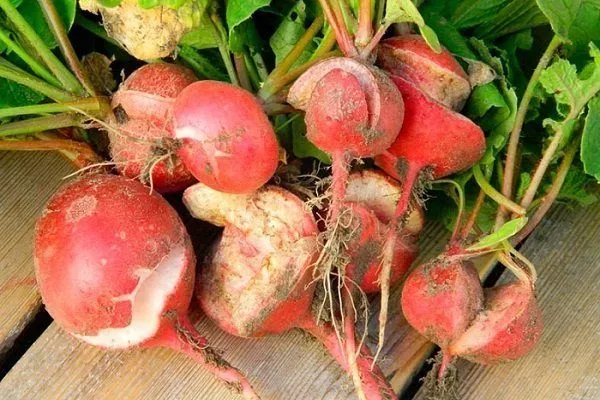
Symptoms of fungal infection:
- the appearance of spindle-shaped or spherical growths on fruits, the color of which does not differ from the color of vegetables;
- gradual change in the color of the roots to brown;
- root rot.
Due to damage to the roots, the lower leaves of the crop become wilted and the plant can be easily pulled out of the ground.
All radishes affected by clubroot should be removed from the soil and burned. The soil should be covered with slaked lime at a rate of 1-1.5 kg per square meter. Fungicides such as Sumilex, Fundazol, and Raksil T can also be used.
- ✓ Optimum soil pH to prevent clubroot: 6.5-7.0.
- ✓ Effective interval between fungicide treatments: 7-10 days.
Once a fungal disease has been detected and the consequences have been eliminated, cruciferous plants cannot be grown in this area for 4 years.
Preventive measures:
- Selecting suitable soil. Avoid choosing a site with acidic soil.
- Preparing the soil before planting. A few days before planting, it is recommended to loosen the soil and incorporate sifted wood ash.
- Timely destruction of weeds.
- Compliance with crop rotation rules and changing the planting location of the crop every 2-3 years.
White rot
Fungal disease develops with excess moisture and lack of heat and light.
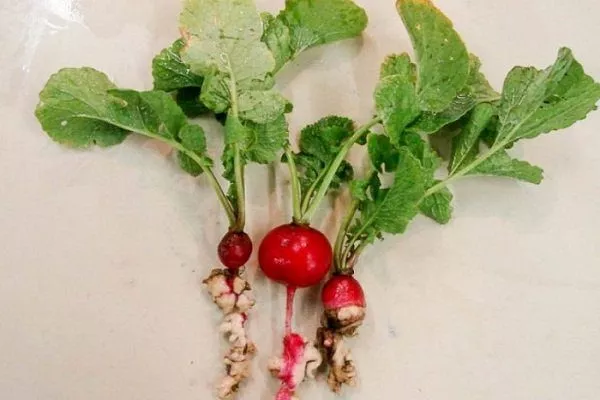
Symptoms:
- wilting of the upper part of the bush;
- rotting of shoots in the root area;
- discoloration of foliage;
- the appearance of a white coating on the leaves.
To combat the disease, you can spray plants with the following compounds:
- Bordeaux mixture;
- copper sulfate solution;
- copper-containing fungicides.
To prevent the disease, disinfect the soil before planting radishes and after harvesting. You can use products such as Fundazol or Fungistop.
Blackleg
The disease is caused by protozoa bacteria and fungi.
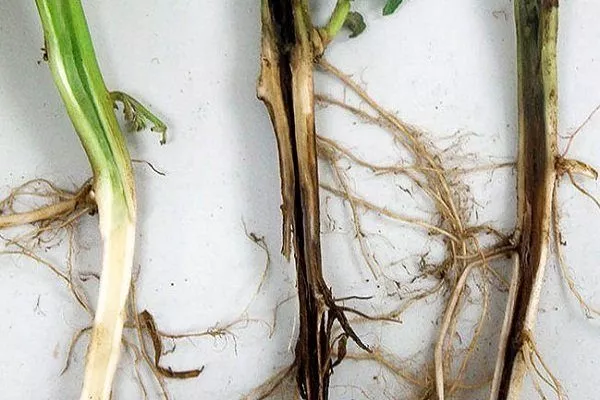
With this disease, radish leaves turn yellow and curl, and the stems turn black. The root also spoils: it becomes soft and covered with a coating.
If black leg has affected the crop, it must be immediately removed and burned, and the soil must be disinfected using a copper sulfate solution.
For prevention you need to:
- regulate the acidity of the soil by adding ash if necessary;
- treat seeds before planting in the soil;
- loosen the soil regularly;
- thin out seedlings;
- Water the beds moderately with water at room temperature.
- ✓ The first signs appear on seedlings in the phase of 2-3 true leaves.
- ✓ Affected plants have a characteristic 'tight' appearance at the base of the stem.
Also, for prevention, you can spray the plants with a composition consisting of 10 liters of water, a tablespoon of copper sulfate and a tablespoon of liquid soap.
Powdery mildew
The disease is also fungal in origin. It is also known as ash-pit or belya.
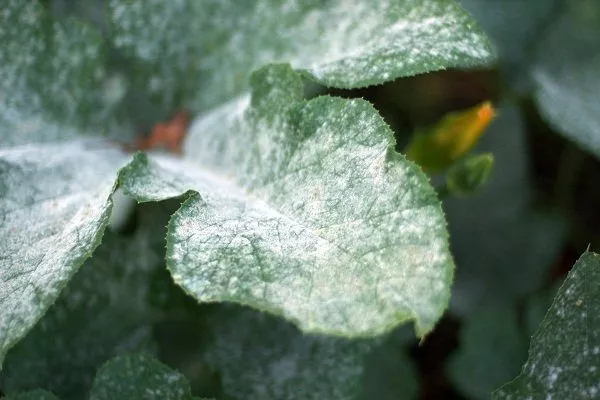
High humidity (60-80%) in the absence of precipitation and temperatures between 15-20°C (59-68°F) promote disease development. Excessive nitrogen fertilizer application is another trigger.
The leaves that are closest to the soil are the first to become infected.
Symptoms of powdery mildew on radishes:
- the appearance of white spots on the upper part of the leaf, which gradually increase in size and cover the entire above-ground part of the crop;
- drying and deformation of leaves.
To get rid of this disease, you need to:
- remove all affected leaves and burn them;
- treat the crop with fungicides: Topaz, Fitosporin, Nitrofural;
- Treat plants with a solution of milk or whey diluted with cold water in a ratio of 1:10.
Preventive measures:
- avoid over-watering the crop;
- carry out preventive treatment of radishes with fungicidal agents;
- remove old leaves that are in contact with the ground;
- thin out the beds regularly;
- Apply nitrogen fertilizers moderately.
Treatment for powdery mildew should begin in the early stages, while the plant can still be saved..
Vascular bacteriosis
The disease is caused by gram-negative aerobic bacteria. Vascular bacteriosis is one of the most dangerous radish diseases.
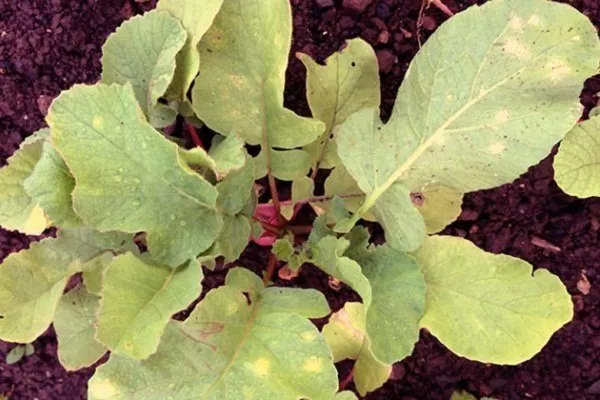
Signs of the disease:
- yellowing and wilting of leaves;
- the appearance of yellow spots along the veins;
- cessation of development and growth of culture.
Vascular bacteriosis of cruciferous plants can be controlled if the bacteria have not completely affected the plant's vascular system or if the disease is localized. Treatment can be achieved with bactericidal fungicides such as Alirin, Acrobat, and Vitaros. When handling these products, wear personal protective equipment.
To prevent the development of vascular bacteriosis, you need to:
- use only healthy seeds for planting;
- do not allow the soil to become over-watered;
- observe crop rotation standards.
Mosaic
A viral disease that slows the development of vegetable crops and causes deformation and shrinkage of leaves.
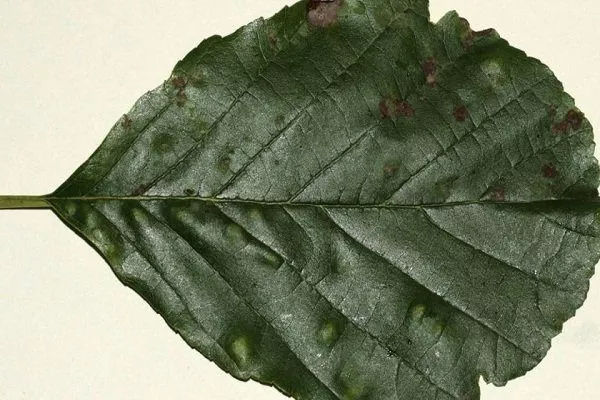
The main symptoms of radish mosaic disease are:
- the appearance of yellow-green or light green spots on the front of the leaf;
- blackening and death of affected tissues;
- darkening of veins.
The shape of mosaic spots varies. They appear as streaks, circles, or angular shapes. This depends on the type of virus infecting the plant.
It's impossible to eradicate this disease. The only way to preserve the remaining healthy crop and stop the spread of the virus is to remove the affected plant, including the roots and root ball, and burn it.
Preventive measures:
- treatment of seeds before planting with protective chemicals (Topaz, Rovral);
- maintaining cleanliness of garden beds, timely removal of weeds;
- control of insects that can carry the mosaic virus (aphids, weevils).
Downy mildew (peronosporosis)
The disease is fungal in origin and occurs during sudden temperature changes, which occur in the fall and spring.
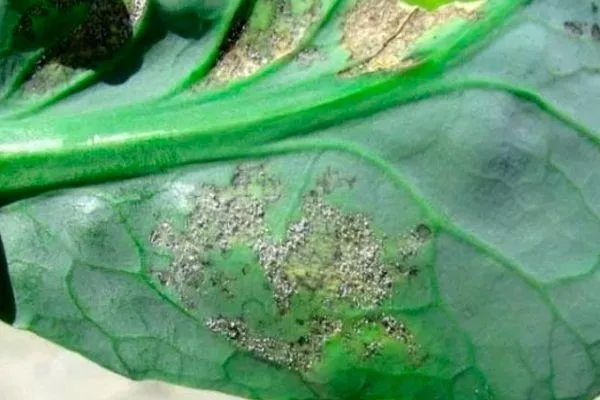
Symptoms of downy mildew:
- the appearance of yellow spots on the surface of the leaves;
- curling, drying and falling of affected leaves;
- the appearance of a greyish-purple coating on the plant under conditions of high humidity.
Fungal infections of radishes can be treated with pesticides (Efal, Copper Oxychloride, Acrobat MC). Fitosporin M is also suitable. Treatment should begin when the first signs of the disease are detected.
Prevention consists of the following:
- disinfection of seeds before planting with a solution of manganese;
- removing last year's leaves and plant debris from the beds before planting;
- preventing crop thickening.
To prevent the spread of the disease, leaves showing symptoms of downy mildew should be cut off and burned.
Gray mold
The disease is caused by a fungal microorganism. It may be present on the leaves of the crop but not manifest itself until favorable conditions arise, such as high humidity and low temperatures. Root crops, seedlings, and sometimes even leaves in contact with the ground are susceptible to infection.
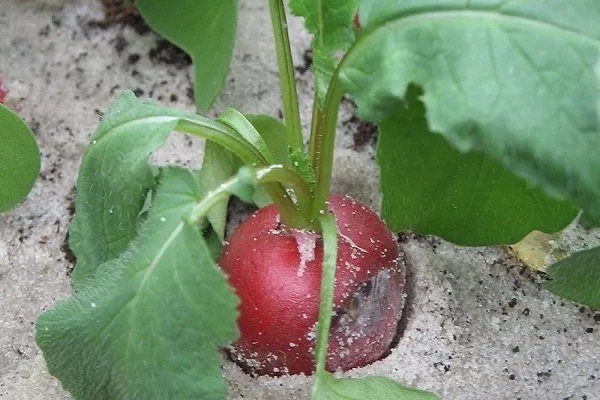
Manifestations of damage:
- the appearance of brown spots on the leaves, which soon become covered with a fluffy gray coating;
- formation of thin leaves between the spots.
If initial symptoms of damage are detected, the vegetable crop should be treated with a mixture of chalk and wood ash (one glass of each component), as well as copper sulfate (one teaspoon), diluted in 10 liters of water.
If the infestation is extensive, use a fungicide (Fitosporin-M) or Bordeaux mixture (1%). These agents are effective even in the late stages of infection.
For preventive purposes, it is recommended to regularly loosen the soil, avoid over-watering, and follow crop rotation rules.
Radish pests
Various insects cause wilting of cruciferous crops. Radishes are susceptible to attacks by above-ground and underground pests, which can and should be effectively controlled.
Cruciferous flea beetles
These are black bugs with a shiny body surface. They become especially voracious during dry, hot days.
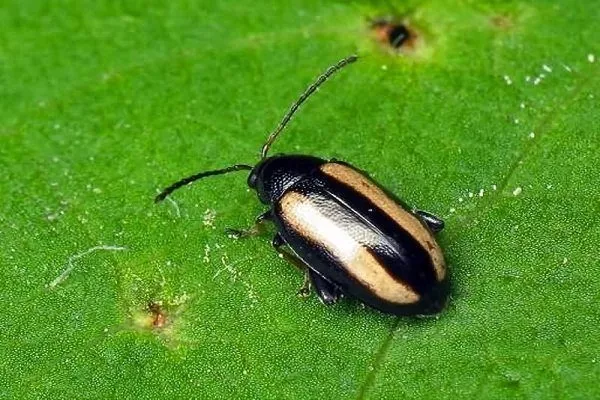
Symptoms of radish infestation by flea beetle:
- leaf thinning;
- the appearance of holes in the greenery;
- formation of passages inside the leaves.
Pests eat holes through leaves, causing them to dry out. Flea beetle larvae destroy the plant's roots.
To get rid of them, you can use folk remedies and chemicals. Chemical flea control products should not be used earlier than 20 days before harvest.
The most effective drugs:
- Aktara;
- Bankol;
- Intavir.
Folk remedies against cruciferous flea beetles:
- Composition with garlicTo prepare, take a cup of peeled garlic and mince it. Grind a cup of tomato shoots in the same manner. Mix both ingredients, dilute with 10 liters of water, and strain. Add a tablespoon of liquid soap and begin spraying the affected beds.
- Dusting plants with a mixture of street dust and cement powderPour the mixture into a sieve and sift over the beds.
- Birch tarDissolve a teaspoon of tar in a liter of water, stirring thoroughly. Spray the plants with the prepared mixture.
To prevent the appearance of pests you need to:
- water the beds more often, as fleas do not like moisture;
- plant next to the area where radishes, calendula, dill, and garlic are planted;
- Dig up the area intended for planting radishes as late as possible before winter to bring dormant bugs to the surface.
This video explains effective ways to combat cruciferous flea beetles:
Cabbage whites
These pests cause significant damage to cruciferous crops. The adult is a large white butterfly with black spots on the forewings. It lays eggs, which hatch into larvae that damage radishes.
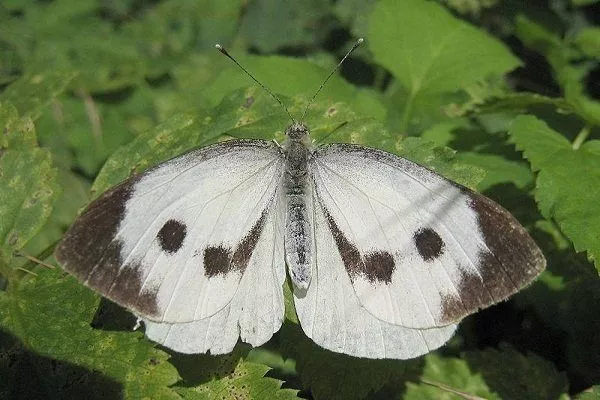
Symptoms of white butterfly infestation on radish:
- roughly eaten leaves (whiteflies leave only the veins);
- the appearance of black spots on plants (pest excrement);
- leaf curling.
If cabbage whites appear, it's recommended to use a solution containing mustard, the smell of which these pests dislike. To prepare it, take 100 g of dry mustard, dissolve it in 10 liters of hot water, and let it sit for two days. Before use, dilute it with water in a 1:1 ratio. Pour the resulting mixture into a spray bottle and spray it on the affected plants.
You can also use chemical agents: Iskra M, Fitoverm.
To prevent the appearance of butterflies, you need to:
- plant fragrant plants around the perimeter of the area - calendula, marigolds;
- sprinkle the ground under the radish with mint, lemon balm, and oregano, finely chopped with a knife;
- Sprinkle tobacco dust or shag onto the beds - their smell also repels insects.
Wireworms
Wireworms are the larvae of the click beetle. They are a very dangerous pest, capable of remaining in the soil for up to four years and destroying virtually any crop.
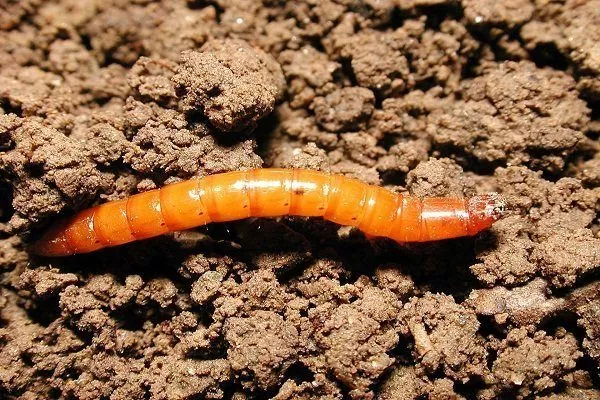
Symptoms that indicate damage to vegetable crops by wireworms:
- holes and straight passages in different parts of the plant;
- thinning of seedlings;
- rotting of plants.
Fighting wireworms once they've appeared in your garden is pointless: their larvae are underground, and using chemicals against them will negatively impact future harvests.
Pest prevention should begin before planting radishes. Similar measures should be taken after harvesting. These include the following:
- autumn and spring digging of the soil;
- removing weeds along with the rhizome (creeping wheatgrass must be destroyed especially carefully);
- timely application of ammonia fertilizers in recommended doses (nitrate, ammonium sulfate).
During the summer, it is necessary to periodically loosen the soil surface to destroy the numerous eggs and larvae of the click beetle.
Slugs
These pests damage the parts of root crops that protrude above the soil surface, as well as the leaves of the crop. They can be detected by dried slime left on the surface of the crop. Slugs are impossible to detect during the day because they feed only at night, hiding under plant debris during daylight hours.
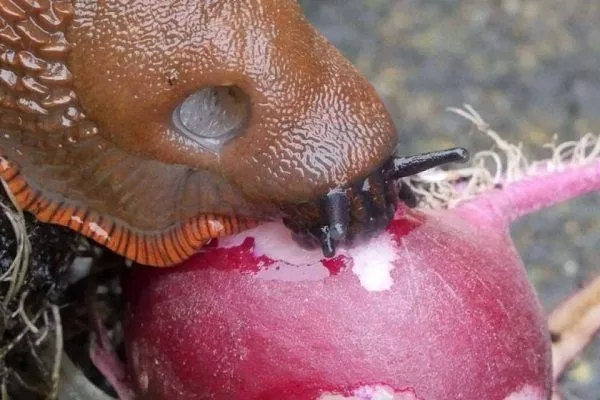
To protect the crop, it is recommended to carefully inspect the area under the seedlings and collect pests, then remove them away from the area.
To repel slugs, you can sprinkle a thick layer of crushed eggshells or lime around the perimeter of your garden beds. This will make it difficult for the pests to access your plants.
Stem nematodes
The most dangerous radish pests are nematodes. They feed on the plant's sap. To obtain it, they nest in the stem, root, or root collar of the fruit. A plant damaged by nematodes stops growing, wilts, and eventually dies.
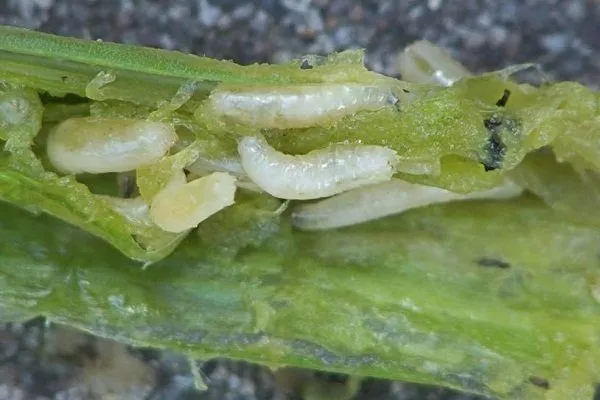
Externally, this pest is a rather small worm, the length of which reaches only 1-1.8 mm.
Symptoms of crop damage:
- slow plant growth;
- deformation of leaves and shoots;
- unsaturated green color;
- the appearance of spindle-shaped thickenings on the stems.
Chemicals are used to control the pest. These treatments will only be effective if the seedlings are young. The optimal time is spring and early summer. Insecticides such as Vidat and Dimethoate are effective against nematodes.
Preventive measures:
- checking planting material before planting in the soil;
- removal of weeds and plant debris from the site;
- disinfection of gardening tools;
- soil disinfection before planting a new crop.
Aphid
Small insects parasitize on young radish leaves, sucking out the juice and weakening the plant.
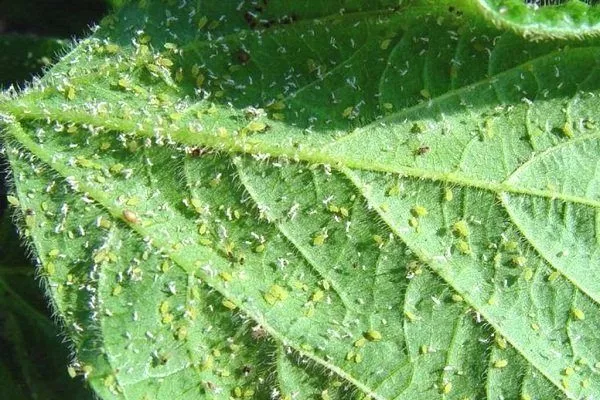
If these pests are found, it is recommended to wash them off the leaves with a soap solution.
Ladybugs destroy insects. To attract them to radish beds, plant calendula, chamomile, and marigolds nearby.
Another way to repel aphids is to spray plants with an infusion of tobacco or orange peel. You can also use Muracid.
Cabbage moth
This insect is a nocturnal parasite. It is a moth with dirty gray wings that lays eggs on the underside of leaves. The caterpillars overwinter underground.
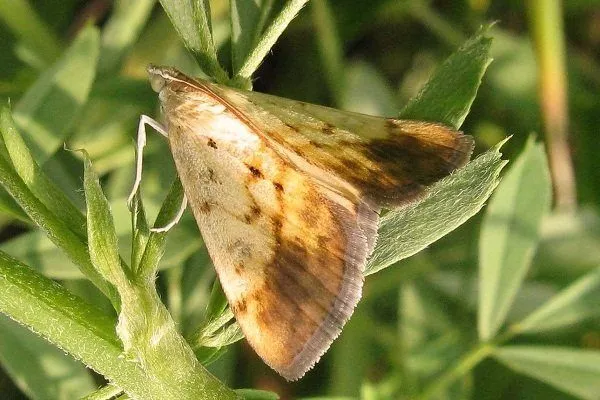
Gnawed radish leaves and holes in the stems are a sign of the presence of cabbage moth.
To repel insects, it is recommended to lay out pieces of cloth soaked in tar or kerosene on the beds.
To prevent butterflies from appearing on radishes, you need to dig the soil deeply in the fall and spring, remove weeds, and attract beneficial insects that fight pests.
Cabbage fly
It's not the fly itself that's dangerous for radishes, but the larvae it lays. Once underground, they damage the roots by chewing holes in them. The caterpillars also damage the leaves of the vegetable crop.
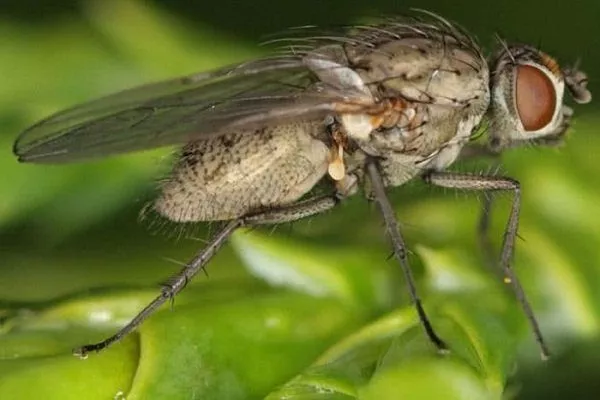
If pests appear, it is recommended to treat the plants with solutions containing slaked lime or naphthalene. If the infestation is extensive, chemical treatments such as Bitoxybacillin or Lepidocid should be used.
Preventive measures:
- attracting ground beetles to the beds;
- deep autumn plowing;
- weed removal.
Rape sawfly
This insect, whose body length reaches 8 mm, lays eggs in the second half of May on the underside of radish leaves. The hatched caterpillars consume the leaves, producing numerous holes of varying sizes.
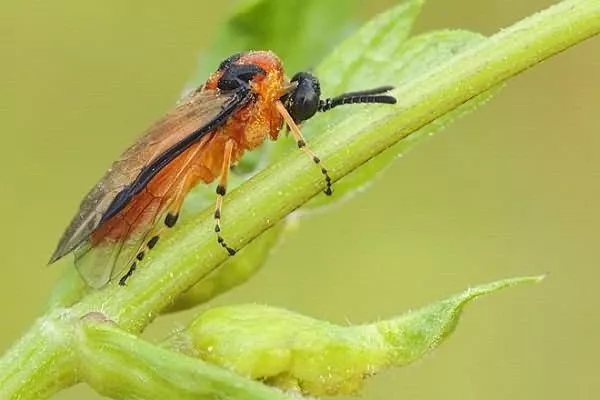
If the infestation is not too extensive, you can treat the beds with a black henbane infusion. To prepare it, take 0.5 kg of dried henbane leaves, pour 2 liters of hot water over them, and let sit for 12 hours. Strain the mixture, dilute it with 8 liters of water, add a handful of grated laundry soap, and spray the bushes.
In complex cases, chemical treatments should be used. Entobacterin or Dendrobacillin are suitable.
Prevention:
- deep loosening of the soil;
- destruction of plant residues after harvest;
- formation of bait crops.
Cruciferous bug
The insect has a flat body with a well-developed shield that covers half of its body. The bug's distinctive coloration is its vibrant coloration: red, yellow, and white spots appear on its back. It overwinters under plant debris, emerging when warmer weather arrives. Various weeds are a convenient habitat for it.
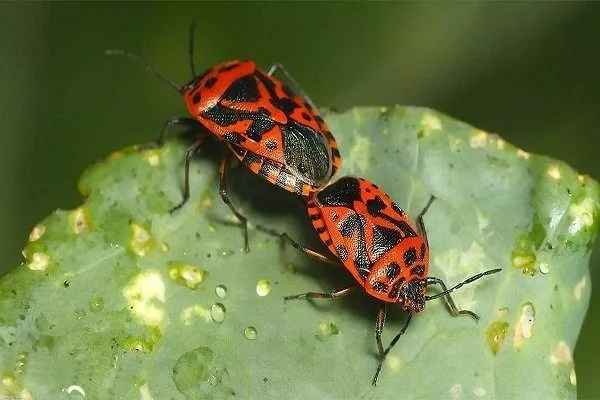
Insects lay eggs on the underside of leaves in early summer. The pests use their proboscises to burrow into stems and leaves, sucking out sap and thus disrupting metabolism and photosynthesis.
Yellow spots appear where the bug has chewed through the plant. Affected roots become slimy and develop an unpleasant, putrid odor.
You can repel bedbugs with fragrant plants like chamomile or wormwood. You can also use onion skins or tobacco dust, scattering them around your garden beds.
It's much easier to prevent radish diseases and pests than to deal with them later. To do this, you need to adhere to proper agricultural practices and use special formulations that protect the plant from various pests.