
Despite its relatively strong immunity and rapid growth, radishes can be susceptible to a wide variety of diseases and pests. Read on to learn how to recognize, prevent, and treat them.
Radish pests
The succulent roots and leaves of radishes attract a wide variety of pests, including chewing and sucking ones. Radishes have a short growing season—about a month—but some insects only need 2-3 days to completely destroy a planting.
| Name | Period of activity | Size | Methods of control |
|---|---|---|---|
| Spring cabbage fly | End of May | 6.5 mm | Tobacco dust, marigolds, chemicals |
| Cruciferous flea beetle | April-October | 2-3 mm | Regular watering, traps, ash |
| Caterpillars of the white butterfly | Late June, September | 5-6 cm | Manual collection, dusting with ash |
| Babanuha | Beginning of June | 3-4 mm | Weed removal, early sowing, ash |
| Cruciferous bug | April-October | Up to 1 cm | Tansy, hand-picked, infusions |
| Aphid | All season | 2 mm | Soap solution, onion, garlic |
| Slugs | Night time | Up to 10 cm | Loosening, weeding, gravel |
| Cabbage moth | May-November | 2 cm | Lavender infusions, chemicals |
| Rapeseed blossom weevil | May-July | 2.7 mm | Weeding, chemicals |
| Rape sawfly | June-August | 7-8 mm | Seed dressing, infusions |
| Cabbage moth | May-November | 2 cm | Digging, biopreparations |
| Wireworms and click beetles | All season | Up to 1.5 cm | Ash, onion peel, chemicals |
- ✓ The optimal soil moisture level to prevent the activity of cruciferous flea beetles should be 60-70%.
- ✓ Air temperatures above +25°C significantly reduce slug activity.
Spring cabbage fly
This pest can significantly damage radish yields. The fly is especially active in late May, when bird cherry and lilac trees begin to bloom. This is precisely the time when gardeners begin planting radishes.
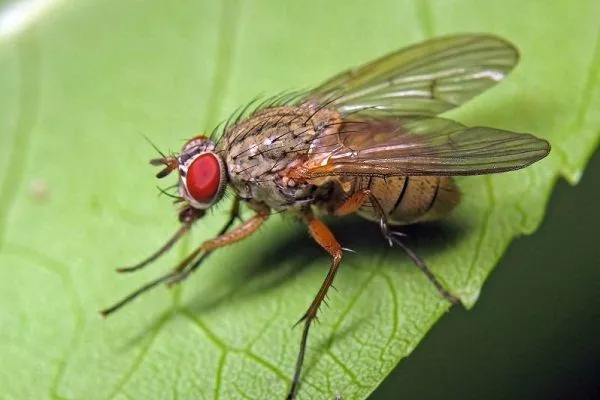
The cabbage fly has a longer body than common flies—about 6.5 mm. It can be identified by a black stripe on its abdomen. Females lay eggs in the soil. The hatched larvae damage radish roots.
Signs of damage:
- the larvae gnaw passages in the root crops;
- the larvae from the root crop rise higher and damage the petioles;
- the leaves turn blue, curl and wither.
The fly itself doesn't harm the plants; its larvae eat them. But it's the fly itself that needs to be dealt with, before the larvae hatch.
How to fight:
- To repel cabbage flies, scatter a mixture of tobacco dust, crushed bay leaves, and camphor over the beds. This should be done 3-5 days after the seedlings emerge.
- Marigolds are planted around radish beds. Celery and parsley also repel the pest.
- The beds are mulched with wood shavings or sawdust.
- If larvae begin attacking plants, chemical treatments such as Karate, Rovikurt, and others are used. A broad-spectrum insecticide, Danadim Expert, is also recommended; it is used for both prevention and control.
- A mixture of vinegar and ammonia – 5 ml per bucket of water – helps to deal with larvae.
- Deep plowing.
- Removing weeds that attract cabbage fly.
Cruciferous flea beetle
Flea beetles look like tiny black beetles. Their hard bodies shine in the sun, giving them a metallic sheen. Blue and brown flea beetles also exist. They are 2-3 mm long. They can quickly riddle entire radish tops. They can jump, enabling them to quickly travel long distances.
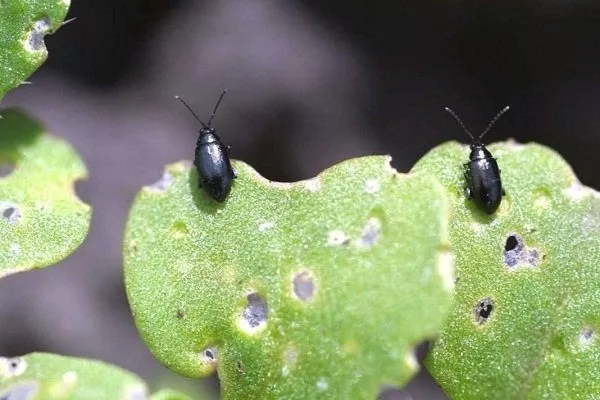
The pest hides in the top layer of soil. Flea beetles lay eggs on fallen leaves and plant debris. After hatching, the larvae immediately begin feeding on the roots. These pests are sucking insects, gnawing through the leaves and roots of radishes.
The cruciferous flea beetle does not like high humidity and heat - under such conditions, the insect's activity decreases sharply.
Signs of damage:
- the leaves are covered with microscopic holes;
- tissue dies off along the edges of damaged areas.
Flea beetles don't damage root crops, but they do carry diseases that infect other plants. The insect prefers dry conditions, so it's especially active in damaging plants that suffer from moisture deficiency.
How to fight:
- Regular watering.
- Setting up the traps. Thin boards coated with honey or glue are placed between the rows. Fleas love to jump, so many of them stick to the sticky base.
- Fleas are repelled by scattering sifted ash mixed with dry tobacco leaves, ground pepper and dry mustard over the seedlings.
- To prevent pests from getting into the beds, they can be covered with film.
- Every week, spray the beds with an infusion of dandelion, tomato, or potato tops diluted in vinegar. Use 30 ml of vinegar per bucket of infusion.
- In case of a massive flea beetle infestation, the beds are treated with chemicals – Decis, Aktara, Molniya.
- Spraying with anti-flea shampoo for animals.
- "Collecting" fleas by hand. A piece of cloth soaked in something sticky is tied to a stick. The resulting "flag" is moved across the tops of the plants, collecting the insects.
Flea beetles love to feed on young radish tops. If they attack young shoots, they can destroy them in a matter of days.
Caterpillars of the white butterfly
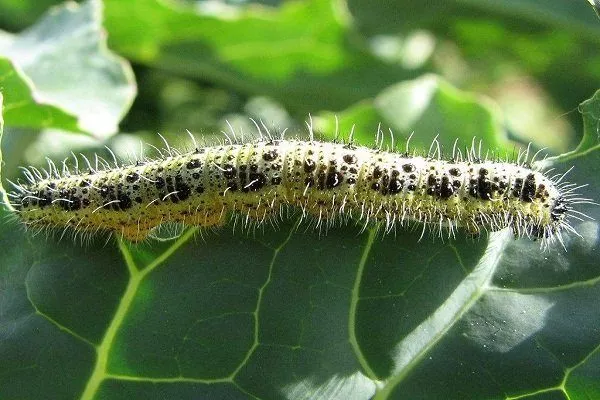
The cabbage white butterfly is a harmless butterfly with white, or less commonly yellow or beige, wings bearing small black spots or stripes. It is commonly called the cabbage white butterfly. It grows to 5-6 cm in length. Damage to radishes is caused by its caterpillars, which hatch in late June. The second generation emerges in September. The green and yellow caterpillars can completely consume the tops of radishes in a matter of days.
Signs of damage:
- corroded leaf blades;
- gnawed stems.
How to fight:
- Caterpillars can be collected by hand. They hide on the undersides of leaves. Turning the leaves over reveals the pests.
- It is not recommended to treat radishes with chemicals, as their ripening period is too short. Sprayed vegetables can be dangerous to eat. However, for severe infestations, Actellic and other treatments are used.
- Dust the soil with ash mixed with cinnamon, mustard, ginger or sage.
Babanuha
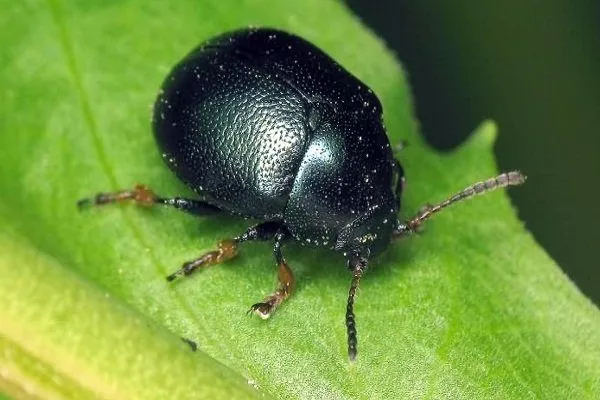
Small black-green beetles attack all crops in the Cruciferae family. These beetles are commonly known as "horseradish leaf beetles." The beetle's body length is 3-4 mm. The horseradish leaf beetle is found throughout Russia, with the exception of the Far East and Eastern Siberia. The beetles become active in early June.
Signs of damage:
- The leaves are gnawed. The beetle literally scrapes off layers of leaf tissue.
- The leaves become thin, rusty, faded and deformed.
How to fight:
- Timely removal of weeds.
- Early sowing of radishes.
- Crop rotation.
- Dusting plantings with wood ash.
- In case of severe damage, spray with Karbofos.
- Dusting the garden bed with ash and mustard.
- Spraying with a vinegar solution - 20 ml per bucket of water, infusion of tomato tops, chamomile or yarrow.
When startled, the beetles fall on their backs. If you spread plastic film on the ground, you can shake the beetles off onto it.
Cruciferous bug
This striped red-and-black insect is easily visible on green foliage. The bugs become active in April, when they emerge from hibernation, and continue until autumn. They are especially damaging to radishes during hot weather, sucking the plant's sap.
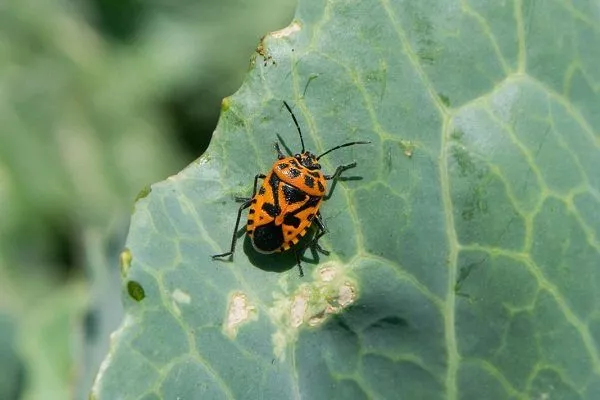
Signs of damage:
- on the leaves – mechanical damage;
- Over time, the affected areas turn yellow and die off.
How to fight:
- Bedbugs are afraid of the smell of tansy. This plant is planted near radish beds.
- Insects can be collected by hand.
- Spraying the beds with infusions of chamomile or onion peels.
- Treatment with chemicals – Aktara, Belofos, etc.
Aphid
Aphids are omnivorous insects that feed on all crops, including radishes. These 2 mm long, green insects suck plant sap and infect them with various pathogens.
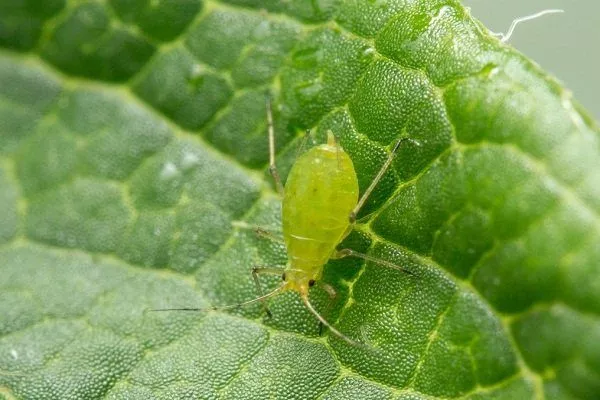
Aphid colonies are maintained by ants. To remove aphids from a site, it is also necessary to kill or expel the ants.
Signs of damage:
- whole colonies of small insects settle on the leaves;
- the leaves become sticky, deformed, yellow.
How to fight:
- spraying with a solution of laundry or tar soap - take 300 g per bucket of water;
- planting onions, garlic, and herbs along the beds;
- spraying with infusions of pine needles, orange peels, mustard powder;
- treatment with Decis EC and other insecticides.
Half an hour after spraying the beds with a foamy soap solution, the radish tops should be washed with water.
Slugs
Slugs are grayish-beige gastropods. They have no shell and are very voracious. Slugs eat both greens and root vegetables, and can completely destroy radish seedlings in a short period of time. Slugs can reach 10 cm in length.
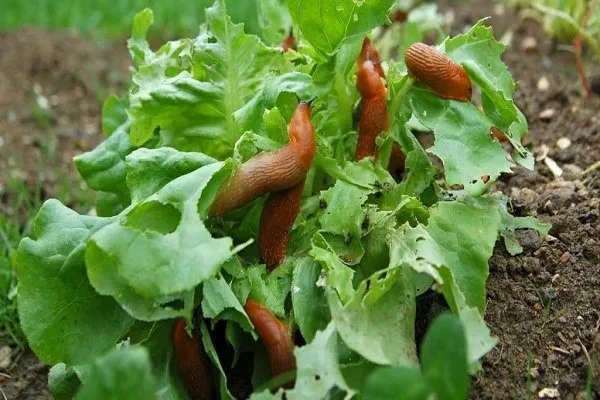
Slugs don't tolerate heat and dryness. They hide during the day and crawl out onto the garden beds at night.
Signs of damage:
- large holes in the leaves;
- through passages in root crops;
- sticky marks on leaves.
Slugs are extremely difficult to get rid of; it's easier to prevent them from appearing on your property.
How to fight:
- loosening the soil between rows;
- weeding beds;
- avoiding excess moisture;
- planting plants that repel slugs – garlic or parsley;
- creation of barrier lines – you can use gravel, pine needles, lime;
- treatment of the entire area with the drug "Slug Eater".
Cabbage moth
This small gray-brown butterfly does not cause any harm to plants. Its caterpillars feed on the leaves. These voracious pests, initially yellow, then light green, actively consume first the roots and then the radish tops.
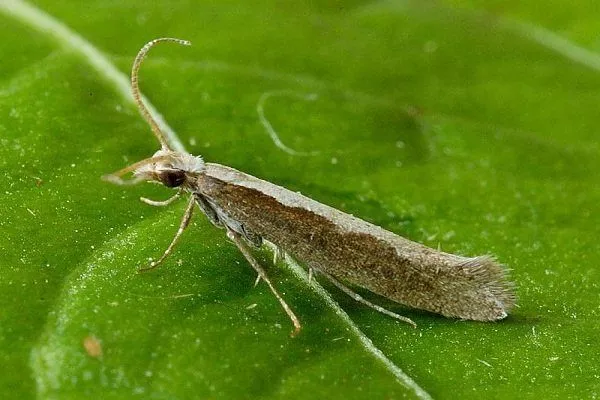
The insects overwinter in the soil and awaken as soon as the soil warms to 10°C. The pests remain active throughout the summer, feeding on cruciferous plants until November. The caterpillars cause especially severe damage to radishes during hot and dry weather.
Signs of damage:
- gnawed passages in root crops;
- eaten leaves;
- The roots rot and the leaves fade and dry out.
The cabbage moth butterfly is inconspicuous and difficult to notice – it looks like a dry branch.
How to fight:
- It is recommended to start by spraying with lavender infusion or citrus peels;
- If infusions fail to repel the caterpillars, resort to chemicals - spray the beds with Ditox or other insecticides.
You can fight the cabbage moth using the same methods as the cabbage white butterfly.
Rapeseed blossom weevil
The beetle is small—up to 2.7 mm in length—and has a black body with a greenish sheen. This characteristic earned it the nickname "shiny beetle." The beetle eats pollen, damaging the stigmas and stamens of flowers, which is why it is attracted to flowering radishes.
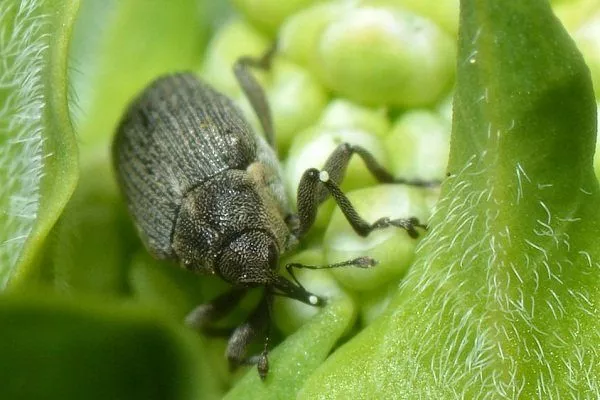
The scaly beetle overwinters in the soil, emerging at temperatures between 10 and 12°C. The beetle prefers rapeseed crops, but also attacks radishes and other cruciferous plants. The scaly beetle can reduce crop yields by 30-70%. It is most active from May to July.
Signs of damage:
- flowers are fading;
- pollen falls from flowers.
The beetle isn't particularly dangerous to radishes, as their flowering ends before the flower weevil emerges. However, other cruciferous plants should be protected from it.
How to fight:
- agricultural methods – weeding and deep loosening of the soil;
- spraying with chemicals – Karate, Fastak, etc.;
- To distract the beetle, you can plant some rapeseed near the radish.
Folk remedies are not effective in the fight against rape blossom beetle.
Rape sawfly
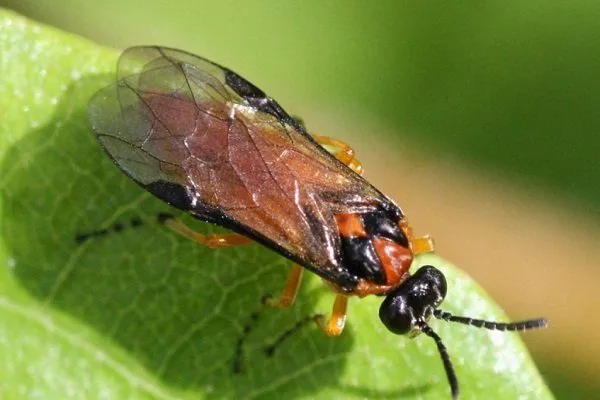
This orange-yellow insect with transparent wings reaches 7-8 mm in length. It belongs to the Hymenoptera family. The edges of its wings have a patterned black border. The sawfly lives on the undersides of leaves, which it feeds on. The pest gnaws off leaves almost completely, down to the petioles.
Signs of damage:
- the edges of the leaf blades are gnawed;
- sawfly larvae – dark green caterpillars – are visible on the tops;
- The radish dries up and dies before it has time to form roots.
Crop losses from rapeseed sawfly can reach 95%.
How to fight:
- Before planting, seeds are soaked for 10 minutes in Karat or Actellik;
- In the fall, dig up the soil to destroy the larvae that overwinter in the soil;
- spray the plantings with Bitoxibacillin - it repels adult insects;
- spray with infusions of chamomile or tansy;
- The beds are treated with Fastak, Mospilan and other insecticides.
Cabbage moth
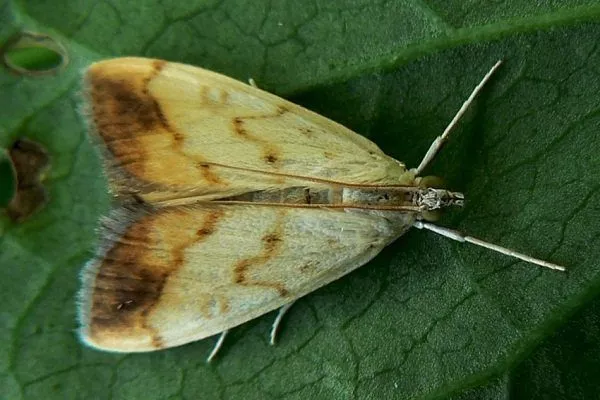
The firefly is a nocturnal, brown-gray moth, reaching 2 cm in length. This moth produces very voracious caterpillars. They feed for 15 to 35 days and then hide in the soil to continue their development. The moth is not harmful to radishes sown early in the spring; it only becomes active in May.
Signs of damage:
- gnawed petioles;
- through holes in the leaves.
How to fight:
- autumn digging;
- weed removal;
- Butterflies are repelled with Bitoxybacillin or Dendrobacillin;
- If caterpillars appear, the plantings are sprayed with Anometrin, Ambush or other insecticides with a similar effect.
Wireworms and click beetles
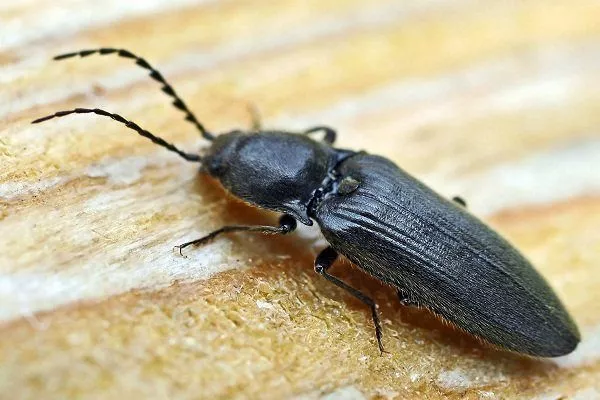
Click beetles are small black beetles that feed exclusively on the radish tops. These insects promote the development of fungi and gray mold. The beetle larvae, called wireworms, feed on the roots of radishes. They live in the soil and can ruin the entire harvest.
Signs of damage:
- on leaves damaged by beetles there are large holes;
- Root crops gnawed by wireworms turn black and rot, losing their flavor.
How to fight:
- dusting with wood ash helps to get rid of click beetles;
- An infusion of ash (400 g per 10 l of water) is also effective against beetles;
- You can kill wireworms with a decoction of onion peel (30 g per 5 liters of boiling water) - it is used for watering;
- If wireworms are actively attacking your plantings, you can spray the beds with Bazudin.
To prevent wireworms, it is recommended to add onion peels to the rows of radishes when sowing them – this will repel the pest.
Radish diseases
Radishes don't have any specific diseases. This crop is susceptible to fungal, bacterial, and viral infections common to all cruciferous vegetables. Diseases are most often transmitted by insect pests.
White rust (white rust of cabbage crops)
The disease is caused by a fungus that attacks all cruciferous crops. Radishes, horseradish, and turnips are particularly susceptible. It is especially dangerous for young seedlings. The fungus thrives at 15°C (59°F), as well as in cool and rainy weather.
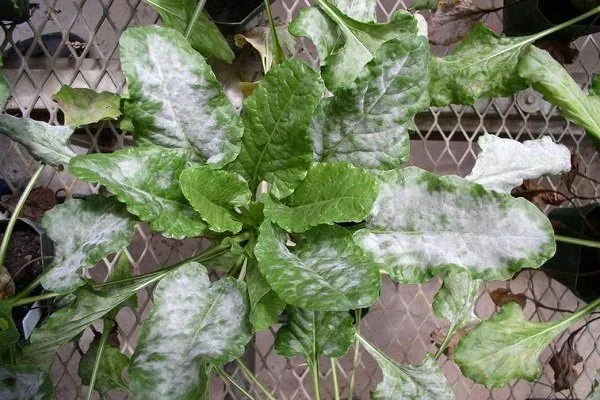
Symptoms:
- light green spots on leaves;
- leaf tissue thickens at the affected areas, then turns brown and dies;
- pustules form on the reverse side, which, when they burst, release an oily coating;
- the stems are deformed;
- root vegetables become covered with growths;
- Radishes often bloom without having time to produce roots, and then dry up and die.
Control measures:
- spraying with copper-containing preparations;
- treatment with biological fungicides – Folicur or others.
- ✓ The appearance of an oily coating on the underside of leaves is characteristic only of white rust.
- ✓ Black holes with jagged edges on root crops are a unique sign of scab.
In the early stages of development, folk remedies are effective, such as spraying with soda, potassium permanganate, and colloidal sulfur. To improve the adhesion of the solutions to the leaves, add liquid soap or soap shavings (3-5 ml per 10-15 g of solution per bucket). Preventative spraying is carried out weekly.
Kila
The disease attacks root crops and can deprive gardeners of half their harvest. It is caused by overwatering and high humidity. Clubroot only affects crops of the Cruciferae family.
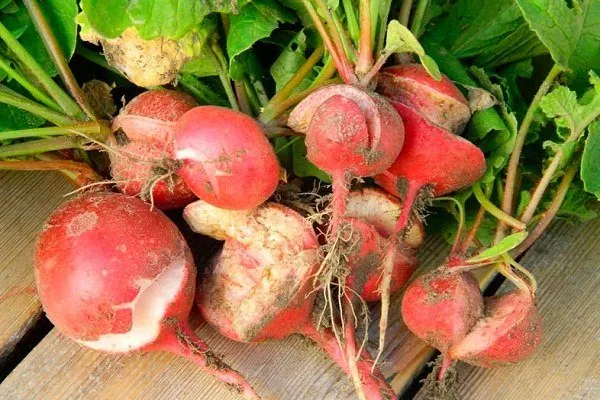
The clubroot virus is extremely resilient and can remain active in the soil for up to five years.
Symptoms:
- growths appear on root crops;
- over time, root vegetables darken and rot;
- the stems turn yellow, dry out and die.
Control measures:
- soil disinfection with dry bleach – 200 g per 1 sq. m;
- watering with a 5% colloidal sulfur solution;
- compliance with crop rotation.
In areas infested with clubroot, planting crops susceptible to the disease is prohibited for 8-10 years. If you plant legumes or nightshade crops such as potatoes or tomatoes, the period can be reduced to 5 years.
Scab
Scab often affects radishes, turnips, and rutabagas. It is caused by a bacterium that survives in the soil. The disease is especially common in dry and poorly fertilized soils.
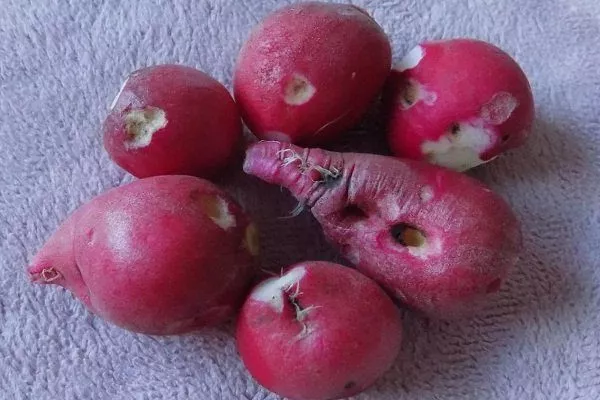
Symptoms:
- root vegetables thicken, white spots appear on them – 1 mm in diameter;
- black holes with jagged edges appear on the root crops;
- the addition of secondary infections causes softening of root crops.
Control measures:
- alternating planting of radishes with crops that are not affected by this pathogen;
- use of fertilizers that acidify the soil;
- Radishes should be watered in warm and dry weather.
Blackleg
A fungal disease caused by two pathogens. One is a soil-dwelling mold that attacks the root collar and roots of plants. The second pathogen is more aggressive, also attacking stems and leaves.
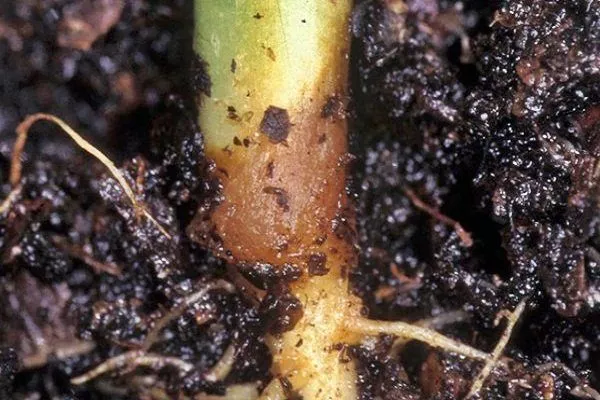
Symptoms:
- mold fungi cause damage to the stem, it turns black and dries out;
- The second pathogen causes black spots to appear on the leaves and completely destroys the plant in a matter of hours.
Control measures:
- disinfection of seeds by heating (+50 °C);
- cleaning and destruction of infected plants;
- watering the soil with a solution of potassium permanganate - 2 g of potassium permanganate are dissolved in 1 liter;
- Treatment with Trichodermin - this drug contains a fungus that suppresses the development of pathogens.
For preventative and therapeutic spraying, use a Trichodermin solution: dilute 10 g of the preparation in 10 liters of water. Seeds can also be soaked in it; 20 minutes is sufficient to disinfect them.
Vascular bacteriosis
It affects mature radishes during the root formation stage. It occurs in high humidity, heat, and mechanical damage. The disease is transmitted during rainfall and is also spread by insects.
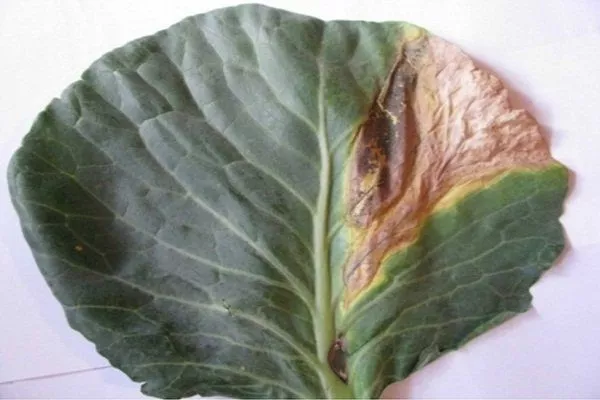
Symptoms:
- blackening of veins on leaves;
- black spots appear around the veins;
- the leaves turn yellow and crumble;
- the stems are deformed;
- plant growth slows down.
Control measures:
- 10 days after emergence, the seedlings are sprayed with Trichodermin;
- At the initial stages of the disease, treatment with Fitovlavin may help, but at later stages it is not possible to save the plants;
- Preventive treatment with Albit is a systemic pesticide that protects vegetables from various phytopathogens;
- preventing over-watering of the soil.
Radish mosaic
The disease is caused by a virus that infects most garden crops. The virus is seed-transmitted.
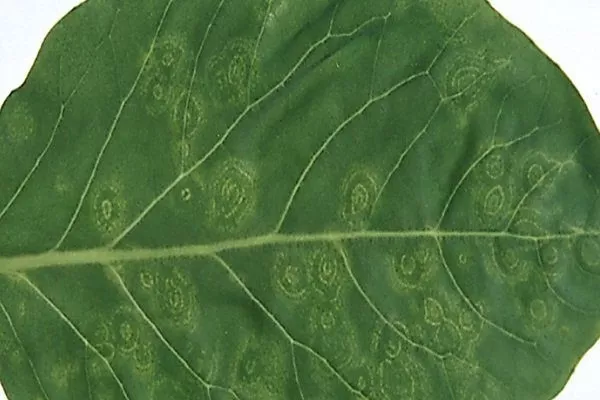
Symptoms:
- growth and developmental delays;
- deformation and shrinkage of leaves;
- leaf blades become covered with yellow-green spots – their shape depends on the type of virus;
- the affected tissues turn black and die.
There are no effective treatments for mosaic virus. Gardeners can only slow the progression of the disease by removing infected plants from their plots.
Control measures:
- use of healthy seed material;
- seed treatment with Horus, Topaz, etc.;
- use of insecticides to prevent the spread of the disease by weevils, aphids, and mites;
- Strengthening the immune system by adding supplementary feeding.
Gray mold
The disease is caused by a fungus. High humidity combined with cold weather favors the development of gray mold. Fruit affected by this disease should not be consumed.
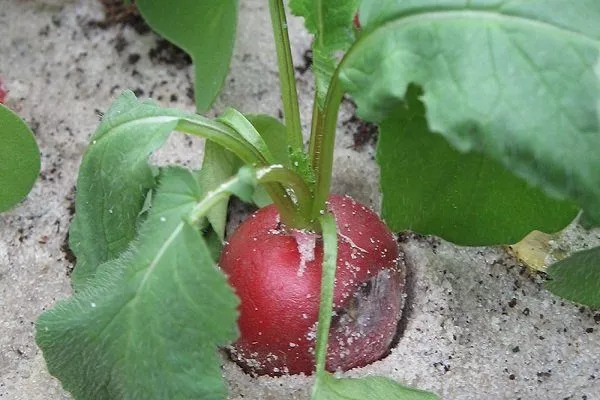
Symptoms:
- the root crops are covered with brown spots, with a bluish-gray coating on top with black inclusions;
- root vegetables become soft and rot;
- The petioles become watery and the leaves wither.
Control measures:
- dusting with wood ash, crushed activated carbon or colloidal sulfur;
- spraying with a solution of mustard powder or iodine - take 50 g and 10 drops, respectively, per bucket of water;
- spraying with Bordeaux mixture;
- application of potassium fertilizers;
- once a week water with a solution of potassium permanganate;
- planting marigolds, nasturtiums or calendulas near the beds;
- In case of mass infection, Horus and Gamair are used, but even their use does not always lead to a cure.
Powdery mildew
The disease is caused by a virus that infects all garden crops. Its development is facilitated by high humidity, heat, and temperature fluctuations. The fungus is spread by wind, raindrops, and insects.
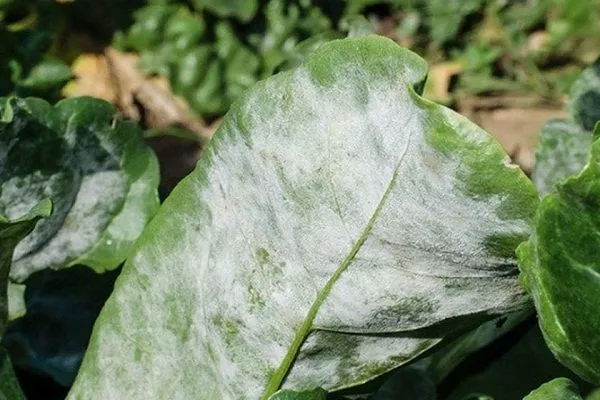
Symptoms:
- a powdery whitish or gray coating that resembles flour;
- brown spots with black dots appear on the leaves;
- the affected tissues die off and through holes appear;
- deformation of sheet plates.
Control measures:
- for preventive purposes, seedlings are sprayed with infusions of ash or colloidal sulfur, yogurt, or a decoction of horsetail roots;
- treatment with copper sulfate solution;
- spraying with copper-containing fungicides – Skor, Quadris, Fundazim and others.
Downy mildew (peronosporosis)
The disease is caused by a fungus. Its spread is facilitated by temperature fluctuations. Downy mildew develops very quickly and can destroy entire crops within a few days.
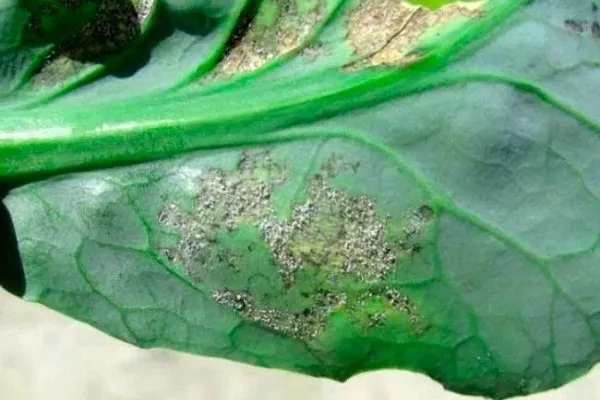
Symptoms:
- small yellow spots appear on the leaves;
- the spots grow and the leaves curl and dry out;
- The back of the sheets is covered with a felt-like coating of a greyish-purple hue.
Control measures:
- for prevention, radishes are sprayed with a solution of boric acid - 15 g per 10 liters of water;
- Rizoplan and Pseudobacterin also help prevent downy mildew;
- spray the plantings with an infusion of onion or garlic shoots;
- soaking seeds in Bud, potassium humate or Photosporin-M;
- use preparations used to combat powdery mildew;
- Affected plants are sprayed with Fitosporin-M.
Prevention methods
To protect radishes from diseases and pests, take a number of preventative measures in advance. Most of these are universal and can prevent a wide range of problems.
Preventive measures:
- Digging the soil. Adding sand to create a loose structure. Adding dolomite flour or slaked lime if the soil is too acidic.
- Sorting and culling seeds. Disinfection before planting.
- Plant care – timely watering and fertilizing.
- Timely preventative spraying is recommended. Safe folk remedies are recommended.
- Destruction of diseased plants and removal of weeds.
- Regular dusting with wood ash.
An experienced gardener will explain how to control radish pests in the following video:
Radish diseases and pest infestations are most often associated with improper care or the use of poor-quality seeds. Although radishes are easy to grow, neglecting proper agricultural practices is essential, as this can lead to the loss of the entire harvest.
Thank you so much for the comprehensive information. I had a real problem with my radishes this year—they were attacked by flea beetles. I didn't know what to do, but you described everything in such detail and gave me some great advice on choosing the right pesticide. You saved my radishes, thank you!