
The 18-Day radish variety stands out for its ultra-early maturity, reaching maturity in just 18 days. It's not a hybrid, but a true cultivar, making it possible to harvest your own planting material. Thanks to its rapid growth, you can harvest several crops in a single season.
History of selection
The history of this variety's development begins with the work of breeders Z. S. Vinogradov, A. A. Litovkin, and V. S. and S. V. Voloschenko. Radish 18 Days was officially registered in the State Register of Experimental Breeding Achievements in 2003.
Description of appearance
The plant is a semi-erect shrub with a rosette of obovate leaves that are moderately pubescent. The aboveground part has a yellowish-green hue and is attached to petioles tinged with anthocyanin.
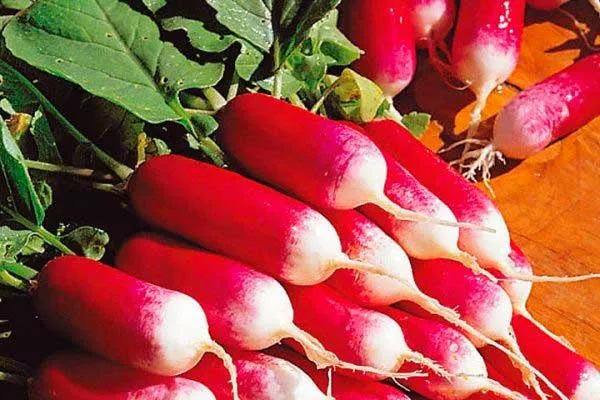
The most important characteristics of 18-day radish fruits are as follows:
- form - elongated cylinder;
- weight - 17-20 g;
- length - about 5-6 cm.
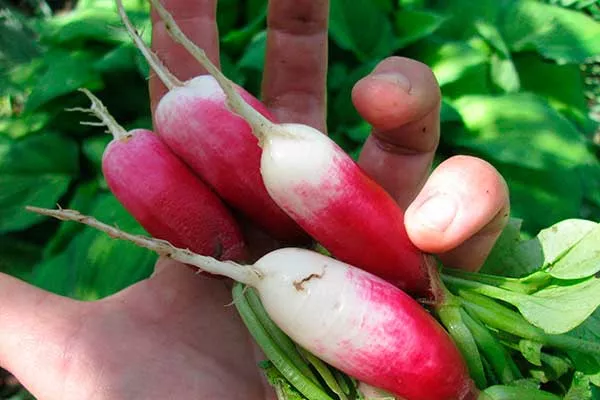
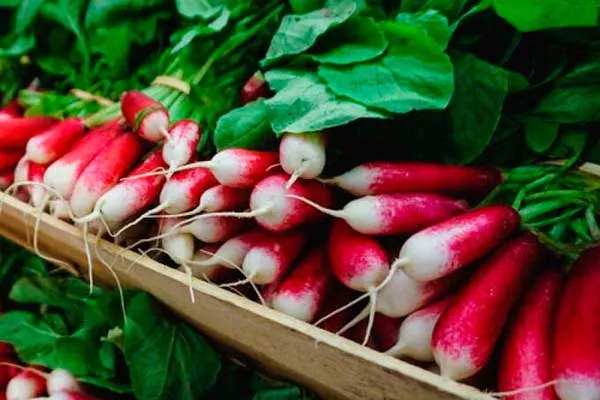
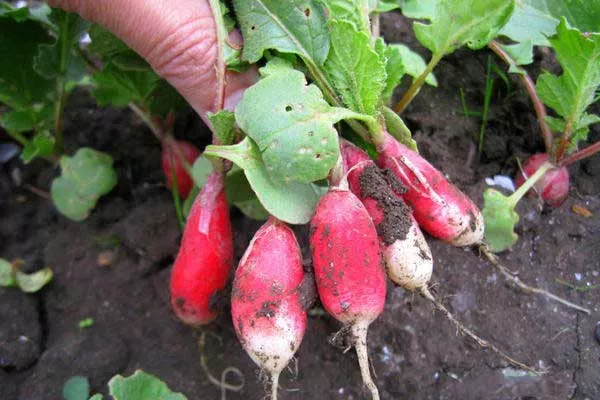
The roots of this variety are distinguished by their convex head and pinkish skin, with a white tip. The flesh of the radish is firm, juicy, and white.
Characteristics
Radish 18-day thrives in moisture, but also has excellent ability to survive drought and low nighttime temperatures, including frosts down to -2°C. This variety has excellent disease resistance and promises bountiful harvests.
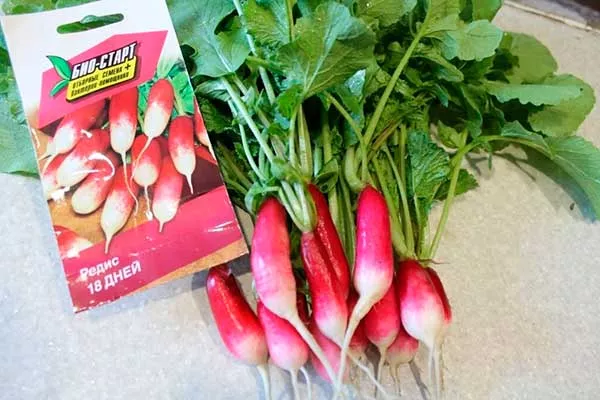
What makes it unique among other species?
Distinctive features of the 18 Days variety include a complete absence of shoots, rapid germination, and an exceptionally short ripening period – the first fruits are ready for consumption within 14-16 days after the emergence of shoots.
Some radish lovers even plant them in open ground for the winter, under the snow, which allows them to harvest as early as February or March, depending on local climate conditions.
Where does it grow best in Russia?
The ideal temperature for the 18-day variety is 15-18°C, although this is rare in summer. Radishes can tolerate heat, but it's highly undesirable to allow the soil to dry out.
Radishes can be planted in gardens of any region for 18 days, but in harsh climates it is recommended to place them in a greenhouse, and in the south, water them more frequently and shade them at midday.
Scope of application
This root vegetable is a veritable arsenal of beneficial nutrients, much needed after prolonged winter frosts. It contains vitamin C, a complex of B vitamins, and fiber, which promotes better digestion and lifts the mood, helping to overcome springtime lethargy.
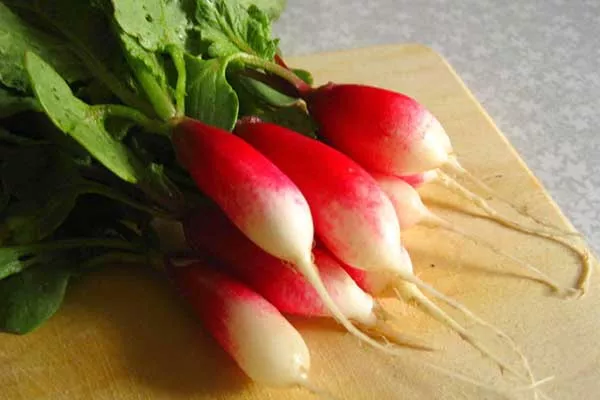
The 18 Days variety stands out for its crisp, delicious flesh. It's quite firm, with a slight bitterness and a delicate, sweet aftertaste. Leading gardeners unanimously praise its excellent flavor.
Served fresh, they're used in salads and slicing. The leaves can also be eaten, pairing well with vegetable salads or served alongside a main course.
Ripening and yield
This variety is characterized by increased productivity, reaching an average of 23 tons per hectare. Approximately 2.2-2.4 kg of root vegetables can be harvested from one square meter of garden bed. Its rapid growth allows many gardeners to harvest two or more crops per season, resulting in increased yields month after month.
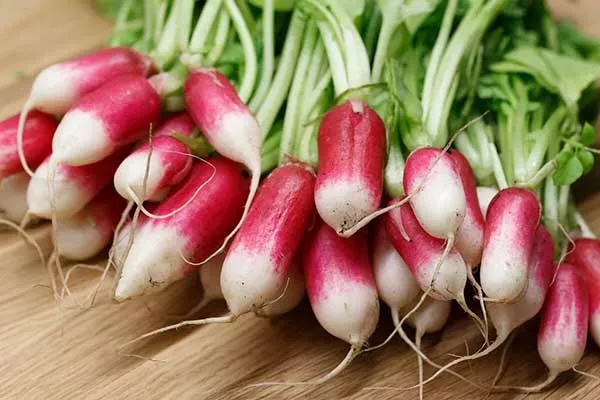
The period between germination and technical maturity, at which harvesting begins, ranges from 16 to 22 days maximum (with improper care and unfavorable weather). Radishes ripen slightly earlier indoors, and a few days later outdoors.
Soil preference
Radishes thrive in light soils such as loam or sandy loam. They do not tolerate acidic or clayey soils. Choosing a planting site should be done carefully, taking into account crop rotation principles:
- Radishes can grow after any vegetable crops, except those belonging to the cruciferous and cabbage families.
- Avoid sowing radishes after horseradish, cabbage, mustard, daikon, or other types of radish, as they may be affected by similar diseases.
- Good predecessors for radishes are potatoes, cucumbers and tomatoes.
Before sowing, it is necessary to improve the soil in the previous autumn period by deep digging and adding organic matter.
Harvest shelf life
Radishes have an attractive appearance, are easy to transport and retain their qualities during storage for quite a long time.
If you store root vegetables in a cellar at a temperature of about +5°C, they will retain their nutritional and taste qualities for 2-3 months.
Basic rules for growing in open ground
To ensure tasty and juicy tubers, it's important to choose a sunny location for growing them, but avoid direct sunlight. If the sun is too strong, provide shade for the plants for part of the day.
- ✓ The optimal soil temperature for sowing should not be below +8°C.
- ✓ To prevent bolting, ensure uniform watering without allowing the soil to dry out.
Growing recommendations
Experienced gardeners use this trick: when radishes begin to ripen, they need to be protected from light from 6:00 PM to 9:00 AM. This allows the tubers to develop maximum sweetness and juiciness.
Radish 18 Days is a variety ideal for the garden or farm. It can be grown in greenhouses and even on windowsills, provided all care instructions are followed.
The main requirements:
- Before sowing, it is necessary to fertilize the soil;
- moisturize it well;
- Spread the seeds carefully to avoid crowding.
When do they plant in different regions?
In the central regions of Russia, the optimal time for planting is mid-April, in the southern regions - mid-March, and in Siberia, early May is expected for sowing in open ground.
Landing
To ensure ideal conditions for radish growth over 18 days, begin preparing the soil early, in the fall. The designated area should be enriched with compost and thoroughly tilled to a depth of 25-30 cm. If this isn't possible in the fall, you can postpone these procedures until spring, but experienced gardeners strongly recommend preparing the soil in advance.
- 2 weeks before sowing, add humus at a rate of 5 kg per 1 m².
- Carry out deep digging of the soil to a depth of 25-30 cm.
- A week before sowing, loosen the top layer of soil and remove large clods.
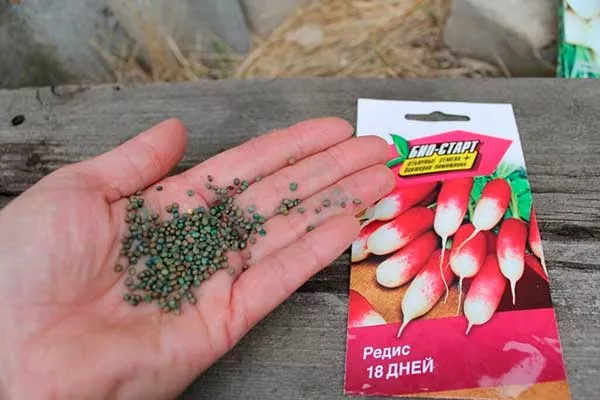
Purchased radish seeds don't require any additional treatment, such as soaking or bubbling, as they have a high germination rate. If you're using your own planting material, you won't need to do without some preparation.
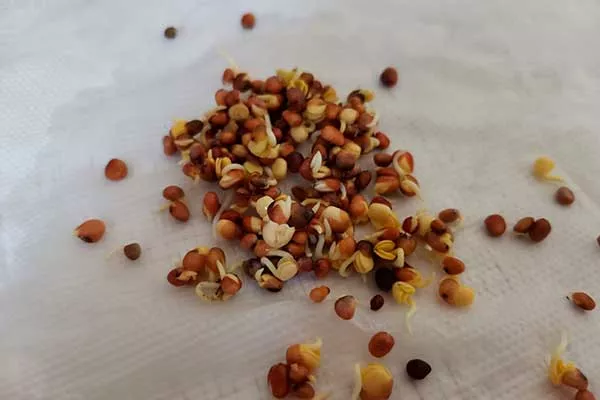
Radishes are sown using standard technology: seeds are placed in 1-2 cm deep holes, following a 5x5 or 5x7 cm pattern, then the soil is carefully covered and lightly moistened.
Care
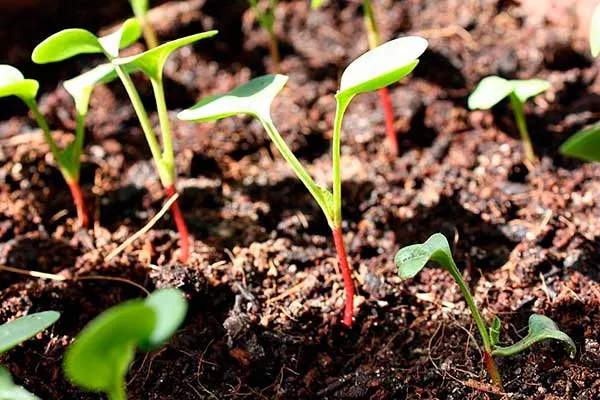
Seed germination begins within 5-6 days after sowing, requiring initial cultivation of the beds. Then, water the seedlings regularly, at least once a day. Use warm water with a watering can or a hose with a spray nozzle to prevent soil leaching.
What else to do:
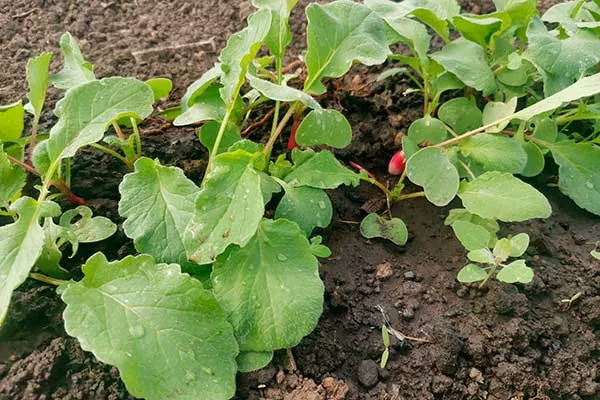
- Once the seedlings have grown, thin them out, but if the seeds were planted at sufficient intervals, this step can be skipped.
- If the soil substrate is not fertile enough, it is recommended to apply fertilizer in the form of a wood ash solution a week after sowing.
Harvesting and storage
The harvest is carried out in stages, as the roots ripen. Ripeness is checked by removing soil from the top of the root and assessing its thickness. It is important not to allow ripe roots to remain in the ground for too long, as this can lead to spoilage.
Problems of growing
During the 18 days that a gardener is growing radishes, a vegetable grower may encounter a number of difficulties:
- Low seed germination may be caused by poor seed quality or sowing too deeply. While this problem cannot be resolved, it's important to carefully monitor seeding depth and check the seed quality and safety before planting.
- If the plant's leaves are small and pale, and the plant is growing slowly, it is recommended to fertilize it with a urea solution.
- If the fruits do not develop properly, it is necessary to regularly water the beds and apply fertilizers to poor soils.
- Slow growth indicates the need for timely thinning, weeding, and soil loosening. During hot periods, when seedlings may experience moisture stress, increase watering to twice a day and protect the bushes from direct sunlight using a polyethylene cover.
Diseases and pests
Radishes of this variety are characterized by fairly robust health. They are generally disease-free for short periods of time. However, there are occasional exceptions, caused by either excess moisture or inadequate care:
- Diseases such as rust, rot, and blackleg may occur. Most of these problems can be prevented with proper care and pre-plant seed treatment.
- Young shoots attract spider mites and aphids. To protect them from these pests, install protective shelters during the initial period. As the plant becomes more robust, the spider mites lose interest. An alternative method is to sprinkle ash dust or tobacco powder between the rows.
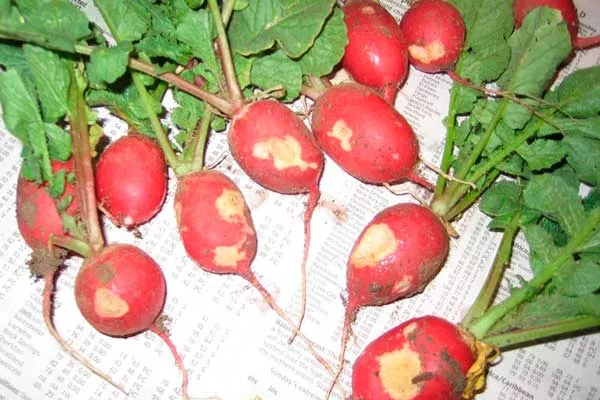
To protect your crop from insect pests, it's recommended to cover root vegetables with sand and plant them alongside pest-repellent plants, such as marigolds, dill, coriander, calendula, lavender, and garlic.
Similar varieties
Breeders' efforts have resulted in the development of numerous radish varieties, and it's no surprise that some of them resemble each other. Here are some examples that can be compared based on various parameters:
- Radish varieties that ripen in about 15-20 days: Randar, Firstborn F1, Children's F1, Presto, Ultra-early, Heat, Zarya.
- In appearance, they are similar to the 18 days variety: French Breakfast, Sweet Tooth, Granddaughter's Joy, Ajour F1, Selyanka.
- The taste characteristics are identical: Albina, Virovsky white, Heat, Zarya, Ilke, Red giant, Quarta, Alyoshka.
Positive and negative qualities
Review of reviews
Radish 18 Days is an unusual root vegetable that can yield up to four harvests per season. Its excellent characteristics have earned it the love of many gardening enthusiasts. However, it's important to ensure the plants are moist during droughts and to sow them in fertile soil.