
The Cinderella tomato is a low-growing variety suitable for salads and canning. It will appeal to those who prefer low-growing varieties with fruits of a classic shape and color. It is productive, easy to grow, and thrives in open ground.
Who and when bred the Cinderella tomato?
The Cinderella tomato was developed by Russian breeders. The authors of the variety are R. V. Skvortsova, L. K. Gurkina, and A. Yu. Lvova. The Cinderella variety was approved for cultivation in 2003. Cinderella is recommended for growing in all regions of the country, both outdoors (where the climate permits) and indoors.
Description of the variety
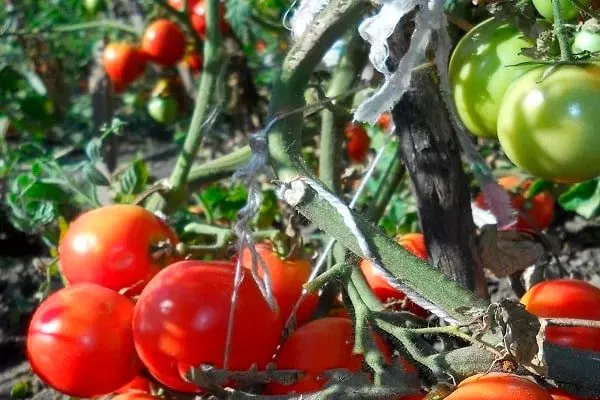
The Cinderella tomato plant grows as a low-growing, determinate variety. The bushes are semi-spreading, with moderate branching and foliage. The height is 45-55 cm. The leaves are fairly large and light green.
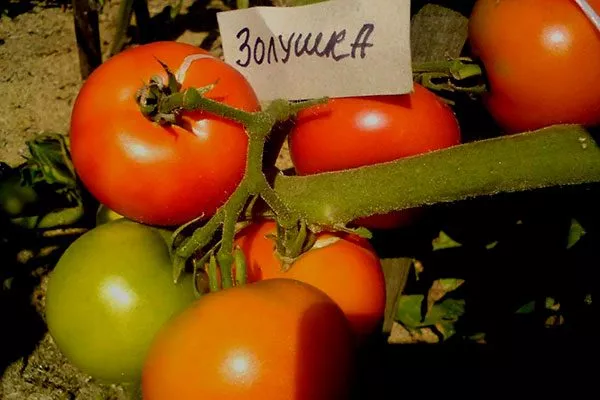
The inflorescences are simple, and the peduncles are segmented. The first inflorescence is initiated above the 6th or 7th leaf, with subsequent inflorescences occurring one or two leaves apart. The flowers are light yellow, ligulate, and pleasantly fragrant.
Brief description of fruits:
- Unripe fruit color: light green with a dark green spot near the stalk.
- Color of ripe fruit: red.
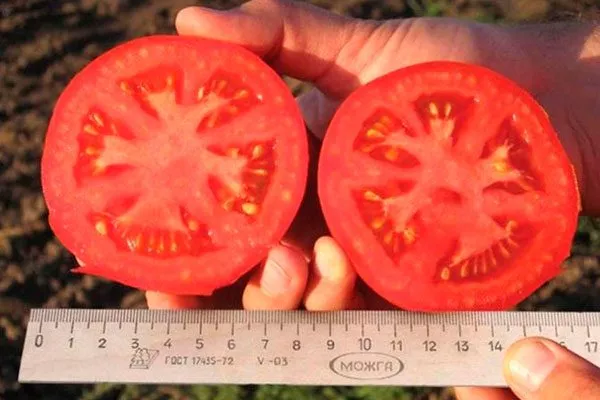
- Form: rounded.
- Skin: smooth.
- Number of cameras: more than 4.
- Weight: 120-160 g.

One brush produces 5-6 fruits.
Taste and purpose
Cinderella tomatoes have a sweet flavor and juicy flesh. These tomatoes are delicious both fresh and processed. They are used in salads, various dishes, tomato products (ketchups, pastes, sauces, etc.), and canning.
Characteristics
The Cinderella tomato is an early-ripening variety. It takes 95-100 days from germination. The uniformity of fruit ripening is 70%. The variety yields 7-8 kg/sq. m. Cinderella tomato is resistant to adverse weather conditions and blossom-end rot.
Pros and cons
The low-growing Cinderella tomato has many advantages that appeal to gardeners and tomato lovers. But before sowing Cinderella tomato seedlings, it's helpful to familiarize yourself with all its advantages and identify any drawbacks.
No particular disadvantages have been found in the Cinderella tomato.
Planting tomatoes
It's not recommended to grow the Cinderella tomato by direct sowing; seedlings are preferred. To ensure a good harvest, it's essential to grow strong, healthy seedlings and then plant them correctly.
How to choose a site?
The growth and development of bushes, their yield and the quality of the fruit are largely influenced by growing conditions and the characteristics of the area where the tomato beds are located.
When choosing a landing site, it is recommended to pay attention to the following points:
- Amount of light. The more warmth and light, the better. A south-facing location is preferable. Tomato plants require 11-12 hours of daylight for normal growth and fruiting.
- Soil quality. Tomatoes can grow in a wide variety of soils, but they prefer light loams and sandy soils that are slightly acidic or neutral. The optimal pH is 6-6.5.
- Crop rotation. Tomatoes should not be replanted in the same spot for at least 3-4 years. A similar interval is required after planting any nightshade crops, such as peppers, potatoes, and eggplants. Good predecessors for the Cinderella tomato include cucumbers, cabbage, carrots, and greens.
- ✓ The soil pH level should be strictly within 6-6.5 for optimal nutrient absorption.
- ✓ The soil must have high air permeability, which is achieved by adding sand or perlite to clay soils.
How to prepare seeds for planting?
Growing good seedlings requires high-quality planting material. Seeds can be purchased or collected from previously grown fruits. In the first case, the seeds are practically ready for planting—the producer treats them with all the necessary disinfectants and growth-promoting agents.
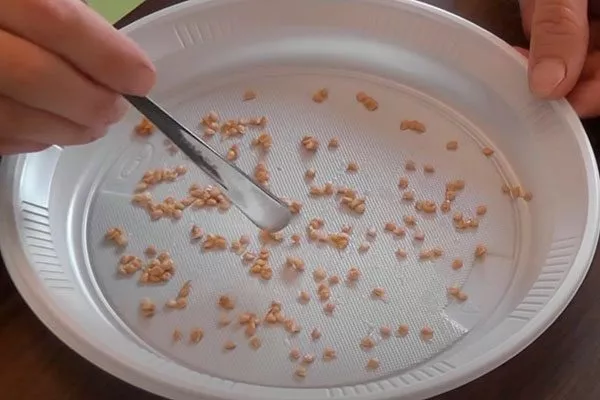
It's recommended to sort purchased and home-harvested seeds and check for germination. Discard any small, dark, or defective seeds. To identify non-germinating seeds, use a salt solution (1 teaspoon per 250 ml of water)—they will all float to the surface.
Self-harvested seeds also need to be disinfected in a solution of potassium permanganate or hydrogen peroxide. Before planting, the seeds must be germinated to speed up germination. Wrap the seeds in damp cheesecloth and place them on a plate. As soon as they sprout, they are planted immediately.
Site preparation
The plot for planting begins in the fall. Since tomatoes require fertile and loose soil, fertilizers (humus, compost, rotted manure) are added during tillage, and, if necessary, river sand is added. The latter is usually added to heavy, dense, clay soils.
It's a good idea to check the soil's acidity so you can add soil amendments during tillage to adjust it accordingly. To lower the acidity, use lime; to increase it, use sulfur, which comes in powder form and is available in agricultural stores. You can also sow green manure crops such as vetch, lupine, sainfoin, clover, spring barley and oats, white mustard, and so on.
Tomato beds are formed approximately a week before planting. The soil is loosened and leveled to ensure water drainage, prevent water stagnation, and ensure even distribution of fertilizer. To ensure the soil warms up to the desired temperature, it is covered with plastic or agrofibre.
Sowing tomato seedlings
Cinderella tomato seedlings are planted in March or early April. Growing seedlings takes 60-65 days. Seedlings are planted when they have 5-7 true leaves.
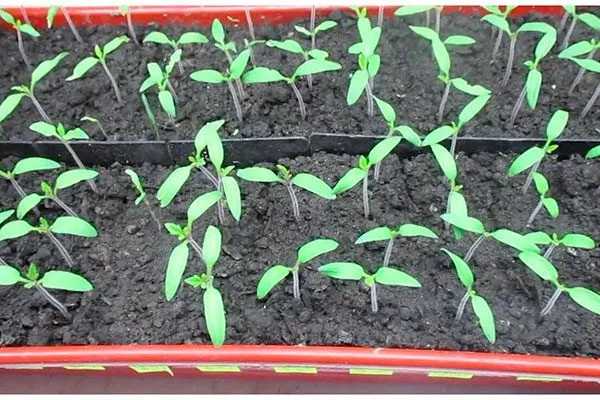
Features of growing seedlings:
- Large containers or individual cups filled with substrate can be used as containers, or peat pots that are completely ready for use and subsequently planted in the ground along with the seedlings.
- Seedlings can be grown in coconut substrates, mineral, peat, and ready-made soils, such as Fasco Malyshok, Gryadki-Leiki, PETER PEAT Hobby Line, etc.
- If using empty containers for sowing, fill them with potting soil or store-bought substrate and moisten with warm, settled water. Spray the water with a spray bottle.
- It's best to use large containers for sowing, from which the seedlings will then be transplanted into individual cups. The soil is leveled, and then furrows are made in it at 3-cm intervals. Alternatively, a special mesh with appropriately sized holes is placed on the soil and the seeds are spread out.
- Tomato seeds are planted 1 cm deep, with a 2 cm gap between adjacent seeds. Cover the planted seeds with a thin layer of soil and moisten again. Use only warm, settled water.
Caring for seedlings
Tomato seedlings usually emerge 7-10 days after sowing. As soon as the first sprouts appear, remove the covering immediately, otherwise they will overheat and may even die.
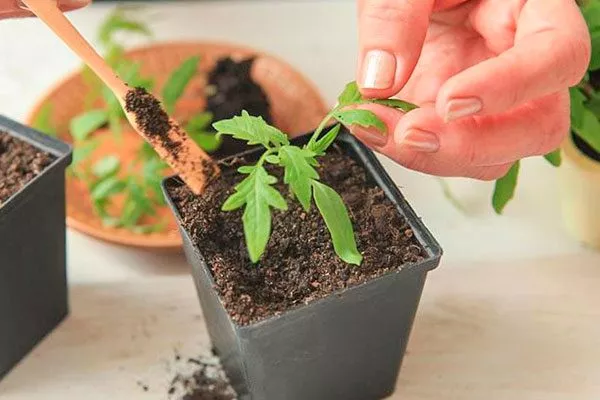
Features of caring for tomato seedlings Cinderella:
- Lighting. Seedlings require 11-12 hours of light per day to grow. However, for the first 3-5 days after germination, lighting should be provided around the clock, then for three weeks, provide the seedlings with 18-20 hours of light per day. Fluorescent lamps or phytolamps are used for supplemental lighting.
- WateringFor the first three weeks, tomato seedlings are watered no more than 1-2 times a week, and after transplanting, 3-4 times. Use warm, settled water, pouring it directly onto the substrate; do not allow moisture to come into contact with the leaves or stems.
- TemperatureIt should be maintained between +20°C and +24°C. However, during the first week after germination, the temperature is kept lower—to +14°C to +16°C (to prevent the seedlings from stretching). At night, the temperature is lowered to +10°C to +12°C. After a week, the normal temperature regime is returned.
- Picking. This procedure is carried out when the seedlings have developed one to two true leaves. The seedlings are watered, then carefully removed, the central root of each one is pinched back by a third, and then transplanted into individual 350-500 ml cups. Pricking stimulates root development, increases the feeding surface, and ensures oxygen access.
- Top dressingAfter transplanting, the seedlings are fertilized several times, approximately every 10-14 days. For this purpose, use a universal commercial seedling fertilizer or a fertilizer made from 100 ml of ash and the same amount of chicken manure. The mixture is diluted in 10 liters of water, stirred, left for 24 hours, and then used to water the seedlings.
- Hardening. When the seedlings are two weeks away from being planted outdoors, they begin acclimating to their new environment. The seedlings are taken outside every day, gradually increasing their time outdoors.
Transplanting
The Cinderella tomato is planted outdoors in late May or early June—the exact timing depends on the regional climate. Seedlings are planted under plastic 2-3 weeks earlier.
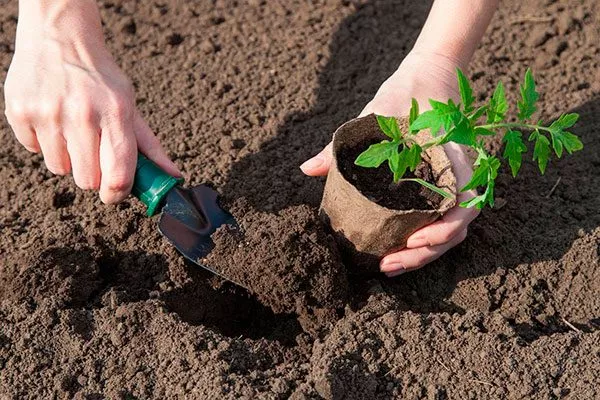
Features of planting seedlings:
- Holes measuring 15 x 20 cm are dug in the beds. The depth and diameter of the hole should be such that it can easily accommodate a peat pot or the root system with the root ball removed from the planting container.
- The holes are dug in a checkerboard pattern or in rows, at the gardener's discretion. Space adjacent plants at 40 cm intervals, and rows at 70 cm intervals.
- Place a few handfuls of humus and wood ash at the bottom of the hole, add superphosphate and potassium sulfate, then add 3-5 liters of water and let sit for 30-60 minutes to allow the soil to settle.
- The seedlings are watered generously to ensure easy removal from the planting containers and transplanted into the hole using the transshipment method. The empty space is filled with soil, compacted to form a depression around the stem, and watered.
Care Features
The Cinderella tomato isn't particularly demanding in terms of care, but it won't yield a good harvest without it. Growing this variety requires regular watering, occasional fertilizing, and all other measures to ensure the plant's normal growth and development.
Watering
The Cinderella tomato is watered infrequently but thoroughly. The frequency is 1-2 times a week, depending on the weather, rainfall, and soil conditions. During hot periods, tomato plants are watered more frequently—2-3 times a week. The best time for watering is evening or early morning. The optimal water temperature is 20–25°C.
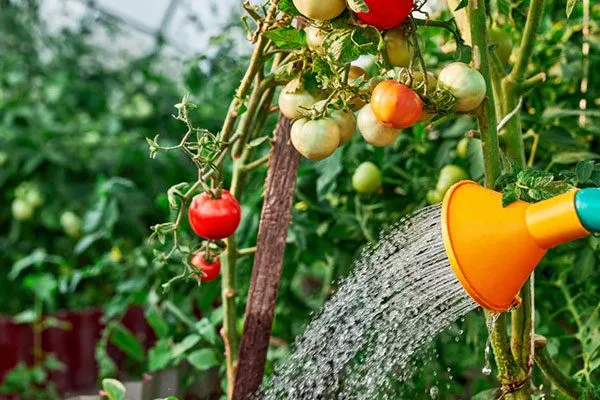
Water should be directed so that it doesn't fall on the leaves and stems, which can cause burns and diseases, as water droplets can harbor fungal spores. The amount of water depends on the age of the plants. A mature plant requires approximately 5 liters of water.
Loosening
The loosening depth depends on root development and during the first week (after planting the seedlings in the ground) is 13-15 cm. After a week, the soil is loosened to a depth of 10-11 cm, and after a month - 4-5 cm.
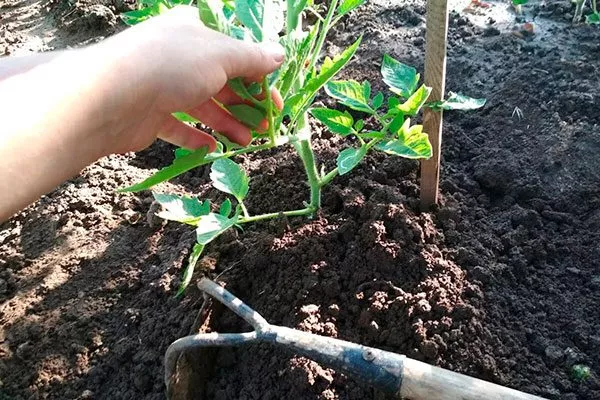
Loosening the soil prevents the formation of a hard crust that blocks oxygen from reaching the roots. Weeding is carried out simultaneously with loosening. To reduce the frequency of loosening, weeding, and watering, the soil around the plants is mulched.
Fertilizing
Fertilizer is applied to tomato plants 4-5 times per season. Two weeks after planting, the tomatoes are fertilized with nitrogen-containing compounds, such as urea, double superphosphate, and potassium sulfate (25 g, 20 g, and 15 g per 10 liters, respectively).
- Two weeks after planting the seedlings, apply nitrogen-containing fertilizers to stimulate growth.
- During the period of ovary formation, increase the dose of potassium and phosphorus to support fruit formation.
- During fruit ripening, use complex fertilizers with microelements to improve the quality of the harvest.
All other fertilizing is done approximately every two weeks. During the formation of ovaries and fruits, plants require more potassium and phosphorus. For example, you can apply a mixture of superphosphate and potassium humate (2 tablespoons of superphosphate and 1 tablespoon of sodium humate per 10 liters of water).
During fruit formation, apply complex fertilizers high in potassium and phosphorus—these elements support fruit development and ripening. Calcium supplements are also beneficial—they prevent blossom-end rot and improve fruit structure—as are magnesium, zinc, boron, and manganese.
Shaping and garter
The Cinderella tomato doesn't require shaping, but the bushes do require pinching and staking. It's especially important to remove side shoots from the lower portions of the tomato plants.
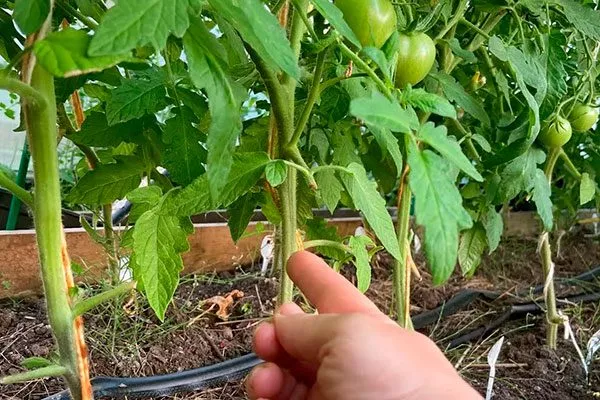
The bushes are tied to vertical supports using the classic method or a sliding loop.
Diseases and pests
The Cinderella tomato is resistant to many nightshade diseases. Thanks to its early ripening period, the bushes are virtually immune to late blight. The variety also has good immunity to the tobacco mosaic virus.
For prevention, it is recommended to spray the bushes with Fitosporin, a solution of potassium permanganate; to combat diseases, fungicides-antibiotics are used, for example, Furazolidone.
The Cinderella variety is not susceptible to pests, but insect attacks are possible, especially if they are widespread. If aphids, whiteflies, and cutworms appear, use insecticides such as Fosbecid. Kleschevit is effective against spider mites.
Harvesting
Cinderella tomatoes are harvested in July and August. The fruits are cut off with their stems using pruning shears; this method prevents rot. Harvesting is best done in the morning, during clear, dry weather.
Reviews
The Cinderella tomato will appeal to lovers of classic tomatoes and dwarf varieties. It's easy to grow, and the yield is excellent. Even inexperienced gardeners can handle the growing techniques of this determinate Cinderella variety.