
Golden Domes tomatoes are bright, golden, and have excellent flavor. This variety attracts gardeners with its compact bush form, making it ideal for greenhouses and small spaces. These large, fleshy tomatoes are highly resistant to temperature fluctuations. With proper care, bountiful harvests are guaranteed.
Origin and growing regions
Developed by Siberian breeders Ugarova, Dederko, and Postnikova, who spent years developing unique varieties, Zolotye Kupola (Golden Domes) was recognized as a significant achievement in breeding and added to the Russian Federation State Register in 2005.
The cultivars claim that the crop will thrive in various climate zones across Russia. It can be grown both in the garden and indoors.
Description of the bush and fruits
It is a determinate species with limited growth, reaching from 85 cm to 1.5 m. However, in greenhouse conditions, plants can grow taller.
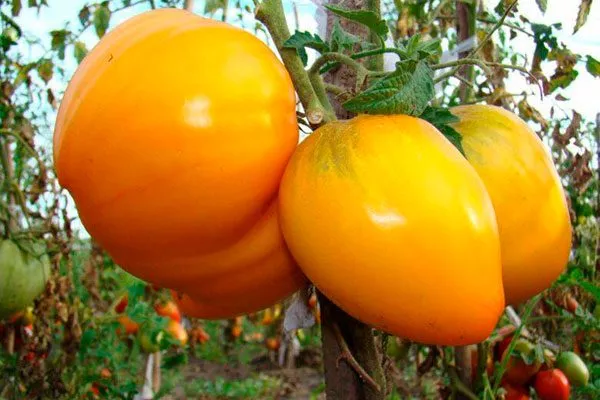
Distinguishing characteristics:
- Escapes – Medium-sized, elongated leaves with serrated edges and light wrinkles. The color is a delicate emerald. The first flower clusters form around the ninth leaf, and then appear at intervals of one or two leaves.
- Tomatoes - They have a heart-shaped form, reminiscent of church domes. When fully ripe, they acquire a rich orange color. The average weight of tomatoes is about 400 g, but when the ovaries are rationed, they can reach 750 g.
Each vegetable contains four seed chambers with a moderate number of grains, which is enough to collect planting material, since this is a variety, not a hybrid.
Main characteristics
The plant has good resistance to cold and many diseases that can affect nightshade crops. Farmers are attracted by the numerous positive qualities of the Zolotye Domey variety.
Ripening and fruiting, productivity
This is a mid-season variety—from sowing to harvesting the first fruits takes 90-100 days. The yield is ensured by large tomatoes, although their number per shoot is small.
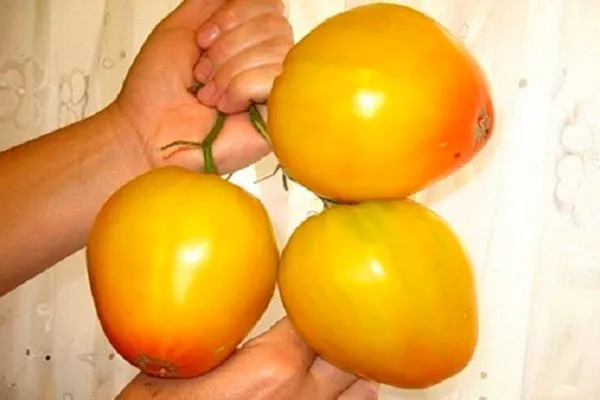
A plant grown with two stems yields up to 4.5 kg of vegetables. With three plants per square meter and proper care, a plot can yield 12-14 kg of tomatoes.
Scope of application
Tomatoes have a pleasant flavor with minimal acidity, making them suitable for dietary use, especially in those with high acidity. The fruits are mainly consumed fresh.
Tomatoes aren't meant for long-term storage, so they're used in summer salads or processed. Large tomatoes aren't suitable for whole canning, but they produce nutritious, rich orange juice, delicious and aromatic sauces, lecho, and adjika.
The intricacies of growing seedlings
Golden Domes are an easy-to-grow variety. They don't require much effort. For best results and a good yield, it's important to grow strong, high-quality seedlings.
Timing for sowing
Trying to speed up fruiting, gardeners often make the mistake of sowing seeds on the wrong days. If in your region, tomatoes can only be planted outdoors in late May or early June, count 60 days from that date.
Sowing too early will cause the seedlings to overgrow, become elongated, and age. As a result, when transplanted into the garden, they will take longer to establish, and an early harvest will be missed.
Typically the calculation looks like this:
- warming up seeds – 2-3 days;
- emergence of seedlings – 5-7 days;
- age of seedlings at the time of planting – 45-50 days.
Maintain an optimal microclimate when cultivating seedlings, as any deviations can delay the ripening of the crop.
Soil and container for growing
For successful germination, growth, and development of seedlings, special soil is necessary. It should be clean, nutritious, light in texture, and neutral or slightly alkaline in acidity.
Garden stores sell all-purpose potting mixes in various sizes. If you need a larger quantity, prepare the soil in the fall by mixing equal parts of:
- humus;
- compost;
- land;
- sand.
Add 20 g of superphosphate per 10 kg, mix thoroughly, and store in a frost-free area. For sowing, use either special containers or any other available container, such as:
- milk and juice packaging;
- cut plastic bottles;
- disposable cups;
- boxes.
Containers should be clean, non-toxic, and have drainage holes. After sowing, cover the seedlings with glass or plastic film to create a greenhouse effect. Place trays (plastic boxes, trays, or other suitable containers) under the containers to collect runoff water.
Seed preparation
Before planting, it's important to treat the seedlings: treat, calibrate, and warm them. If you purchased the seeds from a manufacturer, they're already prepared. If you harvested the seeds yourself, follow these steps:
- Place in a weak solution of potassium permanganate and stir.
- Discard the floating specimens - they are empty.
- Leave the seeds that have settled to the bottom in the substance for 20-25 minutes.
- Rinse with clean water and wrap in a damp cloth.
- Keep in a warm place for 2-3 days to germinate.
After warming up, you will identify viable seeds by the root embryo that appears – these are the ones you should plant in the soil.
Sowing seeds
There are two ways to sow seedlings. Choose the most suitable option for you:
- Group. Place all the seeds in one container, then transplant the seedlings into cups.
- Individual. Plant each seed immediately in a separate container, eliminating the need for picking.
For group sowing, fill the container with prepared soil, compact it lightly, and evenly distribute the sprouted seeds. Then, sprinkle them with a 0.5 cm layer of soil and gently moisten with a spray bottle or through a sieve. Cover the container with plastic wrap and place it in a warm place (22…24°C). Seedlings will appear in 4-6 days.
Caring for seedlings
To ensure strong tomato seedlings and prevent them from becoming leggy, maintain proper temperature and light levels. When 70-75% of the seedlings have emerged, remove the covering and reduce the light levels:
- at night – up to +16…+17°;
- during the day – up to +21…+23°C.
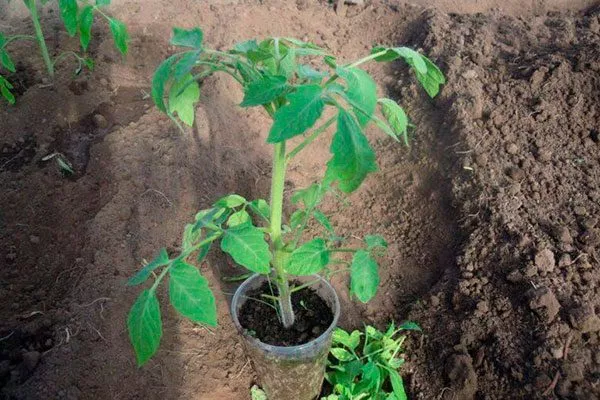
Water the seedlings with warm water, preferably rainwater, as the soil dries. The moisture should penetrate the soil but not stagnate, and excess should drain into the tray. Regular ventilation helps control humidity and prevent the development of fungal diseases.
Hardening off seedlings
13-15 days before planting the seedlings in the garden, begin acclimating them to changing conditions. Follow these steps:
- open windows and vents;
- remove additional window frames;
- Take the containers with seedlings outside, starting with 15 minutes, increasing the time to several hours, and finally leaving the plants outside for the entire day.
Bring the seedlings indoors at night. Initially, they may develop a purple tint due to significant temperature fluctuations. This is normal, as they will soon recover.
Planting seedlings in a permanent location
The seedlings are transplanted at two months of age. By this time, they should be strong, with well-developed 6-7 pairs of true leaves, and have a compact shape.
Preparing the garden bed
When choosing a location for planting tomatoes, it's important to consider certain requirements. Adhere to the following:
- plot – protected from strong winds;
- Earth - fertile and light;
- soil – with a neutral or slightly alkaline reaction;
- ridges – free from weeds.
Practice crop rotation—avoid growing crops where they grew last season. The area should also be protected from flooding.
Landing plan
Plant Golden Domes tomatoes correctly. Follow these directions:
- distance between bushes – 50-60 cm;
- row spacing – 60-70 cm.
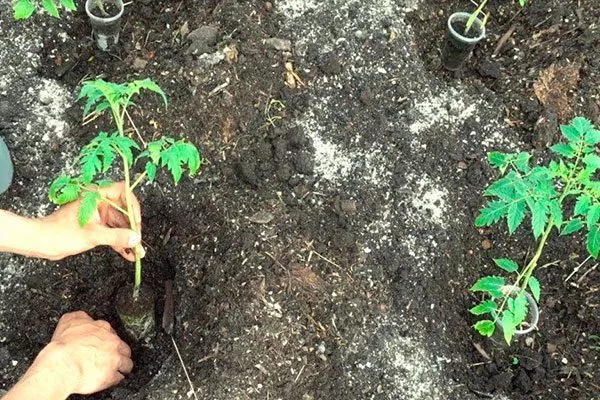
Do not plant the plants too close together, otherwise the vegetative mass will be modest and the harvest will be minimal.
How to care for it in open ground?
With proper care, Golden Domes tomatoes reveal their genetic potential not only in productivity but also in flavor. Standard agricultural practices are essential.
Watering and soil care
Provide the plant with regular, but not too frequent, watering. Water should completely penetrate the root system. Avoid getting the leaves wet. Water early in the morning or in the evening.
Follow these recommendations:
- Loosen the beds after each watering or rain, but once the ovaries begin to form, the procedure becomes less important.
- Mulching, on the other hand, is especially important in conditions of low moisture, as it helps retain moisture in the soil. Cover the stems with protective materials such as peat, straw, or agrofibre.
The soil under the bushes must be thoroughly cleared of weeds, as they take away:
- moisture;
- nutrients;
- light.
Top dressing
Experienced gardeners recommend using a nutrient-rich slurry made with organic or mineral fertilizers. The following recipes are suitable:
- pig, cow or horse manure – 1:10;
- chicken droppings – 0.5:10;
- ammonium nitrate – 20 g per 10 l of water;
- Superphosphate – 25 g per 10 l of water.
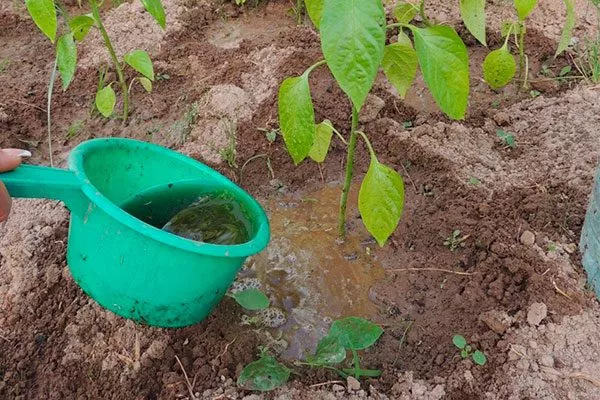
After preparing the solution, let it sit for 24 hours. Then, add 1 liter of the concentrated mixture to 10 liters of irrigation water. Apply 500 ml of fertilizer to the roots at intervals of 15-20 days.
Pinching out the side shoots and tying up the bush
If you are training plants into a single stem, remove side shoots as soon as they reach 2 cm in length. When training into two stems, leave the lower shoot and remove all the others.
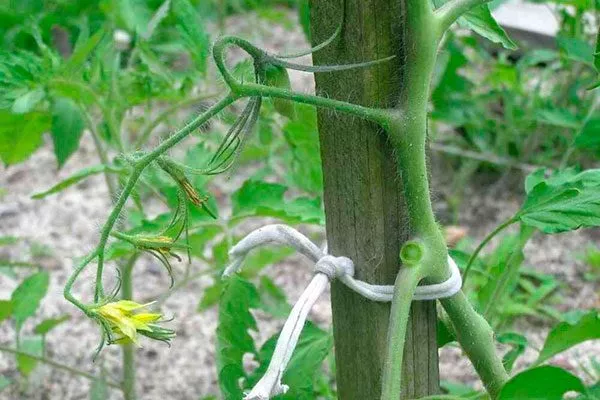
Stems can bend under the weight of vegetables, so tie the bushes regularly. Use soft twine to gently wrap around the trunk, catching the growing fruits. Staking the stems promptly will improve plant growth and ensure easier harvesting.
Harvesting and storage
Harvest tomatoes when they begin to reach biological maturity. They can ripen further in a warm, dark place, covered with a cloth or spread out in a box. The flavor of ripening tomatoes will be no different from those that have reached full ripeness on the vine.
If you want to extend the shelf life, reduce the temperature slightly. However, this may affect the flavor and sugar content.
Pest and disease control, prevention
The variety is characterized by good immunity. However, in unfavorable weather conditions, tomatoes can be affected by:
- Late blight. It manifests itself as dark, water-soaked spots on leaves, stems, and fruit. The foliage turns yellow, dries up, and falls off. A whitish coating may appear on the underside. Tomatoes become covered with hard, brownish-brown marks, becoming tough and inedible. Treat with Quadris.
- Cladosporiosis. A fungal disease characterized by yellow spots on the leaves. These spots merge into a single mass, causing the leaves to wilt. The fungicide Fitosporin-M is effective in controlling the disease.
- Ascochytosis (stem cancer). It is accompanied by the secretion of tissue fluid (gum) on the shoots. These shoots gradually die off. Trichodermin and Rovral will help combat the disease.
- Anthracnose. During the disease, spots form on the fruit that merge into a single mass, leading to mummification of the tomatoes. Treat the plants with the following products: Quadris, Novosil, and Strobi.
Certain pests can attack this variety. Greenhouse whiteflies and Colorado potato beetles attack the bushes, especially if there are no other plants with a more appealing flavor nearby.
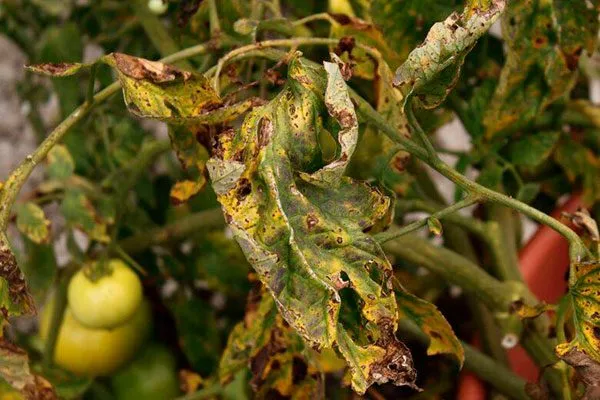
Carry out the first preventative treatment when:
- warm days give way to cold nights;
- during the rainy season;
- Plants are covered with cool morning dew.
These conditions promote fungal growth. Treatment with solutions prepared according to instructions will help prevent the rapid spread of the disease.
Similar varieties
If for some reason you can't find Golden Domes tomato seeds, you can purchase seedlings from other varieties with similar characteristics. Below are some alternatives:
| Name | Description and characteristics |
| Altai honey | When grown outdoors, the bushes grow up to 1.5 m, and in greenhouses they can grow even taller. The leaves are medium-sized, oblong, and a rich dark green. Each cluster produces 5-6 fruits.
Unripe tomatoes are a standard green color with a dark spot near the stem. As they ripen, they turn yellow with a distinct orange tint. They are large, weighing between 350 and 500 grams, heart-shaped with a slight ribbed texture. The flesh is firm but juicy. This mid-early variety ripens in 105-110 days. If sown in February, the first harvest can be collected in July. In a greenhouse, yields reach 6.8 kg per square meter; in garden beds, the yield is lower. With proper cultivation practices, a single bush yields 3-5 kg of vegetables per season. |
| Bull's heart is orange | Plants grow up to 180 cm in greenhouses and about 170 cm in open ground. The stems are thin, light green, and up to 1 cm thick, so they require staking to a trellis or support.
Unripe tomatoes are light green and heart-shaped with slight ribbing. They gradually turn a rich orange, and the dark spot near the stem disappears. They weigh between 300 and 350 grams. This mid-season variety ripens in 105-110 days, but the vegetables ripen in waves from July to September. Yields are 5 kg per plant in the garden and up to 12 kg in the greenhouse. |
| Orange strawberries | The plant is indeterminate, reaching 170-200 cm in open ground, and up to 350 cm in a greenhouse. It is vigorous and foliated.
Ripe fruits are a rich orange color and resemble a heart or a large strawberry. Some specimens have a conical shape. The weight of a single fruit ranges from 400 to 500 g. This mid-season variety ripens tomatoes in 100-110 days without cracking. They ripen evenly, in groups of 8-10. Fruiting continues from July to October. Productivity is excellent – up to 6 kg per bush. |
| Nizami | An indeterminate variety. Plants are vigorous, branched, and have green leaves. Heart-shaped tomatoes weigh 150-300 g and turn a rich orange when ripe. Thick skin ensures resistance to damage during transportation.
This mid-season variety ripens in 105-115 days. Fruiting continues for a long time. |
| The heart of Ashgabat | A standard tomato variety with compact bushes 40-60 cm tall in open ground and up to 100 cm in greenhouses. They are vigorous, with moderate foliage and medium-sized, light green leaves.
The fruits are large, weighing 300-400 g, heart-shaped, and deep orange. The flesh is fleshy and contains few seeds. This mid-season variety ripens in 100-110 days. It produces high yields of up to 7 kg per plant and 20-30 kg per square meter. |
Pros and cons
The Golden Domes variety has a number of advantages. Vegetable growers appreciate it for its attractive yellow color and excellent tomato flavor. The bush is compact and open.
Among the disadvantages of the crop, gardeners note low resistance to some infections, a short shelf life, and a tendency for vegetables to crack.
Reviews
Zolotye Domeli is an excellent choice for those who appreciate juicy and delicious tomatoes. This variety produces a stable yield with minimal care, and its fruits are suitable for both fresh eating and canning. Both novice and experienced gardeners can grow it, as it requires minimal intervention.