
Medeo Golden Mountains tomatoes attract gardeners with their large size and distinctive orange-red hue. This variety is successfully grown in open ground and greenhouses, especially in warm climates. Their sweet flavor and exotic notes make them ideal for fresh salads, sliced vegetables, and as a garnish for various dishes.
Origin of the variety, description of the bush and fruits
The crop was developed in Kazakhstan by Vitaly Alifirov, a breeder from the Almaty region. His work resulted in a high-yielding variety with a distinctive two-tone coloration.
Distinctive features:
- It is an indeterminate variety. In greenhouse conditions, plants reach a height of over 2 m, and when grown outdoors, they can grow up to 3.5 m.
- Despite the strong stems, the bushes need reliable garters, including the tomato clusters.
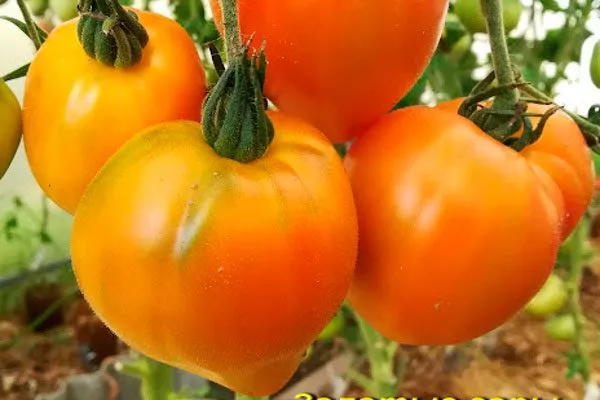
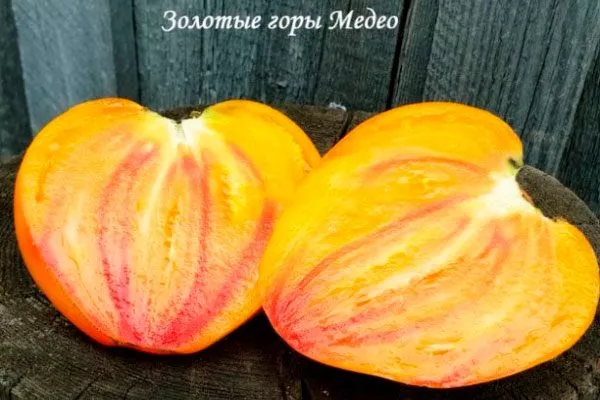
- The tomatoes have an unusual coloring: the skin combines yellow-orange and red shades, and the fleshy pulp is colored in orange-red tones with bright scarlet veins.
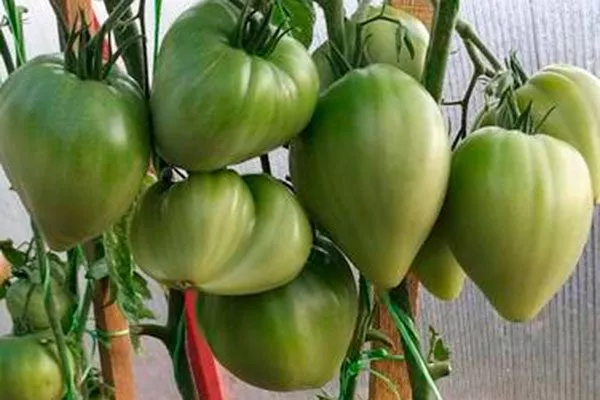
- The fruits are large – their weight varies from 450 to 800 g, they have a dome-shaped configuration.
The vegetables are famous for their rich taste: sweet with light fruity notes.
Main characteristics
Golden Mountains Medeo is a sought-after tomato variety that has gained popularity among gardeners due to its numerous positive qualities. The plant has a strong immune system and tolerates temperature fluctuations.
Ripening and fruiting, benefits and productivity
Tomatoes are rich in vitamins and minerals. They contain vitamins A, B, C, and E, as well as potassium, magnesium, and phosphorus. Regular consumption of the vegetable:
- supports immunity;
- improves vision;
- has a beneficial effect on the heart and digestive system.
This is a mid-season variety. Gardeners begin harvesting towards the end of August. This variety is characterized by good productivity – when trained into two stems, a single plant can produce up to 10 kg of large fruits.
Resistance to adverse conditions, regions
The crop tolerates temperature fluctuations, drought, and high humidity, making it suitable for growing in a variety of climates. The variety demonstrates maximum yields not only in the southern regions but also in central Russia.
In greenhouses, the bushes produce abundant fruit even in cooler climates. In open beds, this variety grows best in regions with warm, long summers.
How to use?
Medeo Golden Mountains tomatoes are versatile in cooking. They're perfect for fresh salads, hot dishes, and winter preserves.
With their vibrant color and distinctive flavor, tomatoes of this variety will grace any table. They produce rich juices and aromatic sauces.
How to sow seeds and grow seedlings?
The crop is grown by seed. It's important to carefully select the soil and planting time, and also determine the planting pattern in advance.
Do not sow seeds in cloudy or windy weather, as this may negatively affect germination.
Recommended timeframes
The sowing date depends on the region's climate. Since seeds germinate better in warm, tepid soil, many gardeners pre-grow seedlings indoors or in a greenhouse.
Orient yourself to the terrain:
- in the southern regions – after February 20;
- in the northern regions – in March or April.
In areas with a temperate climate, such as the Moscow region, start growing seedlings in mid-March.
Selecting a location and soil
Growing seedlings requires soil with a neutral pH. The optimal composition is indicated on the seed packet, but you can prepare it yourself a few days before sowing.
Use soil from the area where the tomatoes will be growing – this will speed up the seedlings' adaptation after transplanting. In the fall, fertilize the soil with manure or rotted leaves and dig in.
Composition of soil mixture per 10 kg of soil:
- cow dung – 2.5 kg;
- peat – 4 kg;
- turf – 10 kg.
Alternatively, a soil mixture consisting of the following components is suitable: 10 kg of soil, 3 kg of peat, 5 kg of cow manure, and 2-2.5 kg of steamed wet sawdust. Mix everything thoroughly.
To increase the yield per 10 kg of the finished mixture, add:
- ammonium nitrate – 5 g;
- phosphate – 10 g;
- potassium chloride – pinch.
To improve drainage, add 3 kg of fine sand. You can also mix 10 kg of store-bought soil with 10 kg of garden soil and 15 g of dolomite flour.
Before planting, disinfect the soil. If you can't bake it in the oven, treat it with a weak solution of potassium permanganate. After the seedlings have rooted, begin planting them in the garden beds.
Planting pattern and bush formation
To properly structure plants, it's important to properly organize the space when planting seedlings. Gardeners use several cultivation methods:
- Classical. Suitable for tall bushes planted in rows. The optimal distance between plants is 15-17 cm.
- Nesting. This is used when you have a large plot. Plant up to three seedlings in one hole, leaving at least 85 cm between each hole. After the seedlings have adapted, remove the weaker ones and tie up the stronger ones.
- Parallel. This involves creating two beds spaced 30-40 cm apart. The distance between plants should be at least 50 cm. This method is especially suitable for southern regions, as the plants shade each other, preventing overheating.
Care Features
The crop is easy to grow—just follow basic farming practices and apply nutrients promptly. This promotes vigorous growth and increased productivity.
Watering
A lack of moisture can negatively impact the flavor of tomatoes. Improper moisture management leads to a number of problems:
- cracking of ripening fruits;
- leaf curling;
- absence of ovaries;
- slow growth and development of bushes.
Follow these recommendations:
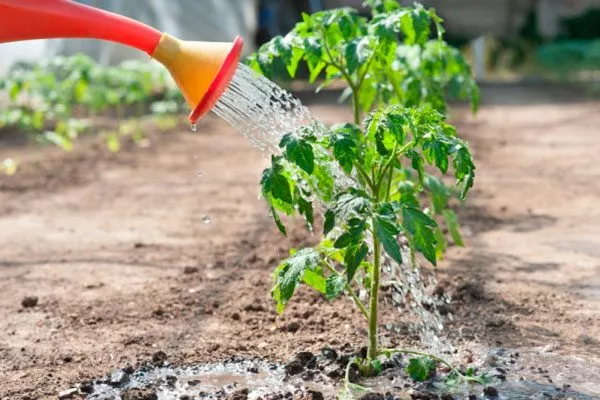
- Tomatoes grown outdoors require moderate but regular watering. Avoid watering on cloudy days, as excess moisture in the soil and air can lead to fungal diseases affecting the stems and roots of the plants. Use warm, settled water—no hotter than 20°C.
- In regions with hot summer climates, including the Rostov, Astrakhan, and Volgograd regions, it is recommended to carry out the procedure in the evening, when the air temperature remains high and the roots do not freeze.
In more moderate climates (the Urals, Siberia, Moscow, and the Moscow region), water in the morning. During the day, water splashed on the leaves can cause burns. - Water tomatoes every 2-4 days, more often in hot climates. The recommended amount per plant is 5-8 liters, but during periods of active growth and fruit set, increase the watering amount by 1.5-2 times.
As the vegetables begin to ripen, water less frequently. For ease of care, use an automatic drip system to ensure the soil is regularly moistened.
Top dressing
Tomatoes require several applications throughout the season. Apply fertilizer at specific times:
- after transplanting seedlings into open ground;
- during flowering;
- at the stage of tomato formation.
After planting the seedlings in the soil, fertilize them with nitrogen-rich fertilizers to stimulate vigorous growth and structure. Avoid applying fertilizers containing potassium and chlorine, even in minimal doses.
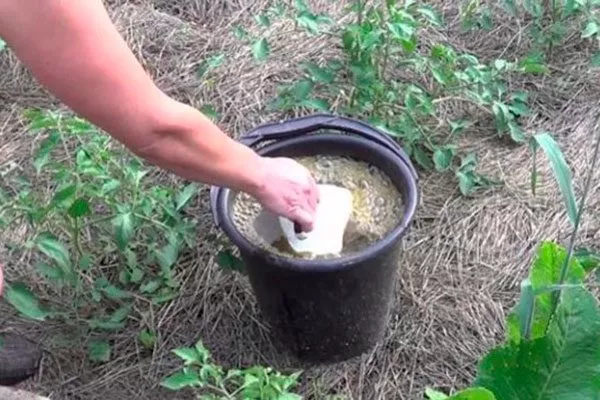
Many gardeners use organic fertilizers, which can be made at home using cow manure. Follow these recommendations:
- Add 2 liters of ash to 5 liters of boiling water.
- After cooling, pour in 10 ml of iodine and 10 ml of boric acid.
- Leave it to infuse for 24 hours.
Before use, dilute 100 ml of the resulting solution in 10 liters of water, using approximately 1 liter for each bush.
During flowering, plants require mineral fertilizer. At this stage, apply mixtures based on:
- yeast;
- boric acid;
- Superphosphate;
- potassium salt.
During fruiting, feed the crop with solutions made from chicken manure, yeast, and iodine. To combat late blight, use whey: pour 100 ml into 1 liter of water and spray the plants in the evening, after sunset.
Pinching out stepsons
Remove excess lateral shoots before fruit forms. These sprouts appear in the leaf axils and negatively impact plant growth, as the roots cannot provide the fruits and stems with the necessary nutrients. If left untreated, the plants will weaken, potentially leading to complete wilting.
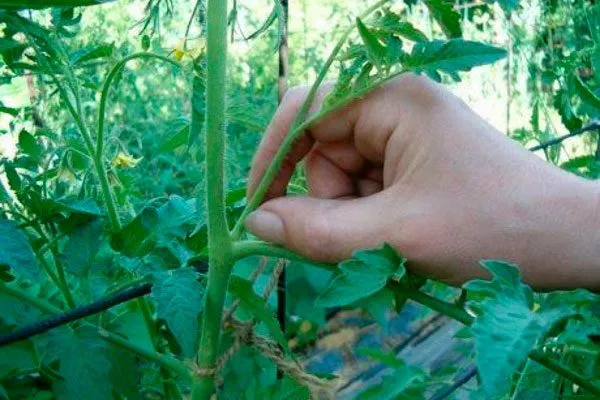
Follow certain rules:
- Gently break off the side shoots, pinching them with your fingers. Don't pull them out completely, as this can damage the stem. A small stump about 2 cm long should remain. Do this during flowering, when the shoots are no more than 5 cm long.
- Decide on a bush formation scheme in advance. If you plan to leave a single stem, remove all side shoots and leaves under the flowering ovaries. Repeat this procedure at least once a week. When structuring into two stems, the strongest shoot should be under the cluster. The second stem will develop quickly.
The three-stem pattern is not suitable for the Golden Mountains Medeo variety, as it is usually used for determinate and semi-determinate tomatoes.
Soil care
Regularly hill and loosen the soil to retain moisture and provide oxygen to the roots. These simple procedures promote improved plant growth and increased resilience.
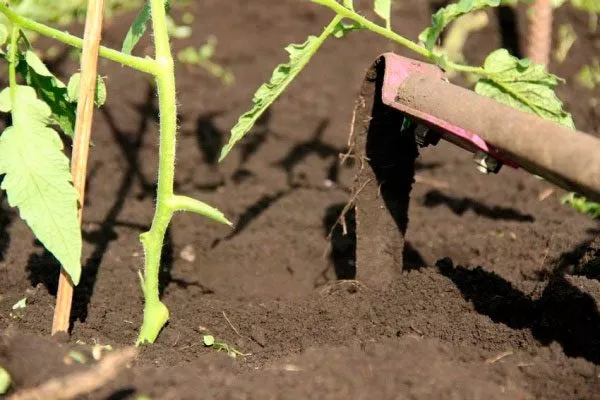
Follow the recommendations:
- Fertilize the soil periodically using either homemade fertilizers or purchased liquid mineral solutions from specialty stores.
- Once the seedlings have fully adapted to the new conditions (approximately 15-17 days after transplanting), hill the beds. Repeat this process every 15-20 days. Moisten the soil beforehand.
To avoid slowing down plant growth, regularly clear the area of weeds, pulling them out by the roots, as their presence can negatively affect the harvest.
Tying up bushes
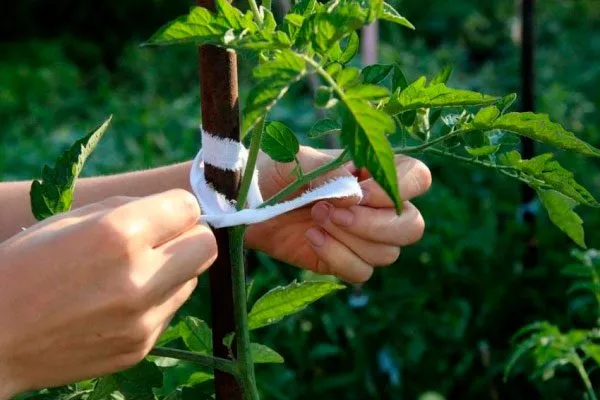
Tomatoes grown outdoors need to be staked, as ripe tomatoes can be too heavy for the stems, causing them to break. Follow these guidelines:
- Avoid using natural fabric slings for tying, as these materials rot quickly, creating conditions favorable for disease development. Large-mesh netting, boards, metal pipe trim, or tree branches are suitable as supports.
- Dig a stake up to 2 m high into the ground to a depth of 25-30 cm. Gently press the stem against the support and tie it with nylon rope.
- You can build pyramids from branches tied crosswise with wire. Place the caps 100-110 cm apart in a row or in a staggered pattern.
An equally popular design is the "hook" garter. Space the stakes 1-1.5 meters apart, and drive a clothesline around each one. Stretch a fishing line along the line, raising it as the plants grow. Make wire loops 20 cm apart, threading hooks through them to hold the tomato stems in place.
Disease susceptibility and treatment
The Golden Mountains Medeo variety requires adherence to agricultural practices to minimize the risk of bacterial or fungal diseases. The crop may be susceptible to the following problems:
- Brown rot (phoma). It attacks fruits and above-ground parts of plants, primarily before harvest. Tomatoes begin to rot, developing dark brown or gray spots with a yellow-white border. It develops under high humidity and a deficiency of phosphorus and nitrogen in the soil.
For early stage control, solutions of soda, potassium permanganate or pine needles, as well as Fitosporin, Gamair and Fitohelp preparations are effective. - White spot (septoria). A fungal disease that begins with leaves, causing gray spots. It can spread to stems and vegetables. Moisture promotes disease development.
For treatment, use infusions of garlic shoots or milk/whey, and the preparations Fitosporin and Kazumin. - Anthracnose. This is accompanied by the appearance of dark lesions on tomatoes and root rot, especially in conditions of high humidity and temperature. Moisture remaining on the fruit after watering facilitates infection. An infusion of garlic shoots or a baking soda solution will help.
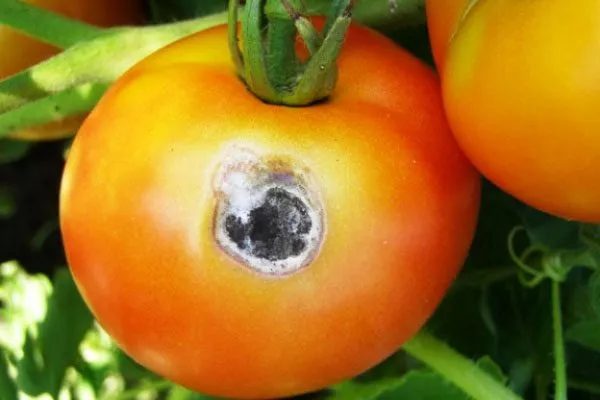
To minimize the risk of disease development, disinfect the soil and seeds; use ready-made preparations from specialized stores – they are easier to dose.
Harvest timing and rules
Tomatoes ripen in mid- to late August, turning a vibrant orange-red hue. Pick them by hand to avoid damage.
For storage, place vegetables in a cool, well-ventilated area, in wooden boxes lined with straw or burlap, with the stalks facing up.
Pros and cons
Golden Mountains Medeo is a high-yielding variety, ideal for cultivation in open ground and plastic greenhouses. Key advantages:
Among the negative qualities, some vegetable growers note the need to form the bush and tie up the shoots.
Reviews
Golden Mountains Medeo is a popular tomato variety, chosen by both novice and experienced gardeners for their gardens. This is due to its high yield, large tomatoes, vibrant flavor, and unique skin color. This variety requires basic care, but will reward you with generous harvests.